Crown Chakra: What It Is, How to Open It, and Why It Matters
Crown Chakra: What It Is, How to Open It, and Why It Matters

A woman in a Facebook group I follow described her experience like this: "I meditated every day for three months focusing on my crown, felt a buzzing sensation twice, and then… nothing. Was I doing it wrong?" She wasn't doing it wrong, exactly. She was doing it out of order — her root chakra was a mess (her words), and she was trying to access the penthouse without fixing the cracked foundation.
That pattern is everywhere. The crown chakra attracts people who want the peak experience first and the groundwork never. It doesn't operate that way. Sitting at the apex of the energetic system, the sahasrara punishes impatience and rewards the boring, unsexy work of stabilizing everything beneath it.
What follows is a grounded, practical walkthrough — the sahasrara's actual function, how a blocked one differs from a balanced one, which so-called opening symptoms deserve your attention (and which don't), and four methods that produce real shifts when practiced consistently.
What Is the Sahasrara Chakra and What Does It Govern?
In Sanskrit, sahasrara chakra meaning breaks down to "sahasra" (thousand) and "ara" (petals) — the thousand-petaled lotus. That name isn't decorative. In tantric philosophy, a thousand petals represent the totality of human experience flowering into awareness.
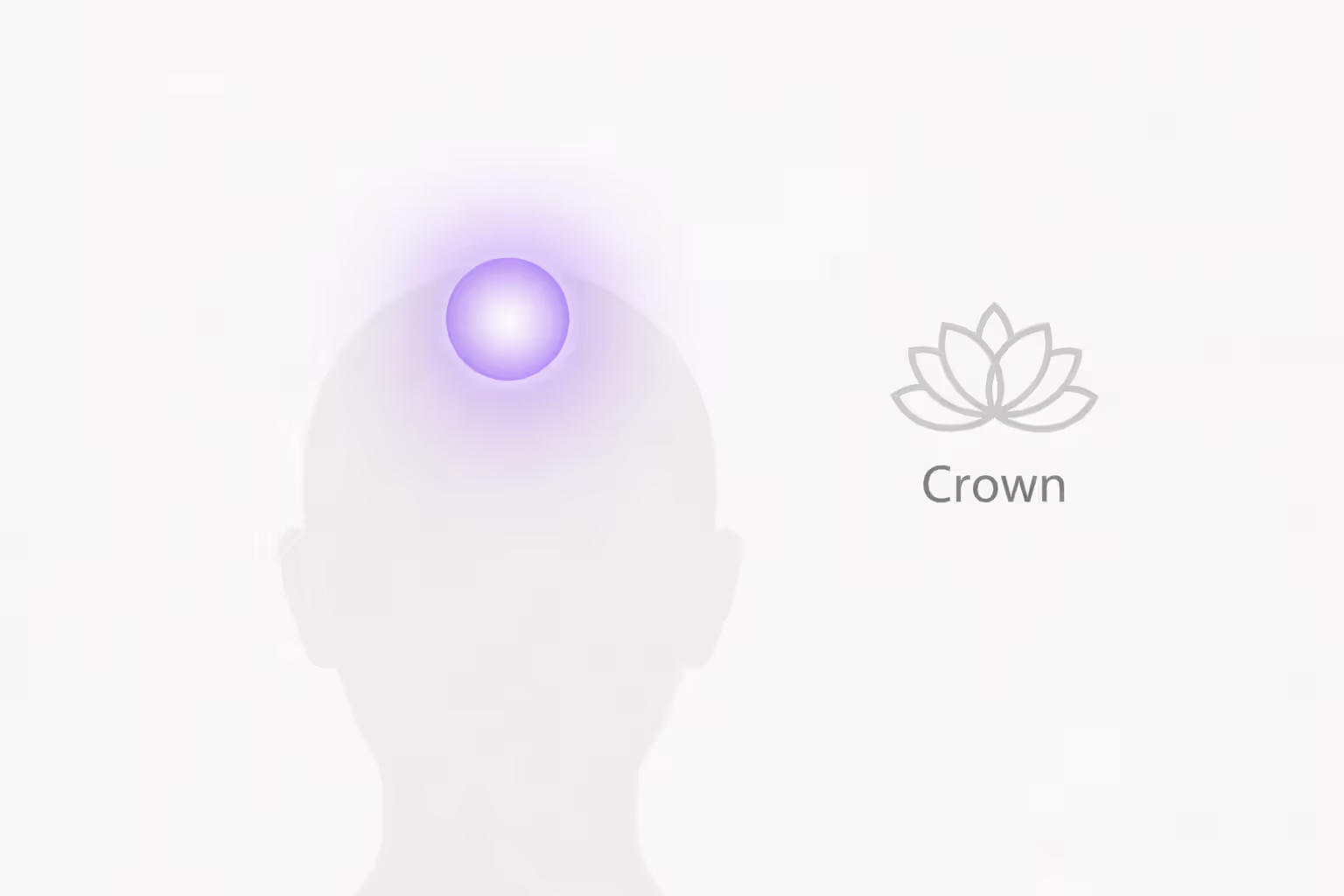
Functionally, the crown chakra handles your relationship with meaning itself. The lower six chakras manage specific domains: physical safety, sexuality, personal power, love, communication, and perception. The sahasrara doesn't manage a domain — it holds the container for all of them. When it's working well, you carry an unforced sense that your life has coherence. Not that everything is perfect, but that the pieces belong to something.
The third eye (ajna) gives you intuitive hits and inner clarity. The crown takes that a step further — it's less about knowing things and more about resting in a state where knowledge and mystery coexist without friction. You've probably met someone like this. They don't broadcast their spirituality. They just seem comfortable with questions that have no clean answers.
Location, Color, Element, and Associated Symbol
Author: Ava Mitchell;
Source: yogapennsylvania.com
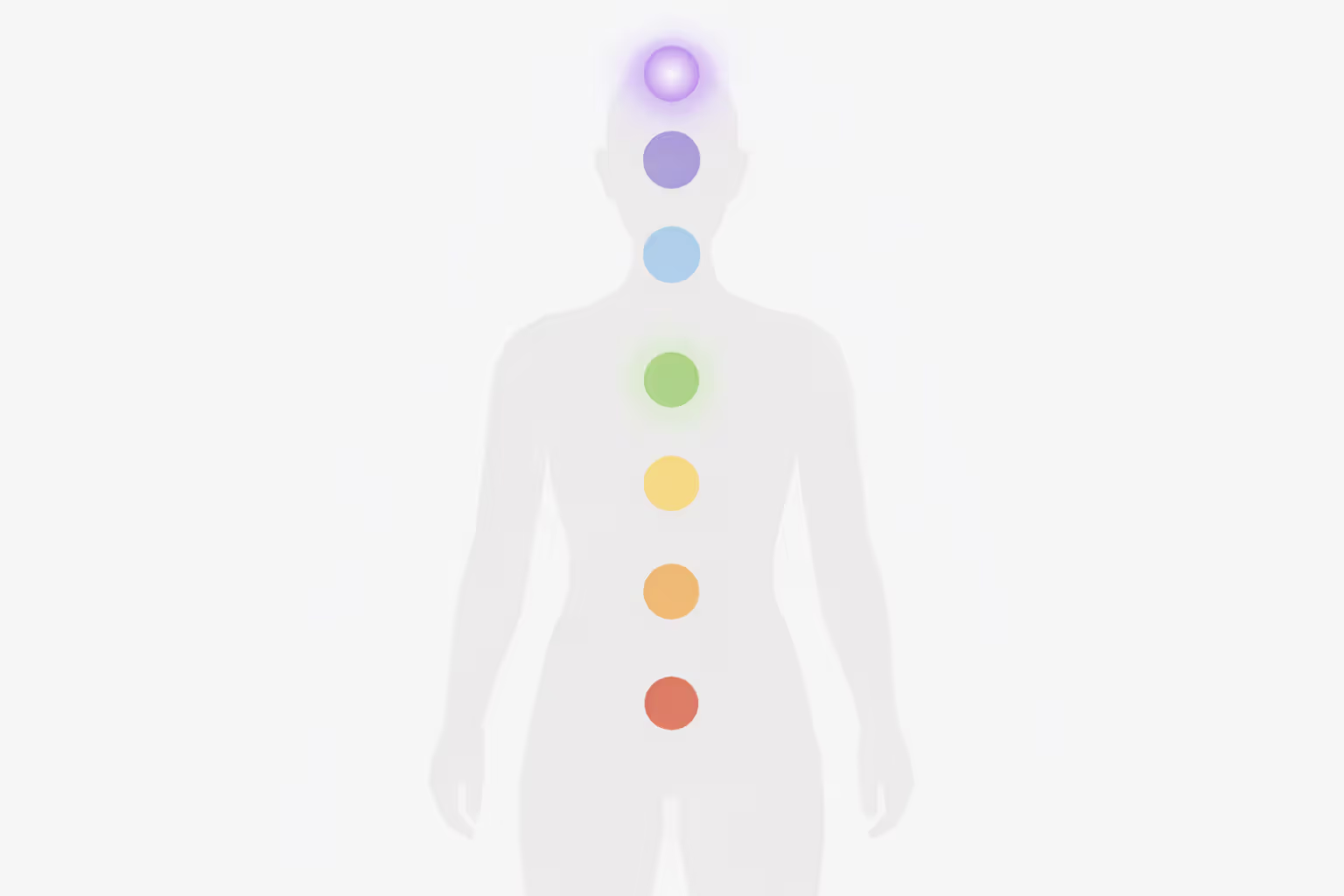
Place your finger on the very top of your skull — the spot where the fontanelle was soft when you were born. That's the crown chakra's physical location. Tradition assigns it either deep violet or luminous white; some lineages use both, with violet representing the active state and white representing full transcendence.
Here's what makes the sahasrara unique in the system: it has no element. Earth belongs to the root. Water to the sacral. Fire, air, and ether fill the solar plexus through the throat. The crown gets nothing — deliberately. Classical Hindu tantric texts position it beyond elemental reality altogether. Assigning it "thought" or "cosmic energy" came later, mostly from Western adaptations.
The visual symbol — a lotus with a thousand petals arranged in twenty layers of fifty — contains a hollow circle at its center. That circle represents shunya, the void. Not emptiness as absence, but emptiness as limitless potential. The bija (seed) mantra paired with it is "Om," treated not as a word but as the fundamental vibration underlying everything that exists.
How the Crown Chakra Connects to the Other Six Chakras
Author: Ava Mitchell;
Source: yogapennsylvania.com
Picture a seven-story building. Root chakra: the concrete slab and plumbing. Sacral: the ground-floor apartment where you actually live daily. Solar plexus: the electrical panel running your sense of agency. Heart: the central stairwell connecting upper and lower floors. Throat and third eye: the upper levels where expression and perception sharpen. The crown? It's the rooftop terrace with the open sky — spectacular, but completely useless if the stairwell is blocked on floor two.
This analogy matters because I've watched practitioners skip straight to crown work and pay for it. One yoga teacher I studied with in Sedona described a student who did ninety days of exclusively sahasrara-focused meditation. By week six, the student couldn't make simple decisions — what to eat, whether to go to work. She'd destabilized her solar plexus (personal will) by pouring all her energy upward without maintaining the lower centers.
The practical guideline energy workers repeat: dedicate roughly twice as much practice time to your lower four chakras as to the crown. The sahasrara functions best as a response to foundation, not a substitute for it.
The privilege of a lifetime is to become who you truly are.
— Carl Jung, psychiatrist and psychoanalyst
Blocked vs. Open Crown Chakra — Signs to Watch For
Spotting crown chakra imbalance takes some honesty. A blocked sahasrara doesn't announce itself with a flashing sign. It creeps in as a slow erosion of meaning — you go through routines, check boxes, but nothing feels connected to anything larger. An overactive crown, paradoxically, can feel like breakthrough while quietly wrecking your relationships and daily functioning.
The comparison below maps out how each state actually shows up:
| Aspect | Blocked Crown Chakra | Overactive Crown Chakra | Balanced Crown Chakra |
| Physical signs | Persistent fatigue no amount of sleep fixes, mental fog, tension or dull ache at the skull's apex | Hypersensitivity to light and sound, insomnia with a racing mind, feeling electrically "on" at all hours | Consistent energy throughout the day, deep and restorative sleep, sharp mental focus |
| Emotional tendencies | Flat cynicism, a sense that spirituality is pointless, emotional numbness masquerading as realism | Cold detachment from loved ones, inflated sense of spiritual rank, dismissing anyone who disagrees as "lower vibration" | Genuine compassion that doesn't drain you, comfortable sitting with ambiguity and paradox |
| Behavioral patterns | Hardcore materialism as identity, reflexive dismissal of anything non-physical, avoidance of silence or introspection | Compulsive retreat attendance, meditating three hours daily while ignoring overdue bills, cycling through spiritual teachers every few months | Fully participating in ordinary life — groceries, taxes, friendships — while holding a quiet awareness of deeper currents |
| Relationship to purpose | "What's the point?" on repeat, existential flatness that no achievement resolves | Grandiose narratives about being chosen, destined, or uniquely gifted spiritually | A settled trust that doesn't need constant external validation or dramatic mystical experiences |

Author: Ava Mitchell;
Source: yogapennsylvania.com
That middle column deserves a second look. An overactive crown feels incredible from the inside. You're certain you've tapped into something real. Meanwhile, your partner hasn't had a genuine conversation with you in weeks, and your coworkers think you've joined a cult. If three people in your life independently express concern about your spiritual intensity, treat that data seriously.
Crown Chakra Opening Symptoms Most People Misunderstand
Instagram infographics paint crown chakra activation as a fireworks display — beams of white light, cosmic downloads, instant knowing. The lived experience is far less cinematic.
Genuine crown chakra opening symptoms tend toward the subtle. A pressure or tingling at the top of the head that comes and goes during quiet moments. Pockets of mental clarity that arrive uninvited — you're washing dishes and suddenly see a problem from a completely new angle. A brief softening of the boundary between your sense of self and your surroundings, not dramatic ego death but a gentle blurring, like the edges of a watercolor painting. Dreams that feel layered with meaning and linger into the morning.
Now here's the critical distinction almost nobody makes clearly enough. Dissociation and spiritual opening can look alike from the outside. Both involve a shift in your normal sense of self. But they move in opposite directions. A genuine crown opening leaves you feeling more present afterward — colors seem richer, your body feels more inhabited, conversations land differently. Dissociation does the reverse. You feel removed, foggy, like watching your life through a window. If you walk away from a meditation session unable to track a simple conversation or feel like the room isn't quite real, that's your nervous system flagging overwhelm, not your sahasrara expanding.
One more myth worth dismantling: the idea that authentic opening is always blissful. Several long-term practitioners I've spoken with describe a phase of discomfort — old grief bubbling up without a clear trigger, a temporary period where their sense of identity felt uncertain, beliefs they'd held for decades suddenly seeming hollow. This reorganization phase is normal and typically passes within days to a couple of weeks. If it persists beyond that or starts interfering with your ability to function, seek out a therapist familiar with contemplative practices or an experienced energy worker. Spiritual growth and professional mental health support belong together.
How to Balance Your Crown Chakra — 4 Practical Methods
The question of how to balance the crown chakra almost always comes down to frequency over intensity. A ten-minute daily practice outperforms a weekend workshop every time — not because workshops are useless, but because the sahasrara responds to steady, repeated invitation rather than a single dramatic push.
Crown Chakra Meditation (Guided Visualization Technique)
Author: Ava Mitchell;
Source: yogapennsylvania.com
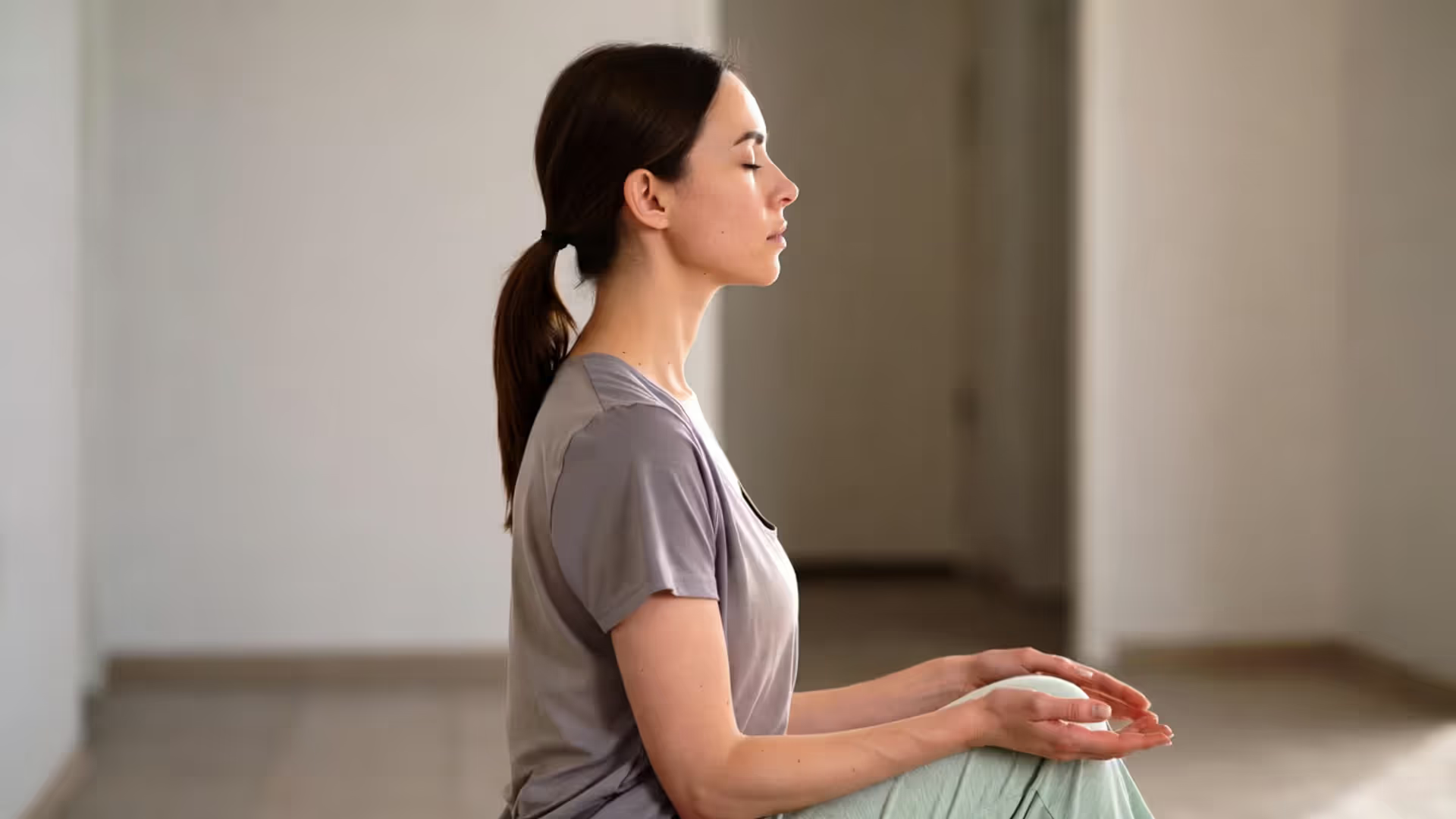
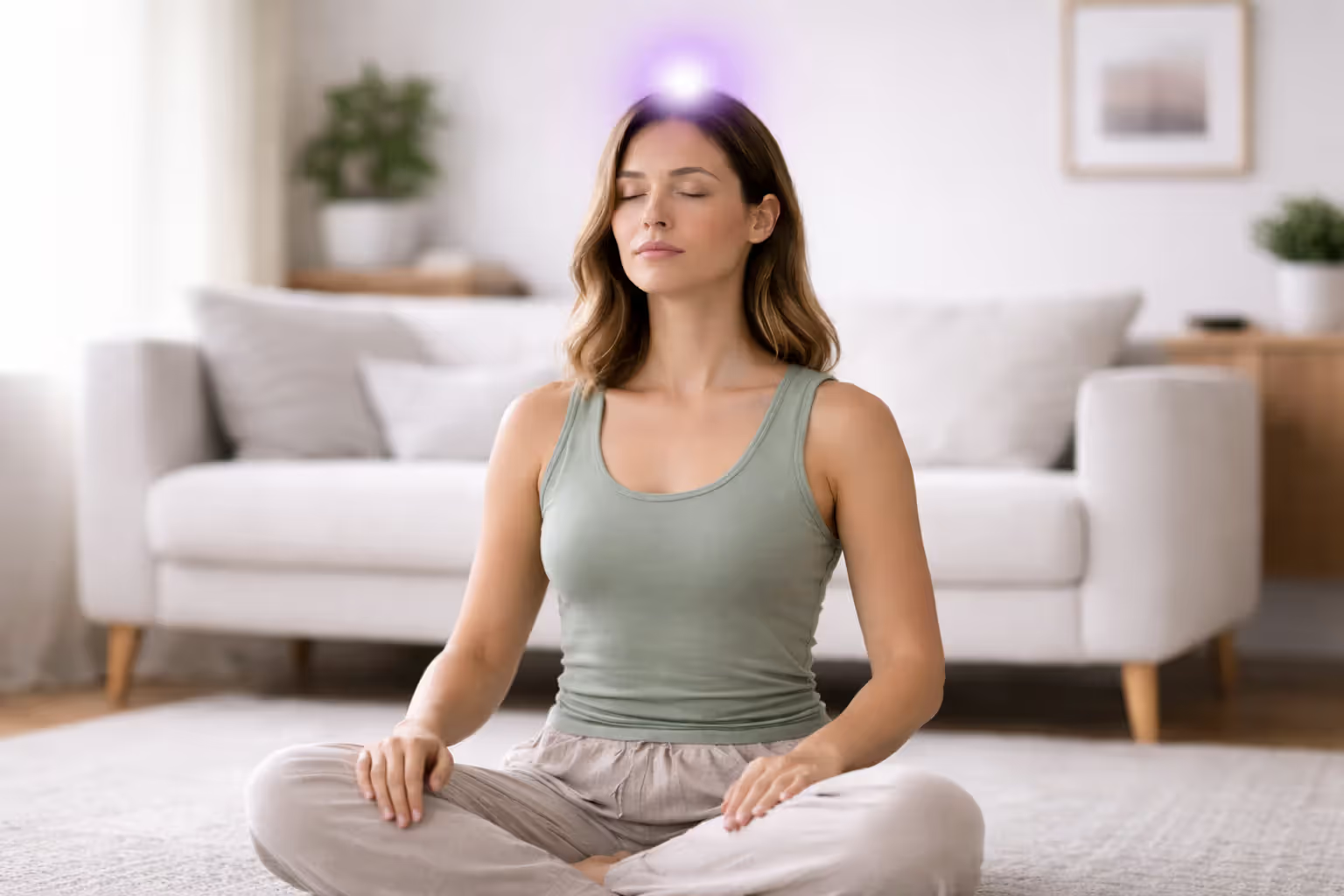
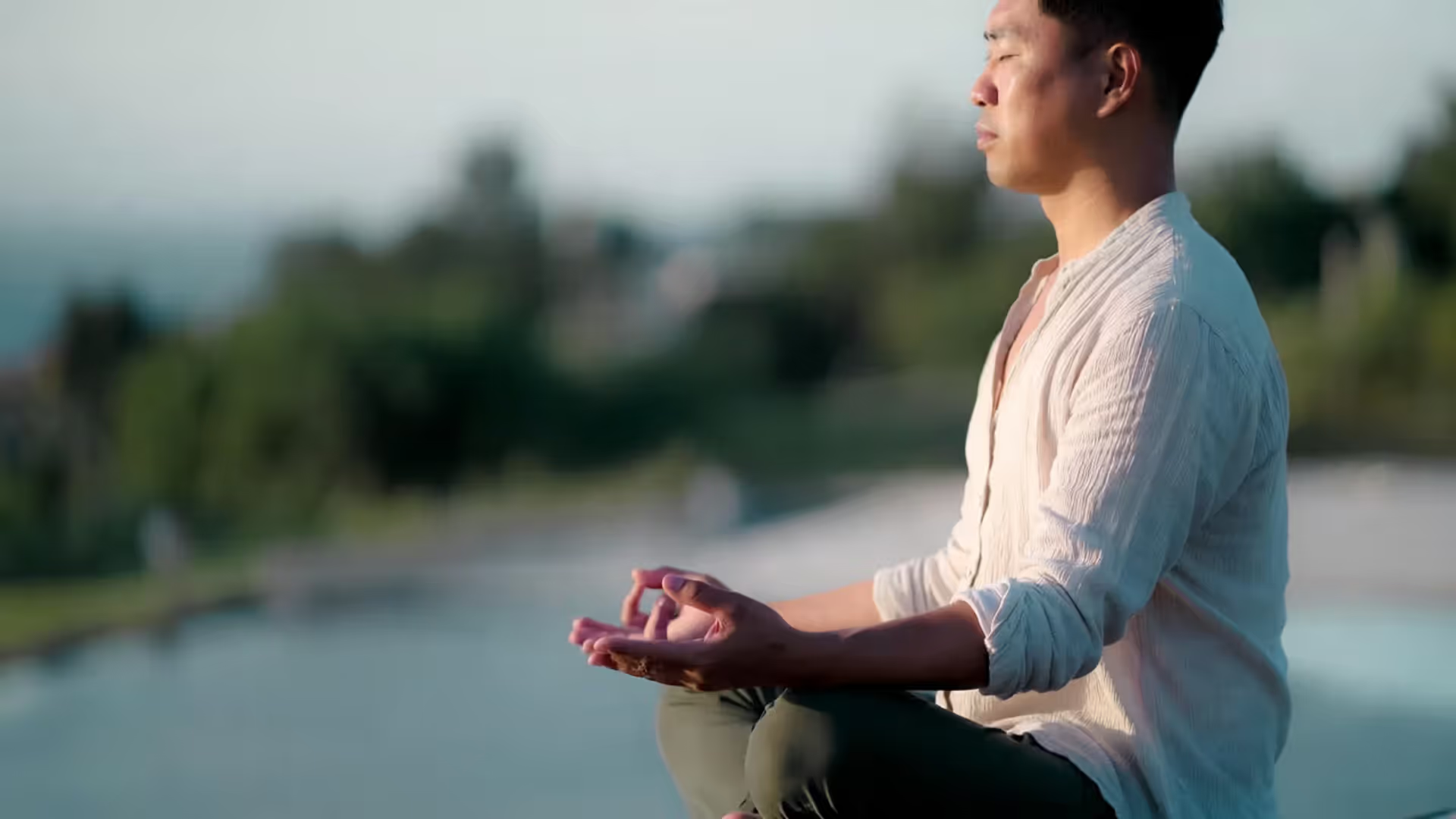
You don't need a special cushion, a singing bowl, or a guided app for effective crown chakra meditation. Here's a simple ten-minute protocol I've used and recommended for years:
Start seated — chair, cushion, floor, doesn't matter — with your spine stacked naturally, not rigidly. For the first ninety seconds to two minutes, just track your breathing. Don't control it. Notice where you feel the breath most vividly: nostrils, chest, belly. This anchoring phase isn't a warm-up — it's the foundation that keeps the rest of the meditation from becoming a dissociative float.
Once you notice your thinking has slowed even slightly, shift your attention to the very top of your skull. Visualize a sphere of soft violet or white light resting just above your head, about the size of a grapefruit. On each inhale, imagine that sphere sending a gentle pulse of light downward through the crown and into the center of your brain. On each exhale, let that light diffuse down your spine and through your limbs. Don't force a vivid picture — even a vague warmth or sense of openness at the top of your head counts.
Continue for five to seven minutes. Then — and people consistently skip this part — spend the final minute bringing attention to the base of your spine. Feel the weight of your body against whatever you're sitting on. Wiggle your toes. This grounding close prevents the spacey, unfocused feeling that gives crown meditation a bad reputation.
Three sessions per week is the minimum for noticeable shifts. Five is better. But a scattered daily five-minute sit beats an intense thirty-minute session done twice a month.
Yoga Poses That Target the Sahasrara
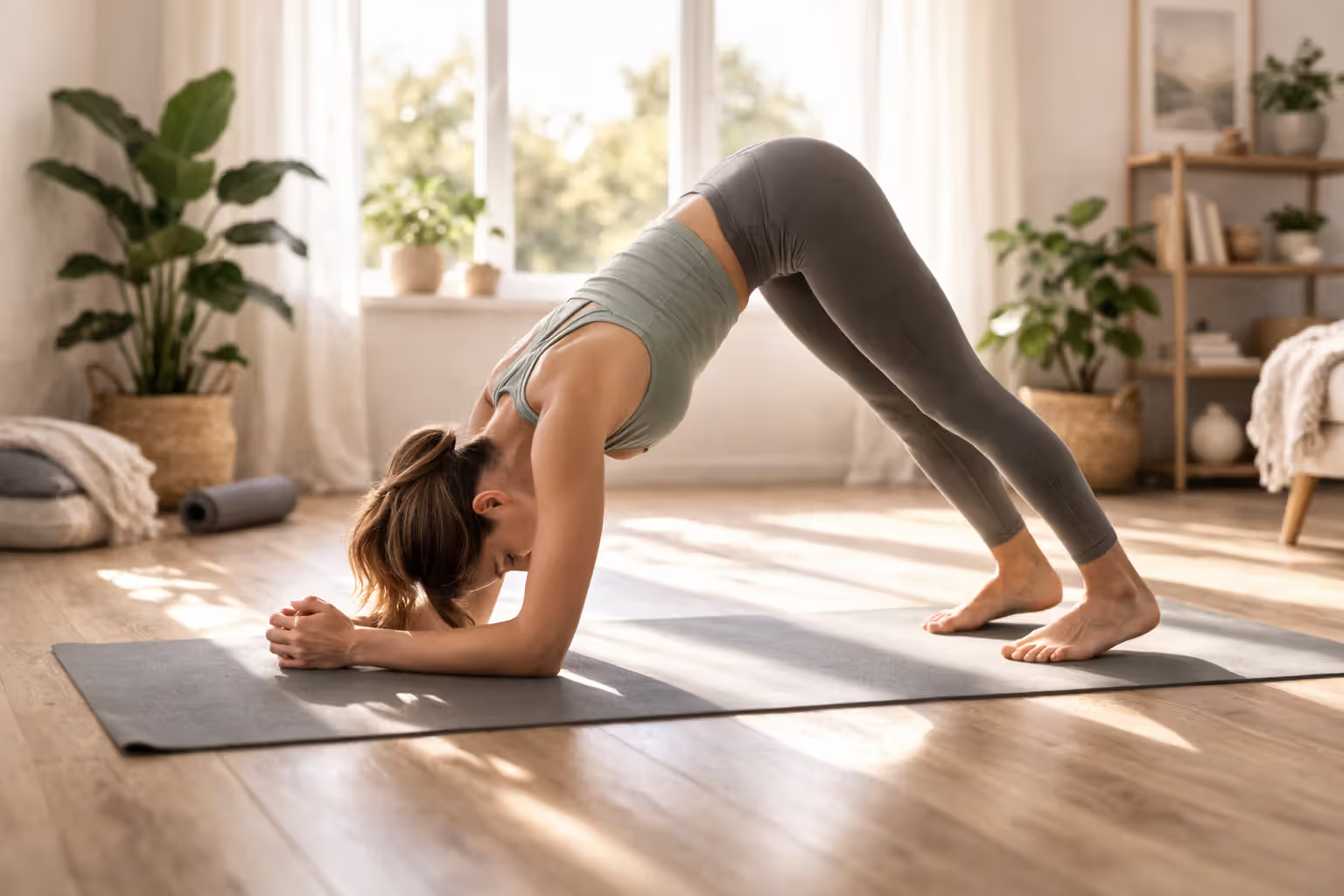
Certain crown chakra yoga poses channel energy toward the top of the head through inversion, stillness, or upward extension.
Author: Ava Mitchell;
Source: yogapennsylvania.com
Four stand out for their directness and accessibility:
- Headstand (Sirsasana) places your crown directly against the ground — literally reversing the energetic flow. If you can hold a freestanding headstand for one to three minutes, it's the most potent physical practice for the sahasrara. But ego injuries from forcing headstand before you're ready are common and counterproductive. Supported headstand against a wall, or Dolphin Pose (forearms down, hips high), offers eighty percent of the benefit with a fraction of the risk.
- Lotus Pose (Padmasana) works differently — the locked leg position creates a stable energetic circuit at the base that naturally encourages prana to rise upward through the central channel. Even half-lotus achieves this if full lotus irritates your knees.
- Tree Pose (Vrksasana) is underrated for crown work. The standing foot roots down while the crown of your head reaches up, physically embodying the balance between grounding and transcendence that the sahasrara demands.
- Savasana (Corpse Pose), done with deliberate crown awareness after an active sequence, allows integration. Lie flat, place your attention at the top of your head, and simply observe for three to five minutes. Many practitioners report that their deepest crown experiences happen here, not during inversions.
Hold active poses for a minimum of five full breath cycles. Shorter than that and you're performing the shape without engaging the energy.
Affirmations to Repeat Daily
Crown chakra affirmations misfire when they're too aspirational for where you actually are. Saying "I am one with all of creation" while anxious about a medical bill doesn't create spiritual alignment — it creates internal conflict. Effective affirmations sit in the gap between your current state and where you're headed. They should feel like a stretch, not a lie.
Use them during the visualization meditation described above, repeat them quietly during your morning coffee, or cycle through them mentally while walking. The next section provides seven specific phrases with context on why each one targets a distinct crown chakra pattern.
Supporting Practices — Diet, Silence, and Nature Exposure
Three habits influence crown chakra balance more than most formal practices — and none of them require a yoga mat.
Eating lighter during periods of intensive sahasrara work isn't about spiritual purity diets or caloric restriction. It's pragmatic. Heavy, processed meals — particularly those high in refined sugar and alcohol — noticeably dampen meditative clarity. One practitioner described it to me as "trying to tune a radio while someone's running a blender." You don't need to become a raw vegan. Just notice which foods leave you mentally sharp and which leave you sluggish, then adjust during periods when crown chakra work is your focus. Most people notice improved meditation quality within five to seven days of cutting processed sugar alone.
Deliberate silence — twenty minutes minimum, without podcasts, music, television, or phone scrolling — gives the sahasrara space to integrate. Think of it as the mental equivalent of fasting. The crown processes transcendence and meaning, but it can't do that while competing with forty browser tabs of input. A quiet morning walk or sitting on your porch without earbuds counts.
Time in expansive natural settings — anywhere with a broad horizon line like an ocean shore, a mountain ridge, or even a wide-open field — naturally evokes the quality the crown chakra governs. You're physically experiencing vastness, and the sahasrara responds. A national park trip is ideal, but a thirty-minute walk through a local park with mature trees still shifts the nervous system measurably compared to staying indoors.
7 Crown Chakra Affirmations You Can Use Today
Each phrase below addresses a specific type of crown chakra blockage or imbalance. Rather than repeating all seven robotically, identify the two or three that provoke a reaction — resistance, skepticism, or a tug of recognition — and focus on those. Discomfort with a particular affirmation often signals the exact spot where your practice needs attention.
- "I trust what I cannot see or control." Targets the rigid, cynical closure of a blocked crown. This doesn't ask for naïve faith. It asks for tolerance of uncertainty — a core sahasrara quality. If you instinctively rolled your eyes reading it, that's information.
- "My understanding doesn't have to be complete for it to be real." Aimed at intellectualizers who won't accept an experience unless they can diagram it. A blocked crown frequently hides behind the demand for proof. This phrase loosens that grip without dismissing the value of rational thought.
- "I am connected to something larger, and that connection doesn't require effort." The operative word is "effort." People with overactive crowns strain toward transcendence as if spiritual connection is a performance review. This affirmation redirects toward receptivity.
- "I release the need to be the most spiritual person in the room." Deliberately confrontational. Spiritual competitiveness — comparing meditation streaks, name-dropping teachers, subtly ranking yourself above "less awakened" people — is one of the sneakiest crown chakra traps. If this affirmation makes you defensive, you've found your work.
- "My daily life is part of my spiritual path, not separate from it." Challenges the compartmentalization habit: meditate in the morning, gossip at lunch, practice loving-kindness in the evening, road-rage on the commute home. The crown chakra integrates everything. This affirmation reminds you there's no "spiritual mode" toggle switch.
- "I welcome stillness without needing it to produce an experience." Many seasoned meditators unconsciously treat each session as a transaction — put in the time, receive the revelation. The sahasrara opens precisely when you stop keeping score. This phrase retrains that expectation.
- "I am both a physical being and something beyond the physical." Holds the essential paradox of crown chakra work without resolving it. You don't transcend the body by leaving it. You transcend by being fully in it while simultaneously recognizing you aren't limited to it. Simple to read, genuinely difficult to embody.
Common Mistakes People Make When Working on the Crown Chakra
These errors repeat across experience levels, from first-year meditators to people who've done ten-day silent retreats. Recognizing them early saves enormous amounts of wasted effort.
Skipping straight to the sahasrara without stabilizing below it. By far the most common misstep. A student once told me she'd been doing crown-focused meditation for six months while dealing with active financial crisis, an unstable living situation, and unresolved trauma from childhood. None of those are crown chakra issues — they're root, sacral, and solar plexus territory. Addressing the sahasrara while those foundations crumble is like installing a skylight on a building with no walls. Step back. Stabilize the lower four centers first. The crown will still be there when you're ready.
Mistaking dissociation for transcendence. This one causes real harm. Genuine crown activation makes the world sharper, more vivid, more present. Dissociation makes it flat, distant, unreal. After an authentic sahasrara experience, you feel settled in your body — you might notice textures, sounds, and colors with unusual clarity. After a dissociative episode, you feel removed from your body, like operating it by remote control. If post-meditation you struggle to follow a conversation or feel like you're observing yourself from outside, stop the practice and do grounding work — barefoot walking, cold water on your wrists, engaging your five senses deliberately — before your next session.
Before enlightenment; chop wood, carry water. After enlightenment; chop wood, carry water.
— Zen proverb
Believing one breakthrough permanently opens the chakra. The crown chakra doesn't have a latch. It's closer to a practice like flexibility: maintain it regularly and it stays accessible; neglect it for three months and you're starting over from a significantly tighter baseline. People who chase a single peak experience and then coast inevitably feel disillusioned when the sense of connection fades.
Over-interpreting physical sensations. Tingling at the crown during meditation gets treated as definitive proof of energetic awakening in many online communities. Sometimes it is energy moving. Sometimes it's the physiological effect of sitting very still with concentrated attention — blood flow patterns shift, nerve endings become more perceptible. Attaching enormous spiritual significance to every physical sensation during practice creates a distraction loop that actually impedes deeper work. Notice sensations, acknowledge them, and return to the practice.
Going it alone when professional guidance would help. Crown chakra work occasionally surfaces buried emotional material — trauma, grief, identity questions that feel destabilizing rather than clarifying. Working with a therapist who understands contemplative practice, or an experienced energy healer with a solid reputation, isn't a sign of spiritual failure. The most effective practitioners I know have a professional support network, not just a personal practice.
FAQ — Crown Chakra Questions Answered
Patience and self-honesty are the two currencies the crown chakra actually accepts. Build from the ground up, show up to practice without demanding fireworks, and the sahasrara will respond — not on your schedule, but on the schedule that produces lasting transformation rather than temporary highs. For most practitioners, accepting that timeline turns out to be the real practice.
Related Stories
Read more
Read more


The content on yogapennsylvania.com is provided for general informational and inspirational purposes only. It is intended to share yoga tips, meditation practices, wellness guidance, retreat experiences, and lifestyle insights, and should not be considered medical, therapeutic, fitness, or professional health advice.
All information, articles, images, and wellness-related materials presented on this website are for general informational purposes only. Individual health conditions, physical abilities, wellness goals, and experiences may vary, and results can differ from person to person.
Yogapennsylvania.com makes no representations or warranties regarding the accuracy, completeness, or reliability of the content provided and is not responsible for any errors or omissions, or for decisions or actions taken based on the information presented on this website. Readers are encouraged to consult qualified healthcare or wellness professionals before beginning any new yoga, meditation, or fitness practice.