
Heart Chakra (Anahata): Meaning, Blockage Symptoms, and How to Open It
Heart Chakra (Anahata): Meaning, Blockage Symptoms, and How to Open It

A practice-grounded guide to the energy center that governs love, grief, boundaries, and the courage to stay emotionally open.
Developed by a certified yoga instructor and wellness editor with over a decade of experience in breathwork, somatic practice, and trauma-informed teaching. Traditional yogic frameworks and evidence-based psychology are clearly distinguished throughout.
What the Heart Chakra Represents in the Chakra System
Fourth in the classical seven-center map, the heart chakra sits at the exact midpoint — three centers below (root, sacral, solar plexus) dealing with survival, desire, and personal power; three above (throat, third eye, crown) dealing with expression, perception, and transcendence. Anahata is the hinge. It converts raw self-interest into something relational: the capacity to love without losing yourself, to grieve without shutting down, to forgive without pretending nothing happened.
Physically, the chakra maps to the center of the chest — sternum level, between the lungs, near the cardiac plexus. Its element is air, which carries a useful metaphor: air cannot be held too tightly or it escapes, but without containment it dissipates. Healthy heart energy works the same way. Too much grip and you suffocate relationships. Too little structure and you dissolve into everyone else’s needs.
Anahata Chakra Meaning and Symbolism
The Sanskrit word Anahata translates roughly to “unstruck” or “unhurt” — a reference to sound that arises without two objects colliding. The implication is specific: beneath accumulated wounds, defenses, and disappointments, there exists a layer of the self that remains undamaged. Heart chakra work isn’t about creating love from scratch. It’s about clearing enough debris to access what was never actually broken.
Traditional symbolism includes a twelve-petaled lotus and the seed mantra YAM (pronounced “yahm”). The color association is green — not the vivid emerald of popular graphics, but a softer, forest-like green that evokes growth, renewal, and living systems.
Vulnerability is not weakness; it’s our greatest measure of courage.
— Brené Brown, research professor and author
Emotional Themes: Love, Boundaries, Forgiveness, and Grief
The heart chakra gets reduced to “love” in most popular treatments, which flattens its actual territory. Anahata governs at least four distinct emotional capacities:
- Love — not just romantic affection but the broader ability to extend warmth, care, and goodwill toward others and yourself.
- Boundaries — the often-overlooked counterpart of love. An open heart without boundaries becomes a doormat. Genuine heart energy includes the ability to say “I care about you, and this behavior isn’t acceptable.”
- Forgiveness — releasing resentment not because the other person deserves it, but because carrying it corrodes you. Forgiveness in the Anahata sense doesn’t require reconciliation or trust restoration — just the internal release of the debt.
- Grief — the heart chakra is where loss lives. Suppressing grief doesn’t protect the heart; it armors it, making every subsequent emotional connection harder to reach.
A well-functioning Anahata holds all four simultaneously. That’s the real skill — staying open enough to love while structured enough to protect yourself.
Heart Chakra Blockage Symptoms: Emotional, Behavioral, and Physical Patterns
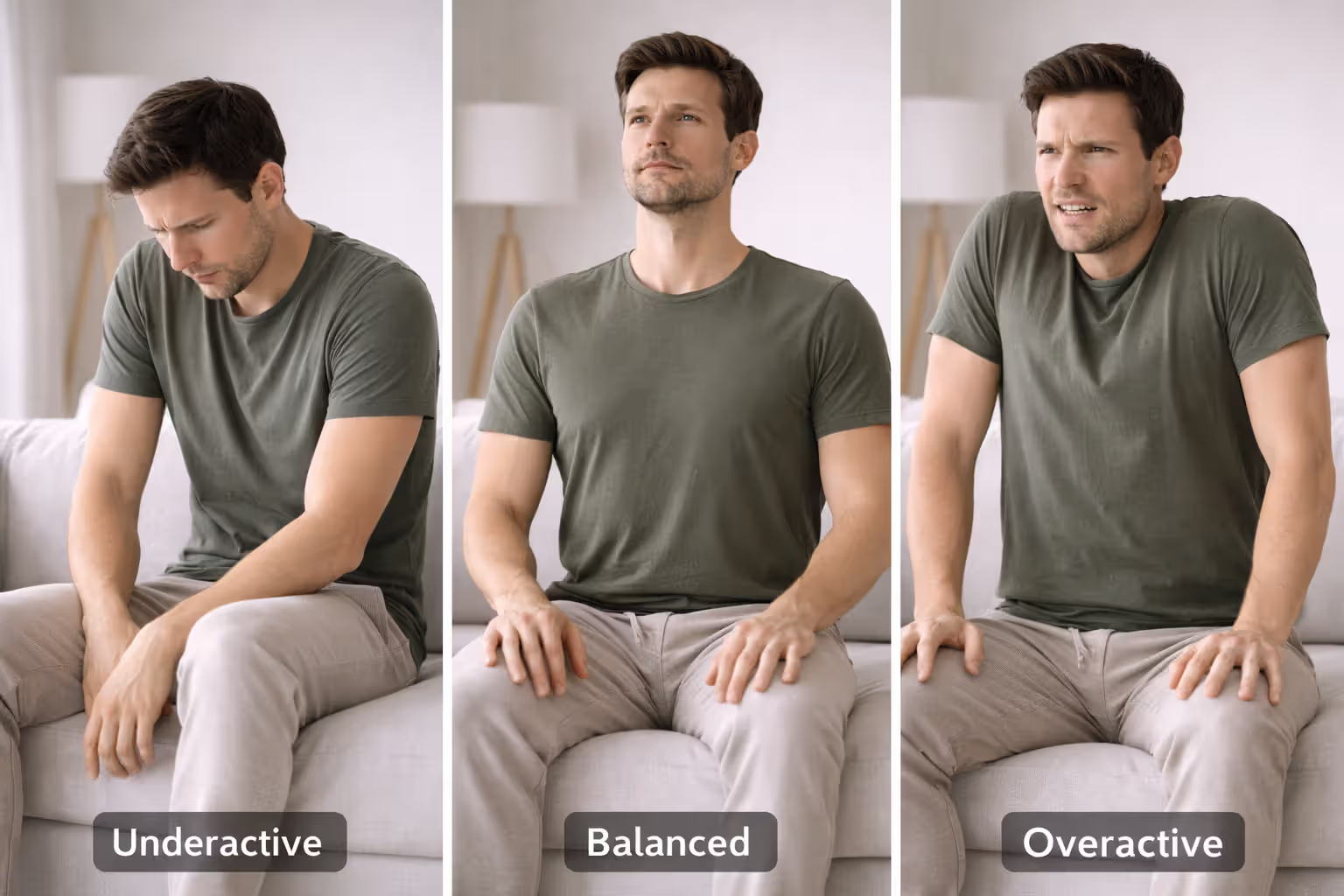
Imbalance here doesn’t present as a single problem. It shows up as a pattern — either withdrawal (underactive) or flooding (overactive) — and the same person can exhibit both depending on context. Someone might be emotionally walled off at work but overwhelmingly codependent in romantic relationships.
| Area | Underactive | Overactive | Balanced |
| Emotional | Numbness, cynicism, difficulty feeling joy or connection | Overwhelmed by others’ emotions, crying at everything, emotional enmeshment | Feels deeply without drowning; recovers from sadness without suppressing it |
| Relationships | Isolates, pushes people away, avoids intimacy | Clings, sacrifices self for partner, can’t tolerate separation | Attaches securely; can be close without losing identity |
| Boundaries | Rigid walls disguised as “independence” | No boundaries; says yes to everything; resents it later | Clear limits communicated with warmth, not hostility |
| Physical | Chest tightness, hunched posture, shallow breathing | Heart racing without physical cause, chest pressure during emotional talks | Relaxed chest, full breathing, stable heart rate under moderate stress |
Author: Lily Patterson;
Source: yogapennsylvania.com
Subtle Emotional Signs You Might Miss
The obvious signs — loneliness, codependency, inability to forgive — get discussed frequently. The subtler ones often go unnoticed:
- A reflexive “I’m fine” that fires before you’ve actually checked how you feel.
- Discomfort receiving compliments, gifts, or help — not from modesty, but from a belief that you don’t deserve them.
- Intellectual engagement with people but persistent emotional distance — you can analyze a relationship but can’t feel it.
- Watching sad movies or hearing emotional music and noticing you physically brace against the feeling rather than letting it land.
- A pattern of choosing partners who are emotionally unavailable, then interpreting their distance as confirmation that love isn’t safe.
These aren’t dramatic. They’re habitual. And habits are often invisible until someone names them.
Physical Sensations vs. Medical Conditions
Chest tightness, shallow breathing, and a sensation of heaviness around the sternum are commonly reported during heart chakra work. These experiences are real — but they overlap with medical conditions that require professional evaluation.
Safety note: Chest pain, heart palpitations, persistent shortness of breath, or pressure that radiates to the arm, jaw, or back need medical attention — not a yoga class. If you experience any of these, see a physician first. Chakra practices are complementary wellness tools, not diagnostic instruments or treatments. Rule out cardiopulmonary and anxiety disorders before attributing symptoms to energy imbalance.
How to Open the Heart Chakra Safely and Gradually
The phrase “open your heart” sounds poetic, but doing it carelessly can destabilize people who armored up for good reasons. A child who learned to shut down emotionally because vulnerability wasn’t safe at home didn’t make an error — they adapted. Opening the heart chakra means updating that adaptation, not demolishing it overnight.
If you’re wondering how to open the heart chakra without overwhelming yourself, the sequence matters: regulate the nervous system first, then introduce gentle self-inquiry, then expand into relational practice.
Nervous System First: Why Safety Precedes Openness
Your chest won’t soften if your body still reads openness as danger. Before any heart-focused practice, the nervous system needs to register baseline safety.
- Extended exhale breathing (4-7): Inhale four counts, exhale seven. The lengthened outbreath stimulates the vagus nerve and activates the parasympathetic branch — the “rest and connect” state. Six rounds minimum. Do this before attempting any emotionally charged practice.
- Self-touch grounding: Place one hand on your chest, one on your belly. Feel the warmth and weight of your own hands. This simple gesture activates the body’s self-soothing circuitry and signals to the nervous system that you are the source of safety, not dependent on someone else providing it.
- Orienting to the room: Before going inward, look around. Name five things you see. This keeps the prefrontal cortex online and prevents dissociation during emotional work — a common issue for people with trauma histories.

Author: Lily Patterson;
Source: yogapennsylvania.com
Micro-Practices for Daily Emotional Expansion
You can open the heart chakra naturally through accumulated small experiences, not dramatic breakthroughs. Practical micro-practices:
- Gratitude with specificity: Not “I’m grateful for my family” — that’s too abstract. Instead: “I’m grateful my sister texted to check on me yesterday.” Specificity forces the brain to re-experience the positive moment rather than just categorizing it.
- One genuine compliment daily: Not flattery. Actual observation. “Your presentation was clear” rather than “You’re amazing.” Precision in kindness builds the habit of noticing goodness in others without performing generosity.
- 30-second emotion naming: Twice daily, pause and name the emotion you’re feeling with as much precision as possible. “Anxious” is a start. “Anxious about the call with my boss because I’m afraid of being dismissed” is better. Naming emotions with granularity reduces their intensity — research on affect labeling consistently supports this.
The wound is the place where the Light enters you.
— Rumi, Persian poet and mystic
Heart Chakra Meditation: A 7-Minute Guided Practice
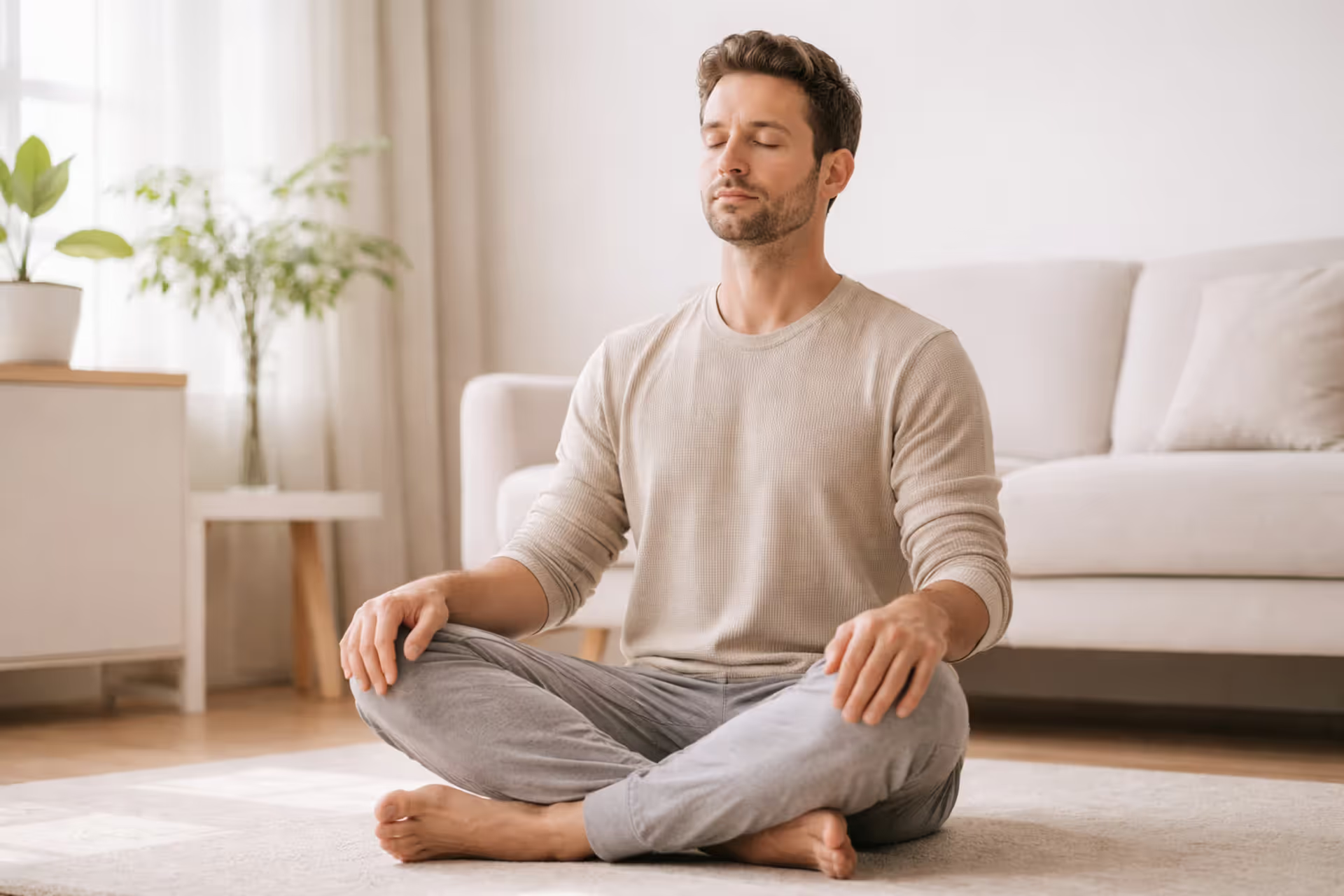
Sit comfortably — chair or floor. Hands resting on your thighs or one hand on your chest. Spine tall but not rigid.
0:00–2:00 — Close your eyes gently. Take three breaths, each exhale progressively longer. On the third exhale, let awareness descend from your head into your chest. Don’t search for anything specific. Just arrive. Notice whatever is present — warmth, heaviness, tightness, blankness. Every starting point counts.
2:00–4:00 — Visualize a soft green glow at the center of your chest. Not a spotlight — more like sunlight filtering through a canopy of leaves. With each inhale, the light expands slightly outward. With each exhale, it deepens in warmth. If visualization isn’t accessible, focus instead on the physical sensation of your heartbeat — even a faint pulse is enough of an anchor.
4:00–6:00 — Introduce a breath-linked phrase. Inhale: “I am safe to feel.” Exhale: “I am safe to love.” Let the words ride the breath without force. If a specific person, memory, or emotion surfaces, let it be present without pushing it away or pulling it closer. Observe it the way you’d watch weather from a window.
6:00–7:00 — Release the visualization and the phrases. Sit in silence for the final minute. Notice what has shifted — or hasn’t. Both outcomes are legitimate. Take one full breath, open your eyes, and reorient to the room before standing.
If meditation increases anxiety: Keep eyes half-open with a downward gaze. Shorten to three minutes. Replace visualization with physical focus — the sensation of your hands on your chest, the texture of fabric under your fingers. If distress persists across sessions, pause and consult a therapist. Heart-centered meditation can surface grief or trauma unexpectedly, and professional support makes that process safer.
Heart Opening Yoga Poses for Anahata Activation
Heart opening yoga poses share a common principle: they expand the front of the chest while releasing the muscles that pull the shoulders forward and collapse the ribcage. The effect isn’t just mechanical — opening the chest changes breathing patterns, which shifts nervous system tone.
| Pose | What It Opens | Easier Variation | Cautions |
| Camel (Ustrasana) | Deep chest and throat expansion | Hands on lower back, tuck toes for height | Low back compression — enter slowly; skip with disc issues |
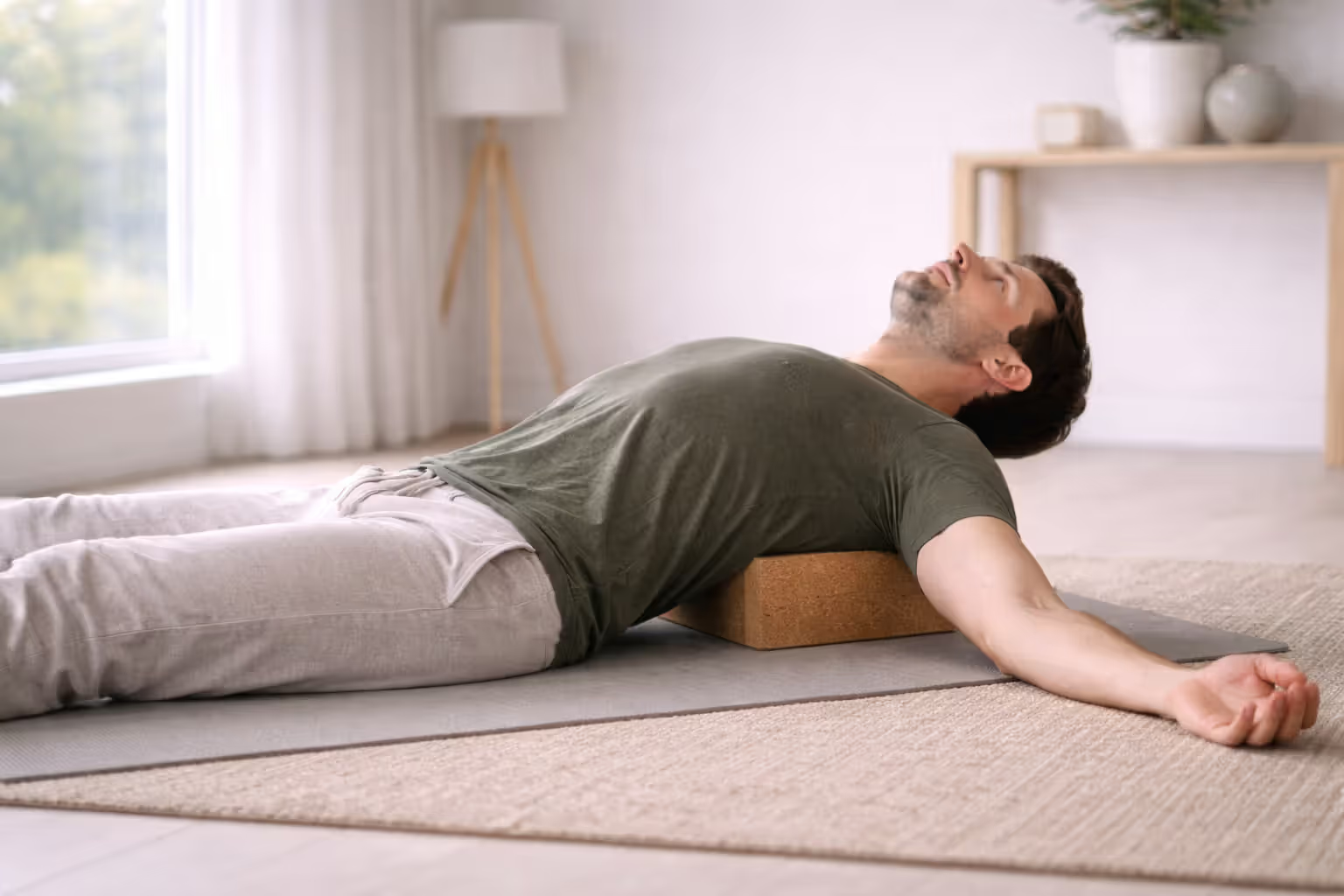
| Supported Fish | Entire front of chest and throat | Block on medium height under upper back | Neck strain if block is too high; adjust to comfort |
| Bridge (Setu Bandha) | Chest via natural chin tuck | Block under sacrum for supported hold | Shoulder impingement — keep arms parallel, not clasped |
| Cobra (Bhujangasana) | Gentle chest lift, beginner-friendly | Keep elbows bent, hands under shoulders | Low back pain — press through palms, don’t sag into spine |
| Reclined Butterfly | Passive chest opening, restorative | Bolster lengthwise under spine; blankets under knees | Hip or groin sensitivity — elevate support under outer thighs |
| Puppy Pose (Anahatasana) | Chest and shoulder release with spinal extension | Walk hands forward only to comfortable depth | Shoulder injury — reduce depth; keep hips above knees |
Author: Lily Patterson;
Source: yogapennsylvania.com
10-Minute Anahata Sequence:
- Warm-Up (2 min): Cat-Cow, 8 rounds. On each cow (inhale), emphasize lifting the sternum and broadening the collarbones.
- Gentle Opening (3 min): Cobra — 3 rounds, holding 5 breaths each. Focus on lifting through the chest, not compressing the lower back.
- Deep Expansion (3 min): Supported Fish on a block — 90 seconds. Transition to Bridge — 2 rounds of 30 seconds.
- Integration (2 min): Reclined Butterfly with hands on heart. Three slow breaths. Notice the difference in chest spaciousness compared to when you started.
Heart Chakra Affirmations That Strengthen Compassion and Boundaries
Heart chakra affirmations go wrong when they focus exclusively on outward love while ignoring self-protection. “I love everyone unconditionally” sounds noble but can reinforce codependent patterns for people who already give too much. Effective Anahata affirmations balance openness with self-trust.
- I deserve the same kindness I extend to others.
- My heart can be open and my boundaries can be firm — both at once.
- I release resentment not to excuse harm, but to free myself.
- Grief is welcome here. It means I loved something real.
- I choose relationships that honor my presence, not just my usefulness.
- Receiving care doesn’t make me weak or indebted.
- I forgive at my own pace — no one else’s timeline applies.
- My compassion has limits, and those limits are healthy.
- I trust my heart’s signals, even when they’re inconvenient.
- Love that costs me my identity isn’t love — it’s erasure.
How to use them effectively:
- Select two or three that create mild internal friction — those mark the active growth edge.
- Speak them aloud after a full exhale, when the nervous system is most receptive.
- Pair each affirmation with one real action during the week. “I choose relationships that honor my presence” means evaluating one relationship this week through that lens — even briefly.
- Log a single line of evidence each evening. “Said no to covering an extra shift — felt guilty for ten minutes, then relief.” Pattern-level proof rewires belief faster than repetition alone.
Integrating Heart Energy Into Real Relationships
The mat prepares capacity. Relationships test it. Heart chakra work that stays on the meditation cushion remains theoretical.
Applied communication — three scenarios:
- With a partner: “When you canceled without telling me, I felt dismissed. I need a heads-up, even if plans change.” (Specific trigger → named feeling → concrete request. No accusation.)
- With a parent: “I love spending time with you, and I need the comments about my weight to stop. That’s a non-negotiable for me.” (Warmth and firmness coexisting — pure Anahata.)
- With yourself: “I’m noticing I want to say yes to this invitation even though I’m exhausted. I’m going to decline and not apologize for it.” (Internal boundary-setting — the hardest and most important kind.)
Forgiveness as a process, not a moment: Genuine forgiveness rarely happens in a single meditation. It tends to arrive in layers — you release 60% of the resentment, then something triggers the remaining 40%, and you work with that layer next. Expecting total forgiveness on demand is a setup for self-criticism. A more realistic frame: “I’m willing to move toward forgiveness, and I’ll let the timeline unfold.”

Author: Lily Patterson;
Source: yogapennsylvania.com
When to seek professional support: If heart chakra work consistently surfaces overwhelming grief, panic, flashbacks, or emotional flooding that doesn’t resolve within a reasonable window (20–30 minutes post-practice), work with a trauma-informed therapist. Deep heart opening can activate attachment wounds that benefit from professional containment rather than solo practice.
FAQ
Related Stories
Read more
Read more



The content on yogapennsylvania.com is provided for general informational and inspirational purposes only. It is intended to share yoga tips, meditation practices, wellness guidance, retreat experiences, and lifestyle insights, and should not be considered medical, therapeutic, fitness, or professional health advice.
All information, articles, images, and wellness-related materials presented on this website are for general informational purposes only. Individual health conditions, physical abilities, wellness goals, and experiences may vary, and results can differ from person to person.
Yogapennsylvania.com makes no representations or warranties regarding the accuracy, completeness, or reliability of the content provided and is not responsible for any errors or omissions, or for decisions or actions taken based on the information presented on this website. Readers are encouraged to consult qualified healthcare or wellness professionals before beginning any new yoga, meditation, or fitness practice.