
So Hum Meditation Step by Step: What the Mantra Means and Why It Works
So Hum Meditation: Mantra Meaning, Breathing Technique, and How to Practice

There's a reason So Hum keeps surfacing in yoga studios, meditation apps, and Ayurvedic wellness circles across the US — and it's not because it's trendy. The technique is among the oldest mantra-based practices still in active use, predating most of what you'll find in a modern meditation subscription by a few thousand years. It's also one of the simplest to learn, which makes it either the perfect entry point or the practice people dismiss as "too easy" before they've actually sat with it for longer than a week.
This guide covers where So Hum originates, what the words literally mean, how the practice works mechanically (step by step, not vaguely), what research says about its effects, and where most beginners quietly go wrong.
Where Does So Hum Come From and What Does It Actually Mean?
The so hum mantra meaning is deceptively straightforward. "So" translates from Sanskrit roughly as "that" — referring to the universal, the totality, whatever you'd call the thing larger than your individual self. "Hum" translates as "I" or "I am." Together: "I am that." Or, reversed: "That I am."
The phrase originates in the Upanishads — specifically the Isha Upanishad and the Hamsa Upanishad — texts composed somewhere between 800 and 200 BCE within the Vedantic philosophical tradition. It functions not as a prayer or a petition but as a recognition statement. You're not asking for anything. You're aligning your awareness with a claim about identity: that your individual consciousness and universal consciousness are not separate things.
The self is not something ready-made, but something in continuous formation.
— John Dewey, philosopher
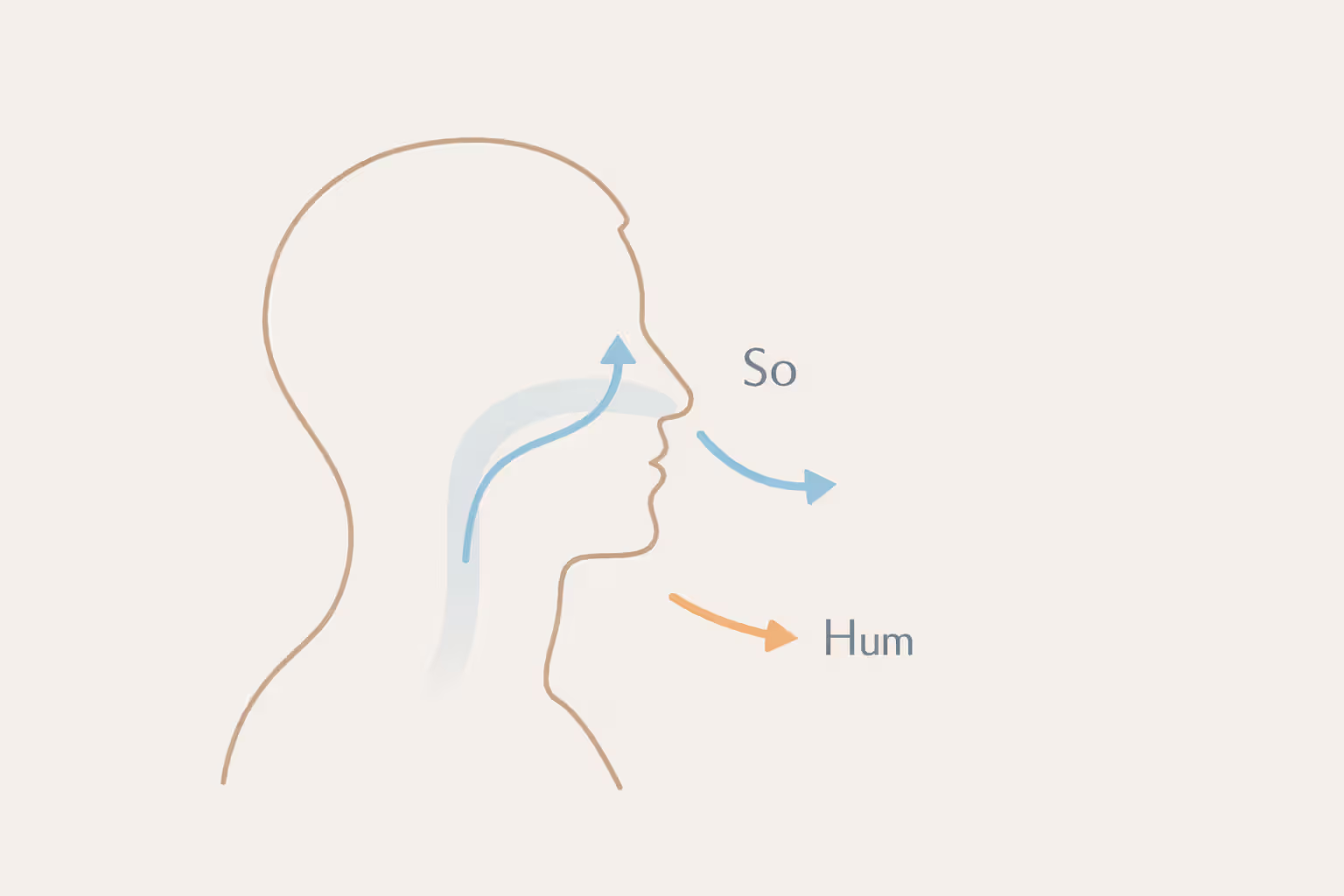
What makes So Hum distinct from many other mantras is its direct relationship to breathing. "So" maps to the inhale. "Hum" maps to the exhale. Listen closely to your own breath in a quiet room and you can almost hear it — the slight sibilance of air entering the nostrils ("sooo"), the soft vibration of it leaving ("hummm"). Some traditions teach that the breath itself is constantly reciting this mantra whether you're aware of it or not — roughly 21,600 times per day.
This isn't a religious invocation. There's no deity attached to it, no required belief system. It's a recognition practice built on a phonetic observation about human respiration. That's part of why it's traveled so well outside its original Hindu context and into secular meditation spaces.
Author: Lily Patterson;
Source: yogapennsylvania.com
How So Hum Differs from Other Mantra Meditation Styles
People searching for mantra meditation in yoga encounter a crowded field. So Hum is one option among many, and knowing how it compares helps you choose deliberately instead of defaulting to whatever a teacher happened to mention first.
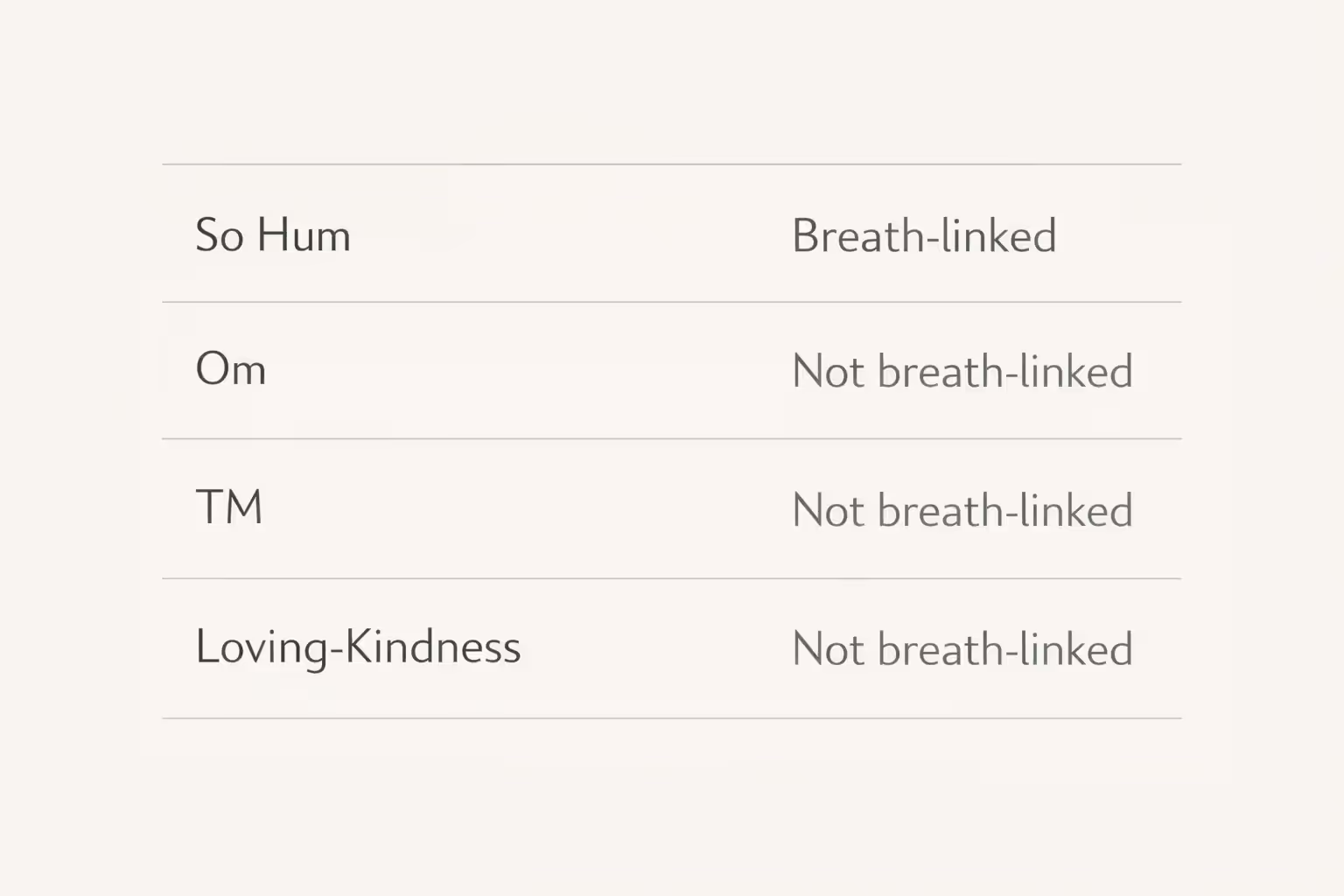
| Technique | Mantra Used | Breath-Linked? | Beginner Difficulty | Primary Effect | Typical Session Length |
| So Hum | "So" (inhale) / "Hum" (exhale) | Yes — directly paired with each breath cycle | Low — natural rhythm, no timing complexity | Calm focus, identity dissolution, nervous system regulation | 10–20 minutes |
| Om (Aum) | "Aaaaauuuummm" — single sustained tone | Optional — can be chanted on exhale or independent | Low — but vocalized, which some find awkward in shared spaces | Vibrational resonance, grounding, mental clearing | 5–15 minutes |
| Transcendental Meditation (TM) | Personalized mantra assigned by certified teacher | No — mantra floats independently of breath | Low technically, but requires paid instruction ($980+) | Deep rest, stress reduction, research-backed | 20 minutes, twice daily |
| Loving-Kindness (Metta) | Phrases like "May I be happy, may I be safe" | No — phrase-based, not breath-synced | Medium — requires emotional engagement that resists some people | Compassion cultivation, reduced hostility, social connectedness | 15–25 minutes |
| Silent Mindfulness (Vipassana-style) | None — attention placed on sensations or breath | Observational — watches breath but doesn't use mantra | Medium to high — no anchor point, more mental wandering | Insight, equanimity, metacognitive awareness | 20–45 minutes |
The key differentiator for So Hum is the breath link. Unlike TM, where the mantra operates independently of your respiratory rhythm, So Hum gives the mind two simultaneous anchors — the words and the physical sensation of breathing. For beginners, this double anchor reduces mind-wandering significantly compared to silent mindfulness, where the only anchor is raw attention.
The trade-off: So Hum is less portable than a non-breath-linked mantra. You can silently repeat a TM mantra while walking through an airport. So Hum works best seated or lying down, where you can feel the breath clearly.
Author: Lily Patterson;
Source: yogapennsylvania.com
How to Practice So Hum Meditation — Step-by-Step
The instructions here are detailed enough to constitute a first session. No app required, no teacher needed for this stage — though working with a teacher later can refine what you're doing.
Setting Up — Posture, Timing, and Environment
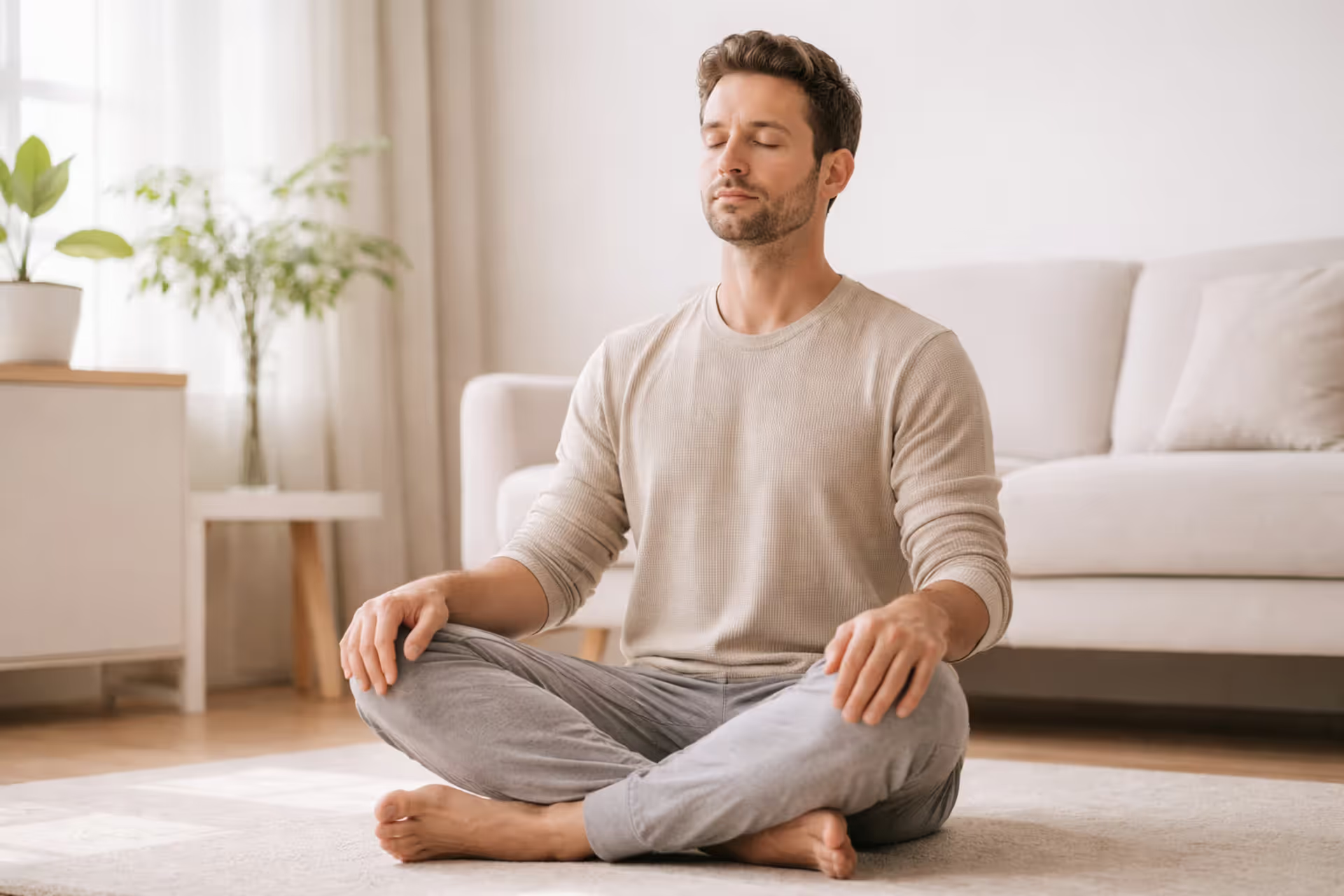
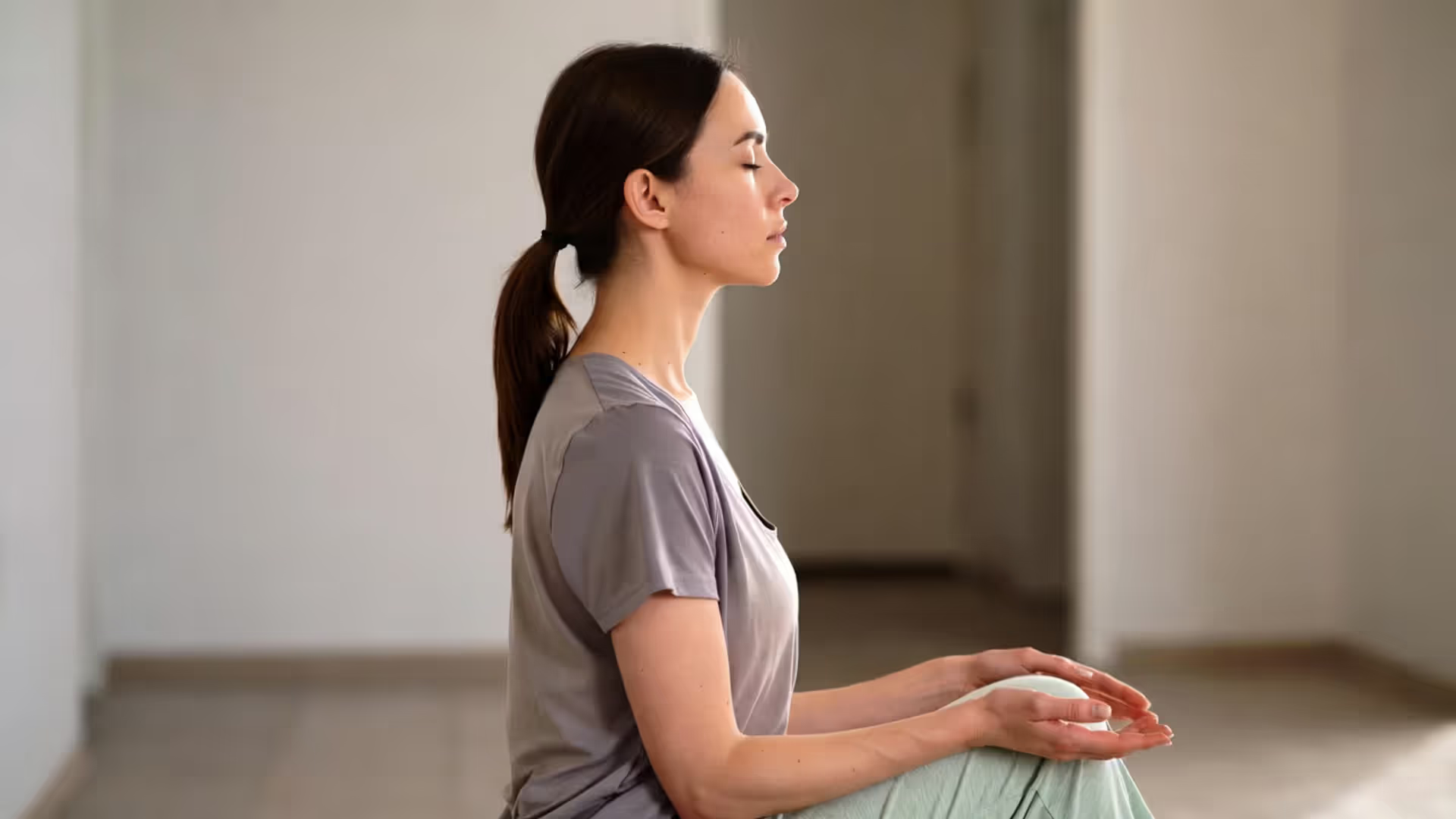
Sit on a chair, cushion, or folded blanket with your spine upright but not military-rigid. If sitting is uncomfortable for more than a few minutes, a straight-backed chair with feet flat on the floor works perfectly. Hands rest on your thighs or knees, palms down for grounding or palms up if that feels more natural. Close your eyes.
Timing: start with ten minutes. Set a gentle alarm — phone on vibrate under a pillow, or a soft chime timer. Guessing at the time while meditating creates a low-grade anxiety that undermines the whole point.
Environment: quiet enough that you can hear your own breathing. That's the threshold. You don't need incense, crystals, or ambient music. A closed door and a consistent time slot (morning before email tends to outperform all other times for habit formation) matter more than any accessory.
The Breathing Technique — Linking So Hum to Inhale and Exhale
Here's the actual so hum breathing technique broken into its mechanical parts:
Breathe in slowly through the nose. As the air enters, mentally hear the syllable "So" — not forced, not shouted internally, just placed gently over the sensation of the inhale. Don't shape the breath to fit the mantra. Let the breath be whatever length it naturally wants to be, and let "So" ride along.
Breathe out slowly through the nose. As the air leaves, mentally hear "Hum." Same principle — the exhale sets the pace, not the word. "Hum" dissolves into the pause at the bottom of the breath.
That's the cycle. Inhale: So. Exhale: Hum. No pause manipulation. No counting. No breath holds unless they arise spontaneously.
A first session might feel like nothing is happening. That's correct. You're training a pattern, not inducing an altered state. By session five or six, most people notice the mantra starts to "run itself" — you stop placing it deliberately and it simply appears synchronized with each breath. That shift from effortful to effortless is the point where the practice begins to deepen.

Author: Lily Patterson;
Source: yogapennsylvania.com
What to Do When You Lose the Mantra (and You Will)
Your mind will wander. Within ninety seconds of starting, probably. You'll find yourself planning dinner, replaying a conversation, or composing a text message. This isn't a failure of the technique — it's the technique revealing what your mind does when it has nothing to grip.
The response is simple and always the same: notice that you've drifted, don't criticize yourself for it (that inner lecture is itself another thought you have to come back from), and gently re-place "So" on the next inhale. That's it. The return is the practice. A ten-minute session where you returned to the mantra thirty times is not a bad session. It's thirty repetitions of the skill that matters most: noticing and redirecting without judgment.
Documented Benefits — What Regular Practice Actually Changes
The so hum benefits break into two categories: what's been studied under controlled conditions and what practitioners consistently report anecdotally.
On the research side: mantra meditation in general (and breath-linked mantra specifically) has been shown to increase vagal tone — the measure of your parasympathetic nervous system's ability to calm you down after stress. A 2017 study published in the International Journal of Yoga found that participants practicing mantra meditation for twenty minutes daily over eight weeks showed significant reductions in salivary cortisol (the primary stress hormone) and improvements in self-reported anxiety.
Regular So Hum practice also appears to improve what cognitive scientists call "attentional regulation" — your ability to hold focus on a chosen object and redirect when distracted. This isn't meditation-specific mysticism; it's the same skill set that improves performance in any domain requiring sustained concentration.
What practitioners report beyond the studies: better sleep onset (particularly when practicing within two hours of bedtime), reduced emotional reactivity in conflict situations (a longer pause between stimulus and response), and a gradually deepening sense of presence — the feeling of actually being where you are instead of mentally running through your to-do list.
What So Hum won't do: cure clinical depression, replace therapy, resolve trauma, or produce enlightenment on a predictable schedule. If a source promises those outcomes, that source is selling something.
Adapting So Hum for Yoga, Breathwork, and Guided Sessions
So Hum doesn't have to live on a meditation cushion. It integrates cleanly into several adjacent practices.
During asana practice, many yoga teachers cue the mantra during sun salutations or slow vinyasa flows — "So" on inhale-linked movements (arms rising, chest opening), "Hum" on exhale-linked movements (forward folds, twists). This turns a physical sequence into mantra meditation in yoga without adding a separate practice block.
For a guided so hum meditation, you don't necessarily need someone else's voice in your ears. You can self-guide by using the first two minutes as a body scan (feet to skull), then introducing the mantra, and closing the last two minutes with silence — no mantra, just observing whatever rhythm the breath has settled into. That said, several meditation platforms (Insight Timer has the broadest free library) offer guided So Hum sessions ranging from five to thirty minutes, which can be helpful during weeks when self-motivation is low.

Author: Lily Patterson;
Source: yogapennsylvania.com
Walking adaptation: slow your pace to roughly half your normal walking speed. Sync "So" to one step, "Hum" to the next. This works best outdoors on a familiar route where you don't need to navigate.
Sleep protocol: lying in bed, eyes closed, practice So Hum without a timer. Let the mantra slow as drowsiness increases. Many practitioners report that the mantra blurs and dissolves as they approach sleep — this is fine. The practice has served its purpose.
Common Mistakes That Stall Your So Hum Practice
Six months of watching students start and stall with this technique reveals the same handful of patterns.
Forcing the breath to fit the mantra. So Hum serves the breath, not the other way around. When people try to elongate their inhale to make "Sooooo" last longer or shorten their exhale to keep pace with a quick mental "Hum," they create tension instead of releasing it. Let the breath lead. Always.
Subvocalizing too aggressively. The mantra should be a mental whisper — something heard internally, not something you're silently shouting. If your jaw, tongue, or throat are engaging while you repeat the words, you're working too hard. Softer. Then softer again.
Treating it as concentration rather than surrender. So Hum is not a focus exercise where the goal is to never lose the mantra. It's a surrender exercise where the goal is to keep returning without tension. Gripping the mantra tightly produces headaches, frustration, and quit rates that spike around week two.
Skipping days and compensating with marathon sessions. Ten minutes daily for seven days reshapes habit circuits. Seventy minutes on Sunday after skipping all week does not. The nervous system responds to frequency, not volume. Consistency is non-negotiable.
Expecting bliss instead of tolerating boredom. The first few weeks of any meditation practice are boring. Genuinely, sincerely boring. People who quit during this phase almost always cite "not feeling anything" as the reason. The boredom is the practice. Sitting with the unremarkable — the plain, non-dramatic experience of breathing and repeating two syllables — is exactly what trains the mind to stop requiring stimulation every eleven seconds.
We must be willing to let go of the life we planned so as to have the life that is waiting for us.
— Joseph Campbell, mythologist
FAQ — So Hum Meditation Questions Answered
So Hum asks very little of you mechanically — two syllables, matched to a breath you're already taking. The difficulty is in the consistency and the willingness to sit through the unremarkable sessions that build toward genuine change. Start with ten minutes. Do it tomorrow morning before you check your phone. Then do it again the day after. The mantra has been doing its work for three thousand years. It's patient enough to wait for you to show up regularly.
Related Stories
Read more
Read more



The content on yogapennsylvania.com is provided for general informational and inspirational purposes only. It is intended to share yoga tips, meditation practices, wellness guidance, retreat experiences, and lifestyle insights, and should not be considered medical, therapeutic, fitness, or professional health advice.
All information, articles, images, and wellness-related materials presented on this website are for general informational purposes only. Individual health conditions, physical abilities, wellness goals, and experiences may vary, and results can differ from person to person.
Yogapennsylvania.com makes no representations or warranties regarding the accuracy, completeness, or reliability of the content provided and is not responsible for any errors or omissions, or for decisions or actions taken based on the information presented on this website. Readers are encouraged to consult qualified healthcare or wellness professionals before beginning any new yoga, meditation, or fitness practice.