Seven Chakras: A Practical Guide to Meanings, Symbols, and Balance
Seven Chakras: A Practical Guide to Meanings, Symbols, and Balance

Somewhere between the Instagram infographics and the incense-scented YouTube thumbnails, the seven chakras became aesthetic content. Pastel rainbow graphics, vague promises about "unlocking your energy" — most of what circulates online strips the system down to decoration and skips the parts that actually help.
The chakra framework is roughly 3,000 years old. It survived that long because it gives people a functional map of how their body, emotions, and awareness interact. Not because it looks good on a vision board.
This guide walks through each chakra with its actual meaning, color, symbol, and function — then lays out a realistic approach to working with the system. No fluff, no mystical hand-waving, and no suggestion that buying a specific crystal will fix your anxiety.
What Are the 7 Chakras and Where Did the System Come From?
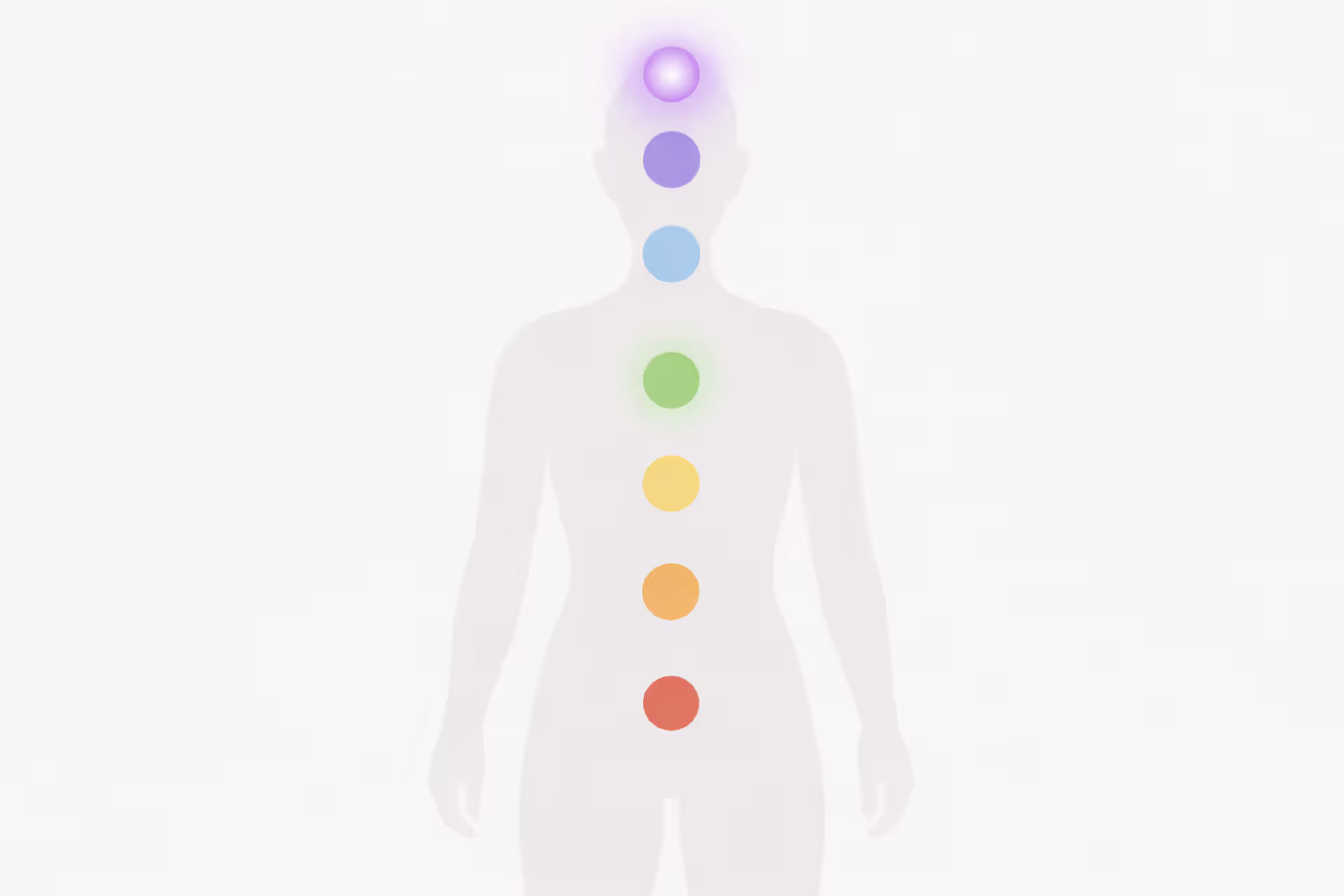
The word "chakra" is Sanskrit for "wheel" or "disk." In the context of yogic anatomy, it describes seven energy centers arranged along the spine, from the base of the pelvis to the top of the skull. Each center corresponds to specific physical, emotional, and psychological functions.
The system originates in the Vedic and tantric traditions of ancient India. The earliest references appear in the Vedas (around 1500–500 BCE), but the detailed seven-chakra model most Westerners recognize comes from later tantric texts, particularly the Sat-Cakra-Nirupana, written in the 16th century by Purnananda Swami. That text mapped the specific locations, colors, petal counts, and seed mantras still used today.
Here's what matters for practical purposes: the 7 chakras meaning isn't about mystical portals or supernatural powers. Each chakra represents a cluster of nerve plexuses, organs, and psychological states. When a particular center is underactive, you tend to see specific deficits — emotional shutdown, physical tension, avoidant behavior. When it's overactive, the opposite pattern shows up: excess, compulsion, dominance of that center's theme at the expense of everything else.
Author: Connor Evans;
Source: yogapennsylvania.com
Think of the system as a diagnostic framework. You don't need to believe in subtle energy to notice that someone with chronic throat tension also struggles to express their needs, or that a person with constant stomach issues often has boundary problems. The seven chakras give you a language for those connections and a structure for addressing them.
For anyone approaching this as a beginner guide to chakras, the single most useful starting principle is this: work from the bottom up. The lower chakras handle survival, stability, and personal power. The upper ones handle expression, perception, and transcendence. Skipping to the top without securing the base produces the energetic equivalent of building a penthouse on sand.
He who has a why to live can bear almost any how.
— Friedrich Nietzsche, philosopher
Each Chakra at a Glance — Names, Colors, Symbols, and Core Functions
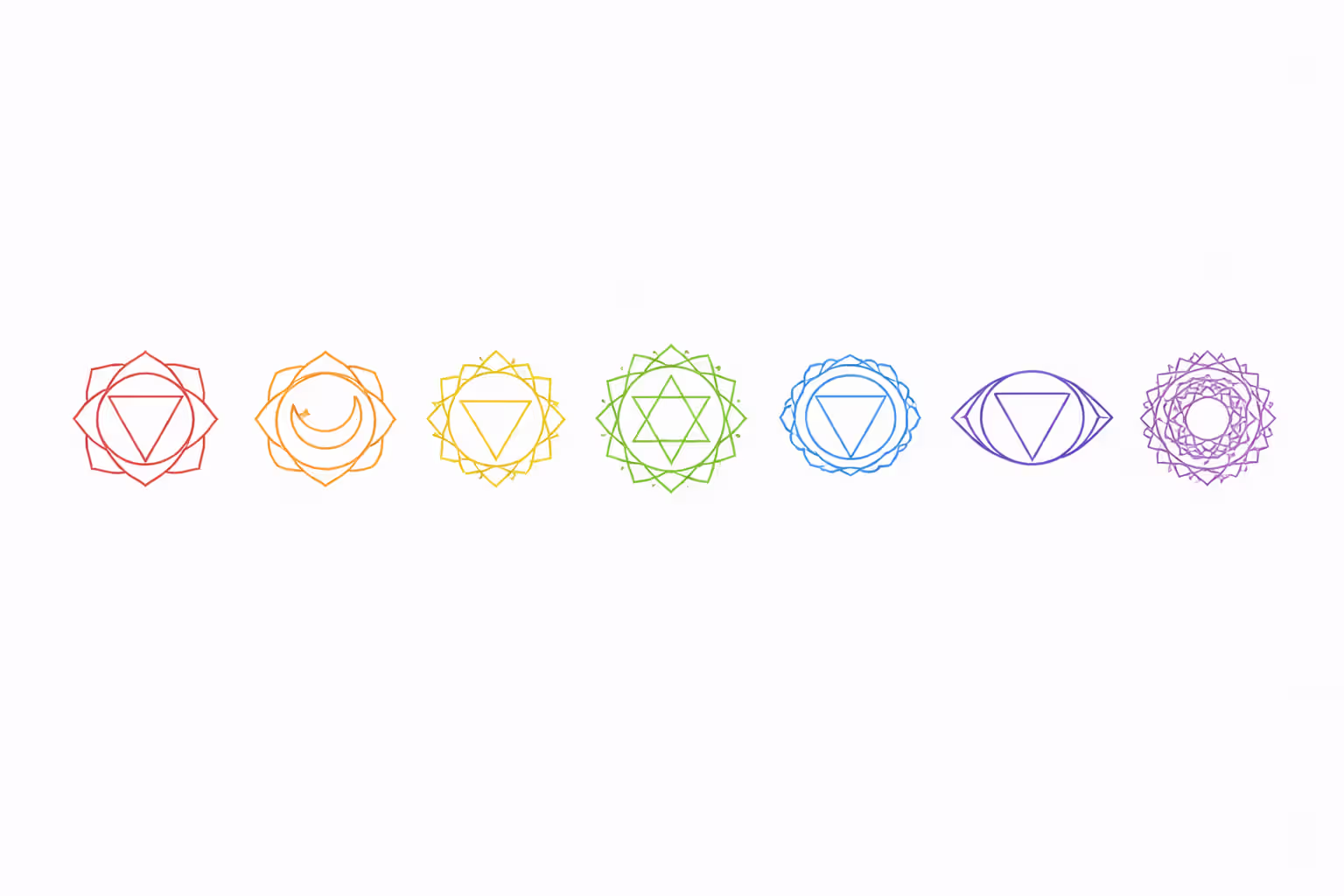
Before breaking each one down, here's a reference table covering the essentials. Bookmark it — you'll come back to this more than you expect.
| Chakra Name (Sanskrit + English) | Location | Color | Element | Symbol (Petals + Shape) | Governs | Seed Mantra |
| Muladhara — Root | Base of spine / perineum | Red | Earth | 4 petals, downward triangle | Physical safety, survival, grounding | LAM |
| Svadhisthana — Sacral | Lower abdomen, ~2 inches below navel | Orange | Water | 6 petals, crescent moon | Sexuality, creativity, emotional flow | VAM |
| Manipura — Solar Plexus | Upper abdomen, stomach area | Yellow | Fire | 10 petals, downward triangle | Personal power, will, self-discipline | RAM |
| Anahata — Heart | Center of chest | Green | Air | 12 petals, hexagram (two interlocking triangles) | Love, compassion, integration | YAM |
| Vishuddha — Throat | Throat, neck, jaw | Blue | Ether / Space | 16 petals, downward triangle within circle | Communication, truth, authentic expression | HAM |
| Ajna — Third Eye | Between eyebrows | Indigo | Light / Mind | 2 petals, downward triangle | Intuition, perception, inner clarity | OM |
| Sahasrara — Crown | Top of skull | Violet or white | None / Beyond elements | 1,000 petals, circle | Transcendence, unity, spiritual connection | Silence (or OM) |
Author: Connor Evans;
Source: yogapennsylvania.com
Root Through Solar Plexus — The Lower Triangle
The first three chakras form what many traditions call the "lower triangle" — the centers governing your relationship with the physical world.
Muladhara (Root) handles your most basic question: "Am I safe?" When it's functioning well, you feel physically grounded, financially stable enough to not live in panic, and anchored in your body. A blocked root shows up as chronic anxiety, an inability to settle, or a pattern of always preparing for the worst. The chakra colors and meanings start here with red — the densest, slowest vibration, tied to earth and matter.
Svadhisthana (Sacral) governs pleasure, creativity, and emotional movement. Its element is water, which tells you everything: this center is about flow. Blocked sacral energy manifests as emotional numbness, creative drought, or guilt around pleasure. Overactive sacral energy looks like emotional flooding, poor boundaries in intimate relationships, or compulsive pleasure-seeking without satisfaction.
Manipura (Solar Plexus) is your center of personal will and agency. A strong third chakra shows up as healthy self-discipline, clear decision-making, and the ability to assert yourself without bulldozing others. Weakness here looks like chronic indecision, people-pleasing, or an inability to follow through. Excess looks like control issues, workaholism, or rage that erupts when things don't go your way.
Heart — The Bridge
Anahata (Heart) sits at the center of the system — three chakras below, three above — and functions as the bridge between physical and transcendent. Its element is air; its color is green. The heart chakra governs your capacity for genuine compassion, love that doesn't come with conditions, and emotional integration.
A closed heart chakra doesn't always look like sadness. Sometimes it looks like self-sufficiency taken to an extreme — the person who never asks for help, never lets anyone in, and calls that "independence." An overactive heart shows up as codependency, poor boundaries in the name of love, or chronic self-sacrifice that breeds resentment underneath.
Love does not consist in gazing at each other, but in looking outward together in the same direction.
— Antoine de Saint-Exupéry, writer
Throat Through Crown — The Upper Triangle
Vishuddha (Throat) manages your ability to communicate authentically. Not just talking — listening, creative expression, and the courage to speak uncomfortable truths. Its element is ether (space), which makes sense: genuine expression requires space to exist. People with blocked throat chakras often have literal physical symptoms — chronic sore throats, jaw clenching, thyroid issues — alongside a pattern of swallowing their words.
Ajna (Third Eye) governs perception, intuition, and the ability to see beyond surface-level reality. When balanced, you trust your instincts without abandoning rational thought. Blocked, you feel mentally rigid and disconnected from any inner guidance. Overactive, you live in your head, over-analyze everything, or mistake fantasy for intuition.
Sahasrara (Crown) sits at the top of the skull and handles your relationship with meaning, transcendence, and the felt sense that your individual existence connects to something larger. It has no element — it's meant to represent what exists beyond the material. A balanced crown looks like quiet wisdom and comfort with mystery. A blocked one shows up as existential numbness. An overactive one looks like spiritual grandiosity — the person who meditates for three hours daily but can't hold a job or maintain a friendship.
Chakra Symbols Explained — What the Geometry Actually Means
Most articles show you the chakra symbols without explaining why a triangle points down in some and up in others, or what the different petal counts represent. That geometry isn't decorative — each element encodes information.
The petals on each symbol correspond to the number of nadis (energy channels) that intersect at that chakra point. Muladhara has four petals because four nadis meet there. Sahasrara has a thousand because it represents the confluence of every channel in the system. Each petal carries a Sanskrit letter — these are the vibrational frequencies associated with that center.
Downward-pointing triangles (found in the root, solar plexus, and throat symbols) represent the downward movement of energy — grounding, manifestation, bringing things into form. The upward triangle in the heart chakra's hexagram represents ascending energy — consciousness moving toward awareness. The hexagram itself — two triangles interlocking — symbolizes the union of ascending and descending forces, which is exactly the heart's function as a bridge.
The crescent moon inside Svadhisthana's symbol represents the lunar, receptive quality of the sacral center. The circle within Vishuddha's yantra represents the full moon and the spaciousness of ether. Ajna's two petals represent the convergence of the two primary nadis — ida and pingala — into a single point of unified perception.
Understanding these symbols turns them from pretty icons into actual maps. When you meditate on a specific chakra and visualize its yantra, you're engaging with a layered set of instructions about how energy moves at that center.
How to Tell Which Chakra Is Out of Balance
Rather than offering a quiz with a neat score at the end, here's a more honest approach: pattern recognition across three dimensions.
For each chakra, look at physical symptoms, emotional tendencies, and behavioral habits. A single symptom means nothing — everyone gets a sore throat sometimes. But when you see a cluster forming across all three dimensions around one center, that's a signal worth paying attention to.
Author: Connor Evans;
Source: yogapennsylvania.com
A quick self-assessment method: take the seven chakras in order and rate each one on a scale of "deficient," "balanced," or "excessive." Deficient means you avoid or suppress that center's themes. Excessive means you overidentify with them.
For example, someone with a deficient sacral chakra might notice hip stiffness (physical), emotional flatness (emotional), and avoidance of creative projects or intimacy (behavioral). Someone with an excessive solar plexus might notice digestive issues and muscle tension (physical), irritability and impatience (emotional), and micromanaging behavior at work (behavioral).
Most people don't have one problem chakra. They typically have two or three that are noticeably off, often in a pattern — a deficient root and overactive third eye, for instance (not enough grounding, too much time in the head). Identifying these patterns gives you a much more targeted starting point than trying to "balance all chakras" as a vague goal.
How to Balance All Chakras — A Layered Daily Practice
The question of how to balance all chakras typically gets answered with an overwhelming list: meditate, do yoga, eat specific foods, wear certain colors, use these crystals, burn that incense, chant these mantras. Nobody sustains a protocol with forty-seven daily steps.
What works: a minimum-effective-dose approach. Pick one practice from each of three categories — movement, breath/meditation, and lifestyle — and do them consistently for at least three weeks before adding anything.
A 30-Minute Chakra Yoga Sequence for Beginners
This chakra yoga sequence moves energy from the base of the spine upward, spending roughly four minutes per chakra region. It's designed for people who aren't advanced yogis.
Author: Connor Evans;
Source: yogapennsylvania.com
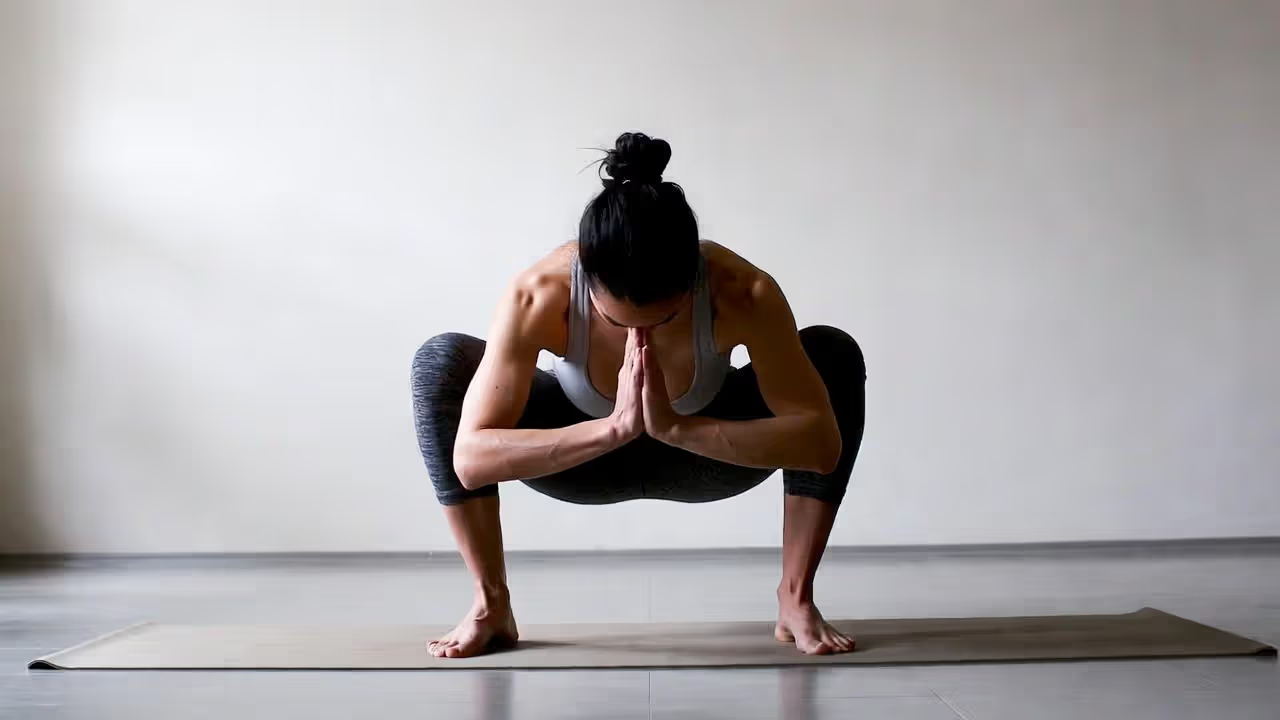
- Minutes 1–4 (Root): Malasana (deep squat), holding for one minute, followed by three minutes of standing poses with emphasis on leg engagement — Warrior I and Chair Pose. Focus on pressing your feet into the ground.
- Minutes 5–8 (Sacral): Reclined Bound Angle Pose (Supta Baddha Konasana) for two minutes, then gentle hip circles in tabletop position. Let the movement be fluid, not rigid.
- Minutes 9–12 (Solar Plexus): Boat Pose for three rounds of thirty seconds, interspersed with gentle twists. Engage the core without clenching the jaw — a surprisingly common compensation pattern.
- Minutes 13–16 (Heart): Camel Pose or a supported bridge — any chest opener held long enough to feel the stretch deepen. Three full breaths minimum per hold.
- Minutes 17–20 (Throat): Plow Pose or Shoulder Stand (supported against a wall if needed). These compress the throat gently and redirect energy through that center.
- Minutes 21–24 (Third Eye): Seated forward fold with forehead resting on a block or the knees. The gentle pressure on the brow point activates the ajna center. Stay still and let your breathing slow.
- Minutes 25–30 (Crown and Integration): Savasana with awareness placed at the top of the skull for three minutes, followed by two minutes of seated silence before moving on with your day.
Breathwork and Meditation Pairing for Each Center
Each chakra responds to slightly different breathing patterns. You don't need to master all seven simultaneously — pick the one or two chakras that need the most attention based on your self-assessment and work with those.
- Root and sacral respond well to deep belly breathing — slow inhale through the nose, expanding the lower abdomen, slow exhale. Five minutes minimum.
- Solar plexus responds to Kapalabhati (skull-shining breath) — rapid, sharp exhales through the nose with passive inhales. Start with thirty pumps, rest, repeat three times.
- Heart opens with equal-ratio breathing — inhale for four counts, exhale for four counts — while visualizing green light expanding from the center of the chest.
- Throat benefits from a humming exhale (Brahmari breath). The vibration physically activates the vocal cords and surrounding tissue.
- Third eye and crown both respond to silence-based meditation. Sit, close your eyes, place attention at the relevant point, and resist the urge to "do" anything. Observation without manipulation is the practice here.
Food, Environment, and Habit Tweaks That Support Each Chakra
These aren't magic prescriptions. They're pattern-based observations from Ayurvedic and yogic traditions, filtered through common sense.
- Root: protein-rich foods, root vegetables, barefoot walking on natural ground, financial organization (seriously — a budget spreadsheet is root chakra work).
- Sacral: adequate hydration, orange-colored foods (sweet potatoes, oranges, carrots), creative hobbies without a performance goal, time near water.
- Solar plexus: yellow foods (ginger, turmeric, bananas), core-strengthening exercise, following through on one commitment per day that you'd normally avoid.
- Heart: leafy greens, spending unhurried time with people you love, acts of genuine generosity (without keeping score), chest-opening stretches throughout the day.
- Throat: warm teas, singing or humming (even in the car), journaling without editing, reducing conversations where you habitually lie or people-please.
- Third eye: reducing screen time before bed, dark blue/purple foods (blueberries, blackberries), ten minutes of unstructured silence daily.
- Crown: light eating during intensive practice periods, time in expansive natural settings, sitting with questions that have no answer instead of reaching for your phone.
Nature does not hurry, yet everything is accomplished.
— Lao Tzu, Tao Te Ching
Five Mistakes Beginners Make with Chakra Work
Working top-down instead of bottom-up. The crown chakra is more appealing than the root because transcendence sounds better than budgeting. But the system is sequential for a reason. A person meditating on cosmic consciousness while their rent is three months late hasn't transcended material reality — they're avoiding it. Start at the root. Always.
Treating chakras as on/off switches. "My heart chakra is open" is a statement that implies a permanent state. Chakras fluctuate constantly depending on your stress level, sleep, relationships, and environment. A more accurate framing: "My heart chakra was balanced during that conversation but contracted during the argument afterward." It's dynamic, not binary.
Ignoring physical health. Chakra work doesn't replace exercise, sleep, nutrition, or medical care. A person with chronic insomnia can't meditate their way to a balanced third eye — the sleep deprivation is creating the imbalance. Address the physical foundation before layering energy practices on top.
Conflating internet aesthetics with real practice. Buying seven colored crystals and arranging them on your windowsill isn't chakra work. It's decorating. Actual practice involves sitting with discomfort, noticing patterns you'd rather ignore, and making behavioral changes that feel inconvenient. The aesthetic layer is fine as a supplement, but mistaking it for the practice itself stalls real progress.
Expecting instant results. The chakra system developed within traditions that measured spiritual progress in years and decades, not weeks. Doing a chakra yoga sequence for five days and concluding "it doesn't work" is like going to the gym once and being surprised you don't have visible abs. Three weeks of consistent daily practice is a reasonable minimum before evaluating whether a particular method is working for you.
FAQ — Seven Chakras Questions Answered
The seven chakras give you a structured way to ask: where am I stuck, and what would movement look like? Start with the lowest stuck point, practice consistently without decorating around it, and let the system do what it was designed to do — not deliver enlightenment on a timeline, but give you a mirror detailed enough to actually be useful.
Related Stories

Read more
Read more



The content on yogapennsylvania.com is provided for general informational and inspirational purposes only. It is intended to share yoga tips, meditation practices, wellness guidance, retreat experiences, and lifestyle insights, and should not be considered medical, therapeutic, fitness, or professional health advice.
All information, articles, images, and wellness-related materials presented on this website are for general informational purposes only. Individual health conditions, physical abilities, wellness goals, and experiences may vary, and results can differ from person to person.
Yogapennsylvania.com makes no representations or warranties regarding the accuracy, completeness, or reliability of the content provided and is not responsible for any errors or omissions, or for decisions or actions taken based on the information presented on this website. Readers are encouraged to consult qualified healthcare or wellness professionals before beginning any new yoga, meditation, or fitness practice.