
How to Build a Daily Meditation for Beginners

Content
Content
The alarm sounds at six-thirty in the morning, and before your feet even touch the floor, your mind has already sprinted through seventeen tasks, three worries from yesterday, and at least one conversation you wish you had handled differently. This is the modern condition—a relentless mental chatter that rarely pauses, rarely softens, and rarely offers you a moment of genuine stillness. You have probably heard that meditation can help. Perhaps a friend mentioned it, or your doctor suggested it, or you stumbled across an article promising that just ten minutes of mindfulness could change everything. And yet, here you are, still wondering whether you are the kind of person who can actually meditate, whether your racing thoughts disqualify you from the practice entirely, or whether you simply lack whatever mysterious quality allows other people to sit in peaceful silence while you cannot seem to quiet your mind for more than three seconds at a time.
Here is the truth that nobody tells you when you first consider learning meditation: the relentless mental chatter is not the obstacle to practice—it is the very material you work with. Every wandering thought, every moment of restlessness, every frustrated sigh when you realize you have been planning dinner instead of focusing on your breath represents not failure but the actual substance of meditation itself. The practice does not require you to achieve some exalted state of mental blankness. It does not demand incense, special clothing, a particular room, or hours of uninterrupted solitude. It asks only that you show up, pay attention, and begin again whenever you notice your attention has drifted—which it will, repeatedly, because that is precisely what human minds do.
Research from the National Center for Complementary and Integrative Health confirms that meditation practices have been studied extensively for their effects on anxiety, depression, chronic pain, and overall psychological well-being, with mounting evidence supporting their benefits even for complete beginners who practice for modest durations. The scientific community has moved well beyond treating meditation as merely a relaxation technique, recognizing instead that regular practice creates measurable changes in brain structure, stress hormone levels, and emotional regulation capacity. This is not wishful thinking or spiritual bypassing—it is documented neurological adaptation that occurs when you consistently train your attention in specific ways.
Rethinking What Meditation Actually Requires
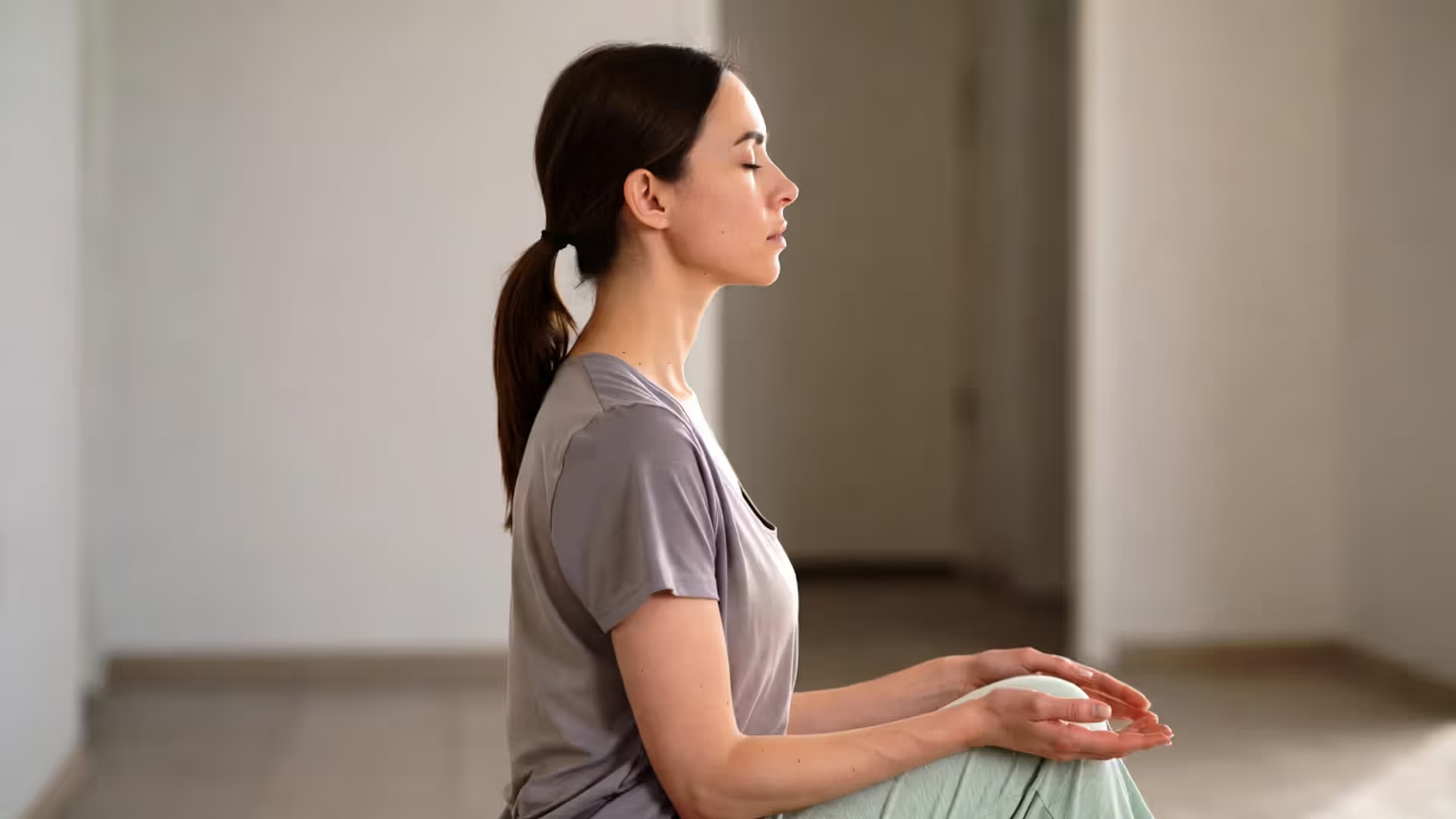
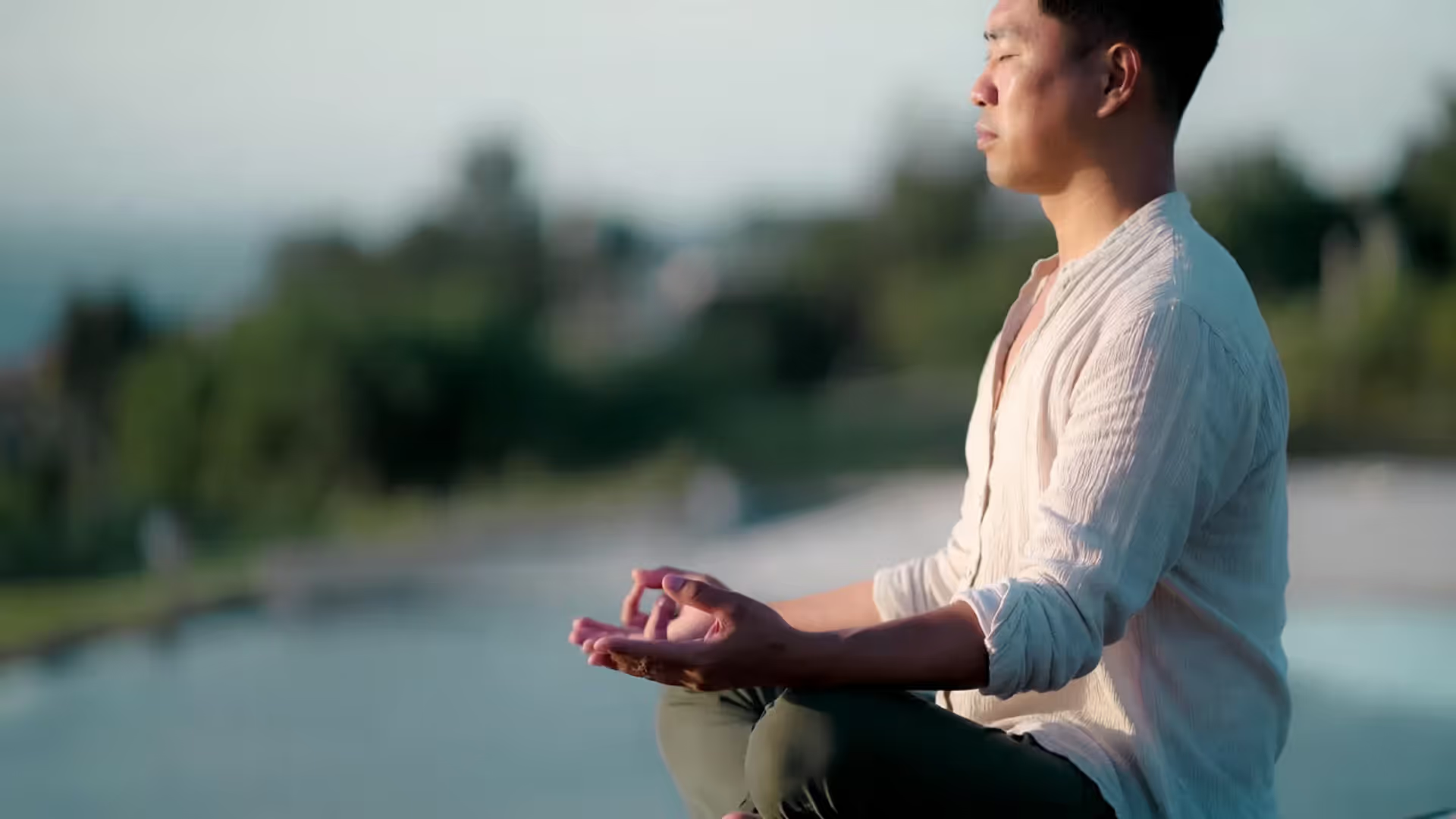
The mental image most people carry of meditation involves a serene figure sitting cross-legged on a mountaintop or in an immaculate minimalist room, eyes closed, face arranged in an expression of transcendent peace. This image creates an immediate barrier for anyone whose life includes children, demanding jobs, cramped apartments, chronic pain conditions, or simply the ordinary chaos of contemporary existence. The assumption that meditation requires perfect conditions prevents countless people from ever beginning, which is unfortunate because the practice adapts remarkably well to imperfect circumstances, interrupted schedules, and bodies that cannot comfortably fold themselves into lotus position.
You can meditate in a chair at your kitchen table. You can meditate on a park bench during your lunch break. You can meditate lying flat on your back if sitting causes discomfort, though you may need to experiment with keeping your eyes slightly open to prevent drowsiness. You can meditate for three minutes while your coffee brews or for ninety seconds while waiting for your computer to restart. The duration matters far less than the consistency, and the setting matters far less than your willingness to direct your attention deliberately rather than allowing it to wander wherever external stimuli or internal anxieties pull it.
The National Institutes of Health has published extensive resources explaining that meditation encompasses a family of practices rather than a single monolithic technique, with variations ranging from focused attention practices that concentrate on a single object like the breath to open monitoring practices that observe whatever arises in awareness without attachment. Understanding this variety helps beginners recognize that if one approach feels uncomfortable or ineffective, alternatives exist that might suit their temperament, schedule, or physical capabilities better.
— Lily Patterson
Understanding Mindfulness Beyond the Buzzword
The term mindfulness has become so ubiquitous in wellness marketing that it risks losing all meaning, applied indiscriminately to everything from coloring books to corporate productivity seminars. Stripped of its commercial packaging, however, mindfulness describes something quite specific: the deliberate cultivation of present-moment awareness characterized by curiosity rather than judgment. When you practice mindfulness, you are training yourself to notice what is actually happening—in your body, in your thoughts, in your emotional landscape—without immediately categorizing these observations as good or bad, desirable or undesirable.
The American Psychological Association distinguishes mindfulness from simple relaxation, noting that while relaxation often follows from mindfulness practice, the two are not synonymous. You can be deeply relaxed while your mind remains scattered and unfocused, and you can be fully mindful while experiencing physical discomfort or emotional difficulty. The cultivation of mindfulness involves developing a specific quality of attention that remains steady and non-reactive regardless of what that attention encounters, a capacity that proves valuable precisely because life regularly presents circumstances that are neither comfortable nor pleasant.
This distinction matters for beginners because it reframes success in meditation. You have not failed when difficult thoughts arise during practice. You have not failed when your body feels restless or your emotions surge unexpectedly. You have failed only if you abandon the practice entirely—and even then, you can simply begin again tomorrow, or in an hour, or right now. The practice itself consists of nothing more complicated than noticing where your attention has gone and gently redirecting it to your chosen anchor, whether that anchor is your breath, physical sensations, sounds in your environment, or any other present-moment phenomenon you have selected as your focus.
How Meditation Changes Your Brain and Body
The scientific investigation of meditation has accelerated dramatically over the past two decades, moving from preliminary studies with small sample sizes to robust research programs conducted at major medical institutions. Harvard Medical School has been particularly active in this field, publishing research demonstrating that regular meditation practice correlates with increased gray matter density in brain regions associated with learning, memory, emotional regulation, and perspective-taking. These structural changes appear even in relative beginners who maintain consistent practice for eight weeks, suggesting that the brain's plasticity allows it to adapt relatively quickly to the demands of attentional training.
The stress-reduction benefits of meditation operate through multiple physiological pathways. When you activate your parasympathetic nervous system through focused breathing and relaxed attention, you counteract the chronic low-grade stress response that modern life tends to maintain in your body. Cortisol levels decrease. Heart rate variability improves, indicating greater autonomic flexibility. Inflammatory markers that contribute to various chronic diseases show measurable reduction in long-term practitioners. These changes do not require marathon meditation sessions—research published on PubMed indicates that even brief daily practice produces meaningful physiological effects, particularly when maintained consistently over weeks and months.
Perhaps most importantly for beginners, the research emphasizes consistency over duration. A daily five-minute practice produces better results than sporadic hour-long sessions, primarily because the neurological adaptations that meditation cultivates depend on repeated activation of specific attentional networks rather than on cumulative time spent meditating. Your brain learns through repetition, not through intensity, which means that the sustainable three-minute morning practice you actually maintain will benefit you far more than the ambitious thirty-minute routine you abandon after a week because it does not fit realistically into your schedule.
Creating a Practice That Actually Survives Your Real Life
The graveyard of abandoned wellness intentions overflows with meditation practices that seemed promising in January but disappeared by February, defeated not by any fundamental incompatibility between the person and the practice but simply by the friction that new habits encounter when they compete against established routines and limited mental energy. Building a meditation practice that survives requires understanding how habits form and designing your approach to minimize the resistance that defeats most beginners before they experience the benefits that would have motivated continued practice.
Habit researchers have identified several principles that dramatically increase the likelihood of new behaviors becoming automatic:
- Start smaller than seems meaningful. If you think you should meditate for ten minutes, begin with three. If three feels like a stretch, begin with one. The goal in the first weeks is not to accumulate meditation time but to establish the neural pathway that associates a specific cue with the behavior of sitting down to practice.
- Attach your new habit to an existing routine. The technique called habit stacking involves identifying something you already do reliably every day—brewing coffee, brushing your teeth, sitting down at your desk—and inserting your meditation practice immediately before or after that established behavior. The existing habit serves as a trigger that reminds you to practice without requiring willpower or memory.
- Reduce environmental friction to near zero. If you plan to meditate on a cushion, leave the cushion out where you can see it. If you plan to use a meditation app, put the app icon on your phone's home screen. Every additional step between your intention and your action increases the probability that you will skip the practice when you feel tired, rushed, or simply not in the mood.
- Protect your practice from perfectionism. You will miss days. You will have sessions that feel pointless, distracted, or frustrating. These experiences do not indicate failure—they indicate that you are a normal human being attempting to cultivate a skill that develops gradually over time. Return to practice the next day without self-recrimination, treating the missed session as data rather than disaster.
The Cleveland Clinic emphasizes that beginning meditators often benefit from lowering their expectations dramatically, focusing initially on simply establishing the routine rather than on achieving any particular mental state. This counterintuitive advice—expect less, not more—actually increases the likelihood of long-term success because it removes the performance pressure that makes meditation feel like yet another task at which you might fail.
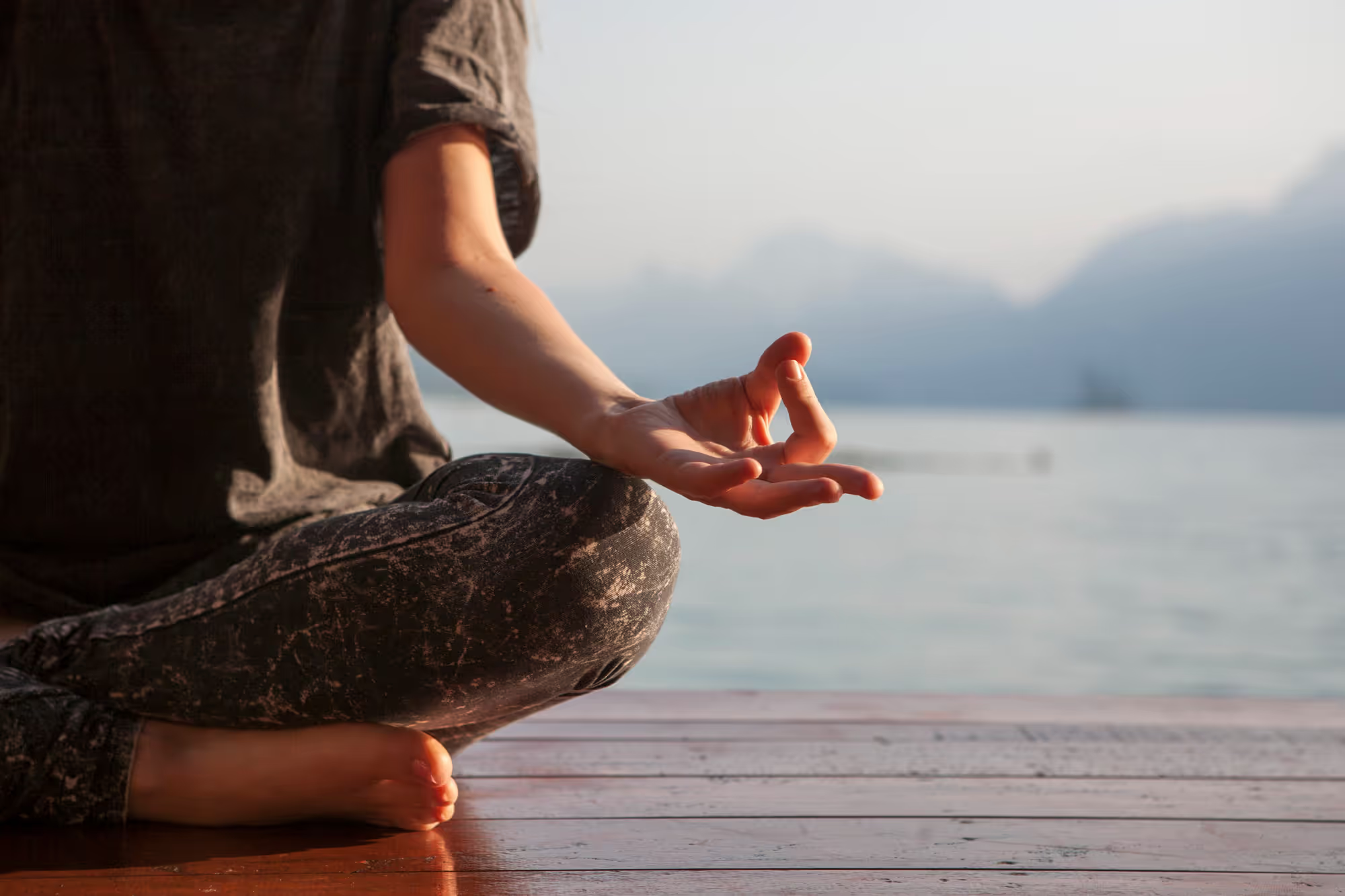
Author: Lily Patterson;
Source: yogapennsylvania.com
Finding Comfort in Your Body Before Seeking Stillness in Your Mind
One of the most common reasons beginners abandon meditation involves physical discomfort that they believe they must simply endure as part of the practice. They sit cross-legged because that looks like what meditators do, their knees ache, their lower back protests, and they spend their entire session wrestling with physical pain rather than cultivating mental awareness. This approach misunderstands the relationship between body and mind in meditation, which actually requires reasonable physical comfort as a foundation for the attentional work that constitutes the practice itself.
You have permission to meditate in whatever position allows your body to relax while remaining alert. For many people, particularly those with joint issues, chronic pain conditions, or bodies that simply do not fold comfortably into floor-sitting positions, a straight-backed chair provides an ideal meditation seat. Plant your feet flat on the floor, rest your hands on your thighs, and allow your spine to maintain its natural curvature without rigid holding. Your head balances atop your neck rather than jutting forward toward a screen as it probably does for most of your waking hours. This position supports both alertness and ease, the two physical qualities that facilitate rather than obstruct mental practice.
If you prefer floor sitting, investigate cushion options that elevate your hips above your knees, reducing the strain on your lower back and allowing your pelvis to tilt slightly forward. Meditation benches offer another alternative, allowing you to kneel with support that prevents the leg numbness and foot tingling that make extended sitting uncomfortable. Lying down works perfectly well too, particularly for practices focused on body scanning or relaxation, though you may need to experiment with keeping your eyes slightly open or your knees bent to prevent drowsiness from overwhelming awareness.
The principle underlying all these options is simple: physical discomfort commands attention, and attention devoted to pain is attention unavailable for the actual practice of meditation. Rather than viewing comfort-seeking as a sign of insufficient discipline, recognize it as a practical adjustment that allows you to direct your awareness where you actually want it to go.
— Lily Patterson
Breathing as Your First Anchor
Among the many possible focal points for meditation, the breath offers several unique advantages for beginners. You do not need any equipment to access it. It happens continuously without requiring you to initiate or maintain it consciously. It provides enough sensory information to anchor attention without overwhelming awareness with complexity. And its rhythm tends to slow and deepen naturally when you observe it closely, producing a physiological calming effect that makes the practice feel immediately beneficial even before longer-term changes develop.
When you sit down to practice breath-focused meditation, you are not trying to breathe in any particular way. You are simply directing your attention to the physical sensations that breathing produces—the subtle movement of air through your nostrils, the expansion and contraction of your chest and belly, the momentary pause between exhale and inhale where everything briefly stills. You might find it helpful initially to count your breaths, numbering each exhale from one to ten and then returning to one, giving your mind a simple task that provides structure without requiring complex cognitive engagement.
The texture of your breath offers another avenue for exploration. Notice whether your inhale feels cool or warm as it enters your nose. Observe whether your exhale moves quickly or slowly, smoothly or in subtle pulses. Track the sensations in your belly as it rises and falls, noticing the exact moment when expansion becomes contraction. These observations require no special skill—only the willingness to pay close attention to something you normally ignore entirely despite its continuous presence in your experience.
Body scanning provides a complementary technique that beginners often find more accessible than pure breath focus. Starting at the top of your head or the soles of your feet, you systematically move your attention through your body, noticing whatever sensations present themselves in each region without trying to change or interpret them. Tension in your shoulders, warmth in your hands, an itch on your cheek, the pressure of your body against the chair—each sensation becomes an object of interest, observed and then released as your attention moves onward.
The Inevitable Wandering of Attention
Your mind will wander during meditation. This is not a problem to be solved—it is the condition within which practice occurs. The untrained mind produces a continuous stream of thoughts, memories, plans, fantasies, judgments, and random associations, most of which operate entirely beneath conscious awareness until you sit down, attempt to focus on something simple like your breathing, and suddenly notice just how noisy your mental environment actually is. Beginners often interpret this discovery as evidence that they are particularly bad at meditation, when in fact they are simply experiencing normal human cognition with unusual clarity.
The practice of meditation involves noticing when your attention has wandered, acknowledging where it went, and gently returning it to your chosen anchor. That sequence—wandering, noticing, returning—constitutes the actual exercise you are performing. Your bicep grows stronger not by holding a weight motionless but by repeatedly lifting it against gravity. Your attentional capacity grows stronger not by maintaining perfect focus but by repeatedly recovering focus after losing it. Each time you notice distraction and choose to redirect your attention, you strengthen the neural networks responsible for sustained attention and self-regulation. The wandering is not the enemy of practice—it is the very thing that creates the opportunity for practice.
The attitude you bring to this process matters enormously. If you criticize yourself harshly every time you notice distraction, you add an additional layer of mental activity that itself becomes a distraction, and you create negative associations with the practice that make it feel punishing rather than nourishing. Instead, experiment with treating each moment of noticing as a small success—you were lost, and now you are found—acknowledging the wandering with something approaching friendliness before returning your attention to the breath. Some practitioners find it helpful to label their thoughts briefly before releasing them: "planning," "remembering," "worrying," "judging." This labeling creates a slight distance between yourself and your mental content, reminding you that thoughts are phenomena arising in awareness rather than commands you must obey or problems you must solve immediately.
Technology as Training Wheels
The proliferation of meditation apps has transformed how millions of people learn and maintain practice, providing guided instruction, progress tracking, and gentle reminders that support consistency in ways that purely self-directed practice often struggles to match. For beginners especially, these digital tools can bridge the gap between intellectual understanding of meditation and the embodied experience of actually doing it, offering voice guidance that helps structure sessions and reduces the uncertainty about what you should be doing at any given moment.
Research published through the National Library of Medicine has examined the effectiveness of app-based meditation programs, finding that they can produce meaningful improvements in stress, anxiety, and well-being markers, particularly among users who engage consistently with the programs over extended periods. The accessibility of these tools—available whenever you have your phone, requiring no travel to classes or coordination with instructors—removes barriers that have historically limited meditation practice to those with specific resources, schedules, or geographic proximity to teachers.
When selecting a meditation app as a beginner, consider several factors that influence whether the tool will support sustainable practice:
- Beginner-specific programming. Apps that offer structured courses for newcomers provide scaffolded learning that builds skills progressively rather than assuming prior knowledge or capacity.
- Session length flexibility. The ability to choose very short sessions—three minutes, five minutes, even one minute—allows you to maintain practice on difficult days when longer sessions feel impossible.
- Voice and style compatibility. You will listen to your chosen app's instructors repeatedly, so finding voices and teaching styles that resonate with your preferences matters more than you might initially expect.
- Reminder functionality. Gentle notifications at consistent times support habit formation during the crucial early weeks when the practice has not yet become automatic.
- Variety of techniques. As your practice develops, access to different meditation styles—breath focus, body scanning, loving-kindness, visualization—allows you to explore what works best for your temperament and needs.
The goal of using meditation apps is eventually to develop sufficient skill and self-reliance that you no longer require external guidance for every session. These tools serve as training wheels that support early learning and provide structure during periods when self-directed practice feels difficult, not as permanent dependencies that you cannot practice without.
Navigating the Rough Patches That Every Beginner Encounters
The honeymoon period of meditation practice, when the novelty of the experience provides its own motivation, inevitably gives way to periods of difficulty that test your commitment to continuing. Recognizing these challenges as normal rather than as signs of personal failure helps you navigate them without abandoning the practice that would eventually carry you through to the benefits that lie on the other side of temporary struggle.
Restlessness often intensifies during the first weeks of practice as you become more aware of just how much physical and mental energy typically buzzes through your body without your conscious attention. Sitting still can feel nearly intolerable when you notice the constant urge to move, shift, adjust, scratch, and generally escape the experience of remaining stationary. This restlessness typically diminishes as practice continues, not because you learn to suppress it but because you develop the capacity to coexist with it without automatically obeying its demands for movement.
Boredom presents another common obstacle, particularly for beginners accustomed to constant stimulation from devices, media, and the relentless activity of contemporary life. Sitting quietly with nothing happening seems pointless when your mind keeps reminding you of all the more interesting or productive things you could be doing instead. This boredom, however, often contains valuable information—it reveals just how dependent on external stimulation your nervous system has become and points toward the cultivation of a different relationship with stillness that meditation gradually develops.
— Lily Patterson
Self-criticism may emerge with surprising intensity as you become more aware of your mental patterns through practice. You notice how frequently you judge yourself, how harsh your internal commentary can be, how automatically you assume the worst about your own efforts and capacities. This awareness feels uncomfortable initially, but it creates the possibility for change—you cannot modify patterns you do not notice, and meditation makes previously invisible habits of self-relating suddenly visible and therefore workable.
Inconsistency plagues nearly every beginner, and the appropriate response to missed sessions is neither punitive self-flagellation nor complete abandonment but simply renewed practice at the next available opportunity. Your meditation practice will survive occasional interruptions; what it cannot survive is the perfectionism that treats any imperfection as total failure and uses one missed session as justification for quitting entirely.
Weaving Meditation Into Your Yoga Practice
The relationship between meditation and yoga practice extends back thousands of years, with meditation traditionally understood as one of the eight limbs of yoga rather than as a separate discipline. For contemporary practitioners, integrating seated meditation with physical asana practice creates a synergy that enhances both elements, using movement to prepare the body for stillness and stillness to integrate the insights that arise through movement.
Practicing meditation before yoga creates focus and intention that you can carry through your physical practice. Even three to five minutes of breath awareness before beginning your asana sequence establishes a quality of attention that persists as you move through poses, helping you notice alignment cues, track physical sensations, and remain present rather than drifting into automatic execution or distracted rumination. Your yoga practice becomes a form of moving meditation rather than merely physical exercise, with each transition and each held pose serving as an opportunity to cultivate the same present-moment awareness you develop in seated practice.
Meditation following yoga practice takes advantage of the body's settled state after physical exertion. Your nervous system has already begun shifting toward parasympathetic dominance through the breath work and relaxation that typically conclude yoga sessions. Your body feels more comfortable in stillness because you have released physical tension through movement. The transition from savasana to seated meditation often feels natural and unforced, extending the integration that begins in final relaxation into a more focused contemplative practice.
Yoga Journal and similar educational resources emphasize that the breath awareness cultivated in pranayama practice directly supports meditation, creating a bridge between physical and mental training that helps practitioners move fluidly between movement and stillness. Noticing your breath during challenging poses develops exactly the capacity for sustained attention that meditation requires, while meditation deepens your sensitivity to the subtle breath patterns that inform intelligent yoga practice.
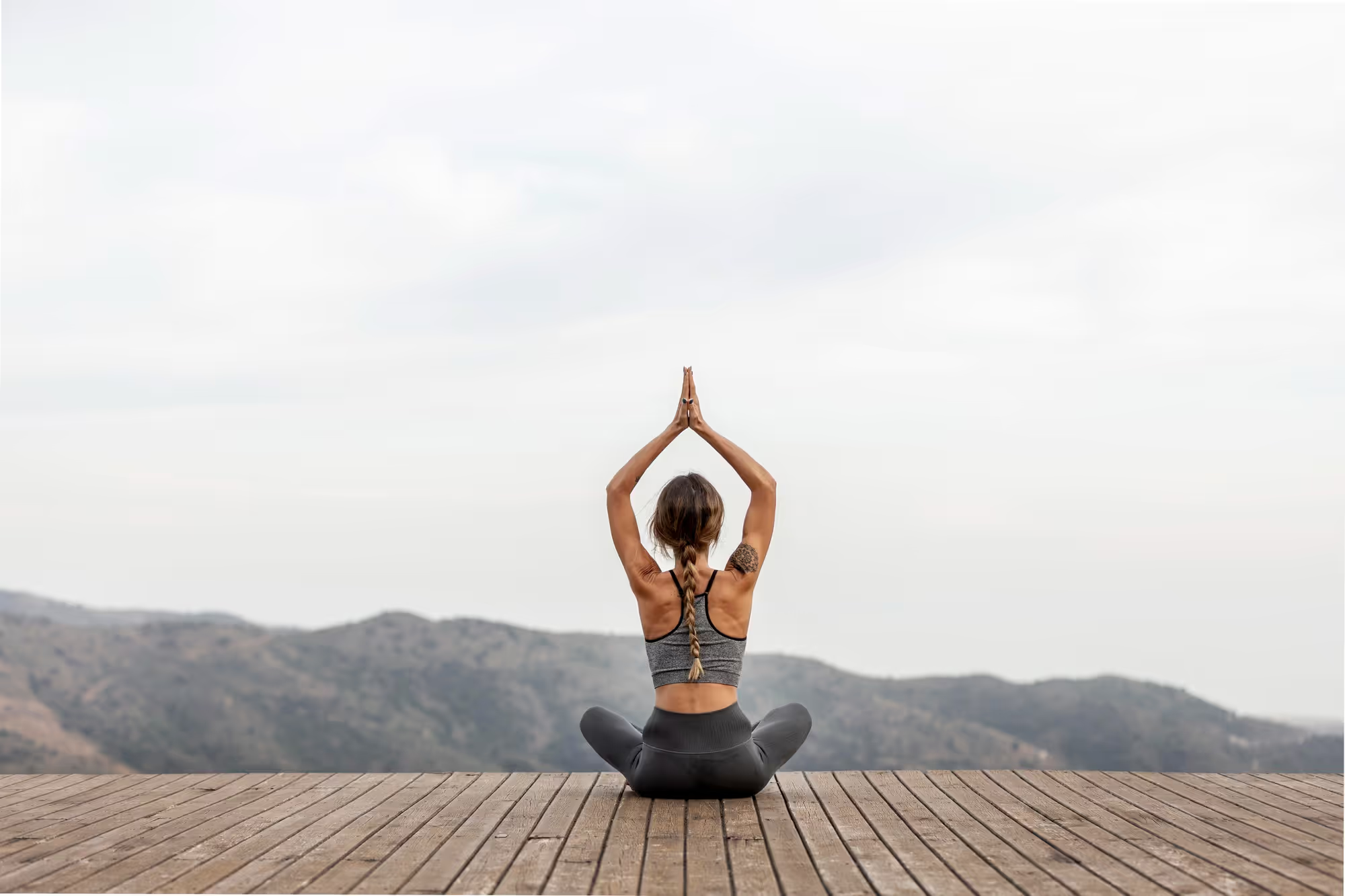
Author: Lily Patterson;
Source: yogapennsylvania.com
Expanding Mindfulness Beyond Formal Practice
The meditation session you complete each morning or evening represents only the most concentrated form of mindfulness practice, not its exclusive expression. The awareness you cultivate in formal seated meditation can infuse ordinary activities throughout your day, transforming mundane moments into opportunities for presence and gradually extending your capacity for non-reactive attention beyond the cushion or chair where you initially developed it.
Mindful walking invites you to apply the same quality of attention you bring to breath observation to the physical sensations of locomotion. As you walk—whether around your neighborhood, through your office, or simply from one room to another—you notice the pressure of your feet against the ground, the subtle shifting of weight from one leg to the other, the coordinated movements of your limbs and torso that produce forward motion. This awareness does not prevent you from walking normally; it simply adds a layer of conscious attention to an activity that usually occurs entirely on autopilot.
Mindful eating transforms nutrition from fuel consumption into sensory experience. Before beginning to eat, you pause to notice the appearance of your food—colors, textures, arrangement. As you take your first bite, you attend to flavors with unusual precision, noticing sweetness, saltiness, bitterness, umami, and the complex combinations that make each food distinctive. You chew slowly enough to actually taste what you are eating rather than swallowing while already loading your fork for the next bite. This practice not only enhances enjoyment of meals but also supports better digestion and more accurate recognition of hunger and satiety signals that fast eating tends to override.
Brief breathing pauses throughout your day reinforce the attentional skills you develop in formal practice without requiring any additional time commitment. Before beginning a meeting, take three conscious breaths. While waiting for your computer to complete some operation, direct your attention to your exhale. In the moment before answering a phone call, feel your feet against the floor. These micro-practices accumulate into a quality of presence that persists beyond isolated moments, gradually shifting your baseline state from scattered distraction toward grounded awareness.
Recognizing Progress Without Measuring Everything
The metrics-obsessed culture that encourages you to track steps, calories, heart rate, and sleep quality can create unhelpful expectations about meditation progress, leading beginners to seek quantifiable evidence of improvement that the practice does not readily provide. Your meditation app may track session length and consistency, useful information for habit maintenance, but it cannot measure the subtle shifts in awareness, reactivity, and self-relationship that constitute genuine progress in contemplative practice.
Instead of seeking dramatic evidence that meditation is working, attend to gradual changes that emerge over weeks and months of consistent practice. You might notice that you recover more quickly from irritation, that the period between stimulus and response has lengthened slightly, giving you space to choose rather than merely react. You might find that anxious thoughts still arise but hold less power over your behavior, observed as mental events rather than experienced as urgent truths requiring immediate response. You might discover increased capacity to remain present during difficult conversations, to feel strong emotions without being overwhelmed by them, to maintain focus despite distractions that previously derailed your attention completely.
These changes rarely announce themselves dramatically. More often, you realize in retrospect that something has shifted—you handled a situation differently than you would have six months ago, or you noticed a habitual reaction pattern before it fully took hold. This subtle, nonlinear progress requires patience and challenges the expectation of immediate, obvious results that contemporary culture encourages. Trust that consistent practice produces gradual change even when that change remains largely invisible day to day.
Beginning Again, Always Beginning Again
The meditation teacher Jack Kornfield titled one of his books "After the Ecstasy, the Laundry," capturing a truth that applies equally to beginners and lifelong practitioners: the work of contemplative practice continues indefinitely, cycling through periods of ease and difficulty, clarity and confusion, enthusiasm and discouragement. You do not graduate from meditation into some permanent state of enlightened calm. You simply continue practicing, meeting whatever arises in your experience with whatever presence and kindness you can muster, and beginning again each time you lose your way.
This orientation toward perpetual beginning characterizes meditation at every stage. The experienced practitioner who has sat for thousands of hours still notices distraction, still returns attention to the breath, still encounters restlessness and boredom and self-judgment. What changes over time is not the elimination of these experiences but your relationship to them—they become familiar visitors rather than shocking failures, recognized and released with increasing skill and decreasing drama.
Your meditation practice will survive absences, disruptions, periods of doubt, and intervals of forgotten intention. It will survive moves to new cities, changes in job schedules, and phases of life that leave you with less time and energy than you had before. What it requires from you is not perfection but persistence—the willingness to return to practice after every lapse, to sit down again even when the previous session felt pointless, to trust that the gradual accumulation of imperfect attempts produces genuine change in how you experience your mind and your life.
The path stretches forward indefinitely, and the journey begins—begins again—with your very next breath. Notice the air entering your body. Notice the sensations that accompany this fundamental act of living. Notice that you are here, now, aware of being aware. This is meditation. This is mindfulness. This is the practice that has transformed lives across millennia and continues to offer its benefits to anyone willing to sit down, pay attention, and begin.
FAQ's
Related Stories
Read more
Read more


The content on yogapennsylvania.com is provided for general informational and inspirational purposes only. It is intended to share yoga tips, meditation practices, wellness guidance, retreat experiences, and lifestyle insights, and should not be considered medical, therapeutic, fitness, or professional health advice.
All information, articles, images, and wellness-related materials presented on this website are for general informational purposes only. Individual health conditions, physical abilities, wellness goals, and experiences may vary, and results can differ from person to person.
Yogapennsylvania.com makes no representations or warranties regarding the accuracy, completeness, or reliability of the content provided and is not responsible for any errors or omissions, or for decisions or actions taken based on the information presented on this website. Readers are encouraged to consult qualified healthcare or wellness professionals before beginning any new yoga, meditation, or fitness practice.