
Sacral Chakra Guide to Meaning and Blockage
Sacral Chakra Guide to Meaning and Blockage

The sacral chakra sits in the lower abdomen, a couple of inches below the navel, right where many people feel that first flutter of excitement or the knot of unease. Known in Sanskrit as Svadhisthana—literally "one's own dwelling place"—this energy center handles the raw material of human experience: emotions, pleasure, creativity, intimacy, and the fluid way we relate to ourselves and others. When it's flowing freely, life feels more vivid; colors pop, ideas arrive unbidden, touch registers as comfort instead of threat. When it's stuck, everything dims—joy feels distant, relationships turn guarded, and even small creative sparks fizzle before they catch.
This isn't medical advice. Chakras come from ancient yogic traditions and serve as a metaphorical map for self-awareness, not a diagnostic tool. Persistent pelvic pain, reproductive issues, urinary problems, or intense emotional distress warrant a doctor's visit first. The practices here support general wellness and emotional resilience, drawing from both traditional yoga teachings and modern understandings of body-based stress regulation.
Svadhisthana Chakra Meaning (Plain-English)
Svadhisthana translates roughly to "the dwelling place of the self," pointing to a core truth: this center houses our capacity to feel at home in our own skin. It governs how we experience pleasure without guilt, express emotions without shame, and create without self-censorship. Balanced, it lets you savor a warm bath, laugh easily with friends, sketch an idea on a napkin at 2 a.m., or say "I need space" without apology.
Imbalance shows up in extremes. Underactive energy leaves you numb—disconnected from desire, stuck in routine, creatively dry. Overactive energy floods the system: emotional rollercoasters, compulsive behaviors, boundary blur. Most people swing between the two depending on the day or season of life. Real balance looks like steady emotional range—feeling deeply but not drowning, pursuing pleasure responsibly, creating regularly without forcing it.
Location, Element, Color, and Associations
The sacral chakra lives in the lower belly, roughly four finger-widths below the navel, overlapping the sacral plexus and reproductive area. Its element is water—fluid, adaptable, cleansing. The color is orange, warm and vibrant like sunset on water. It connects physically to the hips, pelvis, lower back, kidneys, bladder, and reproductive organs. Emotionally, it rules creativity, sensuality, healthy attachment, and the ability to go with life's changes rather than resist them.
Sacral Chakra at a Glance
| Aspect | Details |
| Location | Lower abdomen, below navel (sacral area) |
| Color | Orange |
| Element | Water |
| Key Themes | Creativity, pleasure, emotions, intimacy, flow |
| Body Associations | Hips, pelvis, reproductive organs, kidneys, bladder |
| Common Imbalance Patterns | Emotional numbness or volatility, low/high libido, creative blocks, boundary issues, lower-back/hip tension |
Signs of a Sacral Chakra Imbalance
Imbalance rarely announces itself loudly. It creeps in through small habits—skipping hobbies, avoiding touch, saying yes when every cell wants to say no. Emotional signs often show first, followed by physical echoes.
Emotional & Behavioral Signs (Underactive vs Overactive)
Underactive patterns feel like emotional drought: detachment, loneliness, low motivation, shame around desire, difficulty naming feelings, creative paralysis that leaves projects half-finished.
Overactive patterns flood the system: mood swings, emotional dependency, addictive tendencies (food, shopping, drama), poor boundaries, using sex or fantasy as escape, guilt after pleasure.
Underactive vs Overactive vs Balanced
| Area | Underactive | Overactive | Balanced |
| Emotions | Numb, flat, suppressed | Volatile, overwhelming, dramatic | Deep range, regulated, felt fully |
| Relationships | Withdrawn, fear of intimacy | Codependent, clingy, boundary-less | Healthy attachment, mutual respect |
| Creativity | Blocked, uninspired, procrastinating | Compulsive, scattered, perfectionist | Steady flow, playful experimentation |
| Boundaries | People-pleasing, can't say no | Rigid or nonexistent | Clear, compassionate limits |
| Energy | Lethargic, low libido | Restless, compulsive behaviors | Vital, sensual without excess |
| Body Sensations | Rigid hips, cold lower belly | Tension in pelvis, lower-back ache | Warmth, fluidity, ease in movement |
Author: Ava Mitchell;
Source: yogapennsylvania.com
Body-Level Signals + Medical Caution
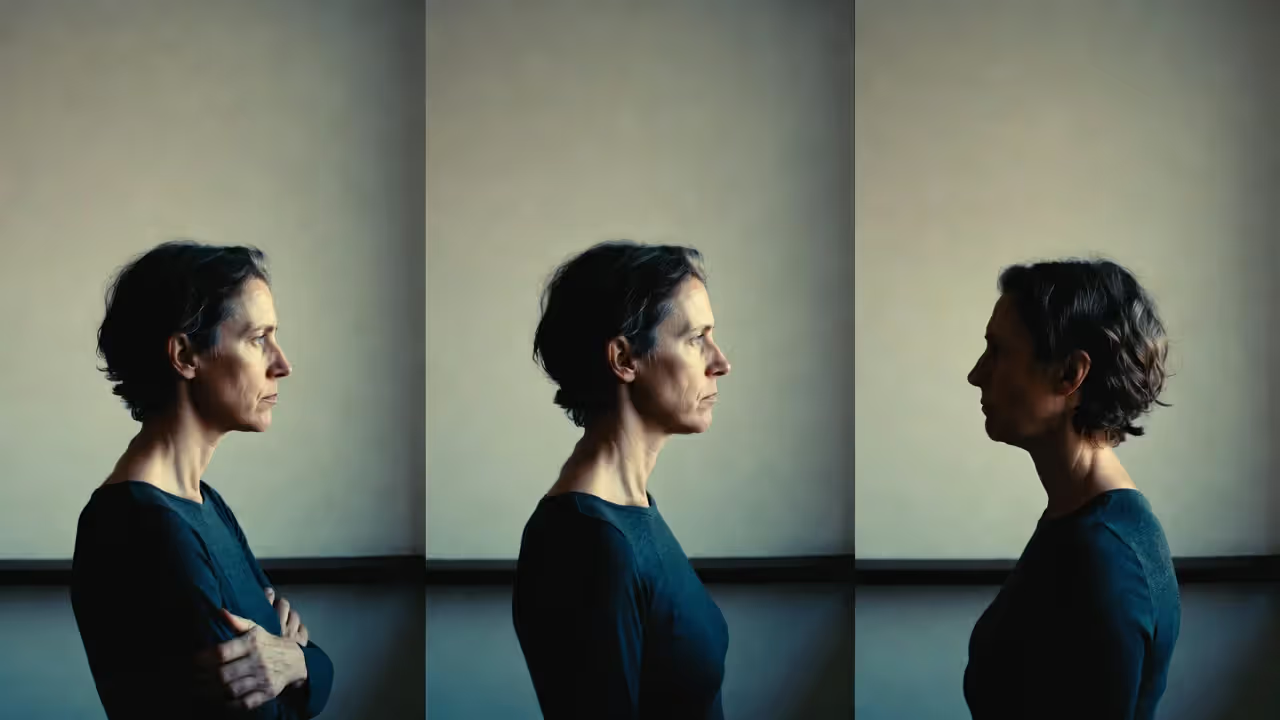
Physical cues often mirror emotional ones: chronic lower-back or hip stiffness, menstrual irregularities, urinary discomfort, low libido or sexual dysfunction, digestive sluggishness in the lower abdomen. These overlap with medical conditions—endometriosis, PCOS, UTIs, sciatica, hormonal imbalances—so rule out physical causes first. A blocked sacral chakra isn't a diagnosis; it's a lens for exploring patterns. If symptoms persist or worsen, see a healthcare provider.
Why the Sacral Chakra Gets “Blocked”
Few people wake up one day with a closed sacral chakra. It closes gradually through repeated messages that feelings are dangerous, pleasure is indulgent, creativity is frivolous. Childhood environments that shamed curiosity or punished emotional expression lay early foundations. Later, rigid workplaces, toxic relationships, body-image pressure, or unresolved trauma reinforce the pattern.
The body keeps the score: it remembers what the mind tries to forget.
— Bessel van der Kolk, psychiatrist and trauma researcher
The nervous system plays a central role. When the body registers vulnerability (intimacy, self-exposure) as threat, it activates protective freeze or flight—tightening the pelvis, shallowing breath, numbing sensation. Over time, this becomes default. A common pattern: someone who people-pleases in relationships to avoid conflict, then feels resentment build silently. Another: creative work stalls because every idea gets judged harshly before it leaves the mind.
How to Balance the Sacral Chakra (Step-by-Step)
Start gentle. Jumping into intense hip openers while stressed can increase tension. First calm the nervous system, then rebuild safety around feeling and expressing.
Step One — Regulate First (Breath + Gentle Movement)
Author: Ava Mitchell;
Source: yogapennsylvania.com
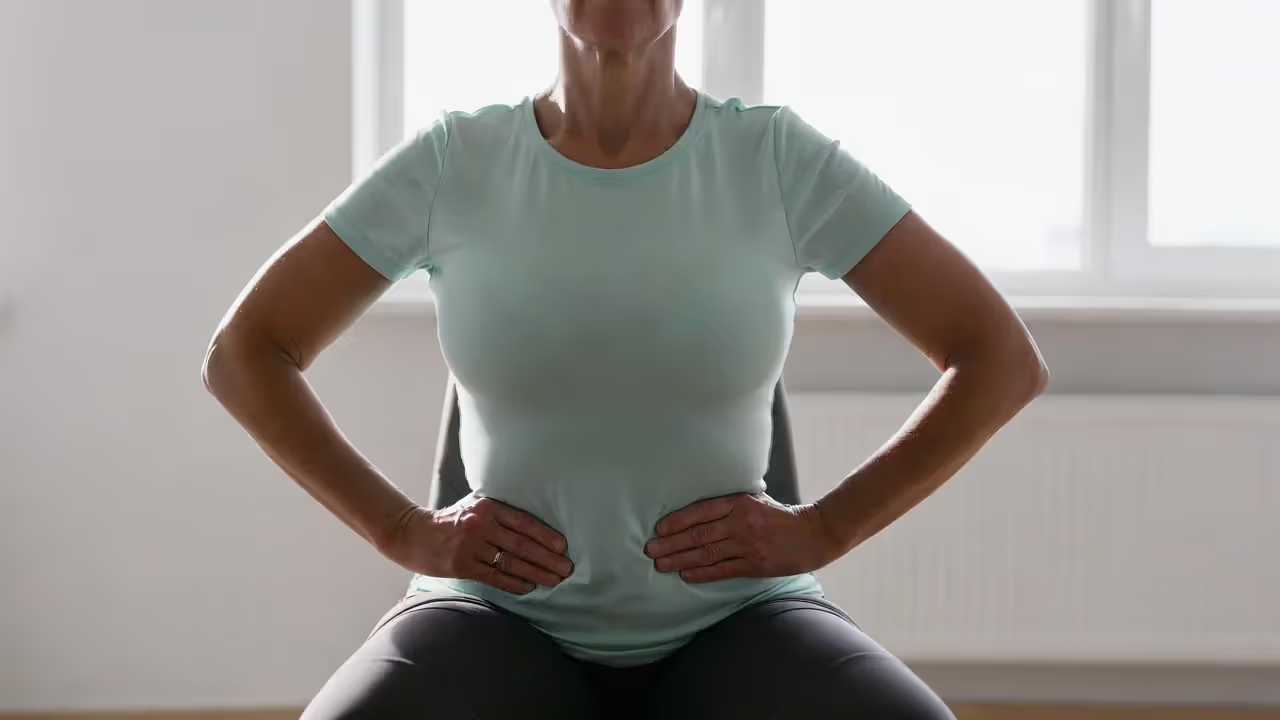
Begin with practices that signal safety. Prolonged exhales (inhale 4, exhale 8) engage the vagus nerve, softening the pelvis. Hip circles while seated—small, slow, intuitive—wake up sensation without force. Five minutes daily lowers the alarm threshold so deeper work lands better.
Step Two — Reconnect to Pleasure, Creativity, and Emotion (Small Wins)
Permission is key. Schedule one tiny pleasure daily: fresh fruit eaten slowly, a favorite song with full attention, barefoot walk on grass. Creativity doesn't need masterpiece status—doodle for three minutes, hum in the shower. Name one emotion daily without judgment: "I'm frustrated and that's okay." These micro-moments teach the body that feeling is safe.
In any given moment we have two options: to step forward into growth or to step back into safety.
— Abraham Maslow, psychologist
Step Three — Build a 10-Min Daily Ritual (Repeatable Plan)
Consistency trumps intensity. Try this sequence:
- 2 min: Prolonged exhales + gentle hip circles
- 3 min: Free-write emotions or ideas (no editing)
- 3 min: Orange-glow visualization (see below)
- 2 min: One affirmation spoken aloud + one small action planned
Daily Sacral Balance Checklist
- Hydrate well (water supports the water element)
- Body scan: notice sensations below navel
- One creative micro-act (sketch, journal, dance)
- Set or honor one boundary
- Pleasure practice (savor food, texture, music)
- 5–10 min gentle movement
- One affirmation voiced
Sacral Chakra Meditation (5–8 Minute Script)
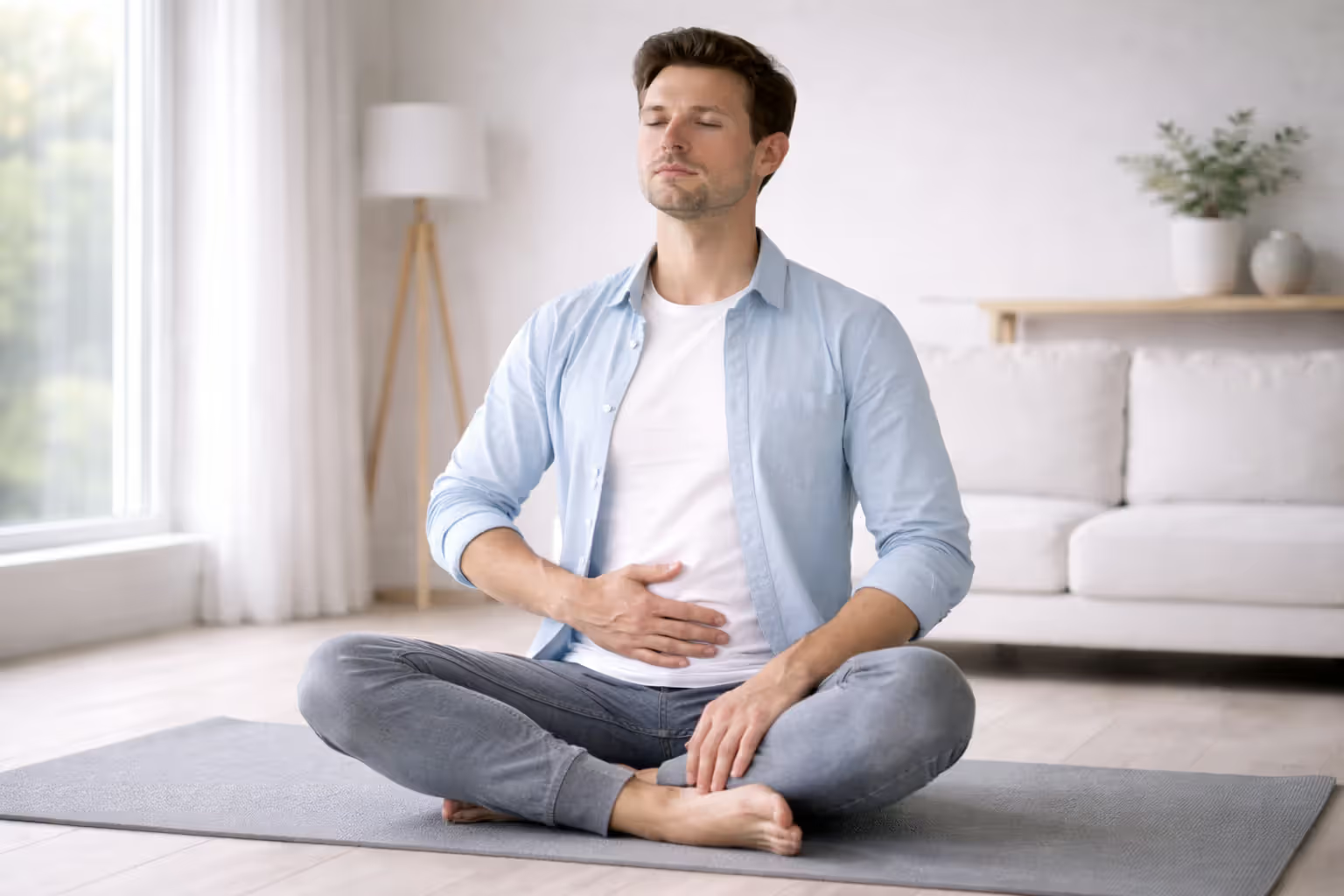
Sit comfortably, spine tall. Close eyes or soften gaze. Rest one hand on lower belly.
Breathe naturally. Notice the rise and fall. After a few cycles, imagine warm orange light pooling below your navel—like sunrise on water. With each inhale, the light gently expands; each exhale, it brightens. No forcing—just allow.
Picture a slow-moving river carrying away tension, shame, stuck feelings. Whisper internally: "I allow myself to feel." Let sensations arrive—warmth, tingling, nothing at all. All valid.
For the last minute, rest in stillness. Feel the space you've created. Open eyes slowly.
Author: Ava Mitchell;
Source: yogapennsylvania.com
If Meditation Increases Anxiety (Modifications)
Shorten to 3 minutes. Keep eyes softly open, gaze downward. Anchor to physical sensation—hand on belly, feet on floor—instead of visualization. If distress builds, stop and ground with slow walking or cold water on wrists. Consult a mental-health professional if practices consistently heighten anxiety.
Sacral Chakra Affirmations (That Convert to Behavior)
Affirmations work best paired with action. Speak them aloud after exhaling fully, when the nervous system is receptive.
Affirmation → Matching Micro-Action
- "I allow myself to feel" → 60-second emotion check-in: name what arises without fixing it
- "My creativity flows freely" → 3-minute free-doodle or voice memo idea
- "I honor my body's needs" → Choose one nourishing food mindfully today
- "I set boundaries with ease" → Practice one gentle "no" or "not now"
- "Pleasure is safe for me" → Savor one small sensory experience (warm shower, favorite scent)
- "I am worthy of joy" → Schedule 10 minutes guilt-free play
Sacral Chakra Yoga Poses (Hip + Pelvis Focus)
Focus on gentle hip openers. Move slowly, breathe deeply.
Best poses for beginners:
- Bound Angle (Baddha Konasana): Soles together, knees wide; support knees with blocks if tight.
- Goddess Pose (Utkata Konasana): Wide stance, knees bent; add side bends for flow.
- Pigeon Pose (Eka Pada Rajakapotasana): Supported version with blanket under hip.
- Happy Baby (Ananda Balasana): Rock gently side to side.
- Bridge Pose (Setu Bandha Sarvangasana): Lift hips, interlace hands below.
- Supine Twist: Knees to one side, arms wide.
Modifications: Use props liberally—blocks, bolsters, blankets. Avoid forcing depth.
10-Min Svadhisthana Flow
- Cat-Cow (2 min): Warm spine, mobilize pelvis.
- Bound Angle forward fold (2 min): Soften hips.
- Goddess with hip circles (2 min): Build warmth.
- Pigeon (supported, 2 min each side).
- Happy Baby or Supine Twist (2 min): Release.
Pose Safety Checklist
- Avoid deep hip openers with acute SI joint pain, recent hip surgery, or pregnancy (consult prenatal specialist).
- No forcing in pregnancy—gentle only.
- Stop if sharp pain occurs; dull stretch is okay.
Lifestyle Supports (Off-the-Mat)
Balance happens in daily choices. Drink water mindfully—sip slowly, notice sensation. Move hips daily—even subtle circles while brushing teeth. Schedule unstructured creative time weekly. Cultivate healthy intimacy—clear communication, mutual consent. Surround yourself with orange accents (clothes, food—carrots, oranges, sweet potatoes). Spend time near water—bath, lake, rain.
7-Day Sacral Chakra Reset Plan
- Day 1: 10-min breath + hip circles; journal one pleasure.
- Day 2: Orange foods focus; 5-min free-write.
- Day 3: Gentle yoga flow; practice one boundary.
- Day 4: Water ritual (bath/shower); name emotions aloud.
- Day 5: Creative micro-act (draw, dance); affirmation pair.
- Day 6: Restorative poses; reflect on week's sensations.
- Day 7: Full 10-min ritual; note shifts.
FAQ
The sacral chakra thrives on gentle permission—permission to feel, to want, to create without apology. Start small: one conscious breath into the lower belly, one honest "no," one unfinished sketch kept visible. These accumulate. Over weeks, the body remembers safety in sensation, the mind loosens its grip on control, and life regains color. You've always carried this capacity. Now you give it room to move.
Related Stories
Read more
Read more


The content on yogapennsylvania.com is provided for general informational and inspirational purposes only. It is intended to share yoga tips, meditation practices, wellness guidance, retreat experiences, and lifestyle insights, and should not be considered medical, therapeutic, fitness, or professional health advice.
All information, articles, images, and wellness-related materials presented on this website are for general informational purposes only. Individual health conditions, physical abilities, wellness goals, and experiences may vary, and results can differ from person to person.
Yogapennsylvania.com makes no representations or warranties regarding the accuracy, completeness, or reliability of the content provided and is not responsible for any errors or omissions, or for decisions or actions taken based on the information presented on this website. Readers are encouraged to consult qualified healthcare or wellness professionals before beginning any new yoga, meditation, or fitness practice.