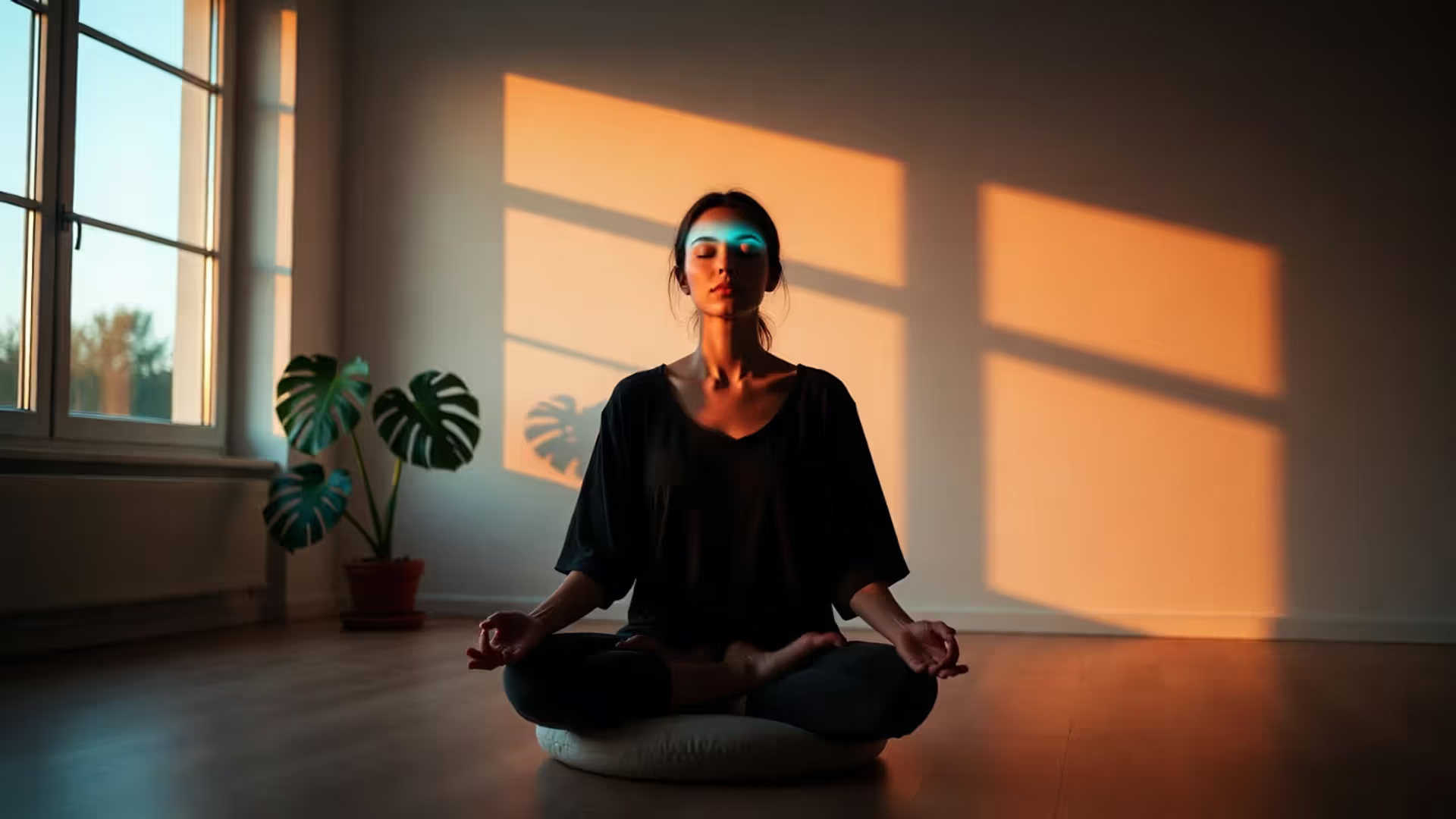
Morning brow center practice — where focused attention meets inner stillness
Third Eye Meditation Guide

Close your eyes. Bring attention to the point between the eyebrows. Hold it there. Within seconds, the mind rebels — a half-finished email, a fragment of yesterday's conversation. You notice the drift and return. That return is the entire practice.
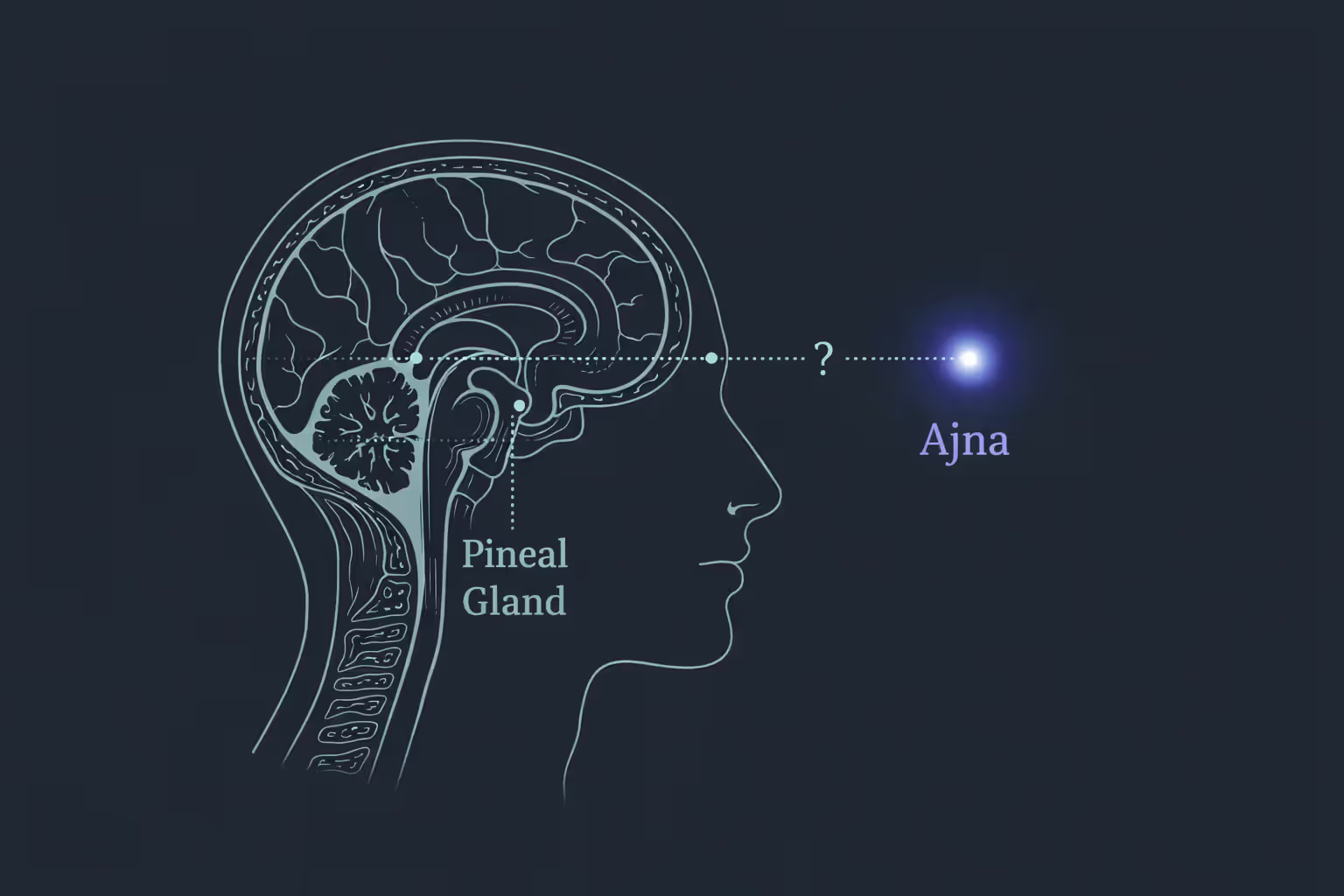
Third eye meditation is a concentration technique rooted in yogic tradition, where practitioners direct sustained attention to the Ajna chakra — an energy center at the brow. As a meditation for intuition and sharpened perception, it spans Hindu, Buddhist, and Taoist lineages. Contemporary interest has also linked it to the pineal gland, though the science behind pineal gland meditation claims is thinner than popular accounts imply.
What Is Third Eye Meditation?
Strip away the esoteric language, and you're left with a focused-attention exercise. Rather than tracking breath at the nostrils or scanning the body, you park awareness at a single internal point — the space between and slightly above the eyebrows.
The Ajna Chakra
Yogic anatomy maps seven principal energy hubs along the spine. Ajna is the sixth, and its Sanskrit name carries a telling double meaning — it can be read as both "to direct" and "to see clearly." The 16th-century tantric manual Sat-Cakra-Nirupana positions this center at the crossing point of two lateral subtle-body currents (ida and pingala) with the central vertical axis (sushumna). Because two opposing streams of energy converge at this junction, traditional commentators treat Ajna as a place of resolution — where the tension between analytical thinking and instinctive knowing collapses into a single, integrated awareness.
Working with this center involves directing a relaxed inner gaze toward the brow — an approach called shambhavi mudra in Hatha yoga. Chinese qigong uses a nearly identical method: soft focus on the area between closed eyelids as a gateway into deeper absorption.
One detail to get right on day one: the focal point is interior. When an instructor says "look inward and slightly upward," they mean a shift in the beam of mental attention, not rolling your eyeballs toward the ceiling.
What "Intuition" Actually Means Here
In contemplative practice, "intuition" has nothing to do with paranormal ability. It refers to a mode of rapid, pre-verbal recognition — the kind of knowing that arrives before you can articulate why. Cognitive scientist Gerd Gigerenzer calls these "gut feelings," and his research suggests they're driven by unconscious pattern matching honed through experience.
Mindfulness traditions (Vipassana, Zen) cultivate this through open monitoring. Third eye concentration works the opposite way: you narrow the beam of attention to one point. The chatter quiets. What surfaces is a cleaner perceptual field — practitioners report faster pattern recognition, more measured responses, and sharper judgment under pressure.
The Pineal Gland Connection — Where Evidence Ends and Metaphor Begins
The third eye as a spiritual concept spans multiple civilizations. The pineal gland — a tiny endocrine structure nestled deep within brain tissue — became linked to it largely because of Descartes, who in the 1600s declared this organ "the principal seat of the soul."
That philosophical marriage has spawned a wave of claims: brow center meditation supposedly "switches on" the pineal gland, triggers endogenous DMT, or reverses fluoride-driven calcification. None have cleared peer review. The DMT hypothesis (popularized by Rick Strassman) remains unverified in living humans. Pineal calcification is a real age-related phenomenon, but connecting it to blocked spiritual perception is speculative, not scientific.
What has been documented: sustained concentration rewires brain activity. A 2012 meta-analysis in Neuroscience & Biobehavioral Reviews identified changes in the prefrontal cortex, anterior cingulate, and insula — regions governing attentional control, self-observation, and emotional processing. The engine is neuroplasticity: repeated training reshapes the circuits you recruit.
Author: Lily Patterson;
Source: yogapennsylvania.com
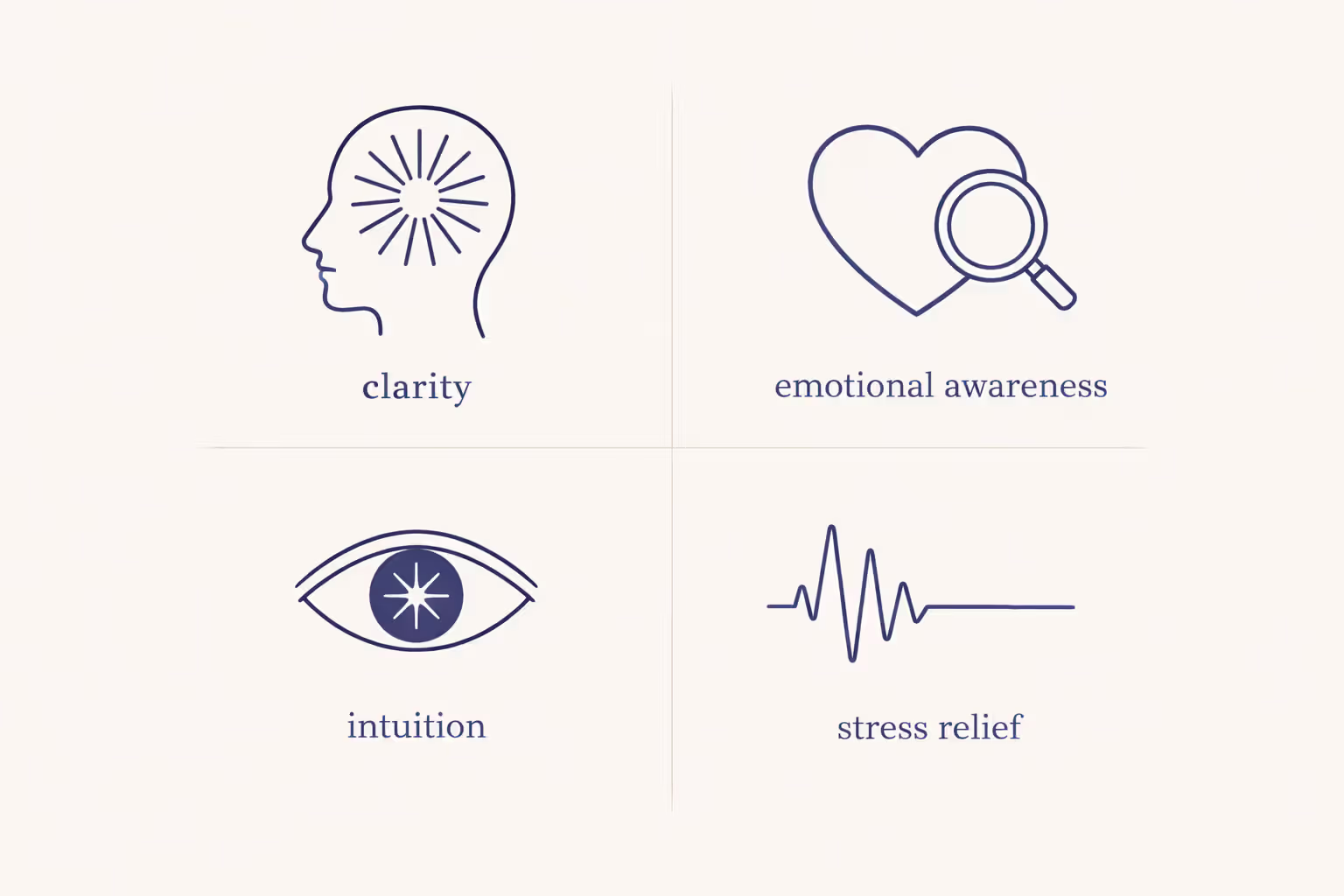
Mental Clarity and Focus
A study by Jha et al. (2007) in Cognitive, Affective, & Behavioral Neuroscience showed that participants in an eight-week focused-attention program performed notably better on attentional tasks than controls. Subjectively, meditators describe something like a decluttered workspace: the same problems exist, but surrounding mental noise drops.
Emotional Awareness
Concentrating on a single point unexpectedly sharpens emotional radar. When anxiety disrupts your lock on the brow center, you register it instantly. Over weeks this builds finer discrimination — "I'm upset" becomes "I'm upset because I feel unheard," a dramatically more actionable starting point.
It sharpens the capacity to observe your own thought patterns while strengthening emotional regulation before reactive impulses take over. That lens — attention training as the active ingredient — reflects where the evidence lands.
— Judson Brewer
Strengthening Intuitive Perception
If intuition is fast, unconscious pattern recognition (as Gigerenzer argues), then using meditation for intuition development follows logically. Lowering the volume on habitual mental commentary creates space for weaker signals to register — the colleague's slight hesitation, the physical tension that tells you a decision feels off.
Stress Reduction
A 2014 meta-analysis by Goyal et al. in JAMA Internal Medicine found moderate evidence that meditation programs reduce anxiety, depression, and pain — through cortisol reduction, lower heart rate, and parasympathetic shift.
Author: Lily Patterson;
Source: yogapennsylvania.com
How to Practice Third Eye Meditation (Step-by-Step)
Preparing Your Space and Posture
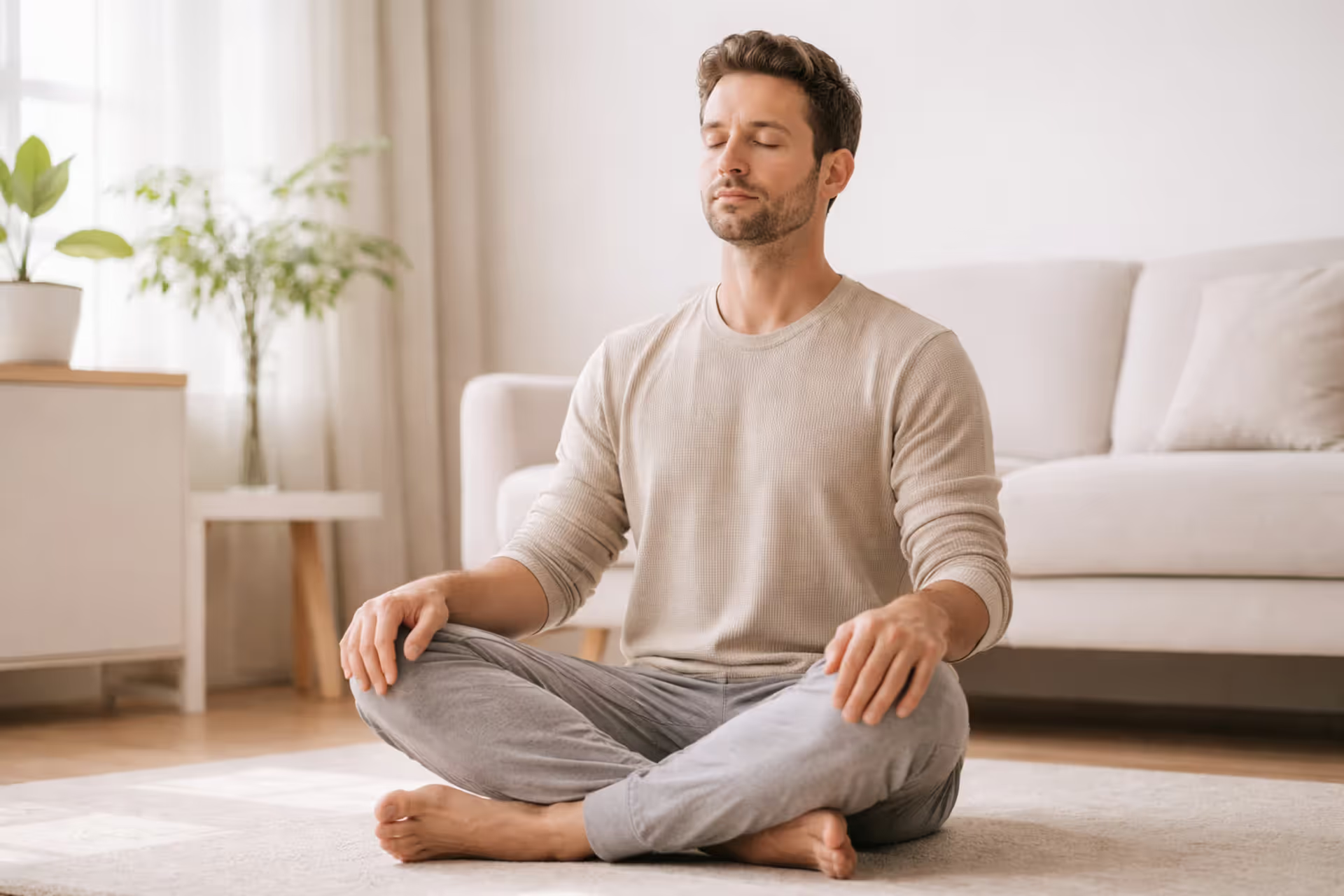
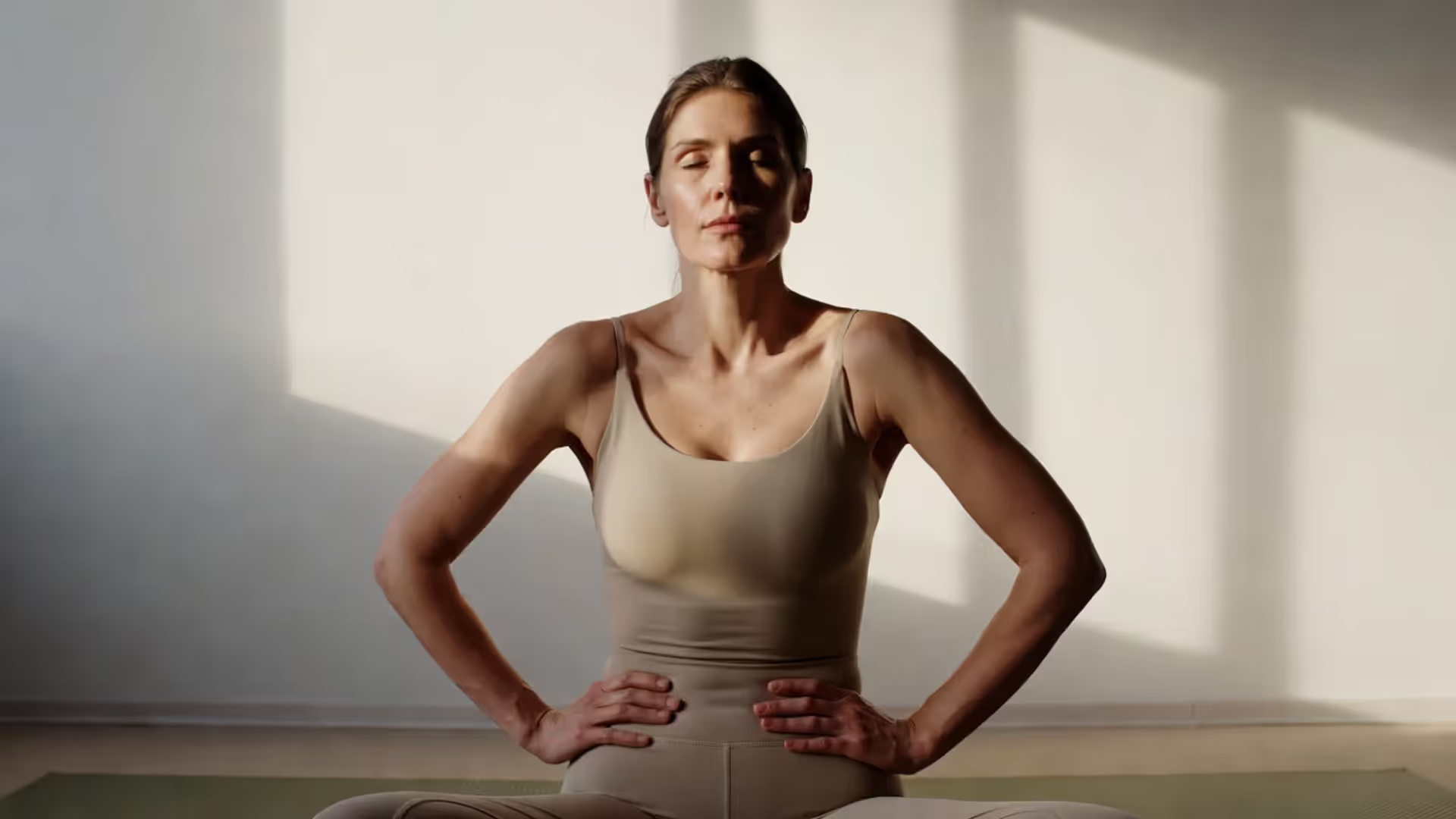
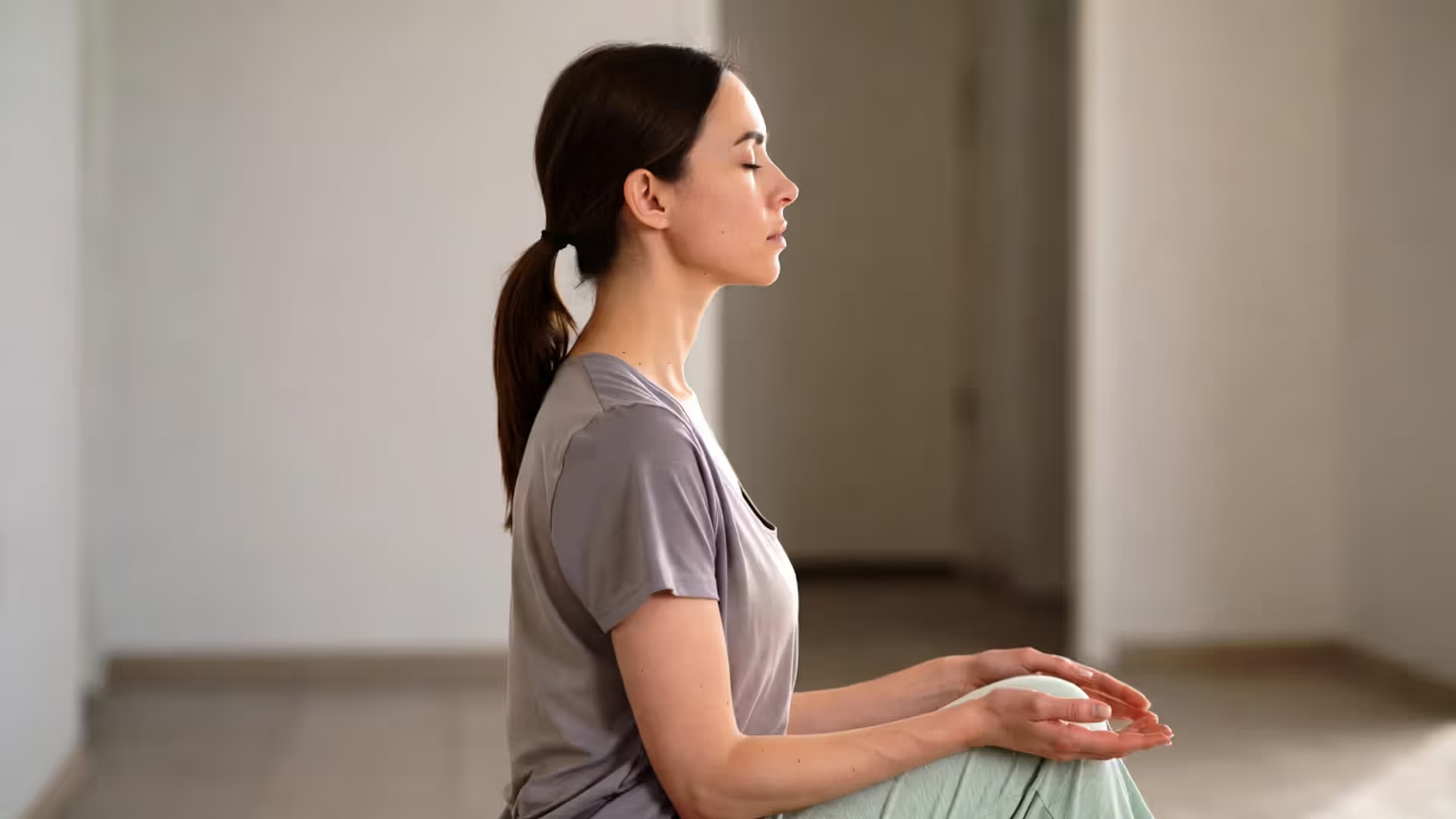
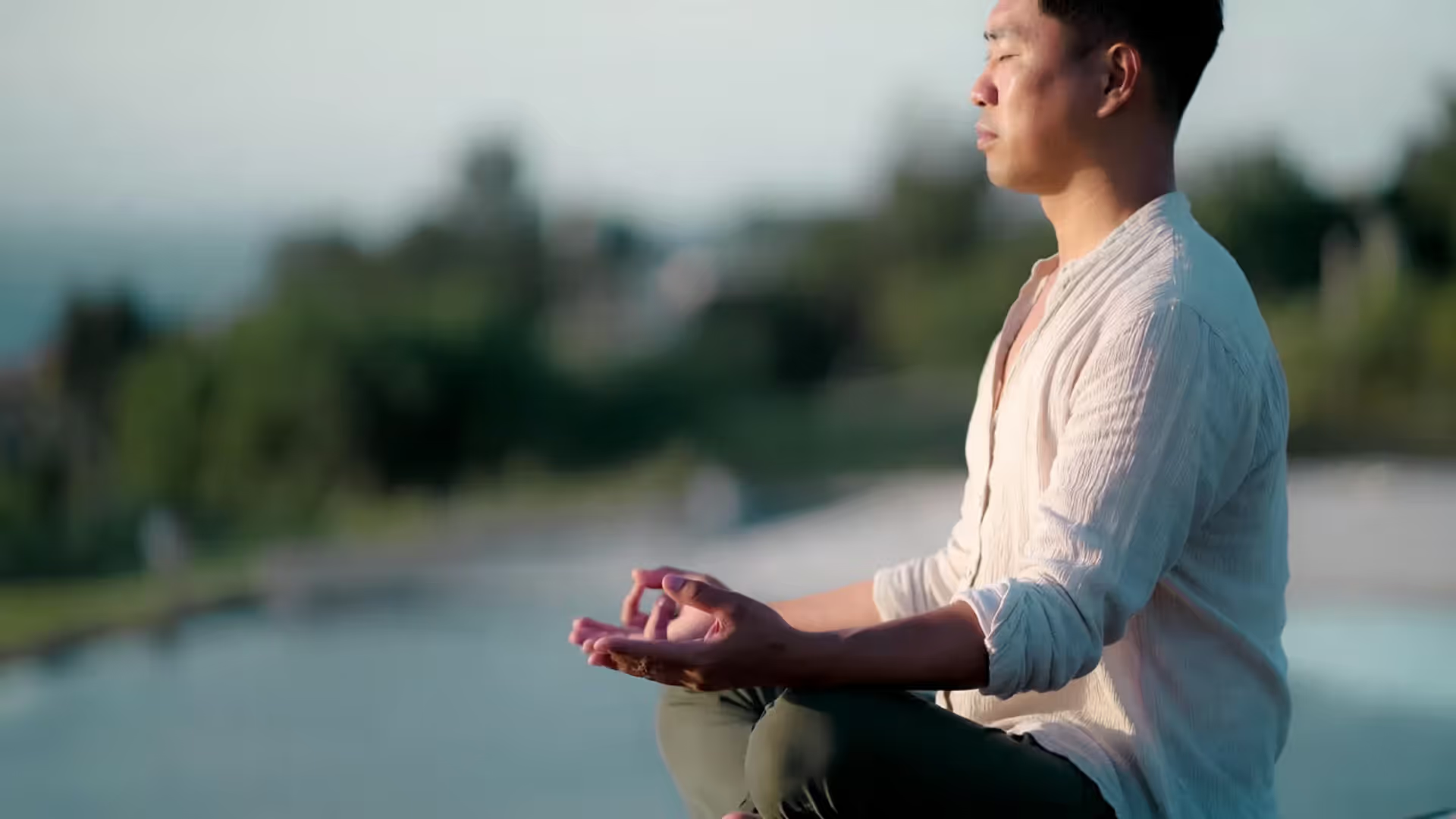
Find a spot where interruptions are unlikely for 10–15 minutes. Sit with your back straight but relaxed. Shoulders drop, hands on thighs. On the floor, use a cushion high enough that your knees angle below your hips.
Close your eyes, unclench your jaw, let the tongue touch the palate softly. Small postural adjustments are fine — locking into forced stillness creates exactly the tension that makes concentration harder.
Settling with Breath
Spend two to three minutes watching your breathing without controlling it. This nervous-system reset matters. Attempting brow center focus while your mind replays a meeting from two hours ago rarely works.
Focusing on the Brow Center
Shift awareness to the space between the eyebrows. Some people tap the spot with a fingertip first for a physical reference.
This is internal attention, not an eye exercise. If your eye muscles ache, soften them. Think "resting" awareness, not drilling into the point.
When the mind drifts — and it will, repeatedly — guide it back. Ten minutes with 40 redirections isn't failure. It's 40 reps.
Visualization Method (Indigo Light)
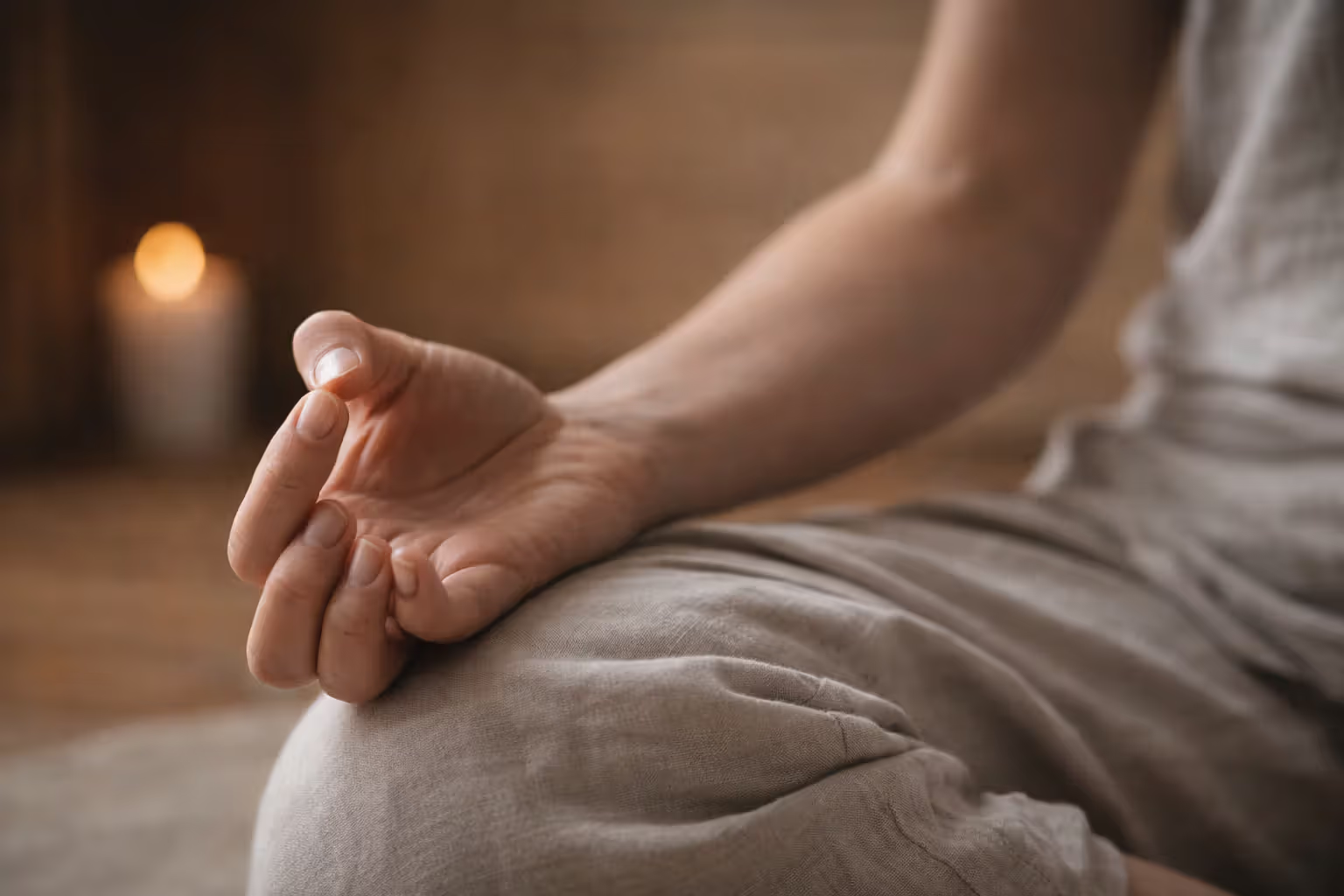
Once settled, imagine a small dot of deep indigo light at the brow. Let it pulse: brighter on the inhale, dimmer on the exhale. A vague sense of color is enough.
Not everyone cooperates with visualization. If the image makes concentration harder, drop it entirely. Pure attention without imagery is equally valid.
Author: Lily Patterson;
Source: yogapennsylvania.com
Closing the Session
Spend a minute broadening awareness: sounds, body weight against the seat, air temperature. Move fingers and toes. Open eyes slowly. If you feel ungrounded, press feet flat on the floor and take several full breaths.
Guided Third Eye Meditation Script (10 Minutes)
Settle into your seat. Close your eyes.
(10-second pause)
Notice your breathing without adjusting it. Air enters, air exits.
(1 minute of silence)
Gently relocate awareness to the space between your eyebrows. No force — just a quiet resting of focus.
(pause)
If you'd like, picture a small sphere of deep blue light at that spot, pulsing softly with your breath.
(2 minutes of silence)
Thoughts will pull you away. Each time, guide yourself back without self-criticism.
(3 minutes of silence)
Let the image dissolve. Maintain attention at the brow center without a visual anchor. Just presence.
(2 minutes of silence)
Expand awareness outward. Notice sounds. Feel your body. Sense the temperature around you. Wiggle your fingers and toes. When ready, open your eyes.
Integrating into a Yoga Meditation Practice
This practice doesn't stand alone in traditional systems. It's embedded in a wider yoga meditation practice that includes physical preparation and breathing exercises.
Preparatory Poses
Balasana (Child's Pose) — folding forward with your forehead touching the mat creates light contact at the exact area you'll concentrate on during sitting, giving the nervous system a tactile preview.
Adho Mukha Svanasana (Downward Dog) — the semi-inverted angle shifts circulation toward the upper body and stretches the hamstrings and calves, which reduces the physical restlessness that often derails the first minutes of a session.
Paschimottanasana (Seated Forward Fold) — a slow hinge from the hips over extended legs lowers heart rate and draws sensory awareness away from the environment, bridging the gap between movement and stillness.
Five to ten minutes of gentle postures is enough.
Pranayama
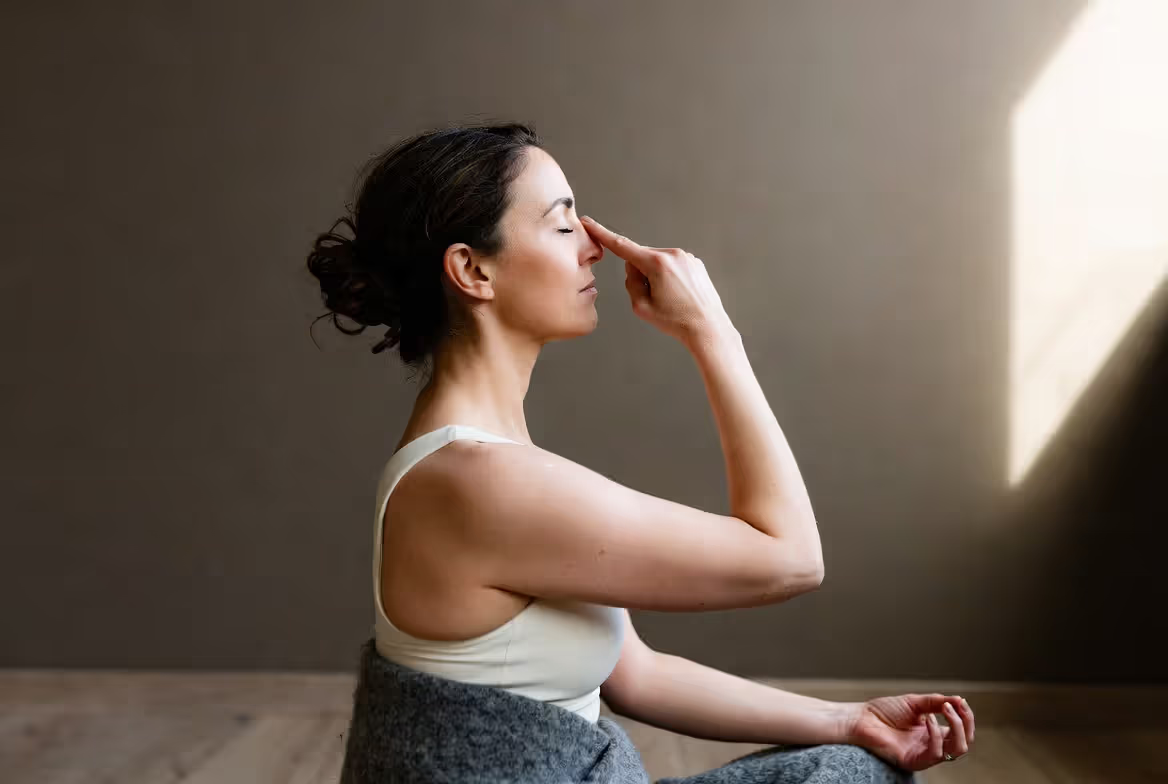
Nadi Shodhana (Alternate Nostril Breathing) — rhythmically switching airflow from one nostril to the other recalibrates the autonomic nervous system, producing a bilateral equilibrium that quiets the default mental chatter. Five minutes before sitting is enough.
Bhramari (Humming Bee Breath) — generating a low, sustained hum creates a vibration often felt directly at the forehead and triggers vagal nerve activity, tilting the body toward deep physiological rest.
B.K.S. Iyengar made a related observation in Light on Life: once respiratory rhythm deepens and steadies, the mind's compulsive outward grasping weakens, and awareness begins to fold inward on its own. That progression — breath settling first, attention following — mirrors precisely what unfolds when a few rounds of pranayama precede concentrated Ajna chakra meditation.
Author: Lily Patterson;
Source: yogapennsylvania.com
Five to ten minutes daily outperforms forty minutes once a week. The nervous system responds to regularity, especially in the first three months.
Signs of Progress — and Mistakes to Avoid
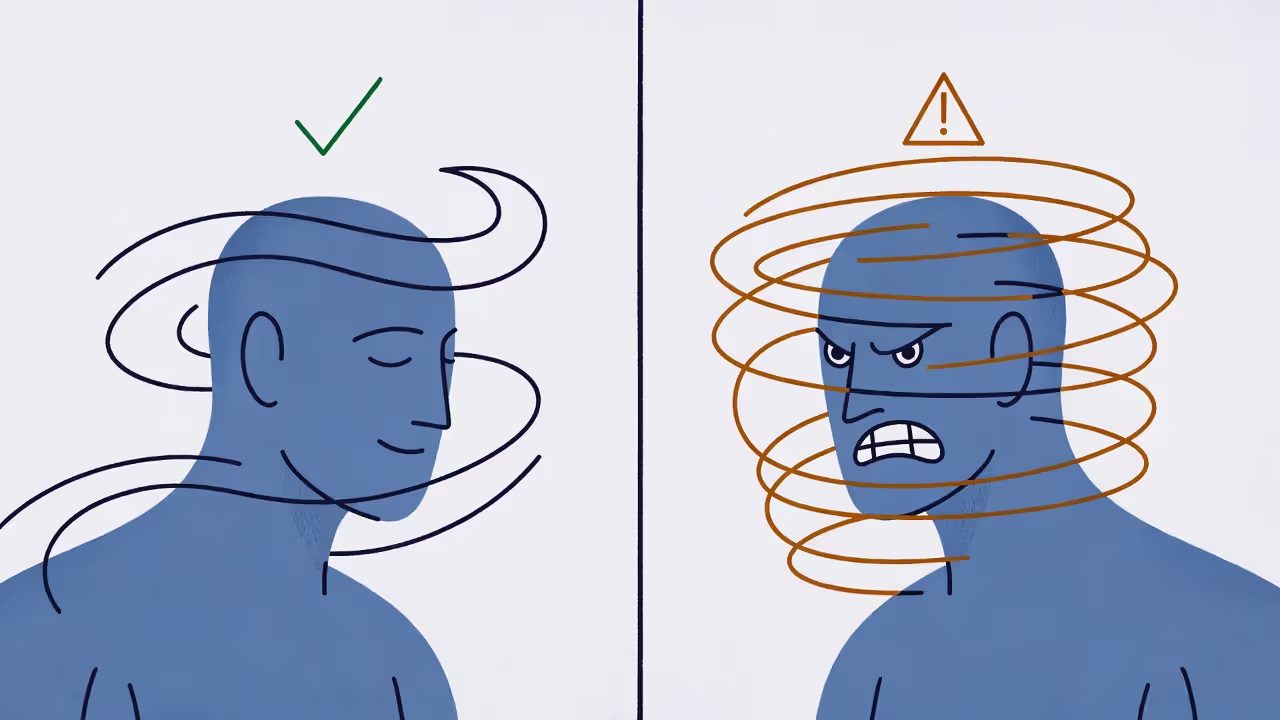
Tingling, warmth, or gentle pressure at the brow after several weeks is normal — heightened proprioceptive awareness, not spiritual fireworks. The body notices an area it's been directed toward, the same way palms warm up during a body scan. If chasing the sensation becomes the point of sitting, you've drifted from meditation into sensory entertainment. Practical rule: note the feeling, let it be, return to the focal point.
Persistent forehead pressure usually means you're straining eye muscles or gripping concentration too hard. Soften. Imagine your eyes resting in warm water. Think "gentle awareness," not "laser focus."
Dizziness sometimes appears during pranayama. Stop the technique, breathe normally, open your eyes, press palms against the floor. Solid physical contact breaks the floating sensation fast.
Pause the practice entirely if you develop recurring headaches, visual disturbances, or anxiety linked to sessions. Switch to a different anchor — heart center, nostrils, candle flame. Concentrated-attention benefits are largely independent of the specific focal point.
Author: Lily Patterson;
Source: yogapennsylvania.com
Third Eye Meditation vs. Other Approaches
| Approach | Focus | Primary Benefit | Level |
| Brow Center (Ajna) | Point between eyebrows | Concentration, clarity | Intermediate |
| Mindfulness (MBSR) | Open present-moment awareness | Stress reduction | Beginner |
| Full Chakra Meditation | Seven chakras sequentially | Energetic balance | Intermediate |
| Visualization | Mental imagery | Relaxation, creativity | Beginner–Intermediate |
| Mantra (TM) | Repeated sound | Deep rest, anxiety reduction | Beginner |
The calm base that brow center work builds is what makes broader awareness practices effective. Mindfulness widens the attentional field; Ajna-focused practice sharpens it.
— Jon Kabat-Zinn
A full chakra meditation moves attention through all seven centers from root to crown. Third eye meditation isolates the sixth. Starting broad and deepening into Ajna-specific work is a natural progression.
Visualization meditation — walking through a forest, constructing a mental sanctuary — overlaps with the indigo light method but differs in goal. Visualization aims at relaxation or creative stimulation. The Ajna-focused approach uses imagery as a temporary anchor, with the intention of eventually dissolving the image and resting in bare concentrated awareness.
7-Day Starter Plan
Day 1 — Breath awareness only (5 min)
Day 2 — Breath + body scan (7 min)
Day 3 — Introducing brow center focus (8 min: 4 breath, 4 brow)
Day 4 — Extended brow focus (10 min: 3 breath, 7 brow)
Day 5 — Adding indigo light visualization (10 min)
Day 6 — Yoga + pranayama + sitting (15 min total)
Day 7 — Your own sequence from the week's elements (15 min)
Pre-Session Checklist
- A space where interruptions are unlikely (total silence not required)
- Spine upright — chair, cushion, or bench
- Timer set, phone in airplane mode
- Zero expectations (the aim is to sit, not to achieve)
- Grounding transition planned for after (walk, stretch, water)
Frequently Asked Questions
Third eye meditation is a concentration discipline with centuries of traditional backing and measurable cognitive payoffs confirmed by neuroscience. It won't deliver supernatural sight. What it reliably builds — with steady daily effort — is a quieter mind, sharper attention, and clear-headed perception.
Start with five minutes of breath. Add a few at the brow center. Build from there.
Related Stories
Read more
Read more

The content on yogapennsylvania.com is provided for general informational and inspirational purposes only. It is intended to share yoga tips, meditation practices, wellness guidance, retreat experiences, and lifestyle insights, and should not be considered medical, therapeutic, fitness, or professional health advice.
All information, articles, images, and wellness-related materials presented on this website are for general informational purposes only. Individual health conditions, physical abilities, wellness goals, and experiences may vary, and results can differ from person to person.
Yogapennsylvania.com makes no representations or warranties regarding the accuracy, completeness, or reliability of the content provided and is not responsible for any errors or omissions, or for decisions or actions taken based on the information presented on this website. Readers are encouraged to consult qualified healthcare or wellness professionals before beginning any new yoga, meditation, or fitness practice.