Where ancient practice meets breathtaking destination
Yoga Retreat Destinations Guide

There comes a moment — maybe during another sleepless night, another stressful meeting, another day when you feel disconnected from yourself — when you realize that a weekend spa visit won't be enough. You need more than relaxation. You need a complete mind and body reset retreat that restores what modern life systematically depletes.
The numbers tell a stark story: 83% of workers experience work-related stress, and burnout has reached epidemic proportions. But beyond statistics lies something harder to measure — a pervasive sense of disconnection from body, from breath, from the present moment. We've optimized ourselves into exhaustion. Yoga and wellness retreats have emerged as a counterforce precisely because they address this crisis comprehensively — not with quick fixes, but with sustained immersion that rewires the nervous system's baseline state.
What happens during a retreat differs fundamentally from regular practice. At home, you squeeze yoga between obligations, checking your phone between poses. At a retreat, yoga becomes the primary obligation — and everything else falls away. This inversion creates neurological space for changes that wouldn't occur in years of weekly classes. Research shows that even one week of intensive retreat practice produces measurable reductions in cortisol, improvements in heart rate variability, and shifts in brain wave patterns associated with reduced anxiety.
But transformation isn't automatic. The destination profoundly shapes the experience: the energy of place, quality of teaching, community you'll join, environment you'll inhabit. Yoga retreats Bali offers something fundamentally different from yoga retreats India or yoga retreats Costa Rica — each carries distinct medicine for different needs.
This guide explores the best yoga retreats in the world — places where setting, teaching, community, and practice converge to create genuine transformation.
“A yoga retreat isn't a vacation — it's an investment in transformation. The right destination amplifies everything: practice goes deeper, insights come faster, healing is more complete. Location matters because energy matters. Choose a place that calls to your soul, not just looks good on Instagram.”
— — Maya Richardson, Yoga Travel Expert and Founder of Retreat Wellness Collective
What Makes a Great Yoga Retreat Destination
The Elements That Matter
Before exploring specific destinations, understanding what makes a location exceptional helps you invest wisely:
Natural environment and its neurological impact. The setting doesn't just affect mood — it changes brain chemistry. Ocean sounds synchronize brain waves toward alpha states associated with calm alertness. Forest environments reduce cortisol measurably within minutes (the Japanese call this "shinrin-yoku" or forest bathing). Mountain air, negative ions near waterfalls, circadian rhythm alignment from natural light — the best destinations leverage these biological mechanisms, making nature itself a healing modality.
Lineage and teaching depth. Yoga is an oral tradition passed teacher to student for millennia. Some destinations (India, particularly) offer direct connection to unbroken lineages. Others (Bali, Costa Rica) have developed excellent contemporary scenes drawing on multiple traditions. Neither is superior — but knowing what you're accessing helps set expectations. A Rishikesh ashram offers different medicine than a Costa Rican surf-yoga retreat.
Teacher quality markers. Beyond certifications, look for: years of personal practice (not just teaching), continued study with their own teachers, ability to adapt to individuals, and genuine embodiment of what they teach. The best teachers aren't just technically skilled — they transmit something through presence that transforms practice.
Food as medicine. Retreat cuisine isn't just healthy — it's therapeutic. Ayurvedic retreats customize meals to your constitution. Raw food retreats cleanse and energize. Conscious eating in silence changes your relationship with food permanently. Don't underestimate this element.
Community alchemy. You'll share intimate experiences with strangers who become surprisingly close. The right community accelerates growth; the wrong one creates friction. Retreats attract different demographics — research this before booking.
Author: Connor Evans;
Source: yogapennsylvania.com
Types of Yoga Retreats
Retreat experiences vary widely:
Immersive practice retreats offer multiple daily sessions, silence periods, minimal distractions — ideal for yoga retreat for burnout recovery or major life transitions.Yoga teacher training combines certification with destination transformation. Bali, India, and Costa Rica host most recognized programs.Luxury yoga retreats pair practice with high-end accommodation, spa treatments, and gourmet cuisine. Affordable luxury options offer comfort without extreme pricing.Wellness and detox retreats combine yoga with cleansing programs, Ayurveda, or other therapeutic modalities — often the best yoga retreats for mental health.Adventure retreats blend practice with surfing, hiking, or diving — for those wanting physical challenge alongside inner exploration.
Asia: The Spiritual Heartland
Bali, Indonesia: The Island of the Gods
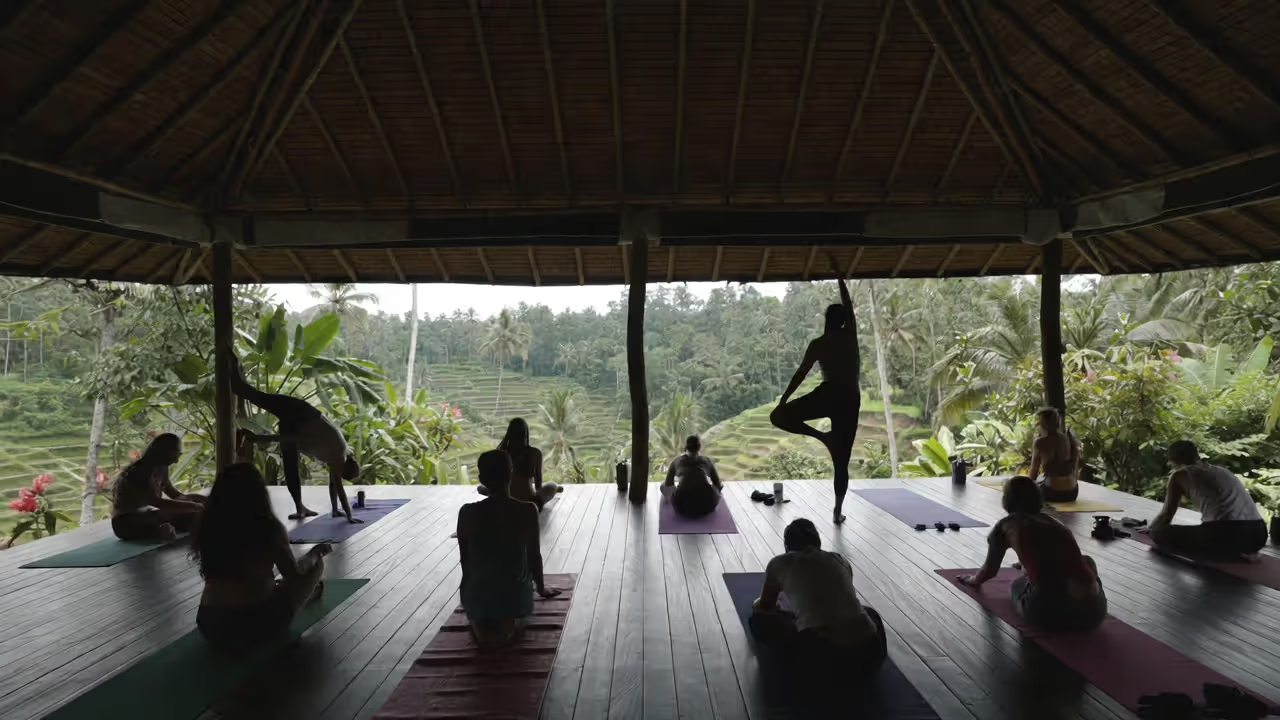
Bali has earned its reputation as the world's premier yoga retreat destination. The island combines Hindu spiritual tradition, stunning natural beauty, warm Balinese hospitality, excellent value, and an established yoga infrastructure that makes it easy to find transformative experiences at any level and budget.
Why Bali works:
The Balinese practice a unique form of Hinduism that permeates daily life — temple ceremonies, offerings, rituals — creating an atmosphere of living spirituality. You feel it everywhere: the incense, the flowers, the prayers on every doorstep, the sacred temples in every village. This cultural context infuses yoga practice with depth it might lack in more secular settings. You're not just practicing yoga — you're practicing within a culture that values spiritual life.
The natural beauty is extraordinary: rice terraces stepping up volcanic slopes, ancient temples overlooking ocean cliffs, dense jungle hiding hidden waterfalls. This landscape continually reminds you why you came — to reconnect with something larger than your daily concerns.
Ubud, in Bali's interior, has become the island's yoga capital. The town and surrounding villages host dozens of yoga studios, retreat centers, and wellness spaces. The famous Yoga Barn offers multiple daily classes in various styles and levels; Radiantly Alive attracts serious practitioners seeking intensive practice; countless smaller shalas provide intimate experiences. The wellness infrastructure extends beyond yoga to include Balinese healers, sound healers, breathwork practitioners, plant medicine ceremonies, and virtually every modality you might seek.
Beyond Ubud, coastal areas like Canggu offer yoga with surf culture — beach life meets asana in a more laid-back, hipster atmosphere. Uluwatu provides dramatic clifftop settings. Quieter regions like Sidemen and Munduk provide escape from tourist crowds, offering traditional Balinese village life alongside practice.
The value is remarkable. Quality retreats cost a fraction of comparable experiences elsewhere, and the cost of living allows extended stays that would be prohibitive in more expensive destinations. A month in Bali costs what a week might in many Western retreats.
Best for: First-time retreaters, those seeking spiritual atmosphere, yoga teacher training, affordable extended stays, combining yoga with cultural immersion, healing work, digital nomads incorporating practice. Excellent choice for yoga retreats for mind and body transformation and wellness retreat for mental health recovery.
When to go: April-October (dry season), though year-round is possible with appropriate expectations for occasional rain November-March.
Budget range: $50-150/day for mid-range all inclusive yoga retreats; luxury yoga retreats from $200-500+/day.
Top retreat centers: The Yoga Barn, Fivelements (luxury), COMO Shambhala (luxury), Blooming Lotus, Ubud Yoga House, Serenity (Canggu), Desa Seni.
Yoga retreats Bali consistently ranks among the best yoga retreat destinations globally for good reason — the combination of affordability, spirituality, natural beauty, and established infrastructure is unmatched.
Author: Connor Evans;
Source: yogapennsylvania.com
India: The Source
Yoga originated in India, and practicing in the motherland carries significance no other destination can match. The depth of tradition, the intensity of spiritual culture, and the unbroken lineage of teaching create experiences impossible to replicate elsewhere. For serious practitioners, pilgrimage to India's yoga centers represents an essential part of their journey.
Rishikesh, Uttarakhand — "The Yoga Capital of the World" sits in the Himalayan foothills where the Ganges emerges from the mountains. This sacred city has drawn spiritual seekers for millennia and now hosts hundreds of ashrams and yoga schools. The energy is intense, sometimes challenging, but undeniably powerful. The Beatles famously visited Maharishi Mahesh Yogi's ashram here in 1968, bringing global attention to India's spiritual offerings.
Rishikesh ranges from rigorous traditional ashrams (basic accommodation, early wake-ups, strict schedules, vegetarian food, no alcohol) to comfortable retreat centers offering gentler immersion. This diversity means you can choose your intensity level. The Parmarth Niketan ashram hosts thousands; smaller shalas offer intimate experiences. The evening Ganga Aarti ceremony — fire offerings at the river's edge — is unforgettable.
Goa offers a different Indian experience — more relaxed, more beachy, more accessible for those intimidated by North India's intensity. The yoga scene in North Goa (Arambol, Morjim, Anjuna) combines practice with beach lifestyle, attracting an international community of practitioners and teachers. Here you'll find diverse styles, from traditional Hatha to ecstatic dance fusion, in a tropical setting with excellent seafood and vibrant culture.
Kerala in South India specializes in Ayurveda, the traditional Indian medicine system closely linked to yoga. Retreats here often combine yoga with Ayurvedic treatment programs — panchakarma cleansing, personalized diet based on your dosha (constitution), herbal therapies, oil treatments — creating comprehensive wellness experiences. Kerala's backwaters, beaches, and hill stations provide diverse natural settings.
Mysore deserves special mention for Ashtanga practitioners. This southern city is where K. Pattabhi Jois developed and taught the Ashtanga method, and his grandson Sharath now continues at the KPJAYI institute. Serious Ashtangis make pilgrimage to study here — an intensive, traditional, sometimes harsh but deeply respected experience.
Best for: Serious practitioners, those seeking authentic tradition, yoga teacher training with traditional lineage, Ayurvedic treatment, spiritual depth-seekers, yoga retreat for stress relief through ancient practices, budget-conscious travelers seeking value.
When to go: October-March (avoiding monsoon and extreme heat).
Budget range: $30-100/day for ashram-style; $100-300/day for comfortable retreats; luxury Ayurvedic resorts from $300+/day.
Top destinations: Rishikesh (tradition), Goa (accessible), Kerala (Ayurveda), Mysore (Ashtanga).
Yoga retreats India offers unmatched authenticity and value — if you're drawn to the source of yoga, this is pilgrimage.
Thailand: Tropical Wellness Hub
Thailand combines tropical beauty, excellent value, developed tourism infrastructure, and genuine wellness culture into an increasingly popular yoga retreat destination. The famous Thai hospitality makes international visitors feel welcome, while Buddhist cultural influence creates contemplative atmosphere that naturally supports practice.
Why Thailand works:
The cost-to-quality ratio in Thailand is exceptional. Your retreat dollar stretches further here than almost anywhere else, allowing longer stays or higher quality at given budgets. The developed tourism infrastructure means reliable transportation, good medical facilities, and easy logistics.
Thai culture itself supports wellness: Buddhism emphasizes mindfulness and meditation; Thai massage tradition aligns with yoga's bodywork; the cuisine (when not sugar-laden tourist versions) is fresh, flavorful, and health-supporting. Many retreats integrate Thai massage, offering a perfect complement to yoga practice.
Koh Samui and Koh Phangan in the Gulf of Thailand have developed strong yoga scenes. Koh Phangan especially — once known mainly for Full Moon parties — now hosts numerous retreat centers, yoga teacher trainings, and wellness communities. The island's jungle-meets-beach environment provides stunning practice settings, with many centers built into hillsides offering ocean views from yoga platforms. The community of long-term yoga practitioners and teachers creates fertile ground for learning.
Koh Samui offers more developed infrastructure, luxury options (including the world-renowned Kamalaya wellness sanctuary), and easier access, while maintaining beautiful practice environments.
Chiang Mai in northern Thailand offers mountain retreats, meditation centers (including traditional Vipassana), and cooler climate. The city's combination of Thai culture, temples, affordable living, and natural surroundings attracts long-term yoga practitioners. The famous temples and ancient history add cultural dimension to wellness stays.
Phuket and Krabi provide beach-resort yoga experiences, often combining practice with Thai spa treatments, island excursions, and tropical relaxation. The Andaman coast's dramatic limestone formations create unique retreat backdrops.
Best for: Budget-conscious retreaters seeking quality, those combining yoga with beach vacation, Vipassana meditation seekers, Thai massage integration, extended stays, digital nomads exploring yoga, yoga retreat for anxiety and stressrecovery.
When to go: November-April (dry season), though shoulder months offer good value with acceptable weather.
Budget range: $40-100/day for quality yoga retreat packages; luxury yoga retreats from $200+/day.
Top retreat centers: Sanctuary Koh Phangan, Kamalaya (luxury), Vikasa, The Yoga Retreat Koh Phangan, Samahita, Absolute Sanctuary.
Yoga retreats Thailand delivers exceptional value — the cost-to-quality ratio makes it possible to stay longer and go deeper than at more expensive destinations.
Central and South America: Nature's Embrace
Costa Rica: Pura Vida Paradise
Costa Rica has emerged as the Western Hemisphere's premier yoga vacation destination. The country's commitment to environmental preservation (over 25% protected land), peaceful culture (no army since 1949), and "pura vida" lifestyle philosophy create an atmosphere naturally aligned with yoga values.
Why Costa Rica excels:
The biodiversity is extraordinary — cloud forests, rainforests, volcanoes, beaches, wildlife — providing backdrop variety unmatched in such compact geography. Howler monkeys provide morning alarm calls; toucans fly overhead during outdoor practice; the ocean offers post-yoga swimming. This isn't nature as backdrop — it's nature as teacher, constantly reminding you of life's larger rhythms.
Costa Rica's yoga scene matured significantly over the past decade. World-class retreat centers now dot both Pacific and Caribbean coasts, offering everything from surf-and-yoga adventures to silent meditation intensives. The infrastructure supports international visitors well: direct flights from major US cities, English widely spoken, modern amenities available, reliable transportation.
Nosara on the Pacific coast has become yoga central — a small beach community now home to multiple yoga studios, teacher trainings, and retreat centers. The Nosara Yoga Institute has trained thousands of teachers over decades; Blue Spirit offers stunning cliff-top luxury retreats with ocean views from every yoga platform. The town maintains a low-key vibe despite its popularity, with unpaved roads and no high-rises.
Santa Teresa and Montezuma on the Nicoya Peninsula combine yoga with excellent surf, attracting athletic practitioners seeking both practice and adventure. The Nicoya Peninsula itself is one of the world's "Blue Zones" — areas where people live measurably longer — adding another dimension to wellness retreats here.
Caribbean coast (Puerto Viejo area) offers different energy — more reggae-influenced, more laid-back, with lush jungle retreats. This side is less developed, wilder, with a distinct Afro-Caribbean culture adding diversity to the Costa Rica experience.
Arenal and Monteverde in the interior provide volcano and cloud forest settings, cooler temperatures, and adventure activities (zip-lining, hiking, hot springs) alongside practice.
Best for: Nature lovers, surf-and-yoga seekers, eco-conscious travelers, those wanting easy logistics (direct flights from many US cities), beginners and experienced practitioners alike, families (many retreats accommodate children), adventure combination, yoga retreat for burnout recovery in nurturing environment.
When to go: December-April (dry season), though green season (May-November) has fewer crowds, lower prices, and dramatic lush landscapes.
Budget range: $100-200/day mid-range yoga retreat packages; luxury wellness travel experiences from $300+/day.
Top retreat centers: Blue Spirit, Nosara Yoga Institute, Pranamar, Bodhi Tree, Anamaya, The Retreat Costa Rica, Samasati.
Yoga retreats Costa Rica ranks among the best yoga retreat destinations for North Americans — the combination of accessibility, natural beauty, and quality makes it the obvious choice for many first-time international retreaters.
Mexico: Ancient Energy, Modern Scene
Mexico offers diverse yoga retreat destinations across dramatically different landscapes, from Caribbean beaches to Pacific surf towns to mountain colonial cities. The country's ancient spiritual traditions (Mayan, Aztec) add dimension that purely imported yoga scenes lack.
Tulum on the Caribbean has exploded as a yoga and wellness destination — perhaps too much, critics say, with overdevelopment threatening what made it special. But quality retreats remain, offering beachfront practice, cenote (sacred swimming holes) visits, and proximity to Mayan ruins.
Oaxaca in southern Mexico provides cultural immersion alongside practice — indigenous traditions, mezcal culture, exceptional cuisine, colonial architecture. The cooler mountain climate suits those preferring escape from tropical heat.
San Pancho and Sayulita on the Pacific coast offer surf-yoga combinations with Mexican culture rather than pure expat scenes.
Best for: Culture seekers, those combining yoga with cuisine and history, beach lovers, budget-conscious travelers.
When to go: November-April (dry season).
Budget range: $80-200/day.
Guatemala: Mystical Waters
Lake Atitlán, surrounded by volcanoes and Mayan villages, hosts a quietly powerful yoga scene. The lake is considered one of the world's most beautiful, and the indigenous culture adds spiritual depth. San Marcos La Laguna has developed as a healing and yoga center, attracting alternative seekers for decades.
Best for: Budget travelers, those seeking authentic alternative community, mystical atmosphere, extended stays.
Europe: Accessible Transformation
Portugal: Europe's Yoga Coast
Portugal has emerged as Europe's leading yoga holiday destination, particularly the Algarve and Alentejo coasts. Excellent weather (300+ sunny days annually), stunning coastline, good value compared to Northern Europe, and easy access from anywhere in Europe make it ideal for those seeking retreat without long-haul flights.
Why Portugal excels:
The Atlantic coast provides dramatic backdrop — towering cliffs, hidden coves, world-class surf breaks — that rivals tropical destinations for natural beauty. The climate allows year-round practice, though spring and fall offer ideal conditions.
Portugal's slower pace of life aligns with retreat philosophy. This isn't a rushed, stressed society — the Portuguese understand relaxation. The culture of long meals, afternoon coffee, evening strolls supports the unwinding process retreats facilitate.
Value compared to Northern European alternatives is significant. Your euros stretch further here, allowing longer stays or higher quality accommodation at given budgets.
The Algarve coast offers dramatic cliffs, hidden beaches, and established surf culture. Retreat centers here often combine yoga with surfing, hiking, and Portuguese cuisine. The western Algarve (around Sagres and Lagos) maintains wilder character; the central Algarve is more developed but still offers quality retreat options.
Sintra near Lisbon provides mystical forest retreats in a UNESCO World Heritage landscape of castles, gardens, and ancient forests. The energy here is different — more mystical, more introverted, suited to those seeking solitude and nature connection.
The Alentejo coast remains wilder and less developed, offering deeper retreat atmosphere for those willing to trade convenience for authenticity. This is Portugal's untouched coastline — dramatic, sparse, and beautiful.
Best for: Europeans seeking accessible retreat, surf-and-yoga seekers, those preferring familiar Western context without long flights, wine lovers (yoga morning, wine evening works for some), couples seeking romantic retreat settings, wellness retreat vacations with European charm.
When to go: May-October for reliable warmth; winter is mild but can be rainy.
Budget range: €100-250/day for quality yoga and wellness retreats.
Top retreat centers: Vale de Moses, Suryalila, Monte Velho, Algarve Yoga, The Beautiful Life Retreat.
Yoga retreats Europe offers accessible transformation without long-haul travel, and Portugal leads the continent in quality and value.
Spain: Diverse Landscapes
Yoga retreats Spain offers remarkable variety across dramatically different landscapes — Andalusian mountains, Catalan coast, Canary Islands, Balearic Islands — each with distinct character. Spain represents excellent yoga retreat vacation ideas for Europeans seeking variety.
Ibiza, despite its party reputation, has developed a serious wellness side. The island's bohemian history and natural beauty support numerous retreats, particularly in the quieter north. Holistic wellness retreats here often combine yoga with sound healing, breathwork, and other modalities.
Andalusia's white villages and mountain landscapes host rustic retreats emphasizing simplicity and nature connection. The region's Moorish history adds cultural dimension.
The Canary Islands offer year-round warmth and dramatic volcanic landscapes — perfect for wellness retreat vacations during European winter.
Best for: Europeans wanting variety within single country, combining yoga with Spanish culture, winter sun seekers.
Greece: Birthplace of Western Wellness
Greece invented the concept of retreat — ancient philosophers sought wisdom in contemplative settings. Today, the Greek islands provide stunning backdrops for yoga practice, combining Mediterranean beauty with affordable European travel.
Crete, Santorini, and smaller islands host retreats ranging from simple to luxurious, often incorporating Greek philosophy alongside yoga tradition.
Best for: History lovers, island-hoppers, Mediterranean climate seekers, those combining yoga with Greek culture.
Finding Your Perfect Retreat

Author: Connor Evans;
Source: yogapennsylvania.com
Matching Destination to Intention
Your retreat purpose should guide destination choice — but first you must honestly assess what you actually need, which may differ from what you think you want.
The Burnout Recovery Path
If you're genuinely burned out — not just tired, but depleted at a cellular level — you need gentler environments than you might realize. The temptation is to book an intensive retreat ("I'll fix myself in one week!"), but burned-out nervous systems need gradual rebuilding, not more intensity. Best choices: Bali's Ubud (established infrastructure means less logistical stress), Costa Rica's quieter Pacific coast (nature without intensity), or Kerala's Ayurvedic retreats (systematic restoration). Minimum two weeks; three is better. Avoid: challenging destinations requiring extensive travel or adaptation.
The Spiritual Seeker's Path
If something in you hungers for meaning, connection to tradition, or genuine spiritual experience, the destination matters enormously. India — particularly Rishikesh — offers living lineage and the incomparable energy of yoga's birthplace. Bali's Hindu culture provides spiritual immersion in a more accessible package. Guatemala's Lake Atitlán attracts seekers for reasons that become clear only upon arrival. These places carry centuries of accumulated practice; you feel it immediately.
The Adventure-Wellness Hybrid
If pure retreat sounds boring but you need wellness support, combine modalities: Costa Rica (surf + yoga), Portugal's Algarve (surf + yoga), Thailand (diving + practice), Mexico (cenotes + yoga). The physical adventure grounds the introspective work; the yoga integrates the adventure. This path suits athletic personalities who'd resist pure stillness.
The Mental Health Priority
For yoga retreat for anxiety and stress, clinical considerations matter. Look for: trained therapists on staff (not just yoga teachers), meditation emphasis, small group sizes, and trauma-informed approaches. Bali's Fivelements, Thailand's Kamalaya, and Costa Rica's Blue Spirit offer sophisticated mental health integration. Avoid high-stimulation environments or intense physical practices until baseline stabilizes.
The First-Timer's Path
For top yoga retreats for beginners, prioritize easy logistics and supportive environments. Costa Rica offers direct flights from major US cities, English widely spoken, and welcoming culture. Bali's Ubud has infrastructure supporting every need. Portugal serves Europeans well. Avoid challenging destinations (rural India, remote locations) until you know how you respond to retreat environments.
Practical Considerations
Duration shapes everything. A weekend retreat offers glimpse and reset. One week allows entry into transformation — research shows meaningful nervous system changes require 5-7 days of sustained practice. Two weeks permits genuine rewiring of patterns. A month creates lasting change that persists after return. The relationship isn't linear: two weeks doesn't just double one week's benefit; it accesses entirely different territory. Budget time generously.
Jet lag is real. A 12-hour time difference means 3-4 days of adjustment. Flying from New York to Bali and immediately starting intensive practice creates struggle, not transformation. Build in arrival days. Or choose destinations minimizing jet lag — Costa Rica from North America, Portugal from Europe.
Season creates different experiences. Bali's wet season (November-March) means afternoon thunderstorms, lush landscapes, fewer tourists, lower prices, and a particular introspective energy some prefer. Dry season means reliable sun, crowded sites, higher prices. Neither is wrong — but know what you're choosing.
“First-time retreaters often worry about going alone. But solo retreat travel is the norm, not the exception. You'll be surrounded by like-minded seekers also pursuing transformation. Some of the deepest friendships form at retreats — bonded through shared practice and vulnerability.”
— Dr. Elena Vasquez, Wellness Travel Researcher and Author, Institute for Transformational Tourism
Planning Your Retreat Journey
How to Choose and Book
Read reviews strategically. Look beyond overall ratings on BookRetreats or TripAdvisor — seek pattern recognition. If multiple reviews mention "transformative teaching" or "life-changing experience," that signals something real. If reviews consistently mention logistics issues, food quality problems, or teacher turnover, believe them. Pay attention to reviewer profiles: a meditation teacher's review carries different weight than a first-timer's.
Verify teacher credentials and presence. Many retreats advertise famous teachers who appear only occasionally. Confirm who actually teaches during your dates. For teacher training, verify Yoga Alliance registration (RYS 200 or 500). More importantly, research the lead trainer's own training lineage, years of practice (not just teaching), and whether they still study with their own teachers. Great teachers remain students.
Decode "all-inclusive" carefully. This phrase means different things. Clarify: Which meals? (All three, or just breakfast?) How many yoga classes daily? What about spa treatments, excursions, airport transfers? Some retreats include everything; others charge separately for items you assumed were included. Get specifics in writing.
Book direct when possible. Third-party platforms charge retreats 15-20% commission, which either raises your price or reduces retreat quality. Direct booking often yields better rates, room upgrades, or added perks. It also establishes direct communication with the retreat, useful if issues arise.
Timing strategy. High season (Christmas, New Year, February-March for tropical destinations) means peak prices and full capacity — book 3-6 months ahead. Shoulder season often provides best value: good weather, fewer crowds, lower prices. Ask retreats about their quiet periods; some offer significant discounts.
Red flags to avoid. Vague teacher information; no photos of actual facilities (only stock images); prices dramatically below market; high-pressure booking tactics; inability to answer basic questions; poor communication responsiveness. Quality retreats communicate professionally and transparently.
Questions to ask. What's the teacher-to-student ratio? What happens if you get injured or ill? What's the refund/cancellation policy? Can they accommodate dietary restrictions? What's the typical participant demographic? What's nearby if you want to explore independently?
What to Expect
Daily schedule typically includes:
- 6:00-7:00 AM: Early morning meditation or pranayama (breathing practice)
- 7:00-9:00 AM: Morning yoga practice (often the longest and most intensive session)
- 9:00-10:00 AM: Healthy breakfast (often buffet-style with fruit, grains, protein options)
- 10:00 AM - 4:00 PM: Free time, workshops, excursions, spa treatments, or personal practice
- 4:00-6:00 PM: Afternoon yoga or restorative practice
- 6:00-7:00 PM: Dinner
- 7:30-8:30 PM: Evening meditation, chanting, dharma talks, or community activities
Schedules vary considerably — some retreats are more intensive with minimal free time; others offer more relaxation. Silent retreats remove the talking; adventure retreats add activities. Review schedules carefully to ensure alignment with what you're seeking.
Accommodation ranges from shared dormitories to private luxury villas. Mid-range retreats offer comfortable private rooms with en-suite bathrooms. Accommodation quality is often the main variable between budget and luxury options with similar programming.
Food is usually vegetarian or vegan, organic when possible, always health-focused. Quality retreats accommodate dietary restrictions with advance notice. Alcohol is typically unavailable or discouraged.
Digital detox is encouraged. Some retreats require device surrender; others encourage but don't enforce. Consider honestly: can you truly retreat while checking email?
Community forms naturally. Shared meals, partner exercises, and contemplative practice together builds connection. Many arrive alone but leave with lasting friendships.
Maximizing Your Investment
Arrive rested — jet-lagged practice isn't transformative. Set clear intentions — what specifically do you want to shift? Participate fully — resistance signals what needs attention. Embrace discomfort — transformation isn't always comfortable. Leave integration space — don't return immediately to chaos.
Specialized Retreat Experiences
Yoga Teacher Training Destinations
Yoga teacher training abroad combines professional development with transformative travel. Top destinations for 200-hour and 300-hour certifications:Bali offers the largest concentration of Yoga Alliance registered trainings, across various styles and price points. The supportive environment, affordability, and beauty make it ideal for the intensive month-long commitment most trainings require.India provides traditional lineage trainings, particularly in Rishikesh for various styles and Mysore specifically for Ashtanga. Training in yoga's birthplace carries significance many find valuable.Costa Rica has established excellent training programs, particularly at Nosara Yoga Institute and Blue Spirit. The nature setting and easier logistics (compared to Asia) appeal to Americans and Europeans.Thailand's Koh Phangan hosts numerous affordable trainings in a supportive community environment.
Considerations: Yoga Alliance registration ensures international recognition. Research lead trainer credentials carefully. Understand what's included (accommodation, food) versus additional costs.
Meditation and Silent Retreats
For those seeking primarily meditation retreat experiences:Vipassana centers worldwide (dhamma.org) offer free 10-day silent meditation courses in the tradition of S.N. Goenka. Serious, intensive, transformative — but not for everyone.Spirit Rock and IMS in California and Massachusetts offer insight meditation retreats in established Western Buddhist centers.Thailand's monasteries welcome serious meditation practitioners for extended stays, often donation-based.Plum Village in France (Thich Nhat Hanh's tradition) offers mindfulness retreats combining meditation with community practice.
Luxury Wellness Retreats
When budget allows, luxury yoga retreats offer unparalleled experiences: COMO Shambhala (Bali), Kamalaya (Thailand), Ananda in the Himalayas (India), and SHA Wellness (Spain) represent the pinnacle of wellness retreat vacations.
Budget-Friendly Options
Extended practice needn't break the bank. India's ashrams ($20-40/day all-inclusive) offer unmatched depth-to-cost ratio. Guatemala's Lake Atitlán ($50-80/day) combines magical setting with affordability. Thailand delivers excellent value outside peak season. Work-exchange programs at retreat centers provide free stays in exchange for karma yoga service.
Detox and Healing
Ayurvedic panchakarma in Kerala offers traditional cleansing under medical supervision. Juice fasting retreats (Thailand excels) combine yoga with therapeutic nutrition. Digital detox retreats address technology addiction — increasingly relevant and increasingly available.
Emerging Destinations to Watch
Rising Stars
Sri Lanka — Post-civil-war recovery has opened this beautiful island to wellness tourism. Excellent Ayurveda, stunning beaches, Buddhist culture, good value.
Morocco — Marrakech and coastal areas host growing yoga scenes, combining practice with unique Moroccan culture and cuisine.
Japan — Yoga meets Zen in retreats combining asana with zazen, forest bathing, and Japanese aesthetics.
Colombia — Improved safety has revealed stunning retreat possibilities, from Caribbean coast to coffee region to Amazon edge.
Vietnam — Early-stage yoga scene in a beautiful, affordable country with profound Buddhist tradition.
Considerations for Emerging Destinations
- Less established infrastructure may mean more research required
- Fewer reviews make quality assessment harder
- Adventure and discovery for those willing to pioneer
- Often better value before destinations become well-known
Frequently Asked Questions
Conclusion: The Journey Inward Begins with a Journey Outward
Somewhere in the world right now, the sun is rising over a yoga shala. People who weeks ago felt depleted, disconnected, or desperate for change are rolling out their mats for morning practice. They don't know yet how different they'll feel when they return home — how the persistent anxiety has quieted, how sleep has deepened, how some burden they'd carried so long they'd forgotten it existed has finally released.
This transformation is available to you. Not through reading about yoga retreats, not through adding another bookmark to your browser, not through "someday when things calm down." The nervous system doesn't transform through information — it transforms through experience. And experience requires commitment: choosing a destination, booking flights, telling your boss, and going.
The destinations in this guide offer different medicines for different ailments. Yoga retreats India provides the potency of source — lineage, tradition, and the undeniable energy of yoga's birthplace. Yoga retreats Bali offers spiritual immersion in accessible packaging — Hindu culture, natural beauty, and established infrastructure. Yoga retreats Costa Rica brings nature's healing in an easy-to-reach package. Yoga retreats Europe allows Europeans transformation without long-haul complexity. Each destination serves those ready to receive what it offers.
The best retreat isn't the most luxurious, the most Instagram-worthy, or the most expensive. It's the one you actually attend — fully present, genuinely committed, willing to do the work. A simple ashram entered with complete dedication transforms more than a luxury resort visited with half-attention.
Something in you already knows this is needed. Perhaps you've felt it during another sleepless night, another overwhelming week, another moment of wondering how life got so far from what you imagined. That knowing is intelligence — your deeper self pointing toward what supports your healing.
The logistics are solvable. The time can be found. The investment is worthwhile.
Retreat isn't escape from life — it's preparation for living it fully. The calm you cultivate, the awareness you develop, the patterns you shift: these travel home with you. They change how you respond to stress, relate to loved ones, navigate challenges, and experience ordinary moments.
Millions have walked this path before you. The practices are refined over millennia. The teachers are ready. The communities will welcome you.
All that's missing is your yes.
Where will your journey take you?
Related Stories
Read more
Read more


The content on yogapennsylvania.com is provided for general informational and inspirational purposes only. It is intended to share yoga tips, meditation practices, wellness guidance, retreat experiences, and lifestyle insights, and should not be considered medical, therapeutic, fitness, or professional health advice.
All information, articles, images, and wellness-related materials presented on this website are for general informational purposes only. Individual health conditions, physical abilities, wellness goals, and experiences may vary, and results can differ from person to person.
Yogapennsylvania.com makes no representations or warranties regarding the accuracy, completeness, or reliability of the content provided and is not responsible for any errors or omissions, or for decisions or actions taken based on the information presented on this website. Readers are encouraged to consult qualified healthcare or wellness professionals before beginning any new yoga, meditation, or fitness practice.