
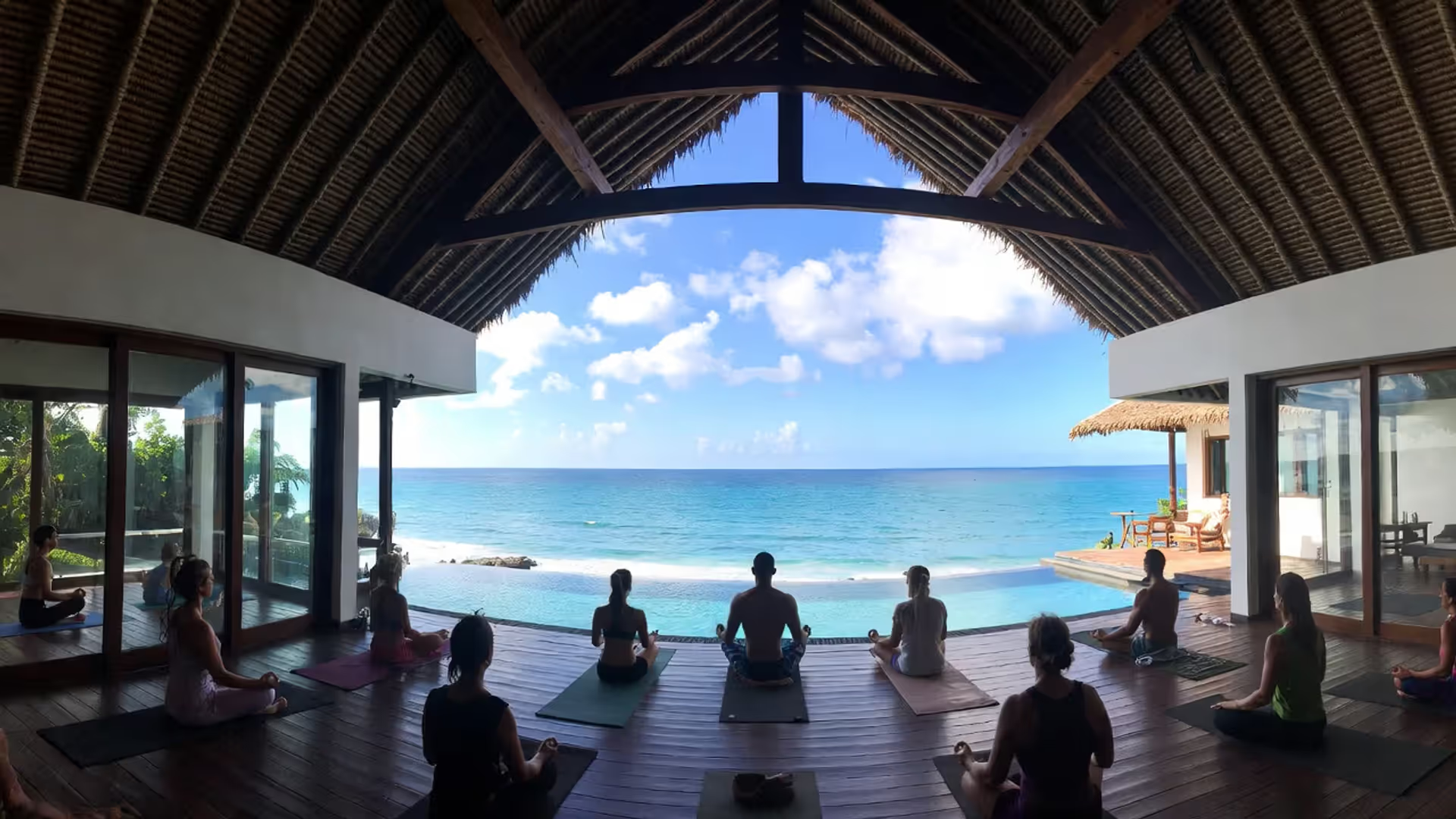
Small-group yoga class at a luxury oceanfront retreat with open-air shala and infinity pool.
Luxury Yoga Retreat: How to Choose the Right High-End Program Without Overpaying

A couple books a $7,500-per-person retreat in Tulum based on the website photos alone — turquoise infinity pool, open-air shala, candlelit dinners. They arrive to find 38 other guests, one lead instructor who teaches two generic group classes per day, and a "spa" that's a single treatment room with a two-day waitlist. The food is good. The venue is beautiful. The yoga is an afterthought.
This is the central problem with the luxury yoga retreat market: the word "luxury" gets applied to any program that charges premium rates, regardless of whether the instruction, structure, or guest experience justifies the cost. This guide breaks down what separates genuinely high-end programs from expensive scenery, and how to evaluate whether a specific retreat deserves your budget.
What Actually Makes a Yoga Retreat "Luxury" (and What's Just Expensive Marketing)
The distinction sits in six concrete areas — not aesthetics.
Private or semi-private accommodations with en-suite bathrooms. Not shared dorms with upgraded linens. Not "garden view" rooms in a converted hostel. Actual hotel-grade or villa-grade private space.
Staff-to-guest ratio below 1:4. A genuine boutique yoga retreat keeps total guest count under 16 and provides enough staff — instructors, bodywork therapists, culinary team, housekeeping — that you never feel like you're in a crowd or competing for attention.
Instructor caliber. Lead teachers at legitimate high-end programs typically hold E-RYT 500 credentials (or equivalent), carry 5,000+ documented teaching hours, and often maintain their own teacher-training programs. They're not newly certified instructors getting experience on someone else's beautiful property.
Culinary program with a dedicated chef — not catered buffet meals. Menus account for individual dietary needs, feature locally sourced ingredients, and treat food as part of the experience rather than a logistical box to check.
Integrated spa or bodywork. Massage, Ayurvedic treatments, or hydrotherapy woven into the schedule — not tacked on as an expensive add-on you have to book separately.
Concierge-level personalization. Schedule flexibility, private sessions available on request, curated excursion options, and pre-arrival consultation to tailor the program to your goals. At the best properties, this includes a questionnaire weeks before arrival covering your experience level, physical limitations, dietary restrictions, and what you hope to take away — allowing the team to customize before you step off the plane.

Author: Connor Evans;
Source: yogapennsylvania.com
If a program charges $5,000+ per person per week but doesn't deliver most of these elements, you're paying for a location — not a high-end experience. The most common tell: gorgeous social media presence, vague details about instruction. Beautiful photos are easy. Consistent, credentialed teaching staff is not.
Luxury Wellness Retreat vs Standard Retreat: Where the Money Goes
| Dimension | Luxury Wellness Retreat | Standard Retreat |
| Accommodation | Private suite or villa, en-suite bath | Shared room, communal bathroom |
| Group size | 8–16 guests | 20–40+ guests |
| Meals | Chef-prepared, multi-course, dietary-personalized | Buffet or family-style, limited customization |
| Instruction | 2–3 daily sessions + private options | 1–2 group classes |
| Instructor access | Small-group or 1-on-1 availability | Group setting only |
| Spa / bodywork | Included (2–4 sessions per week typical) | Not included or à la carte |
| Daily schedule | Flexible, multiple track options | Fixed for all guests |
| Staff-to-guest ratio | 1:3 to 1:5 | 1:8 to 1:15 |
| Typical cost (per person / week) | $4,000–$12,000+ | $1,500–$4,000 |
| Post-retreat support | Integration guidance, follow-up resources | Certificate of attendance |
The upgrades that consistently deliver proportional value: small group size, private instruction access, and culinary quality. These directly affect your daily experience. The upgrades that are mostly cosmetic: branded bath products, designer furniture, and "curated" playlists. A $200 bottle of shampoo in the bathroom doesn't improve your practice.
What's Included in All-Inclusive Yoga Retreat Packages (and What's Not)
Accommodation, Meals, and Spa Access

Author: Connor Evans;
Source: yogapennsylvania.com
An all inclusive yoga retreat typically bundles: nightly accommodation for the full stay, three daily meals plus snacks, all group instruction sessions, use of the venue's facilities (pool, fitness room, meditation spaces), and a set number of bodywork treatments (commonly two to four per week at the luxury tier).
What's usually separate even when "all-inclusive" is advertised: airport transfers ($50–$200 each way depending on location), off-property excursions (guided hikes, cultural tours, boat trips), bodywork sessions beyond the included allotment ($100–$250 per additional treatment), premium alcohol, gratuities for staff, and laundry service.
Instruction, Private Sessions, and Extras
Group yoga sessions — typically two per day — are nearly always included. Private one-on-one instruction ranges from included (at the highest tier, $8,000+ programs) to $150–$300 per session as an add-on. Specialty workshops (sound healing, breathwork intensives, nutrition consultations) sometimes appear in the base package and sometimes carry a surcharge.
A practical budgeting rule: plan for $300–$800 per person in add-on spending above the advertised rate. This covers tips, one or two extra spa sessions, a day excursion, and incidental expenses. Programs that advertise "all-inclusive" but generate $1,000+ in add-on revenue per guest are using the term loosely.
Top Destination Tiers for a Premium Yoga Vacation
U.S. and Caribbean (Domestic Luxury Picks)
California dominates the domestic market. Big Sur, Ojai, and Sonoma County host properties that combine wine-country or coastal settings with serious programming and chef-driven meal programs. Expect $5,000–$10,000 per person per week.
Hawaii (Big Island and Maui) offers tropical luxury without a passport. Volcanic landscapes, year-round warmth, and established wellness infrastructure. Price range runs $6,000–$12,000 for top-tier programs — higher than the mainland due to island logistics and real estate costs.
The Caribbean — particularly the Turks and Caicos, St. Barts, and the Riviera Maya corridor — provides resort-scale luxury with short flights from most East Coast cities. A boutique yoga retreat in this zone typically runs $4,500–$9,000 all-in.
Quality is not an act, it is a habit.
— Aristotle
Central America, Bali, and Europe (International Luxury Picks)
Costa Rica's Pacific coast (Nosara, Santa Teresa, Nicoya Peninsula) delivers high-end wellness at a lower price point than domestic equivalents: $3,500–$7,000 for programs that would cost 40% more in California. No visa required for U.S. citizens. Infrastructure quality has improved significantly over the past decade.
Bali remains the most cost-effective luxury destination. Ubud hosts properties where $3,000–$5,000 buys a week of villa-level accommodation, private-chef meals, daily bodywork treatments, and experienced instruction. The trade-off: 20+ hours of travel and substantial jet lag from the U.S.
Europe — particularly the Algarve coast of Portugal, Ibiza (off-season), and Tuscany — caters to a more design-forward, spa-integrated model. Expect $5,000–$10,000 per week. These lean toward spa yoga retreat packages with a wellness-resort atmosphere rather than practice-intensive programs.

Author: Connor Evans;
Source: yogapennsylvania.com
How to Evaluate a Five-Star Yoga Retreat Before Booking
Eight verification steps — complete all of them before paying a deposit on any five star yoga retreat:
- Instructor credentials: confirm E-RYT or equivalent, and look for documented teaching hours (not just certifications held). Request the instructor's bio if it's not published.
- Guest-to-staff ratio: ask directly. Any answer above 1:5 at premium pricing is a flag.
- Accommodation verification: request recent, unedited photos — not the styled marketing images on the website. Ask when the property was last renovated.
- Meal program specifics: who is the chef? What's their background? How are dietary restrictions handled — through genuine menu adaptation or by removing items from a fixed menu?
- Cancellation and refund terms: read them completely. Some high-end programs offer zero refunds beyond 60 days out, which creates significant financial risk for international bookings.
- Independent reviews: check Google, TripAdvisor, and Trustpilot — not just testimonials curated on the retreat's own site. Look for reviews that mention the instruction, not just the scenery.
- Safety and medical access: for remote locations (jungle, island, mountain), ask about on-site first aid capabilities, distance to the nearest hospital, and whether medical evacuation insurance is recommended.
- Post-retreat integration: does the program offer any follow-up — recommended practices, online sessions, teacher availability for questions? This differentiates programs that invest in your development from those that sell an experience and move on.
Common Booking Mistakes at the Luxury Level

Author: Connor Evans;
Source: yogapennsylvania.com
Choosing property over programming. The most photogenic venue in Bali can still deliver mediocre instruction if the resident teachers are undertrained and the schedule treats yoga as an amenity rather than the core offering. Always vet the instructor before the location.
Assuming "spa yoga retreat" means serious practice. Many luxury wellness resorts offer one optional morning class alongside a full menu of bodywork treatments, pool time, and curated excursions. That's a spa vacation with yoga available — not a dedicated program with spa integration. If the depth of instruction matters to you, confirm daily practice hours, style, and whether there's a structured curriculum or just drop-in sessions.
Not verifying group size. Some premium-branded programs pack 30–40 guests into group sessions because the property can accommodate them. At that count, personal corrections and instructor access — the things that justify the cost — disappear. Ask for the maximum enrollment number in writing.
Booking at peak-season prices when shoulder-season dates offer the identical experience. A late-January week in Costa Rica costs 30–40% more than the same program in early May. The weather is slightly different; the instruction, meals, accommodation, and service are not. Shoulder seasons (May–June and September–November for most tropical destinations) represent the best value-to-experience ratio in the premium tier.
Overlooking the cancellation terms until it's too late. International high-end programs frequently enforce strict no-refund policies beyond 60 or 90 days before the start date. A $7,000 booking made six months in advance becomes a total loss if a family emergency strikes three weeks before departure. Travel insurance with "cancel for any reason" coverage costs $200–$400 and eliminates this risk entirely.
Ignoring the instructor's background because the property looks impressive. A stunning estate with a newly certified RYT-200 leading all sessions is a vacation rental with included yoga — not a premium yoga vacation. The teacher is the product. The venue is the packaging.
FAQ
The highest-value programs in the upper tier share a common pattern: experienced instructors leading small groups in well-maintained properties with genuine culinary and spa integration. Everything else — the infinity pool, the branded amenities, the Instagram angles — is secondary. Vet the teacher, verify the group size, read the cancellation terms, and book during shoulder season. A $6,000 retreat that delivers transformative instruction and personalized attention is worth more than a $10,000 resort that happens to offer a morning yoga class by the pool.
Related Stories
Read more
Read more



The content on yogapennsylvania.com is provided for general informational and inspirational purposes only. It is intended to share yoga tips, meditation practices, wellness guidance, retreat experiences, and lifestyle insights, and should not be considered medical, therapeutic, fitness, or professional health advice.
All information, articles, images, and wellness-related materials presented on this website are for general informational purposes only. Individual health conditions, physical abilities, wellness goals, and experiences may vary, and results can differ from person to person.
Yogapennsylvania.com makes no representations or warranties regarding the accuracy, completeness, or reliability of the content provided and is not responsible for any errors or omissions, or for decisions or actions taken based on the information presented on this website. Readers are encouraged to consult qualified healthcare or wellness professionals before beginning any new yoga, meditation, or fitness practice.