
Yoga teacher training class with instructor teaching anatomy to seated trainees in a studio.
Yoga Teacher Training Guide to Programs in the USA

Content
Content
Maybe you've been showing up to class for three or four years. The sequences feel second nature. An instructor pulls you aside: "Have you thought about getting certified?" Before the week ends, your phone is full of bookmarked schools — some charging $2,200, others $10,000 — and you still can't tell which ones are worth opening.
What follows is a clear-eyed look at formats, what credentials do and don't prove, real dollar ranges across the U.S., and a method for separating rigorous education from expensive wallpaper.
What "Yoga Teacher Training" Means (and What It Doesn't)
People regularly assume that graduating from a course produces a yoga instructor certification on par with a medical or legal license. That assumption is wrong. No arm of the U.S. government oversees or regulates who may teach a yoga class. There is no licensing exam, no state board, no mandatory piece of paper.
A graduate walks away with a document confirming that a particular school considers their coursework complete. If that school carries Yoga Alliance status (covered next), the graduate may opt into a voluntary title — RYT-200 or RYT-500. The whole system is educational, not legally binding, so the real question isn't "which permit do I need?" but "which school will actually prepare me?"
The Common Paths: 200-Hour, 300-Hour, 500-Hour
The 200 hour yoga teacher training remains the recognized baseline. Studios, gym brands, and digital hiring platforms almost universally expect it as a minimum. Content typically spans introductory anatomy, class construction, philosophical survey, pedagogical technique, and observed practicum.
A 300-hour module sits on top of that foundation — there's no shortcut past the initial tier. Its purpose is specialization: working with pregnant students, therapeutic contexts, granular biomechanics, or tradition-specific depth. Completing both adds up to 500 hours.
Useful benchmark: the 200-hour mark opens the door to general group instruction. The 300-hour layer becomes worthwhile once you've delivered around 100 compensated sessions and know exactly where you want to focus. Enrolling in both before ever facing a live audience rarely pays for itself.
Yoga Alliance Certification Explained (RYS vs RYT)
Author: Connor Evans;
Source: yogapennsylvania.com
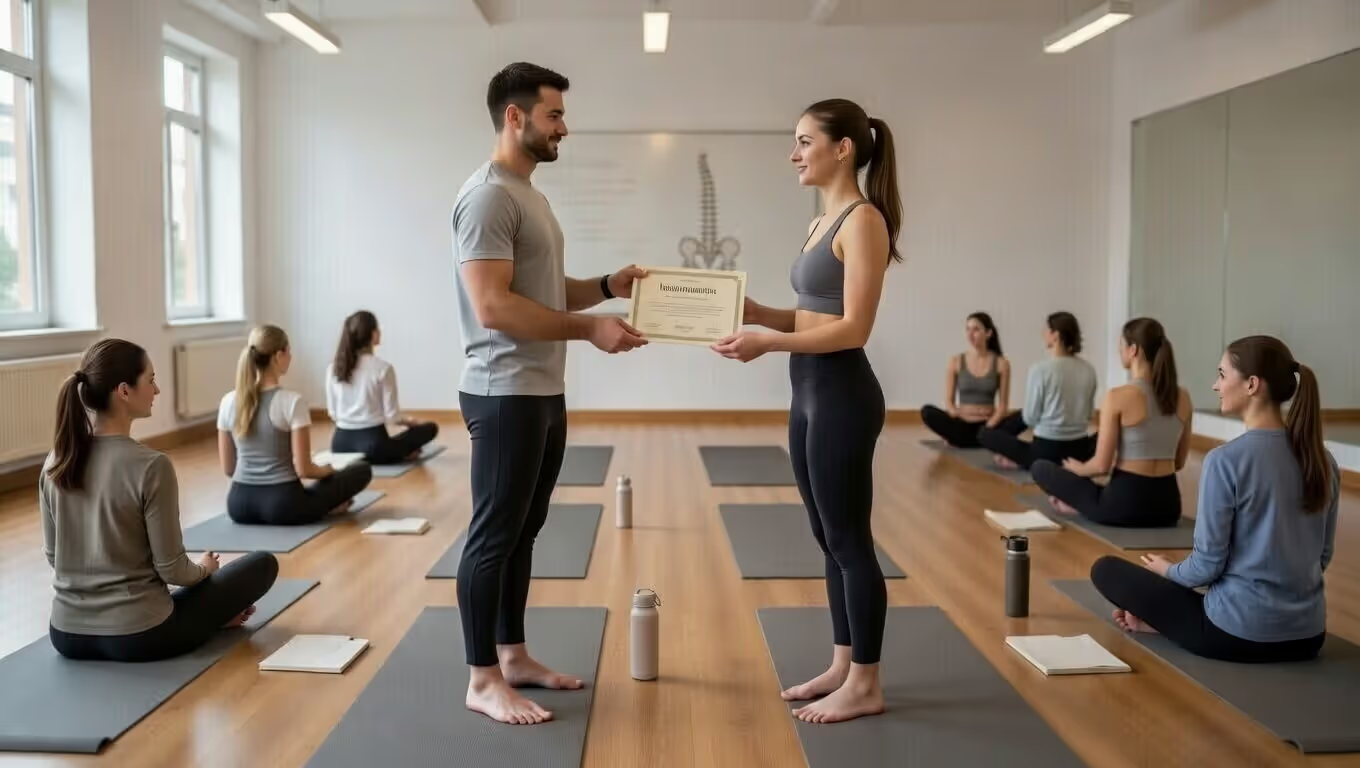
Yoga Alliance operates as an opt-in, member-funded register — it has no governmental powers. It publishes voluntary guidelines for schools (labeled Registered Yoga Schools, RYS) and for individuals (labeled Registered Yoga Teachers, RYT).
What Yoga Alliance Standards Require
Schools on the register must demonstrate adherence to outlined requirements across core categories: personal technique, anatomical study, ethics and philosophy, pedagogical method, and supervised practicum. Demonstrating genuine skill — rather than simply showing up — is a stated expectation. Hour breakdowns give every approved program a shared framework, though each school interprets delivery independently.
Do You Need Yoga Alliance to Teach?
In the eyes of the law, no. Plenty of skilled instructors have never joined the register. Some studios never mention it. People building their own client base through word of mouth rarely encounter the question.
In day-to-day hiring, though, the title smooths the path. A majority of fitness clubs, studio networks, and web-based platforms name "RYT-200" as a threshold requirement. Health-related insurers that reimburse yoga services tie eligibility to it. For anyone whose plan involves established locations, holding the designation avoids awkward conversations about why you don't.
What Makes the "Best" Yoga Teacher Training for You?
The highest-rated school on any ranking site becomes irrelevant if it centers Kundalini while your entire practice is Ashtanga. Identifying the best yoga teacher training always comes back to three individual factors: what you want from it, which tradition matches your body of work, and how thoroughly the coursework develops your ability to actually lead a room.
Your Goal: Teach Publicly, Teach Privately, or Deepen Practice
Something close to one in three people who finish a 200-hour course have no plans to charge for a session. They're after a richer understanding — alignment science, respiratory theory, philosophical depth — beyond what any drop-in slot provides. A sound reason to enroll, though it redirects which school matters.
People who intend to lead paying audiences should weight curricula loaded with practicum (20 hours bare minimum, 30+ if available), mentored performance reviews, and commercial realities like pricing, insurance, and client acquisition. When personal growth is the sole aim, material depth and the primary educator's background carry more weight than time at the head of a class.
Yoga Style Fit
Programs are not one-size-fits-all. A vinyasa-oriented track dedicates major blocks to flow sequencing and transitions. Hatha leans into prolonged holds and meticulous positioning. Yin prioritizes fascial science and extended passive shapes. Trauma-informed curricula incorporate nervous system education and consent-centered language.
Settle on the tradition that mirrors your current work — or the one you want to specialize in. An intensive yoga training program grounded in Ashtanga leaves you unprepared for a restorative setting, and vice versa.
Teaching Readiness: Practicum, Critique, and Guidance
Programs that measure competence through observed demonstrations, written self-analysis, and student-led sequences produce meaningfully stronger graduates than those that merely check attendance boxes.
Nail down your three highest priorities before you open a single school's website: time constraints, tradition match, mentorship caliber, price ceiling, practicum volume, or post-completion support. Use those as your primary screen. Everything else ranks lower.
Author: Connor Evans;
Source: yogapennsylvania.com
200 Hour Yoga Teacher Training: What You'll Learn
Core Curriculum Areas
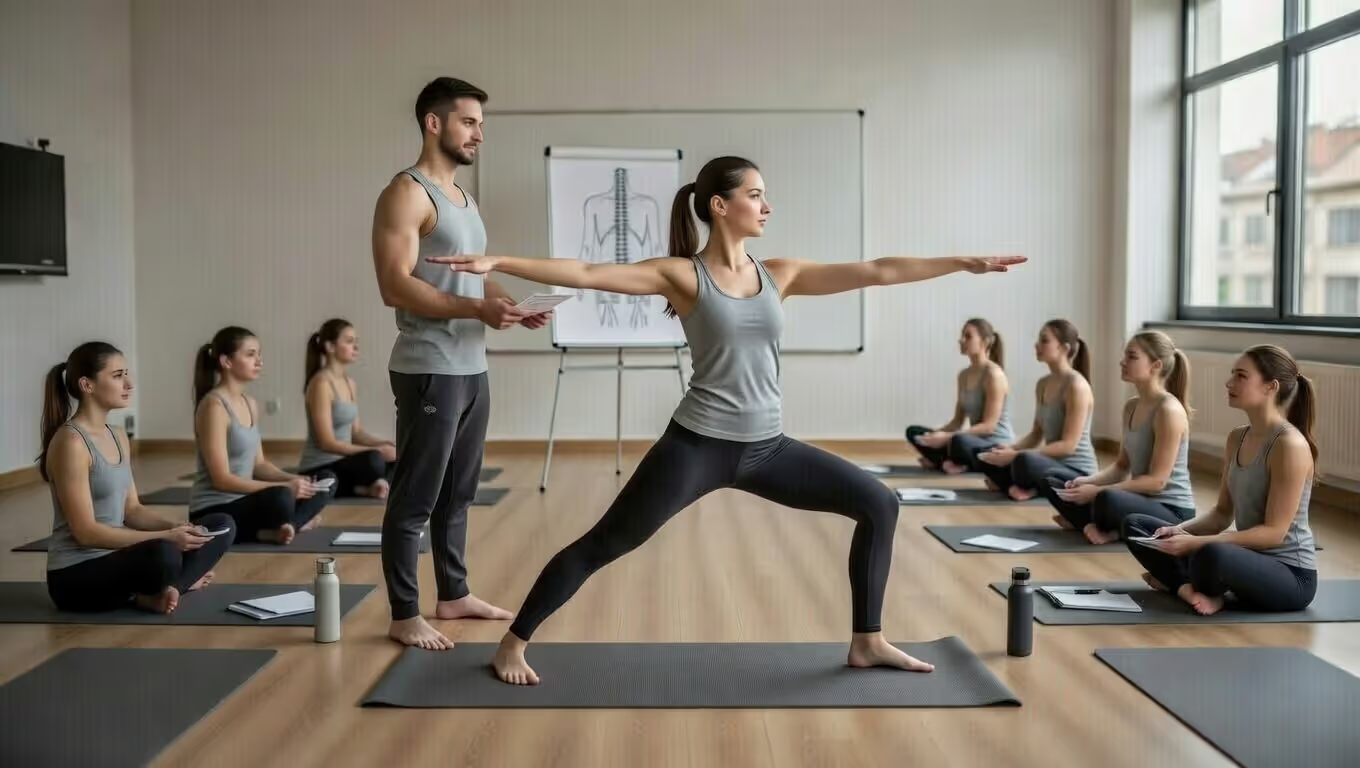
A credible 200-hour program covers six essential domains. Any significant gap is cause for concern.
| Curriculum Area | What's Covered | Typical Hours |
| Posture Workshop | Cueing precision, adaptations, prop integration, safety considerations | 75–90 |
| Anatomy and Physiology | Skeletal and muscular basics, respiratory function, injury prevention | 20–30 |
| Sequencing and Pedagogy | Session arc, verbal direction, vocal dynamics, timing, room navigation | 25–35 |
| Philosophy and Ethics | Classical texts, tradition context, cultural respect, professional conduct | 15–20 |
| Pranayama and Meditation | Breath methods, facilitated stillness, energetic body models | 10–15 |
| Practicum | Student-taught segments under observation with structured response | 15–25 |
Graduation Outcomes: What You Can Realistically Do After 200 Hours
Straightforward reality: you can facilitate a 60-minute group class in the tradition you studied, adapt postures for common physical constraints, design a coherent sequence, and hold a room with reasonable steadiness.
What you won't yet handle: rehabilitating injuries, serving specialized groups without further education, or filling a full weekly schedule right away. Two hundred hours marks the threshold, not the ceiling. Functional expertise builds over many hundreds of hours of actual instruction.
Online Yoga Teacher Training vs In-Person
Pros and Cons
Remote formats became mainstream during 2020 and haven't receded, but the spectrum from excellent to useless is wide.
Face-to-face upsides: tactile corrections, shared physical atmosphere, on-the-spot response, and personal connections that become referral channels.
Remote upsides: study from anywhere, lower spend, self-directed pace for conceptual material, and viability for working parents, employees, or geographically isolated students.
Where screen-based delivery falls shortest is practicum. Leading someone through a webcam — partial visibility, zero physical adjustment, domestic distractions — operates on different mechanics than standing before a live room.
How to Vet an Online Program
Trouble signs: nothing but pre-recorded content, no video-on policy for practicum, vague "self-review" standing in for educator assessment, anonymous faculty, and refund conditions buried where nobody will read them.
Essentials for a credible remote format:
- Real-time sessions with mandatory camera activation
- Faculty-observed practicum featuring live, specific response
- Defined written assessments that go beyond a participation checkbox
- Named educators whose credentials can be independently verified
- Formal mentorship windows on a set calendar (not a passive "get in touch" offer)
Yoga Teacher Training Cost in the USA (Realistic Budgeting)

Author: Connor Evans;
Source: yogapennsylvania.com
Price Bands and What Influences Them
Training cost in the USA for a 200-hour program currently falls between $1,500 and $12,000-plus. That wide band reflects the delivery model, local market, group size, lead educator reputation, and what the quoted figure actually includes.
| Format | Price Band (200-hr) | Typically Included | Often Charged Separately |
| Remote (live + recorded hybrid) | $1,500–$3,500 | On-demand video, live calls, digital guides, evaluations | Private mentorship, advanced anatomy modules |
| Local studio (evening/weekend schedule) | $2,500–$5,500 | In-room instruction, printed materials, practicum, cohort community | Yoga Alliance annual fee ($50–$100) |
| Live-in immersion (U.S.-based) | $4,000–$8,000 | Accommodation, meals, all-day instruction, course materials | Travel costs, incidentals, lost income |
| Premium destination retreat | $6,000–$12,000+ | Full board excluding flights, intimate group, mentorship access | International flights, visa expenses where applicable |
What's Usually Included (and What's Not)
Tuition generally covers: study guides, entry to all scheduled hours, a completion certificate, and a basic alumni channel.
Items commonly charged on top: Yoga Alliance registration (paid to YA directly — about $50 to join plus annual renewal), professional liability insurance, further education credits, and mentoring past a defined window. Plan on $200–$400 in supplemental first-year spending beyond the sticker price.
Intensive Training Programs: Who They're For
Intensive vs Weekend vs Modular Formats
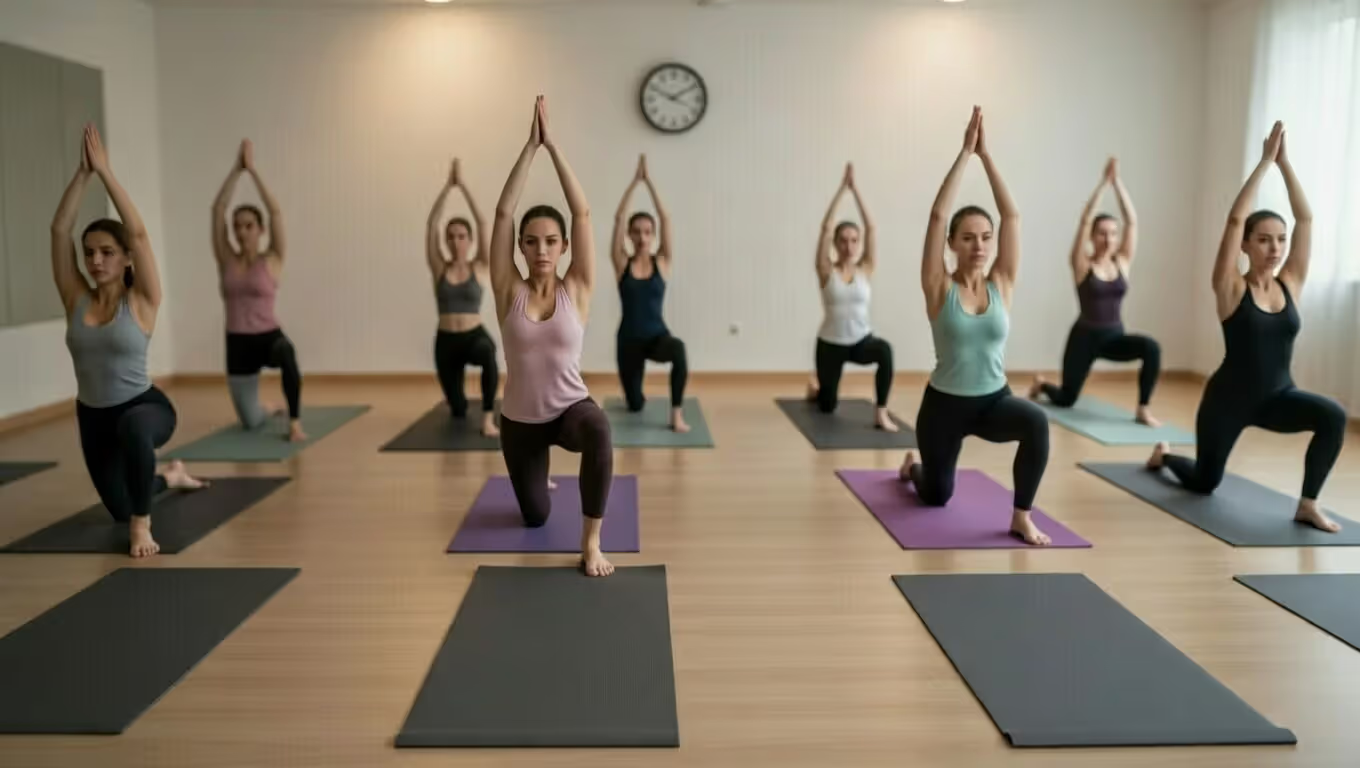
An intensive yoga training program compresses the entire 200-hour scope into 2–5 straight weeks of all-day work. Days run 6–10 hours across five or six days each week. The strain on body, mind, and emotions is substantial — but so is the immersive depth that no part-time alternative can match.
Weekend models stretch equivalent material over 6–9 months of Saturday-and-Sunday blocks. Modular designs mix remote coursework with periodic face-to-face weekends — perhaps monthly for half a year.
The compressed approach works for career-changers, sabbatical-takers, recent college graduates, or anyone lacking nine open months of weekends. The cost is cumulative exhaustion. Sequential full-length days over several weeks erode both physical reserves and concentration. Build buffer days before and after.
Author: Connor Evans;
Source: yogapennsylvania.com
How to Prepare
Physically: move your personal practice to five or six days per week over the preceding month. The aim is building tolerance for daily, multi-hour mat work without injury.
Academically: finish every pre-assigned text before you arrive. The Yoga Sutras and a foundational anatomy manual appear on nearly every reading list. Walking in familiar with the source material lets you contribute instead of struggling to follow.
Snapshot of a standard intensive day:
6:30 AM — Movement session (75 min of postures plus breath work)
8:30 AM — Breakfast
9:30 AM — Classroom block: anatomy or philosophy (2 hrs)
11:30 AM — Posture lab / hands-on technique focus (90 min)
1:00 PM — Lunch
2:30 PM — Practicum block (2 hrs — student-led segments with faculty response)
4:30 PM — Closing circle, journaling, questions
5:00 PM — Self-study or downtime
How to Choose a Program You Won't Regret
The 10-Point Vetting Checklist
Complete this review before committing any deposit.
- Lead educator carries 1,000+ confirmed instructional hours and provable qualifications
- Full syllabus disclosed before any enrollment step
- A minimum of 20 hours where you are personally leading (watching others doesn't qualify)
- Anatomy material presented by a properly credentialed professional
- Group size limited to 25 or under for meaningful personal attention
- Competence measured by observed performance, not merely by showing up
- Alumni reviews verifiable on independent, third-party platforms
- Refund and postponement terms available in writing before money is due
- Post-completion mentorship guaranteed for no fewer than six months
- Clear scope statement — the school specifies what its certificate does and does not authorize you to do
Don’t choose a training because it’s popular. Choose it because it will challenge you, refine you, and prepare you to serve.
— Tiffany Cruikshank, yoga teacher
Questions to Ask Before You Enroll
Contact every school on your final list: How many practicum hours are included, and who oversees feedback? What is the student-to-faculty ratio? If I miss a weekend, what's the make-up process? Can I talk with a recent alumnus? What proportion of graduates lead sessions within twelve months?
Schools that handle these openly have earned your attention. Those that sidestep likely haven't built the systems to back up their brochures.
After You Graduate: Registration, Insurance, and First Steps
Author: Connor Evans;
Source: yogapennsylvania.com
Yoga Alliance Registration Basics
Anyone who completed their hours at a Registered Yoga School (RYS) may apply for RYT-200 status through the Yoga Alliance website. Upload the certificate, pay the fee, agree to the published ethical guidelines — turnaround is roughly one to two weeks.
The process is elective. It strengthens your profile and simplifies entry at locations that list it as a requirement.
Building Teaching Experience
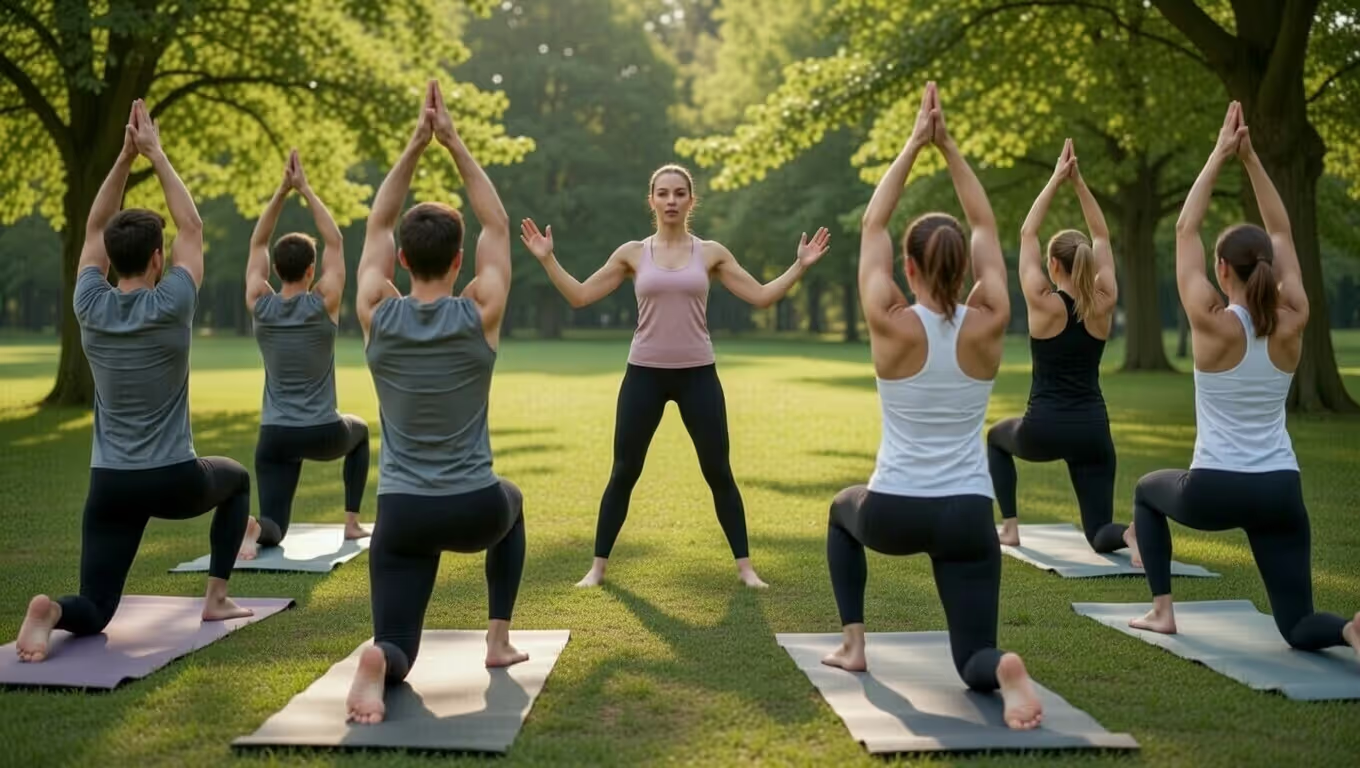
The education that matters most happens during your first 100 sessions in front of actual people. Begin wherever you can: no-cost outdoor classes, donation-based community slots, covering shifts for established instructors, or structured sessions with people you know.
Put together a short video clip — five to ten minutes of you leading a segment — and send it when approaching venue owners. Accompany the footage with a written session plan. Decision-makers pay attention to evidence of preparation far more than enthusiasm alone.
FAQ
The school that deserves your enrollment fits your goal, sits within your budget, and works with your calendar — while delivering enough mentored practicum to build real competence, not just a line on a résumé. Work through the vetting checklist, ask the pointed questions before payment clears, and think of the 200-hour mark as a launchpad. What the first year of hands-on instruction teaches you will dwarf anything a course alone can deliver.
Related Stories
Read more
Read more



The content on yogapennsylvania.com is provided for general informational and inspirational purposes only. It is intended to share yoga tips, meditation practices, wellness guidance, retreat experiences, and lifestyle insights, and should not be considered medical, therapeutic, fitness, or professional health advice.
All information, articles, images, and wellness-related materials presented on this website are for general informational purposes only. Individual health conditions, physical abilities, wellness goals, and experiences may vary, and results can differ from person to person.
Yogapennsylvania.com makes no representations or warranties regarding the accuracy, completeness, or reliability of the content provided and is not responsible for any errors or omissions, or for decisions or actions taken based on the information presented on this website. Readers are encouraged to consult qualified healthcare or wellness professionals before beginning any new yoga, meditation, or fitness practice.