
How to Choose a Yoga Retreat That Fits Your Goals

Content
Content
The glossy photographs catch your eye immediately. Practitioners in graceful postures against backdrops of misty mountains, crystalline oceans, or sun-drenched terraces surrounded by tropical foliage. The marketing copy promises transformation, renewal, and the kind of profound peace that feels increasingly elusive in everyday existence. You feel the pull toward escape, toward something that might finally provide the reset your overwhelmed nervous system desperately craves. So you book impulsively, drawn by beautiful imagery and compelling promises, only to discover upon arrival that the retreat bears little resemblance to what you actually needed or expected.
This scenario repeats countless times each year as seekers eager for meaningful experiences invest significant time and money into yoga retreats that ultimately disappoint, frustrate, or even harm them because the fundamental mismatch between their genuine needs and the retreat's actual offerings was never examined before credit card details were entered. The yoga retreat industry has exploded in recent decades, offering everything from luxury resort experiences with gentle stretching sessions to austere meditation intensives where silence and austerity dominate, from athletic programs pushing physical boundaries to therapeutic environments focused on trauma recovery and emotional healing. This diversity represents both opportunity and peril because without clarity about your own goals, the abundance of options becomes overwhelming noise rather than meaningful choice.
Selecting the right yoga retreat requires the same intentionality you would bring to any significant life decision, demanding honest self-assessment about what you actually need versus what sounds appealing, careful evaluation of offerings against your genuine goals, and willingness to look beyond marketing polish toward substance that will actually serve your growth. The National Center for Complementary and Integrative Health documents growing research interest in mind-body practices including yoga, noting that benefits depend significantly on appropriate matching between practice types and individual circumstances. Similarly, Harvard Health Publishing emphasizes that yoga's benefits for stress reduction, physical health, and psychological wellbeing vary based on practice intensity, style, and individual factors that make personalized selection essential.
This guide walks through the essential considerations that transform retreat selection from impulse gambling into thoughtful investment, helping you identify retreats genuinely aligned with your goals rather than simply attractive in their presentation. Whether you seek physical transformation, emotional healing, spiritual deepening, or simply a meaningful pause from the relentless demands of modern existence, the framework presented here will help you find experiences that deliver on their promises rather than leaving you disappointed and depleted.
Clarifying What You Actually Want
Before browsing retreat websites or soliciting recommendations, the most valuable work involves turning attention inward to identify what you genuinely need from this investment of time, money, and energy. This clarification process feels less exciting than scrolling through stunning retreat photographs, but it fundamentally determines whether your eventual choice will serve you or disappoint you regardless of how impressive the location or credentials might appear.
Physical goals represent the most straightforward category to assess, involving questions about whether you seek increased strength, improved flexibility, recovery from injury or chronic pain, enhanced athletic performance, or simply more consistent movement practice than your regular life permits. Someone recovering from back surgery needs radically different physical programming than someone training for a marathon, yet both might describe themselves as seeking "physical wellness" in ways that make them equally susceptible to retreats mismatched with their actual bodies and circumstances. Consider your current physical condition honestly, including any limitations, injuries, or health concerns that might affect what practices serve you and what practices might cause harm.
Mental and emotional goals require deeper excavation because they often remain partially unconscious until deliberately examined. Are you seeking relief from anxiety that has become unmanageable? Processing grief or major life transitions? Developing meditation skills that have eluded your solo efforts? Breaking free from thought patterns that keep you stuck in unfulfilling situations? Learning stress management techniques applicable to your demanding career? Each of these goals points toward different retreat styles, teaching approaches, and environmental factors that will either support or undermine your intentions. The person seeking anxiety relief needs a different container than someone processing grief, even though both might describe their goal as "emotional healing" in ways that obscure the distinct approaches each situation requires.
Spiritual goals, for those who resonate with this dimension, introduce additional considerations about lineage, philosophical orientation, and the degree to which retreat programming addresses transcendent concerns versus focusing on secular wellness benefits. Some practitioners seek explicitly spiritual contexts rooted in traditional yogic philosophy, while others prefer approaches that extract practical benefits without religious or metaphysical frameworks they find off-putting or incompatible with their existing beliefs. Neither orientation is superior, but mismatches between your spiritual preferences and retreat orientation create friction that undermines whatever benefits the experience might otherwise provide.
Relational and social goals often go unexamined yet significantly influence retreat satisfaction. Do you seek solitude and silence, craving escape from the constant social demands of ordinary life? Or do you hunger for community, hoping to connect with like-minded practitioners who share your values and interests? Some retreats emphasize communal experience with shared meals, group activities, and structured social interaction, while others protect individual space and minimize required social engagement. Neither approach universally serves all participants, making your own relational needs important factors in selection.
- Physical conditioning goals might include building strength, increasing flexibility, recovering from injury, developing consistent practice habits, or preparing for athletic challenges that yoga can support.
- Mental and emotional goals often involve stress reduction, anxiety management, processing difficult life circumstances, developing meditation skills, or escaping burnout that regular life perpetuates.
- Spiritual goals may include deepening connection with traditional yoga philosophy, exploring meditation practices rooted in specific lineages, or seeking transcendent experiences within supportive containers.
- Relational goals involve determining whether you seek community connection and shared experience or solitude and individual space protected from social demands.
Writing your goals explicitly, even briefly, creates reference points against which you can evaluate retreat options rather than getting swept up in attractive marketing that may not address your actual needs. This written clarity becomes your anchor when comparing options that each present compelling but different appeals. Revisit this written statement throughout your selection process, asking whether each retreat you consider genuinely serves the goals you identified or merely sounds appealing for reasons unrelated to your authentic needs.
Understanding Retreat Styles and Formats
The yoga retreat landscape encompasses remarkably diverse formats that serve fundamentally different purposes despite all falling under the broad umbrella of "yoga retreat." Understanding these distinctions helps you match your clarified goals with retreat styles actually designed to address them rather than assuming that any yoga retreat will serve any yoga-related goal equally well.
Movement-focused retreats emphasize physical practice, often featuring multiple daily asana sessions exploring particular styles, sequences, or physical objectives. These retreats attract practitioners seeking to deepen their physical practice, learn new approaches, or enjoy extended immersion in movement-based yoga that their regular schedules cannot accommodate. Participants should expect significant physical demand and sufficient conditioning to benefit from intensive practice rather than being overwhelmed or injured by volume their bodies cannot handle. Movement-focused retreats vary considerably in style emphasis, with some featuring vigorous vinyasa flow, others emphasizing precise alignment work, and still others exploring gentler approaches like yin yoga or restorative practice that prioritize passive stretching and nervous system calming over muscular engagement and cardiovascular challenge.
Meditation-centered retreats prioritize stillness over movement, featuring extended sitting practices, instruction in various meditation techniques, and schedules designed around contemplative practice rather than physical asana. These retreats serve those seeking mental training, spiritual deepening, or escape from the constant stimulation that prevents genuine rest and reflection. Physical yoga may appear minimally or not at all, surprising participants who assumed any yoga retreat would involve significant asana practice. Meditation retreats often incorporate periods of silence ranging from portions of each day to complete noble silence throughout the entire retreat, creating containers that support deep introspection but that can feel isolating or uncomfortable for those unprepared for extended periods without verbal communication.
Holistic wellness retreats combine yoga with complementary modalities including massage, nutrition counseling, nature excursions, creative expression, and various healing approaches that address wellbeing comprehensively rather than focusing narrowly on yoga practice alone. These retreats appeal to those seeking general renewal and lifestyle recalibration rather than specifically deepening yoga practice, offering variety that prevents the intensity of single-focus immersion while potentially diluting depth in any particular area. The breadth of offerings can feel enriching or scattered depending on your preferences and goals, with some participants appreciating the diverse programming while others wish for more concentrated attention to fewer modalities explored more deeply.
Restorative and therapeutic retreats specifically serve those recovering from burnout, trauma, illness, or other conditions requiring gentle, supportive environments rather than challenging practice. These retreats feature slower paces, trauma-informed teaching approaches, and programming designed around healing rather than achievement. They serve crucial purposes for appropriate populations but may frustrate practitioners seeking challenge or advancement who mistake "restorative" marketing for universal applicability. Therapeutic retreats often incorporate professional support from counselors, therapists, or medical practitioners alongside yoga instruction, creating multidisciplinary approaches that address complex healing needs beyond what yoga teachers alone can appropriately provide.
Teacher training retreats serve those seeking certification to teach yoga professionally or those wanting intensive study without necessarily planning to teach. These immersive programs typically run longer than recreational retreats, often spanning multiple weeks, and demand significant time, energy, and financial investment. The intensity and rigor of teacher training creates transformative experiences for many participants but requires readiness for demanding schedules and comprehensive curriculum that far exceeds typical retreat programming.
Yoga Alliance, the largest nonprofit representing yoga teachers and schools, provides resources about yoga styles and practice approaches that help practitioners understand the diversity within yoga and make informed choices about which approaches serve their particular situations.

Author: Connor Evans;
Source: yogapennsylvania.com
Honestly Assessing Your Experience Level
Experience level profoundly affects retreat appropriateness in ways that both beginners and advanced practitioners sometimes underestimate, leading to miserable experiences when practitioners find themselves either overwhelmed by practices far beyond their current capacity or bored by instruction pitched toward beginners when they sought advancement. Honest self-assessment about where you actually are, rather than where you wish you were or where your ego prefers to locate itself, prevents these costly mismatches.
Beginning practitioners face particular vulnerability because they lack the embodied knowledge to evaluate retreat descriptions accurately, often not understanding the implications of terms like "vinyasa intensive" or "advanced asana exploration" that signal practice levels their bodies cannot safely meet. Beginners benefit most from retreats explicitly designed for new practitioners or from mixed-level retreats with robust modification offerings and teachers skilled at adapting instruction for diverse bodies and experience levels. The humility to acknowledge beginner status protects against injury and frustration while opening genuine learning opportunities that advanced-focused retreats cannot provide. Beginner-appropriate retreats typically feature more instruction time explaining alignment and technique, slower pacing that allows absorption of new information, and teachers experienced in working with bodies unfamiliar with yoga's demands.
Intermediate practitioners occupy the broadest and most ambiguous category, encompassing everyone from those with a year of regular practice to those with decades of experience who have not pursued advanced training. This group benefits from carefully reading retreat descriptions to assess whether programming targets their particular level within this wide spectrum, asking questions directly to retreat organizers when descriptions leave ambiguity, and honestly evaluating whether they seek challenge that pushes their edges or consolidation that deepens existing practice without significant new demand. The intermediate category's breadth means that two practitioners both accurately describing themselves as intermediate might have radically different needs and capacities, making careful inquiry essential rather than assuming that any intermediate-labeled retreat will serve all intermediate practitioners equally well.
Advanced practitioners seeking genuine advancement require retreats specifically designed for their level, led by teachers whose own practice and training exceed participants' levels sufficiently to offer meaningful instruction. Advanced practitioners sometimes attend general retreats for rest or community rather than learning, which works fine when expectations are calibrated appropriately but frustrates when serious advancement was the goal and instruction targets lower levels. Advanced practitioners benefit from investigating teacher credentials and teaching focus carefully, seeking instructors with demonstrated expertise in areas where advancement is sought rather than assuming that any experienced teacher can serve advanced students in all areas equally.
Physical limitations and health conditions transcend simple experience-level categories, requiring consideration regardless of how long you have practiced. A twenty-year practitioner with recent knee surgery may need more modifications than a healthy beginner, making communication about health circumstances essential when selecting retreats and when arriving at chosen programs. Quality retreats welcome this communication and adapt programming accordingly, while retreats that dismiss health concerns or fail to offer modifications signal teaching quality issues worth noting.
Yoga Journal offers extensive educational resources about yoga practice levels, style differences, and skill development that help practitioners accurately assess their current level and identify appropriate next steps for growth.
— Connor Evans
Evaluating Retreat Intensity
Intensity considerations extend beyond simple beginner versus advanced classifications to encompass overall retreat structure, daily scheduling, and the degree of immersion versus spaciousness that programming provides. Two retreats might both serve intermediate practitioners yet differ dramatically in intensity, with one offering gentle schedules and abundant free time while another fills every hour with practice, instruction, and structured activity. Neither approach is inherently superior, but they serve different needs and suit different temperaments and circumstances.
Relaxed retreats featuring optional sessions, flexible scheduling, and significant unstructured time serve those seeking rest and renewal rather than intensive learning or practice advancement. These retreats allow participants to follow their bodies' needs, sleeping when tired, practicing when energized, and enjoying contemplative solitude or social connection as mood dictates. The spaciousness supports nervous system recovery and prevents the exhaustion that intensive programming can produce even when activities are nominally restorative. Relaxed retreats particularly benefit those arriving already depleted, those recovering from illness or burnout, and those whose regular lives involve such constant demand that any additional structure feels oppressive rather than supportive.
Immersive retreats fill days with scheduled programming, demanding consistent engagement and offering depth through volume and intensity rather than through spaciousness and rest. These retreats serve those seeking maximum learning, practice advancement, or structured container that prevents the drifting and distraction that unstructured time might enable. The intensity produces results that relaxed formats cannot match but requires energy reserves and physical conditioning that depleted participants may not possess. Immersive retreats suit practitioners who thrive with structure, who have adequate reserves to sustain intensive engagement, and whose goals require the depth that only concentrated practice can provide.
Honest self-assessment about your current state matters enormously here. Someone arriving at retreat already exhausted and depleted from burnout needs spacious, restorative programming even if their self-image prefers intensive advancement. Forcing depleted systems through demanding schedules deepens exhaustion rather than producing growth, making the retreat counterproductive regardless of how excellent the teaching might be. Conversely, someone well-rested and seeking challenge may find overly gentle programming frustrating and unfulfilling even while it perfectly serves those needing restoration.
Schedule structure also affects how retreats feel experientially beyond simple intensity metrics. Some retreats maintain rigid schedules with activities beginning precisely on time and expectations of punctual attendance, while others flow more organically with flexible timing and relaxed transitions between activities. Some feature early morning starts that suit natural early risers but challenge night owls, while others begin later and extend into evening hours. These scheduling details shape daily experience significantly, making inquiry about typical daily rhythms worthwhile before committing to programs whose schedules might conflict with your natural patterns or preferences.
Researching Teacher Quality and Credentials
The teacher or teachers leading retreats dramatically influence outcomes in ways that facility beauty and location appeal cannot compensate for when instruction proves inadequate, unsafe, or misaligned with participants' needs. Researching teacher credentials, experience, and teaching philosophy before committing helps avoid disappointment and potential harm from unqualified or incompatible instruction.
Formal credentials provide baseline assurance that teachers have completed recognized training programs, though credentials alone do not guarantee teaching quality or appropriate fit for your particular goals. Look for teachers with certification from recognized programs, years of teaching experience beyond initial training, ongoing education demonstrating continued growth, and any specialized training relevant to your specific needs such as trauma-informed approaches, therapeutic applications, or advanced practice instruction. The standard 200-hour teacher training certification indicates baseline competency but does not qualify teachers for specialized instruction in therapeutic applications, advanced practices, or populations with particular needs. Teachers offering specialized programming should hold additional credentials appropriate to their offerings.
Teaching philosophy and approach matter as much as credentials because even well-trained teachers vary enormously in style, emphasis, and the populations they serve best. Some teachers emphasize precision and alignment with detailed technical instruction. Others prioritize flow and intuitive movement with minimal verbal cuing. Some create warm, supportive environments that nurture hesitant practitioners. Others challenge students intensely, pushing edges in ways that serve some practitioners while overwhelming others. Reading teacher bios, watching available video content, and seeking reviews from past participants helps assess whether a teacher's approach matches what you seek.
Lineage and tradition shape teaching in ways that merit consideration for practitioners who care about philosophical orientation or who seek specific approaches rooted in particular yoga traditions. Teachers trained in Iyengar traditions emphasize different elements than those from Ashtanga, Kundalini, or contemporary fusion backgrounds. Understanding these distinctions helps match your preferences and goals with teachers whose training and orientation align with what you seek. Some practitioners feel strongly about practicing within specific lineages, while others prefer eclectic approaches that draw from multiple traditions without strict adherence to any single lineage.
Teaching experience specifically with retreat formats matters because leading retreats requires skills beyond teaching regular classes. Retreat teachers must manage group dynamics across extended periods, handle the emotional content that intensive practice often surfaces, create containers that serve diverse participants with varying needs, and navigate the logistical complexities that multi-day programs involve. Teachers excellent in studio contexts sometimes struggle with retreat demands, making inquiry about retreat-specific experience worthwhile alongside general teaching background.
The International Association of Yoga Therapists provides resources about yoga therapy credentials and standards that help practitioners evaluate teachers offering therapeutic or healing-focused instruction that requires training beyond standard yoga teacher certification.
The Transformative Power of Location and Environment
Where a retreat takes place influences outcomes through mechanisms that extend far beyond aesthetic appeal, with natural environments in particular offering therapeutic benefits that indoor urban settings cannot replicate regardless of how beautiful or well-appointed those spaces might be. Understanding how location affects retreat experience helps you select settings genuinely aligned with your goals rather than simply choosing the prettiest photographs.
Nature therapy, sometimes called ecotherapy or green therapy, describes the documented psychological and physiological benefits that natural environments provide, including stress reduction, attention restoration, mood improvement, and enhanced sense of wellbeing that develop through immersion in forests, oceans, mountains, deserts, and other natural settings. The National Park Service maintains research documentation about nature's health benefits, while the American Psychological Association has published extensively on nature exposure and mental health, establishing scientific foundations for what many people intuitively sense about natural environments' restorative power.
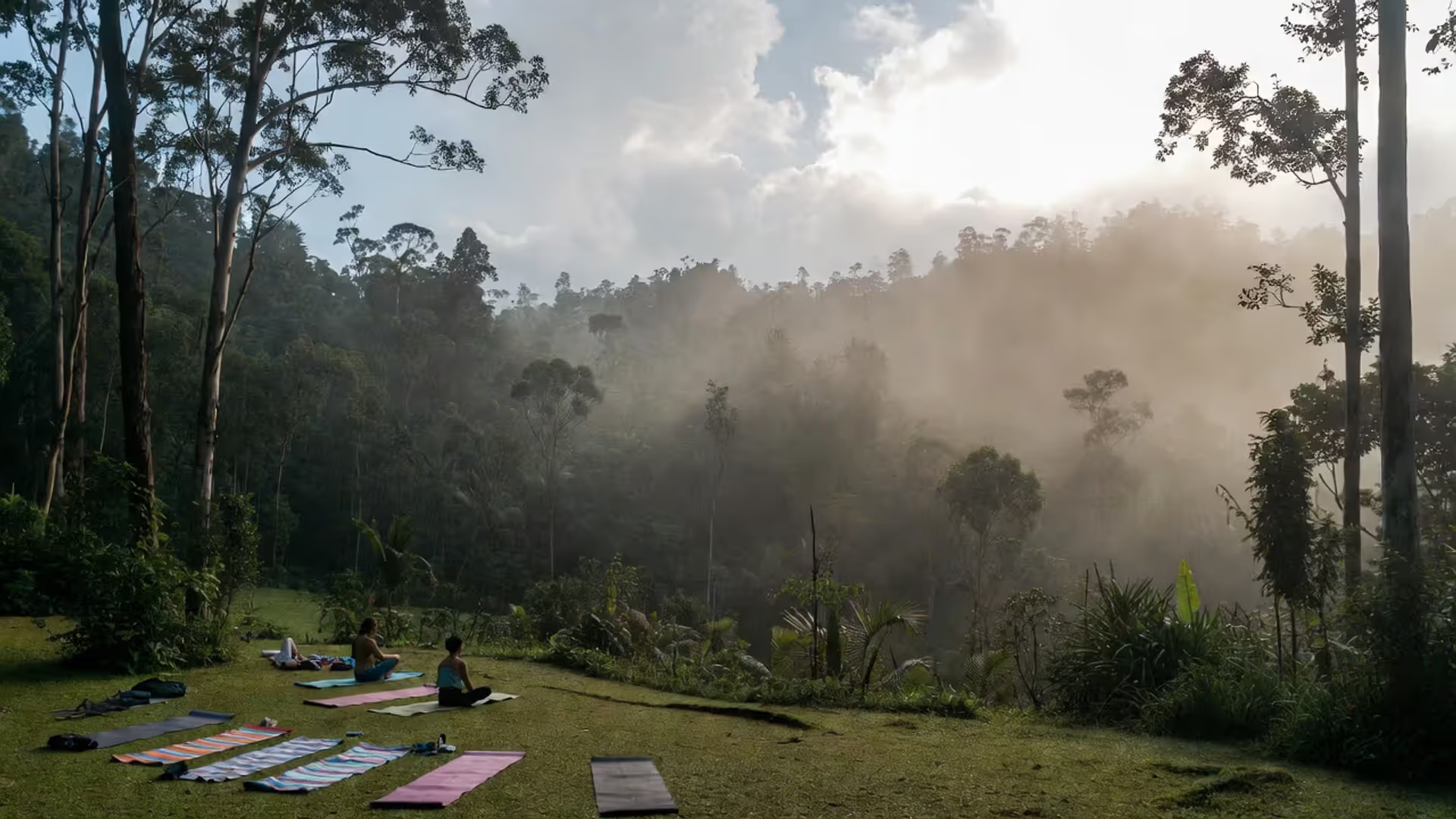
Forest environments offer particular benefits through mechanisms that researchers continue investigating, including phytoncides (airborne compounds released by trees), reduced urban noise and stimulation, and visual patterns that allow mental rest unavailable in built environments. The Japanese practice of shinrin-yoku, or forest bathing, has generated substantial research demonstrating measurable physiological changes including reduced cortisol levels, lowered blood pressure, and enhanced immune function following forest immersion. Retreats set within forested environments leverage these benefits, creating conditions that support healing beyond what yoga practice alone provides.
Mountain settings provide altitude effects, expansive views that shift perspective, and physical demands that ground attention in the body. The grandeur of mountain landscapes naturally invokes humility and wonder, psychological states that support the contemplative orientation yoga cultivates. Higher altitude environments require physical adaptation that some practitioners find invigorating while others find challenging, making altitude a factor worth considering particularly for those with cardiovascular or respiratory concerns.
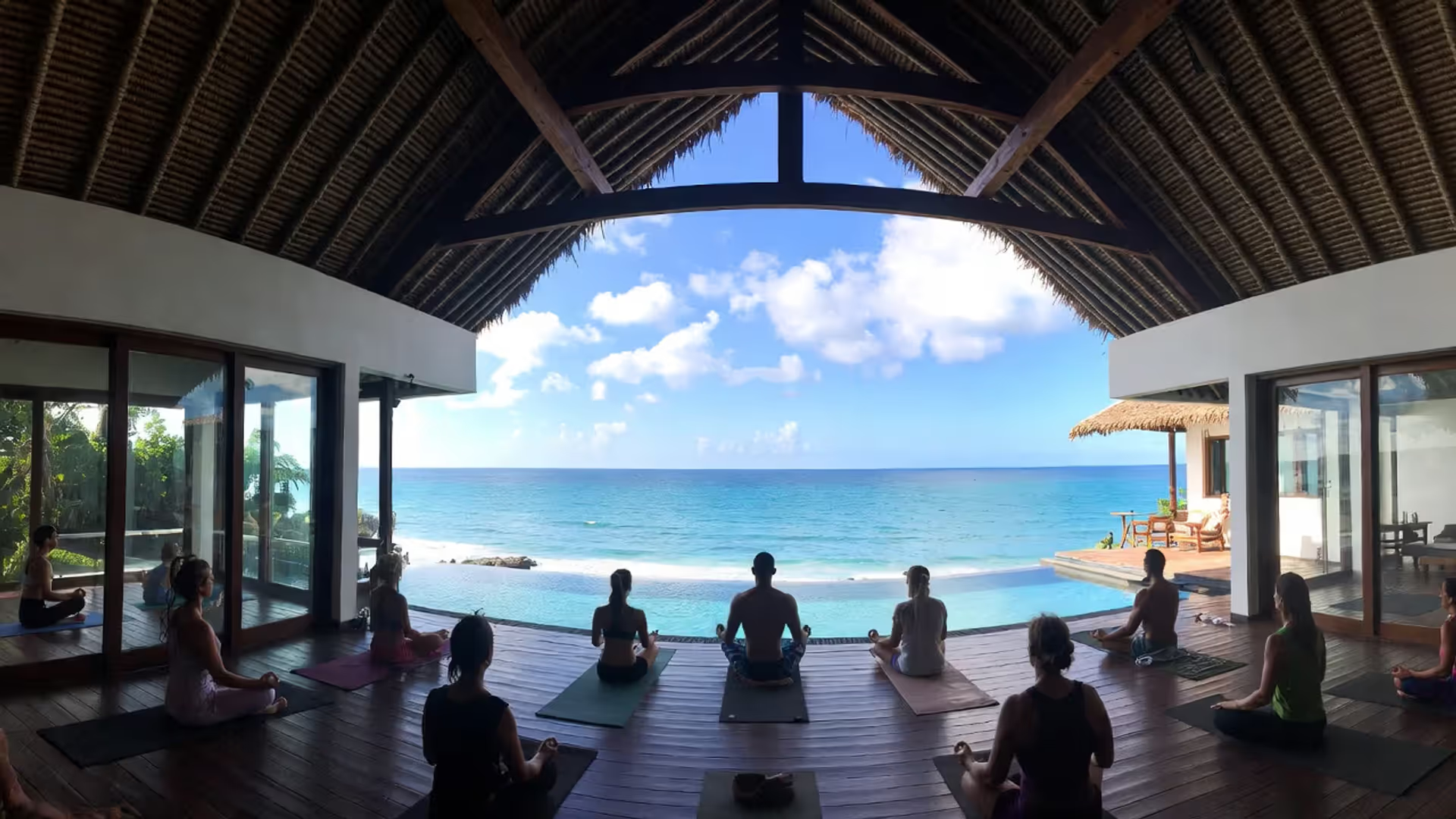
Ocean environments offer negative ion exposure, rhythmic sounds that calm the nervous system, and horizons that create psychological spaciousness. The sound of waves provides natural white noise that supports meditation and sleep, while the vast expanse of ocean views can shift perspective in ways that landlocked settings cannot replicate. Ocean-based retreats often incorporate water activities including swimming, paddleboarding, or simply beach time that complement land-based yoga practice.
Desert landscapes provide stark beauty, profound silence, and environmental simplicity that strips away the complexity overwhelming many retreat seekers. The minimalism of desert environments can support practitioners seeking clarity and simplification, though the harsh conditions require appropriate preparation and may not suit those seeking lush, verdant settings.
— Connor Evans
Urban retreat settings may suit those prioritizing convenience over nature immersion or those whose goals center on instruction quality available primarily in metropolitan areas where prominent teachers reside. However, choosing urban settings sacrifices nature therapy benefits that significantly enhance wellness outcomes for many practitioners, a trade-off worth making consciously rather than defaulting into by failing to consider location's therapeutic implications.
How Natural Settings Enhance Retreat Outcomes
Beyond general nature therapy benefits, natural environments specifically enhance yoga and meditation practice through mechanisms that amplify whatever benefits indoor practice provides, creating synergies between contemplative disciplines and environmental factors that neither offers independently.
Sensory immersion in natural environments provides richness that supports present-moment awareness, the foundation of mindfulness that yoga and meditation cultivate. Rather than fighting to stay present despite sterile indoor environments that offer little to anchor attention, practitioners in natural settings find attention naturally drawn to sensory experience, birdsong and wind and water sounds, shifting light and shadow, temperature variations and air quality differences, that support embodied presence without requiring the effortful attention indoor practice demands. This sensory richness makes meditation more accessible and asana practice more grounded, enhancing both through environmental support that indoor settings cannot provide.
Circadian rhythm alignment occurs naturally in retreat settings removed from artificial lighting and schedule demands that disrupt sleep-wake cycles in ordinary life. Rising with natural light, spending days outdoors, and sleeping in genuine darkness resets biological rhythms that modern life chronically disrupts, producing improvements in sleep quality, energy levels, and emotional stability that support all other retreat benefits. Many retreat participants report sleeping better during retreats than they have in years, a benefit attributable partly to reduced stress and increased exercise but also to circadian restoration that natural lighting patterns support.
Reduced cognitive load in natural settings allows mental rest unavailable in environments requiring constant navigation, decision-making, and information processing. The relative simplicity of retreat environments, particularly those in natural settings away from urban complexity, permits the mental restoration that prevents genuine rest even when bodies stop moving. This cognitive recovery supports the integration of insights and learning that retreat programming offers, allowing changes to take root in ways impossible when minds remain perpetually busy.
Temperature and weather variations in natural settings connect practitioners with elemental experiences that climate-controlled indoor environments eliminate. Feeling morning chill during outdoor meditation, experiencing afternoon warmth during gentle movement, noticing how weather shifts affect mood and energy, these elemental connections ground practice in embodied reality that artificial environments cannot replicate. Some practitioners find weather variations challenging while others appreciate the authenticity that variable conditions provide, making climate preferences worth considering when selecting retreat locations.
Wildlife encounters, however brief, remind practitioners of the larger living world that urban existence obscures. Seeing deer during walking meditation, hearing owls during evening practice, noticing insects and birds going about their lives alongside human retreat activities, these encounters expand awareness beyond human concerns in ways that support the perspective shifts yoga philosophy encourages. Natural settings rich with wildlife provide these encounters regularly, creating opportunities for wonder and connection unavailable in human-dominated environments.
Practical Logistics That Shape Experience
Beyond philosophical alignment and location appeal, practical factors significantly influence retreat experience in ways that merit careful attention before booking. These logistics seem mundane compared to questions about teacher quality and environmental setting, but they shape daily experience throughout your retreat in ways that either support or undermine everything else.
Retreat length affects what outcomes become possible, with weekend retreats offering introduction or refreshment while longer immersions enable deeper transformation that brief experiences cannot provide. Consider what your goals actually require rather than defaulting to whatever fits your schedule most conveniently. Deep healing or significant learning typically require more than a long weekend, while simple rest and renewal may not need extended time away from life responsibilities. Week-long retreats provide sufficient time for settling in, moving through initial resistance, and experiencing the deeper benefits that emerge once surface disturbance settles. Longer retreats of two weeks or more enable even more profound transformation but require significant commitment and may trigger challenging material that shorter programs do not surface.
Group size influences the balance between community connection and personal attention, with small groups offering intimacy and individualized instruction while larger gatherings provide energy and diversity that smaller groups cannot match. Neither is inherently superior, but your preferences and goals determine which serves you better. Those seeking deep personal work generally benefit from smaller settings, while those comfortable with more anonymous participation may enjoy larger group energy. Small groups typically feature ten to twenty participants, allowing teachers to know each person individually and adapt instruction accordingly. Large groups may include fifty or more participants, creating community energy that some find inspiring while others find overwhelming.
Accommodations range from luxury private rooms to shared dormitories to tent camping, with each option affecting cost, comfort, and retreat experience in ways worth considering carefully. Shared accommodations build community and reduce costs but sacrifice privacy and control over sleep environment that some practitioners require for genuine restoration. Private accommodations provide space and quiet but at higher cost and sometimes at the expense of community connection that shared living facilitates. Camping options connect practitioners directly with natural environments but require comfort with outdoor living and appropriate gear. Consider your actual needs rather than what sounds adventurous or virtuous when selecting accommodation types.
Meals and dietary provisions matter for health, comfort, and alignment with any dietary restrictions or preferences you maintain. Investigate what food retreats provide, whether special dietary needs can be accommodated, and how meal schedules integrate with retreat programming. Arriving at a retreat to discover that the provided food conflicts with medical dietary requirements or deeply held preferences creates ongoing frustration that undermines everything else the retreat offers. Most retreat centers accommodate common dietary needs including vegetarian, vegan, and gluten-free options, but less common requirements may need advance arrangement or may not be available at all locations.
Travel logistics including distance, transportation options, and arrival complexity affect both cost and energy required to reach retreat locations. Remote locations offer deeper immersion and stronger nature therapy benefits but require more complex travel that adds expense and fatigue. Accessible locations reduce travel burden but may sacrifice environmental qualities that remote settings provide. Consider your travel tolerance, budget constraints, and how arrival exhaustion might affect your first retreat days when evaluating location accessibility.
The American Camp Association, though focused on youth camping, provides useful frameworks about evaluating retreat facilities, safety standards, and accommodation quality that transfer to adult yoga retreat evaluation.
| Consideration | Questions to Ask | Why It Matters |
| Your goals | What do I actually need—physical challenge, emotional healing, rest, spiritual deepening, or community connection? | Mismatches between goals and retreat offerings lead to disappointment regardless of retreat quality |
| Experience level | Am I honestly a beginner, intermediate, or advanced practitioner? Do I have any physical limitations? | Retreats too advanced cause injury or overwhelm; those too basic cause boredom and frustration |
| Intensity preference | Do I need spacious restoration or structured immersion? Am I arriving depleted or energized? | Depleted practitioners need gentle programming; well-rested ones may find it unfulfilling |
| Teacher quality | What are the teacher's credentials, experience, and teaching philosophy? Do they match my learning style? | Teachers dramatically influence outcomes in ways beautiful locations cannot compensate for |
| Location and environment | Does the setting offer nature therapy benefits? Does climate and terrain suit my preferences and health? | Natural environments provide documented physiological and psychological benefits beyond aesthetics |
| Practical logistics | What is included in the price? What are accommodations, group size, and dietary provisions? | Hidden costs, uncomfortable lodging, or unsuitable food create ongoing frustration |
Budget Considerations and Value Assessment
Financial investment in yoga retreats varies enormously, from relatively affordable local weekend programs to luxury international experiences costing thousands of dollars. Understanding how to evaluate value rather than simply comparing prices helps ensure that your investment produces returns commensurate with costs regardless of what budget level you select.
Price alone indicates little about retreat quality or appropriateness for your goals. Expensive retreats sometimes deliver less value than modest programs because luxury amenities substitute for teaching quality, or because high prices reflect location costs rather than programming excellence. Conversely, inexpensive retreats sometimes cut corners in ways that compromise safety, instruction quality, or environmental conditions that affect outcomes. Evaluating what each price point includes helps compare options meaningfully rather than simply selecting the most or least expensive alternatives.
Included versus additional costs require careful attention because advertised prices sometimes exclude significant expenses including transportation, certain meals, optional activities, spa services, or gratuities that substantially increase total investment. Request complete cost breakdowns before comparing options to ensure accurate assessment of total financial commitment rather than being surprised by additional charges after arrival.
— Connor Evans
Value relative to goals matters more than absolute price when assessing retreat investment. A thousand-dollar retreat that perfectly serves your goals and produces lasting benefits represents better value than a five-hundred-dollar retreat that misses your needs and produces no meaningful change. Similarly, an expensive retreat that offers life-changing experience may justify its cost despite seeming extravagant by absolute measures. Consider what outcomes you seek, what those outcomes are worth to you, and whether particular retreats seem likely to deliver results that justify their costs.
Financial assistance options exist at some retreat centers through scholarship programs, work-trade arrangements, or payment plans that make expensive programs accessible to those with limited budgets. Inquiring about assistance options before assuming particular retreats exceed your means may reveal opportunities to access programming that initial price tags suggested was unaffordable.
Author: Connor Evans;
Source: yogapennsylvania.com
Warning Signs and Common Selection Mistakes
Experience teaches patterns of warning signs that predict disappointing or harmful retreat experiences, red flags that careful evaluation can identify before booking saves you from discovering problems only after arriving or, worse, after completing retreats that caused harm rather than providing benefit.
Vague descriptions that emphasize experience promises while avoiding specifics about programming, schedule, teacher qualifications, or what participants actually do suggest either that organizers themselves lack clarity or that they deliberately obscure details that would discourage bookings. Quality retreats provide detailed schedules, clear descriptions of programming, explicit information about teacher backgrounds, and transparent communication about what participants should expect. Vagueness invites projection of whatever you hope the retreat will offer rather than revealing what it actually provides.
Unrealistic promises of transformation, healing, or awakening through a single retreat experience should trigger skepticism because genuine growth develops incrementally through sustained practice rather than through isolated experiences however powerful. Retreats can catalyze growth, introduce practices, and provide experiences that accelerate development, but promises of instant enlightenment or complete healing through a single event typically reflect marketing manipulation rather than honest representation of what retreats realistically provide.
Insufficient teacher information that omits training background, teaching experience, or professional credentials suggests either that teachers lack credentials worth mentioning or that organizers prioritize other factors over instruction quality. While credentials do not guarantee quality, their absence or concealment warrants investigation before trusting your practice and potentially your safety to teachers whose qualifications remain unexamined.
Missing or hidden reviews from past participants should prompt caution because quality retreats accumulate testimonials from satisfied participants while problematic retreats either lack feedback or actively conceal negative experiences. Search beyond retreat websites for independent reviews and consider asking organizers directly for references from past participants whose experiences you can verify.
- Vague programming descriptions that emphasize feelings over specifics often indicate unclear planning or deliberate obscuring of details that might discourage enrollment.
- Promises of guaranteed transformation, complete healing, or spiritual awakening through single retreats typically represent marketing exaggeration rather than realistic outcome expectations.
- Absence of clear teacher credentials, training background, or experience information suggests potential quality concerns worth investigating before committing.
- Difficulty finding independent reviews or reluctance to provide past participant references may indicate problems that organizers prefer to conceal.
Pressure tactics including limited-time discounts, artificial scarcity claims, or aggressive sales approaches indicate prioritization of enrollment numbers over participant fit. Quality retreats allow prospective participants time to evaluate options thoughtfully rather than pressuring quick decisions that serve organizer interests over participant welfare.
Preparing for Your Chosen Retreat
Once selection is complete, thoughtful preparation maximizes the benefits your chosen retreat can provide while minimizing preventable difficulties that poor preparation creates.
Physical preparation appropriate to retreat intensity helps ensure your body can handle programming demands without injury or exhaustion. If selecting an intensive movement retreat, gradually increasing practice frequency and duration in weeks preceding the retreat prepares your body for sustained demand. If selecting a meditation-focused retreat involving extended sitting, practicing longer sits before arrival develops the physical tolerance that extended meditation requires.
Mental preparation including setting clear intentions, releasing expectations about specific outcomes, and cultivating openness to whatever emerges supports psychological readiness that affects retreat experience significantly. Arriving with rigid expectations about what must happen creates disappointment when reality differs from imagination, while arriving with open curiosity allows whatever actually occurs to serve your growth.
Logistical preparation including confirming travel arrangements, packing appropriately for location and activities, arranging life responsibilities that require attention during your absence, and communicating with retreat organizers about any special needs prevents practical difficulties from undermining retreat experience.
Digital preparation including decisions about device use during retreat, communication arrangements with people who might need to reach you, and work boundaries that protect retreat time from professional intrusion establishes conditions that support genuine disconnection rather than partial attention divided between retreat experience and digital demands.
Building Lasting Benefits Beyond the Retreat
The best yoga retreats recognize that meaningful wellness develops through sustained practice rather than temporary escape, designing programming that prepares participants for integration back into ordinary life rather than creating dependencies on retreat experiences that cannot be maintained. Evaluating how retreats address post-retreat integration helps identify programs that support lasting benefit rather than merely providing temporary relief that evaporates upon returning home.
Integration practices that retreats introduce should include techniques applicable to daily life, not just methods requiring retreat conditions that ordinary existence cannot provide. Quality retreats help participants identify which practices they can realistically maintain, develop plans for incorporating retreat learning into regular schedules, and anticipate obstacles they will encounter while strategizing responses that sustain practice despite challenges.
Take-home resources including written materials, recorded practices, or online access to continuing instruction extend retreat benefits beyond the experience itself, providing support for the weeks and months following return to regular life when retreat experiences fade and old habits reassert themselves. Retreats that simply deposit participants back into ordinary life without ongoing support waste much of what intensive experiences could offer if properly reinforced through continued engagement.
Community connections formed during retreats can provide ongoing support through shared practice, accountability, and relationships with others who understand your retreat experience because they shared it. Some retreats facilitate continuing connection through alumni groups, online communities, or follow-up gatherings that maintain relationships supporting continued growth. Others conclude without structures for ongoing connection, leaving participants to maintain practice alone without the support that community provides.
Re-entry planning that acknowledges the challenge of returning from retreat environments to ordinary demands helps prevent the crash that often follows intensive experiences. Quality retreats discuss re-entry openly, helping participants prepare for the transition and develop strategies for protecting retreat benefits against the erosive pressure of regular life that can dissolve transformation remarkably quickly without intentional preservation.
Finding Your Perfect Match
The abundance of yoga retreat options represents genuine opportunity for those who approach selection thoughtfully, offering experiences precisely calibrated to countless different goals, circumstances, and preferences that a more limited marketplace could not serve. This same abundance overwhelms those who skip the clarification and evaluation work that transforms confusing variety into clear choice.
Return to your written goals before making final decisions, evaluating shortlisted retreats against what you actually need rather than what appeals aesthetically or emotionally. The retreat that produces stunning photographs may not serve your particular nervous system. The teacher everyone raves about may emphasize approaches misaligned with your goals. The location you find most appealing visually may lack the environmental factors that would most support your healing.
Trust your discernment while remaining appropriately humble about its limitations. You know your body, your history, and your genuine needs better than any marketing material or recommendation can capture. But you also may not accurately perceive your actual condition, may underestimate how depleted you have become, or may not recognize needs that direct self-assessment cannot reveal. Balance confidence in your self-knowledge with openness to possibilities you had not considered and honesty about limitations in your self-perception.
The right yoga retreat does not simply provide pleasant experience during the days you attend. It catalyzes changes that continue developing long after you return home, introduces practices that become sustainable parts of your life, and creates reference experiences that inform and inspire ongoing growth. This deeper service, rather than temporary escape or fleeting relaxation, represents what quality retreats actually offer those who select them wisely.
Choose with the care this investment deserves. The time, money, and energy you commit to retreat experience can yield returns that compound across years of continued practice when selection aligns retreat offerings with your genuine needs. The same investment can produce frustration, disappointment, or even harm when poor selection creates mismatches between what you need and what retreats actually provide.
Your wellness journey deserves the thoughtfulness that transforms retreat selection from hopeful gambling into strategic investment. Take the time to clarify goals, research options, evaluate fit, and choose deliberately. The retreat waiting for you, the one that will actually serve your growth, becomes findable through this process in ways that impulsive booking simply cannot match. May your selection process itself become a practice of the intentionality and self-awareness that yoga cultivates, preparing you for retreat experience even before you arrive at your chosen destination.
FAQ
Related Stories
Read more
Read more



The content on yogapennsylvania.com is provided for general informational and inspirational purposes only. It is intended to share yoga tips, meditation practices, wellness guidance, retreat experiences, and lifestyle insights, and should not be considered medical, therapeutic, fitness, or professional health advice.
All information, articles, images, and wellness-related materials presented on this website are for general informational purposes only. Individual health conditions, physical abilities, wellness goals, and experiences may vary, and results can differ from person to person.
Yogapennsylvania.com makes no representations or warranties regarding the accuracy, completeness, or reliability of the content provided and is not responsible for any errors or omissions, or for decisions or actions taken based on the information presented on this website. Readers are encouraged to consult qualified healthcare or wellness professionals before beginning any new yoga, meditation, or fitness practice.