
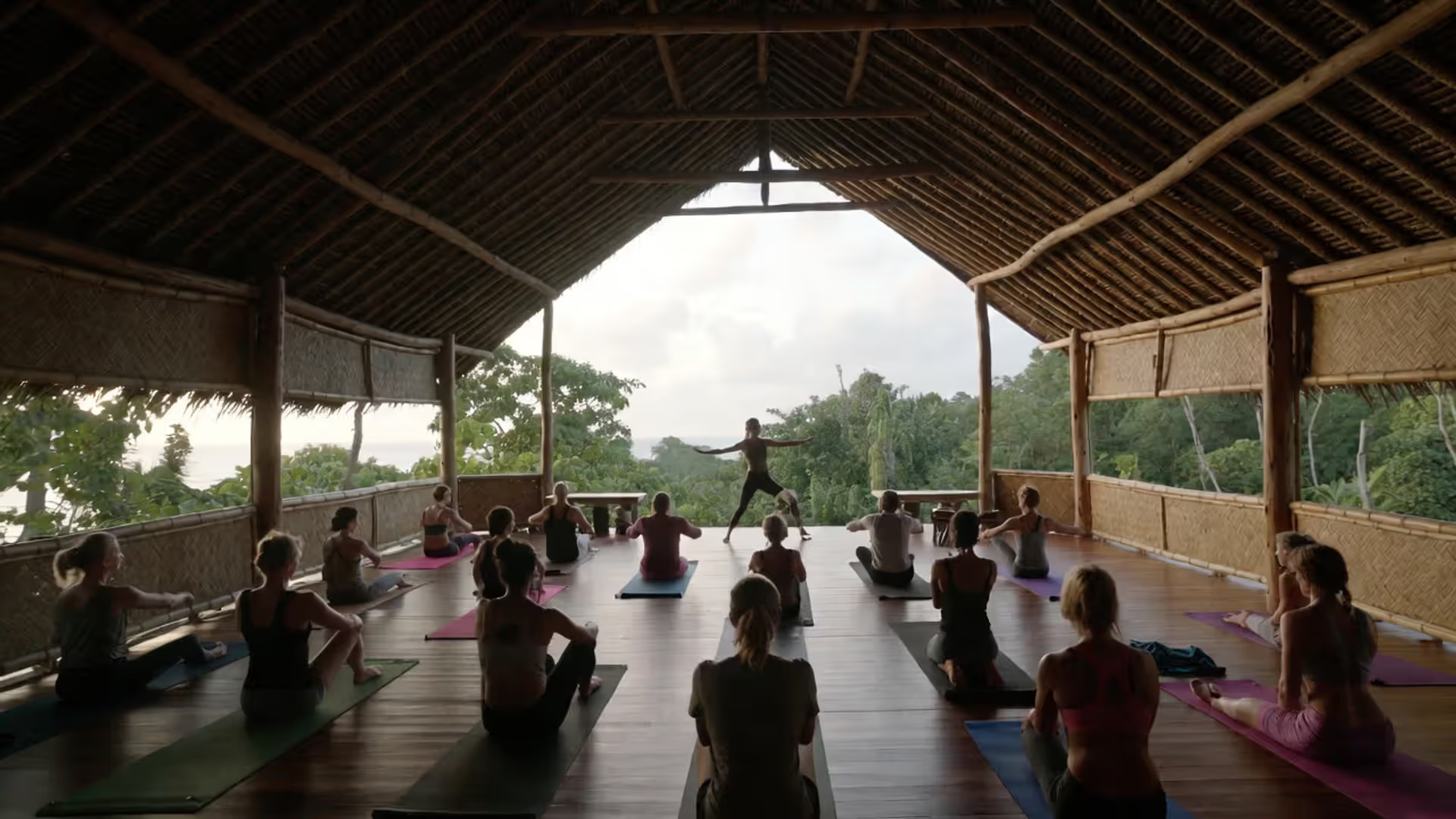
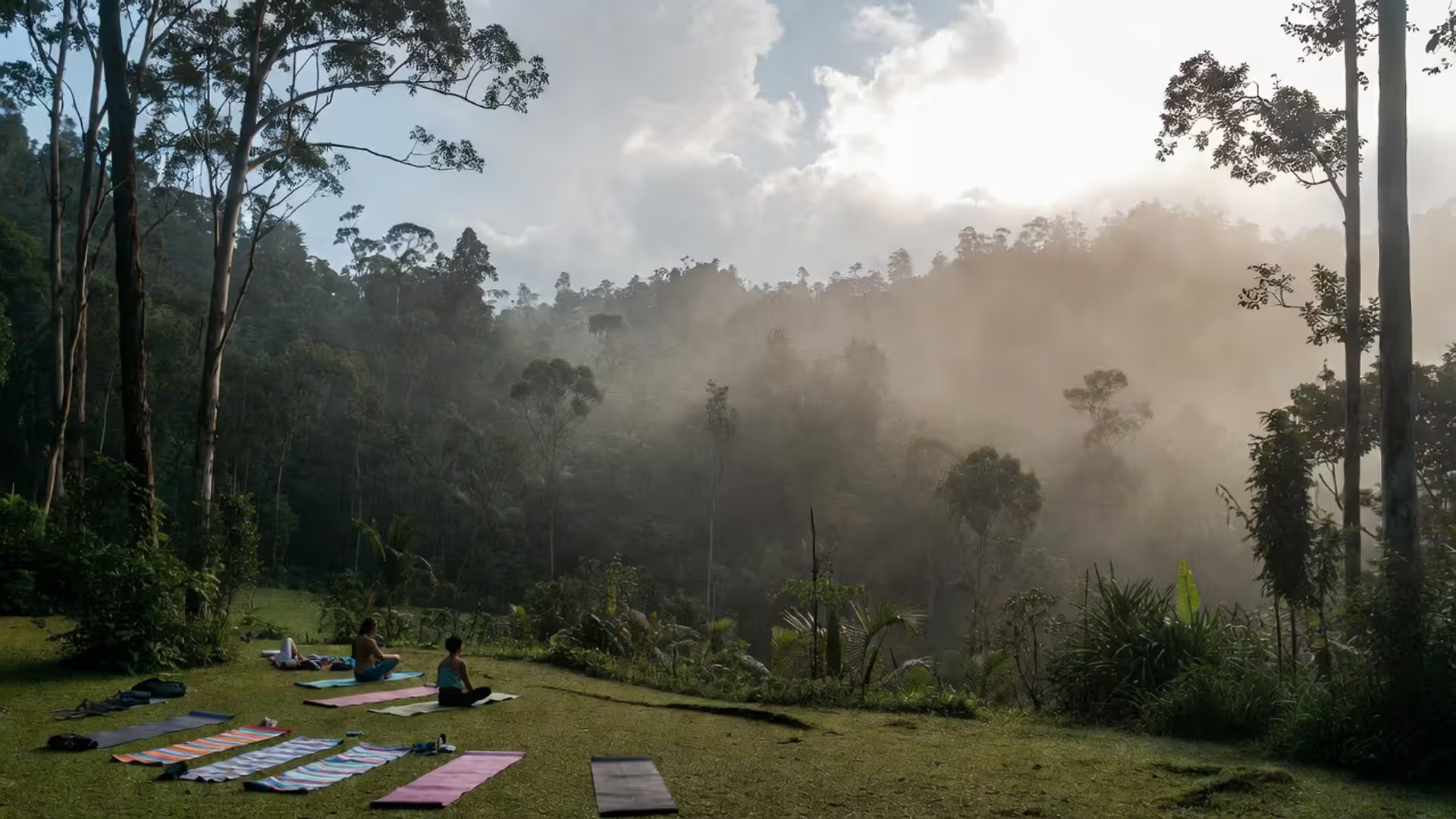
Yoga teacher training group practicing in an open-air pavilion at a tropical retreat center.
Destination Yoga Teacher Training Retreats Guide

You've decided to get certified — but instead of spending nine months of weekends at a local studio, you want to do it all at once, somewhere worth traveling to, with full days on the mat and nowhere else to be. That's the premise behind destination yoga teacher training retreats: compressed 200-hour (or 300-hour) programs held at dedicated retreat facilities, where the coursework, accommodation, meals, and community living are bundled into a single immersive experience lasting two to four weeks.
The format works brilliantly for the right person and backfires for the wrong one. This guide covers what to expect, how programs compare, where people go, what things cost, and how to evaluate whether a specific retreat deserves your deposit.
What Is a Destination Yoga Teacher Training Retreat?
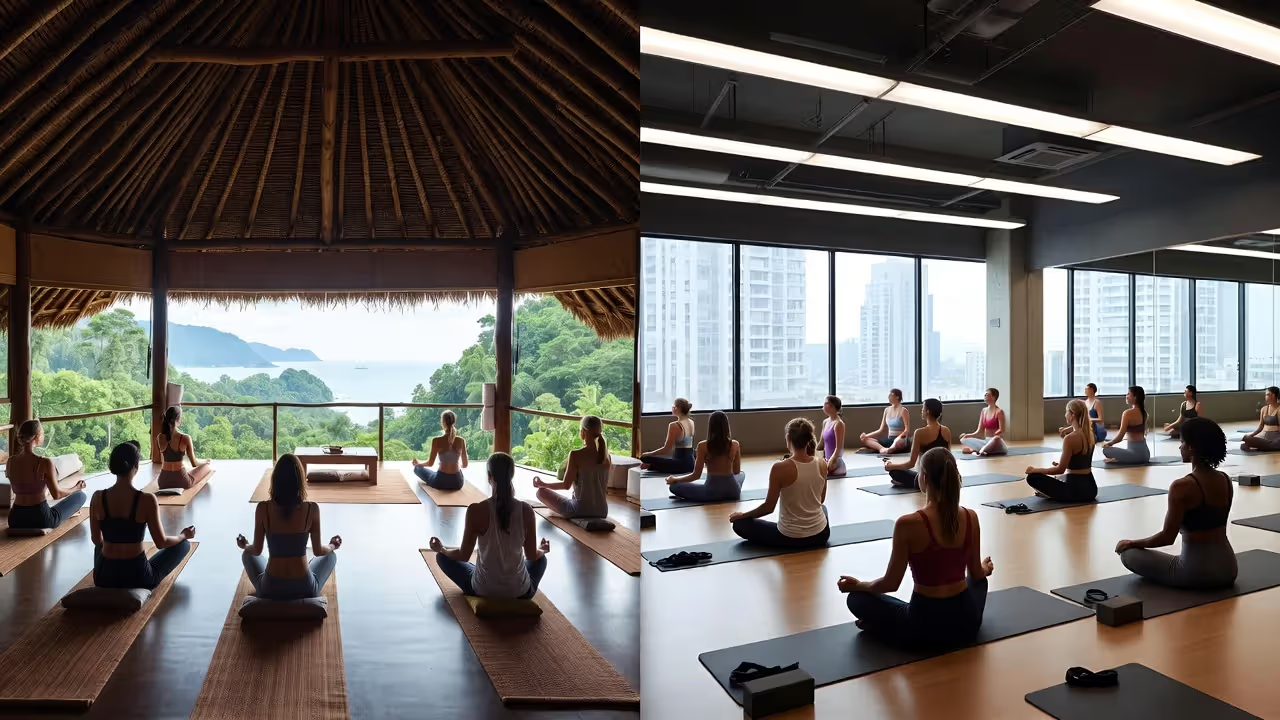
A yoga teacher training retreat replaces the part-time, months-long studio model with a concentrated residential format. Instead of commuting to a local school for weekend modules over half a year, you travel to a dedicated facility — often in a rural, coastal, or mountain setting — and live on-site while completing the entire curriculum in 14–30 consecutive days.
The "destination" element matters for two reasons. First, geographic removal strips away the daily-life distractions (commute, laundry, email) that fragment attention during part-time programs. Second, the travel component creates a psychological boundary — you're not squeezing education between obligations; you're fully inside it.
Typical duration for a 200-hour certification: 21–28 days. Shorter 14–17 day formats exist but compress the schedule to 10–12 hour days, which can exhaust students who lack a strong existing practice.
Why Choose an Immersive Yoga Retreat for Certification?
The Benefits of Residential Yoga Training
Residential yoga training creates conditions that a commuter format simply cannot. When you eat, sleep, practice, and study in the same location alongside the same cohort for three or four weeks straight, the depth of absorption changes fundamentally.

Author: Connor Evans;
Source: yogapennsylvania.com
Focused environment: no scrolling between modules, no rushing from work to make a 6 PM lecture. The facility becomes your entire world. Students consistently report that concepts they'd read about for years — bandhas, the koshas, pranayama mechanics — finally clicked when they had hours of uninterrupted practice to integrate them physically.
Community bond: living with 15–25 people going through the same intense process creates connections that rarely form in part-time settings. These relationships frequently become professional referral networks, co-teaching partnerships, and lasting friendships.
Momentum: the consecutive daily structure builds on itself. Day 12 feels dramatically different from day 2 — your body has adapted, the terminology is natural, and practice teaching starts to feel less performative. That progressive deepening is harder to achieve when a week of regular life interrupts between each module.
Who Thrives in an Immersive Format?
Career changers who need to complete the credential within a defined leave window. Gap-year students or recent graduates with flexible schedules. Experienced practitioners who already hold a strong daily practice and can physically handle 6–8 hours of daily mat work without injury risk.
Who should think twice: anyone unable to take 3–4 consecutive weeks away from family or work obligations; people with injuries that flare under sustained daily load; beginners with less than a year of regular practice — the physical demands of an intensive can overwhelm a body that hasn't built baseline endurance.
A day in the life at a typical yoga certification retreat:
6:00 AM — Morning bell, optional silent meditation
6:30 AM — Led asana practice (90 min)
8:00 AM — Breakfast
9:30 AM — Anatomy or philosophy lecture (2 hrs)
11:30 AM — Technique lab: alignment, adjustments, props (90 min)
1:00 PM — Lunch and rest
3:00 PM — Practicum: student-led teaching segments with feedback (2 hrs)
5:00 PM — Restorative or yin session (45 min)
6:00 PM — Dinner
7:30 PM — Evening satsang, journaling, or free time
9:30 PM — Lights out
Yoga Certification Retreat vs Traditional Studio Training
| Feature | Certification Retreat | Local Studio Format |
| Schedule | Full-time, 2–4 weeks | Part-time weekends, 6–9 months |
| Setting | Rural, coastal, or purpose-built facility | Urban studio |
| Cost structure | Tuition + lodging + meals bundled | Tuition only (commute and food separate) |
| Community intensity | High — live together 24/7 | Moderate — see cohort on scheduled days |
| Practicum depth | Daily segments with ongoing faculty observation | Periodic, often compressed into final weekends |
| Pace | Immersive, accelerated | Gradual, integrated with daily life |
| Best for | People who can commit a full block | People who need to maintain work/family routine |
The retreat model front-loads the intensity. You absorb everything at once — which produces rapid skill-building but limited time to process between sessions. The studio model spaces learning out, allowing more reflection between modules but risking momentum loss when life intervenes.
Author: Connor Evans;
Source: yogapennsylvania.com
Top Locations for Destination Yoga Teacher Training Retreats
Immersive Yoga Retreat USA (Domestic Picks)
California: The widest selection in the country. Ojai, Big Sur, Joshua Tree, and Marin County each host multiple Yoga Alliance-registered programs. Styles lean vinyasa and Hatha, with growing options in somatic and trauma-informed tracks. Expect $4,500–$8,000 all-inclusive for 200 hours.
Colorado: Mountain settings near Boulder, Crestone, and Telluride. Altitude adds a physical variable — useful to know if you have respiratory concerns. Programs here often integrate mindfulness and nature immersion. Range: $4,000–$7,000.
Hawaii: Big Island and Maui host retreats year-round. Tropical climate keeps outdoor practice comfortable even in January. Higher food and travel costs push total budgets up. Typical all-in: $5,500–$9,000.
Arizona: Sedona and the surrounding desert offer dry-heat settings popular with Ashtanga and hot-yoga certifications. Smaller cohort sizes are common. Range: $3,800–$6,500.
International Yoga Retreats (Popular Global Destinations)
Costa Rica: One of the most established international hubs. Programs cluster along the Pacific coast (Nosara, Santa Teresa). No visa needed for U.S. citizens staying under 90 days. All-inclusive pricing often undercuts U.S. equivalents: $2,500–$5,500. Trade-off: tropical humidity and insects are constant companions.
Mexico: Tulum and Sayulita have become major centers. Short flights from most U.S. cities keep travel costs low. Range: $2,800–$5,000. Currency advantage makes ancillary spending affordable.
Bali: The iconic destination. Ubud hosts dozens of programs across every tradition. Costs are low ($2,000–$4,500 all-inclusive), but 20+ hours of travel from the U.S. and significant jet lag erode your first 2–3 productive days. Visa: free for stays under 30 days.
India: Rishikesh remains the traditional epicenter. Extremely affordable ($1,500–$3,500), but infrastructure quality varies wildly. If hot water and reliable WiFi matter to you, vet the specific facility carefully. Cultural immersion is unmatched.
| Location | Avg. Duration | Estimated Total Cost | Best Suited For |
| California | 21–28 days | $4,500–$8,000 | Domestic convenience, style variety |
| Colorado | 21–25 days | $4,000–$7,000 | Nature integration, mindfulness |
| Hawaii | 21–28 days | $5,500–$9,000 | Tropical outdoor practice year-round |
| Costa Rica | 21–28 days | $2,500–$5,500 | Budget-friendly international, no visa |
| Mexico | 18–25 days | $2,800–$5,000 | Short travel from U.S., affordability |
| Bali | 21–28 days | $2,000–$4,500 | Low cost, spiritual culture |
| India | 21–30 days | $1,500–$3,500 | Tradition, maximum affordability |
What to Expect at Yoga Retreat Centers

Author: Connor Evans;
Source: yogapennsylvania.com
Yoga retreat centers range from bare-bones ashram dormitories to high-end eco-resorts. Most fall somewhere in the middle: clean shared rooms (2–4 beds), communal bathrooms, three vegetarian or vegan meals daily, an open-air shala (practice hall), and limited or intentionally restricted WiFi.
Shared rooms are standard in the base tuition. Private or semi-private upgrades typically add $500–$2,000 to the total. If you're a light sleeper or need alone time to process intense days, the upgrade is often worth paying.
Meals are almost universally plant-based. Programs in India and Bali frequently serve Ayurvedic or Sattvic cuisine. Dietary restrictions (gluten-free, nut allergies) are usually accommodated but should be confirmed before booking.
Many centers enforce partial digital detox: WiFi available in common areas during set hours, no devices in the shala. Some go further — no phones during instruction. This is a feature, not a limitation, but know your tolerance beforehand.
Questions to Ask a Yoga Retreat Center Before Booking
- Is the program registered with Yoga Alliance (or another recognized body)?
- Can I see the full daily schedule before committing?
- What are the lead instructor's credentials and teaching experience?
- What is the refund or transfer policy if I need to cancel?
- Is airport pickup included, or what are the transport logistics?
- What's the maximum group size?
- Are medical or evacuation procedures in place for remote locations?
Immersion changes you. When yoga is no longer something you fit into your life but something your life revolves around, even temporarily, the learning accelerates.
— Tiffany Cruikshank
Curriculum Breakdown: What You Learn in a Retreat-Style 200-Hour Program
Core Components
The content mirrors any quality 200-hour program — the delivery method is what differs. Expect the same subject pillars compressed into daily intensive blocks:
| Area | Content | Typical Hours |
| Asana and Alignment | Posture mechanics, modifications, hands-on adjustment skills | 75–90 |
| Anatomy and Physiology | Musculoskeletal overview, respiratory function, common injuries | 20–30 |
| Sequencing and Methodology | Class design, cueing, pacing, room awareness, voice modulation | 25–35 |
| Philosophy and Ethics | Classical texts, lineage context, boundaries, cultural sensitivity | 15–20 |
| Pranayama and Meditation | Breath techniques, seated practices, subtle body | 10–15 |
| Practicum | Student-led segments with faculty observation and critique | 15–25 |
The retreat advantage for practicum: daily proximity to instructors means feedback happens in real time across multiple days, not in a single compressed weekend at the end of a months-long course. Students can implement a correction on Tuesday and have it re-evaluated on Wednesday.
Cost of Destination Yoga Teacher Training Retreats
Author: Connor Evans;
Source: yogapennsylvania.com
Budget transparency is the single most important trust signal when evaluating a program. Here's what the total typically includes — and what it doesn't.
Usually included: tuition (all instruction hours), accommodation for the full duration, three daily meals, training manuals, use of facility amenities, and a completion certificate.
Usually separate: flights or ground transport to the venue, Yoga Alliance registration fee (~$50 + annual renewal), travel insurance, personal spending, gratuities, pre-arrival reading materials (books), and visa fees for overseas destinations.
Realistic all-in budgets by category (200-hour, per person):
- Domestic retreat (U.S.): $5,000–$9,000 including flights and personal expenses
- Central America (Costa Rica, Mexico): $3,500–$6,500 all-in
- Southeast Asia (Bali): $3,000–$6,000 all-in (higher due to airfare from U.S.)
- India: $2,500–$5,000 all-in
A common budgeting mistake: comparing sticker prices without accounting for airfare and lost income. A $2,500 program in Bali plus $1,200 in flights and three weeks of unpaid leave may cost more than a $5,000 retreat two hours from home.
Pros and Cons of International Yoga Retreats
Advantages:
Cultural enrichment that deepens the philosophical and spiritual dimensions of training. Practicing yoga in Rishikesh or on a Balinese temple complex carries a resonance that a suburban studio cannot replicate.
Lower tuition in regions with favorable exchange rates. Programs in India, Indonesia, and parts of Latin America frequently cost 40–60% less than U.S. equivalents.
Unique natural settings — jungle, beach, mountain — that enhance the sense of separation from routine life.
Drawbacks:
Travel fatigue. Long-haul flights and jet lag can cost you 2–3 productive days at the start of a program. For a 21-day course, that's roughly 10–15% of total time operating below capacity.
Visa and insurance complexity. While most short-stay destinations don't require U.S. citizens to obtain visas in advance, travel insurance (with medical evacuation coverage) is essential for remote locations. Budget $100–$200 for adequate coverage.
Infrastructure variability. "Eco-lodge" can mean anything from tasteful sustainability to cold showers and intermittent electricity. Request recent photos and read reviews on independent platforms.
How to Choose the Best Destination Yoga Teacher Training Retreat

Author: Connor Evans;
Source: yogapennsylvania.com
10-Point Evaluation Checklist
- Accreditation: Yoga Alliance (RYS) or equivalent recognized body
- Lead instructor carries 1,000+ teaching hours and verifiable E-RYT or equivalent
- Maximum group size stated (25 or under for meaningful feedback)
- Practicum hours clearly defined (minimum 20 of you personally leading)
- Safety: medical protocols, emergency access, especially at remote sites
- Graduate reviews confirmable on third-party platforms (Google, TripAdvisor, Trustpilot)
- Total pricing transparent — no hidden fees revealed after deposit
- Accommodation quality verifiable through recent photos or video tours
- Syllabus available in full before enrollment
- Post-completion support: alumni community, mentorship, continuing education guidance
Red Flags to Avoid
No published syllabus or only a vague topic list. Programs that "reveal the curriculum as you go" are usually under-structured.
Zero practicum hours — or practicum listed as "optional." If you're pursuing credentials to teach, you need observed, faculty-critiqued instruction time. Period.
Instructor bios that list only certifications with no verifiable teaching history. A credential without experience behind it is wallpaper.
Promises of guaranteed employment, spiritual awakening, or physical transformation. Credible programs describe realistic outcomes: instructional readiness, foundational knowledge, and personal growth through disciplined study.
Who Should NOT Choose a Residential Yoga Training?
This format isn't universally ideal. Skip it if:
You can't take 3–4 consecutive weeks away from work, caregiving, or family obligations. Some people try to "make it work" with daily check-ins and remote work in the evenings — this defeats the purpose of immersion and leaves you exhausted.
Your budget requires financing that creates post-graduation financial stress. A $6,000 program funded by credit card debt is a poor foundation for a career that typically starts with $30–$50/class pay rates.
You prefer gradual absorption. Some learners retain more by studying a module, practicing it in real life for a week, and returning for the next. The intensive model doesn't accommodate that rhythm.
You're recovering from injury or managing a condition that worsens under sustained physical load. Daily 6-hour mat work for three weeks demands a resilient body. Consult a physician if there's any uncertainty.
Frequently Asked Questions
Choosing a destination yoga teacher training retreat is a decision that blends educational evaluation with travel planning. The strongest candidates combine Yoga Alliance accreditation, transparent pricing, verified instructor depth, structured practicum, and honest outcome descriptions. Match the location and format to your physical readiness, schedule availability, and financial reality — and you'll walk away with a credential backed by genuine skill rather than a scenic backdrop alone.
Related Stories
Read more
Read more



The content on yogapennsylvania.com is provided for general informational and inspirational purposes only. It is intended to share yoga tips, meditation practices, wellness guidance, retreat experiences, and lifestyle insights, and should not be considered medical, therapeutic, fitness, or professional health advice.
All information, articles, images, and wellness-related materials presented on this website are for general informational purposes only. Individual health conditions, physical abilities, wellness goals, and experiences may vary, and results can differ from person to person.
Yogapennsylvania.com makes no representations or warranties regarding the accuracy, completeness, or reliability of the content provided and is not responsible for any errors or omissions, or for decisions or actions taken based on the information presented on this website. Readers are encouraged to consult qualified healthcare or wellness professionals before beginning any new yoga, meditation, or fitness practice.