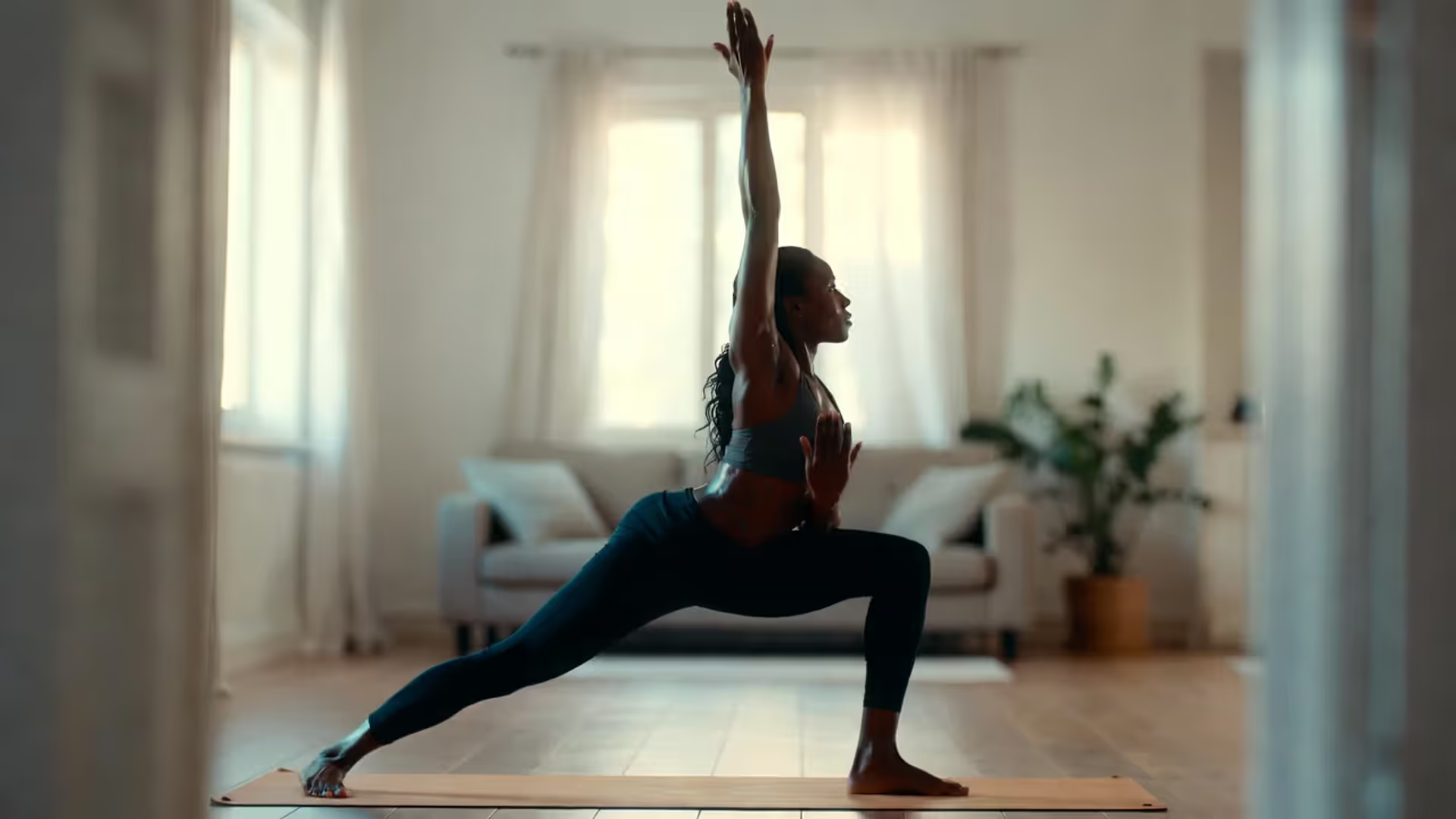
A focused 30-minute flow can reset both body and mind.
30 Min Yoga Flow: A Complete Full-Body Vinyasa Sequence You Can Do at Home
Half an hour between morning coffee and the workday. Or 9 PM, the house finally quiet, your body asking for a reset. A properly sequenced 30 min yoga flow slots into these gaps—enough time for measurable adaptation, brief enough that skipping takes more effort than showing up.
Why a Half-Hour Practice Delivers Real Results
The primary enemy of a sustainable daily yoga routine is logistics. A 75-minute studio class absorbs travel, parking, and cooldown—easily two hours. Thirty minutes on your own floor eliminates all of that.
Exercise science backs the approach: distributing moderate activity across several shorter bouts per week improves joint mobility more reliably than packing identical volume into one marathon session. Four half-hour practices outperform a single weekend megaclass for functional range of motion.
The word vinyasa—Sanskrit for "to place in a special way"—implies deliberate sequencing. A focused thirty-minute arc lets you warm tissue, load it under controlled stress, then restore it. That structured progression is what separates a yoga workout for flexibility from aimless stretching.
A short practice done consistently reshapes the body faster than a long practice done sporadically. The nervous system rewards repetition, not duration.
— Jason Crandell
What to Expect From This Full Body Yoga Flow
The sequence addresses hip flexors, hamstrings, quadriceps, gluteals, the shoulder girdle, thoracic spine, and deep trunk stabilizers. Intensity sits between gentle and athletic—manageable with six months of mat time, still demanding with two years. You need a mat. Blocks and a strap are useful but optional.
Pre-Practice Checklist:
30 Minute Yoga Class at Home — Phase-by-Phase Breakdown
0–5 Minutes: Warm-Up and Breath Calibration
Begin seated or on all fours. First sixty seconds: breathing only—four-count inhale, four-count exhale. This dials down sympathetic arousal and redirects attention into body-based awareness.
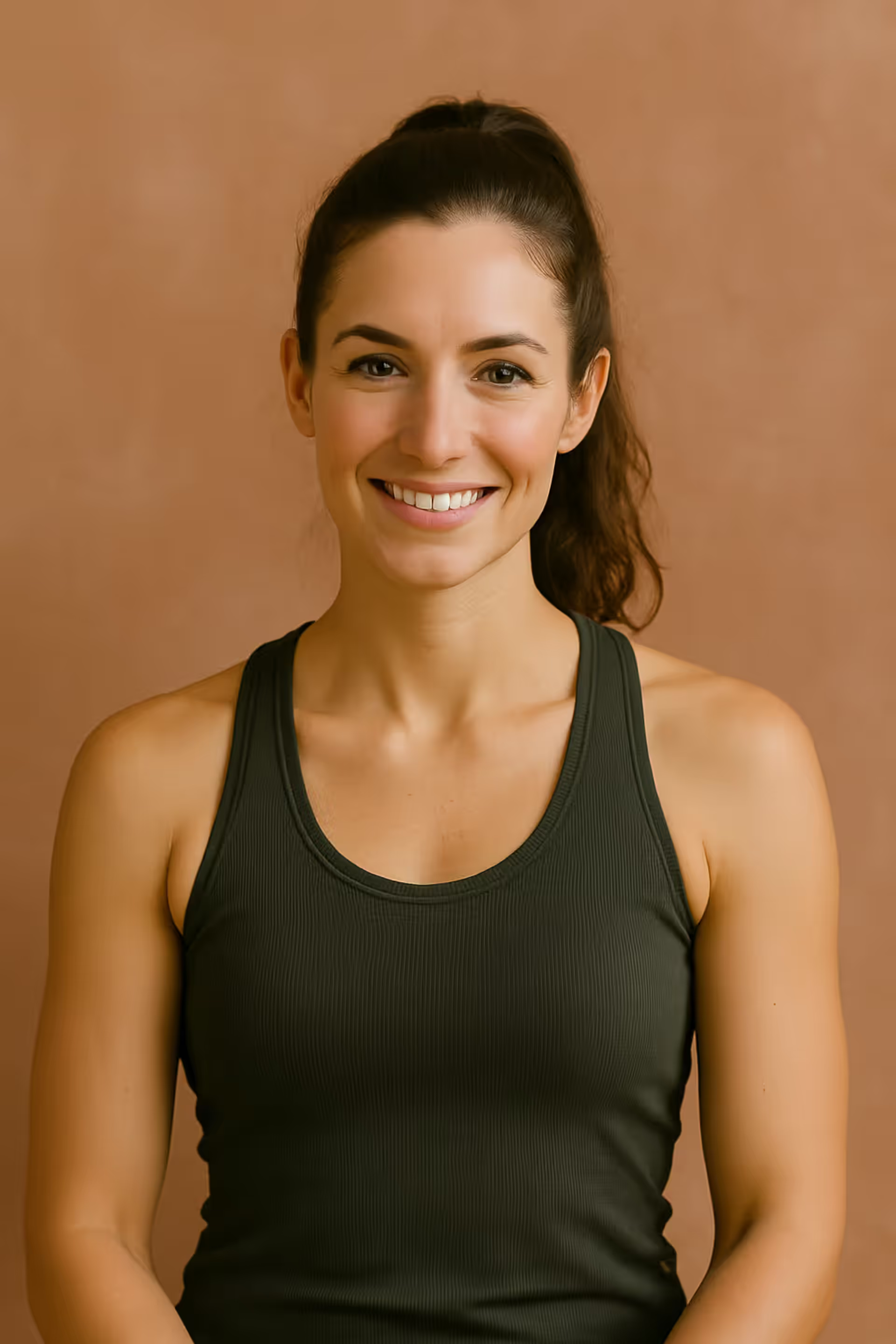
Cat-Cow (8–10 cycles): Wrists beneath shoulders, knees beneath hips. Inhale—belly descends, sternum lifts. Exhale—vertebrae round sequentially, chin tucks, palms press the ground away. One cycle per breath.
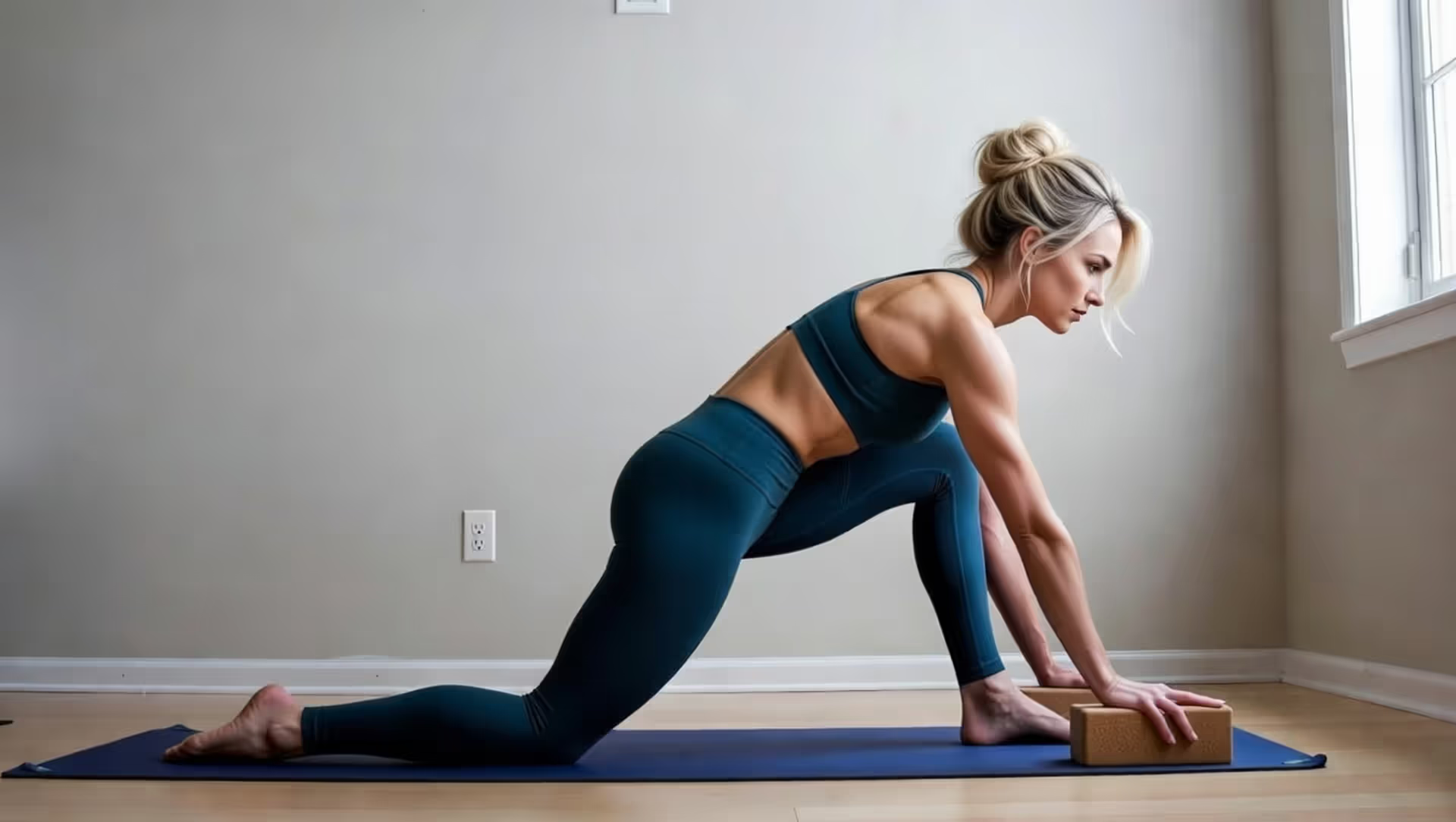
Low Lunge (30 sec per side): Right foot between the hands, rear knee on the mat, pelvis sinks forward. Targets the iliopsoas of the trailing leg—a muscle that shortens in anyone who sits professionally.
Shoulder Mobilizer: In the lunge, clasp fingers behind the lower back, coax knuckles earthward. Sternum broadens. Five breaths, then mirror on the opposite side.
Author: Ava Mitchell;
Source: yogapennsylvania.com
5–15 Minutes: Sun Salutation–Driven Vinyasa Sequence
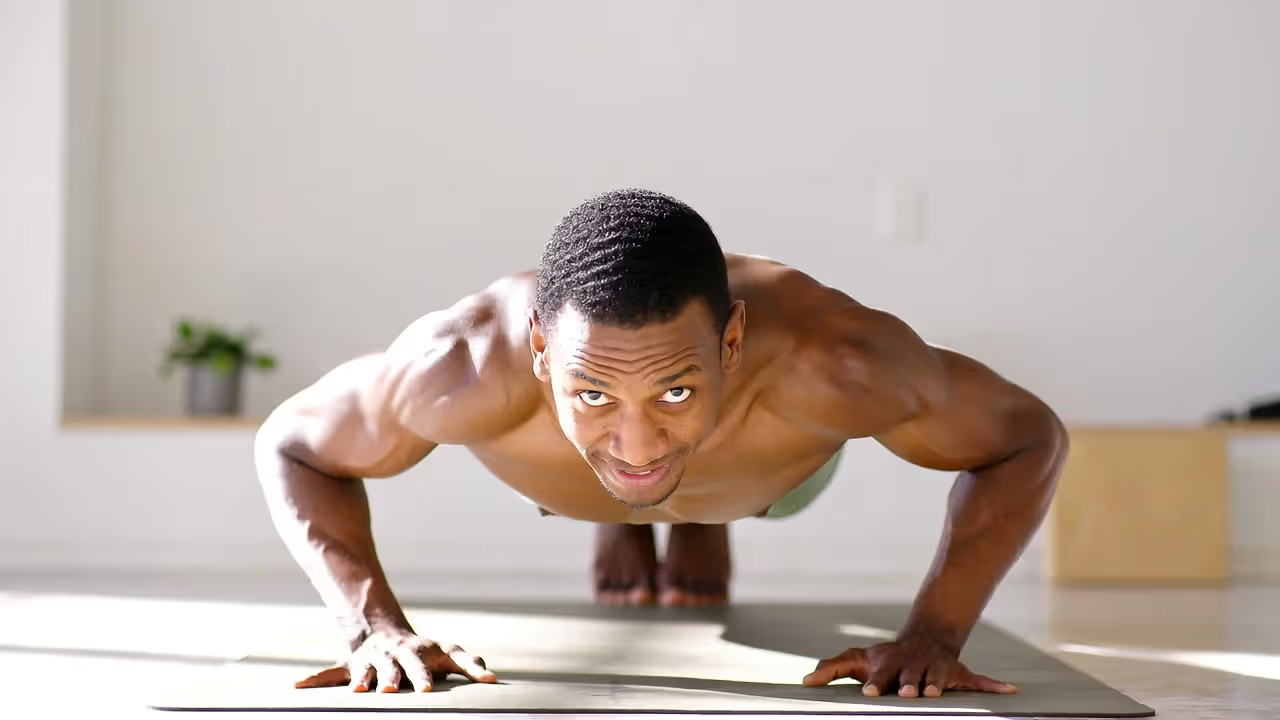
The Sun Salutation (Surya Namaskar) is a chain of roughly twelve postures coordinated with inhales and exhales. It elevates heart rate, distributes synovial fluid, and raises internal tissue temperature.
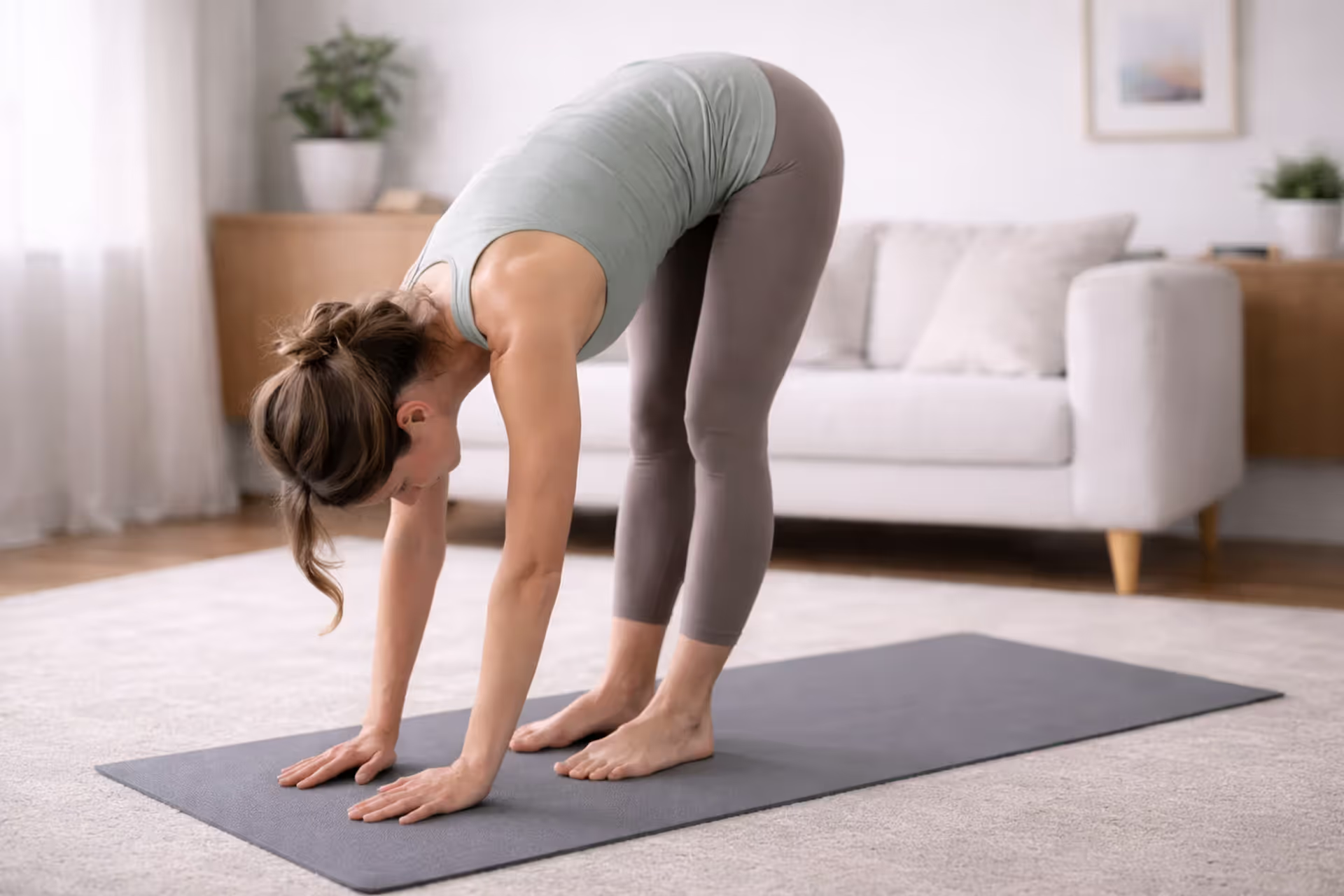
Cycle 1 (Deliberate): Mountain Pose → Forward Fold → Halfway Extension → step back to Plank → knees-chest-chin or Chaturanga → Cobra or Upward Dog → Downward Dog (5 breaths) → step forward → Halfway Extension → Fold → Mountain. Resist accelerating through the first round.
Cycles 2–3: Same skeleton, increasing fluidity. Use Chaturanga if the shoulders stay above elbow height; otherwise keep knees-chest-chin—identical recruitment pattern, reduced load.
Cycles 4–5 (Standing postures): After Downward Dog, advance the right foot into Warrior I (3 breaths), rotate to Warrior II (3 breaths), hands down, step back, vinyasa, repeat left side.
By minute fifteen: quads, deltoids, and trunk feel warm. Breathing is elevated but nasal without strain.
Author: Ava Mitchell;
Source: yogapennsylvania.com
15–25 Minutes: Loaded Holds and Balance
Durations lengthen, equilibrium demands rise. This segment functions as the intermediate yoga flow layer.
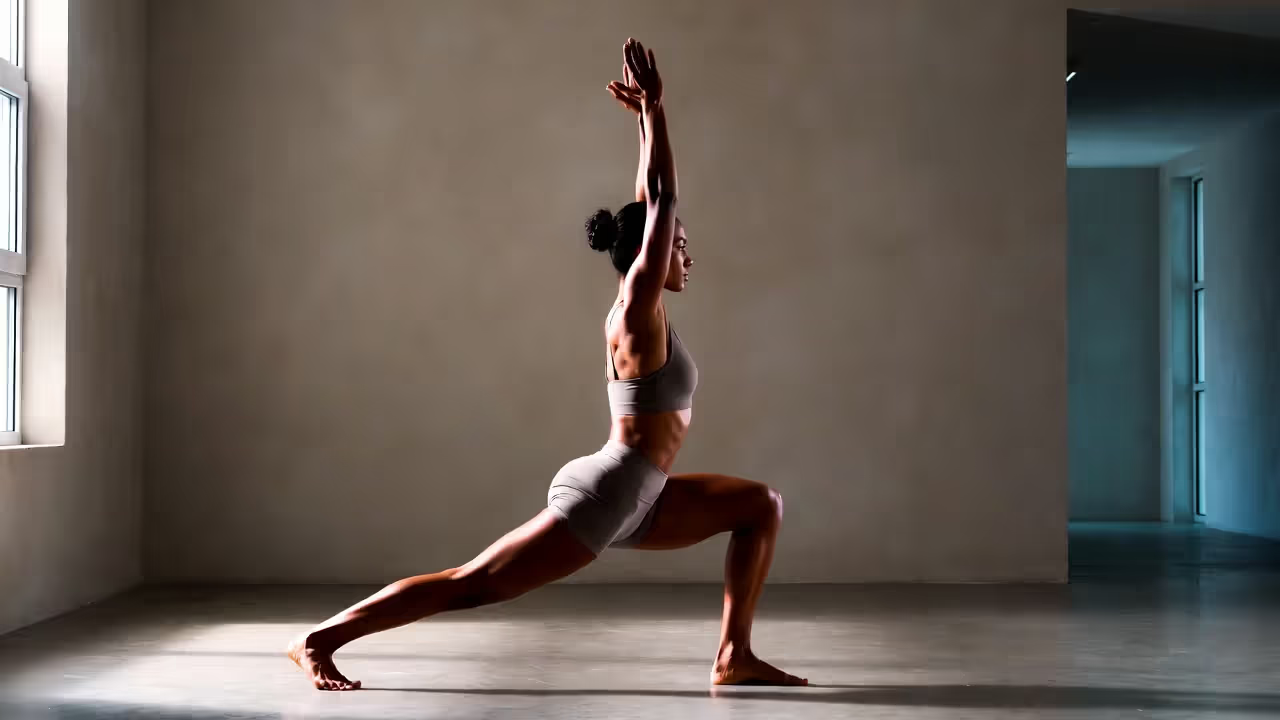
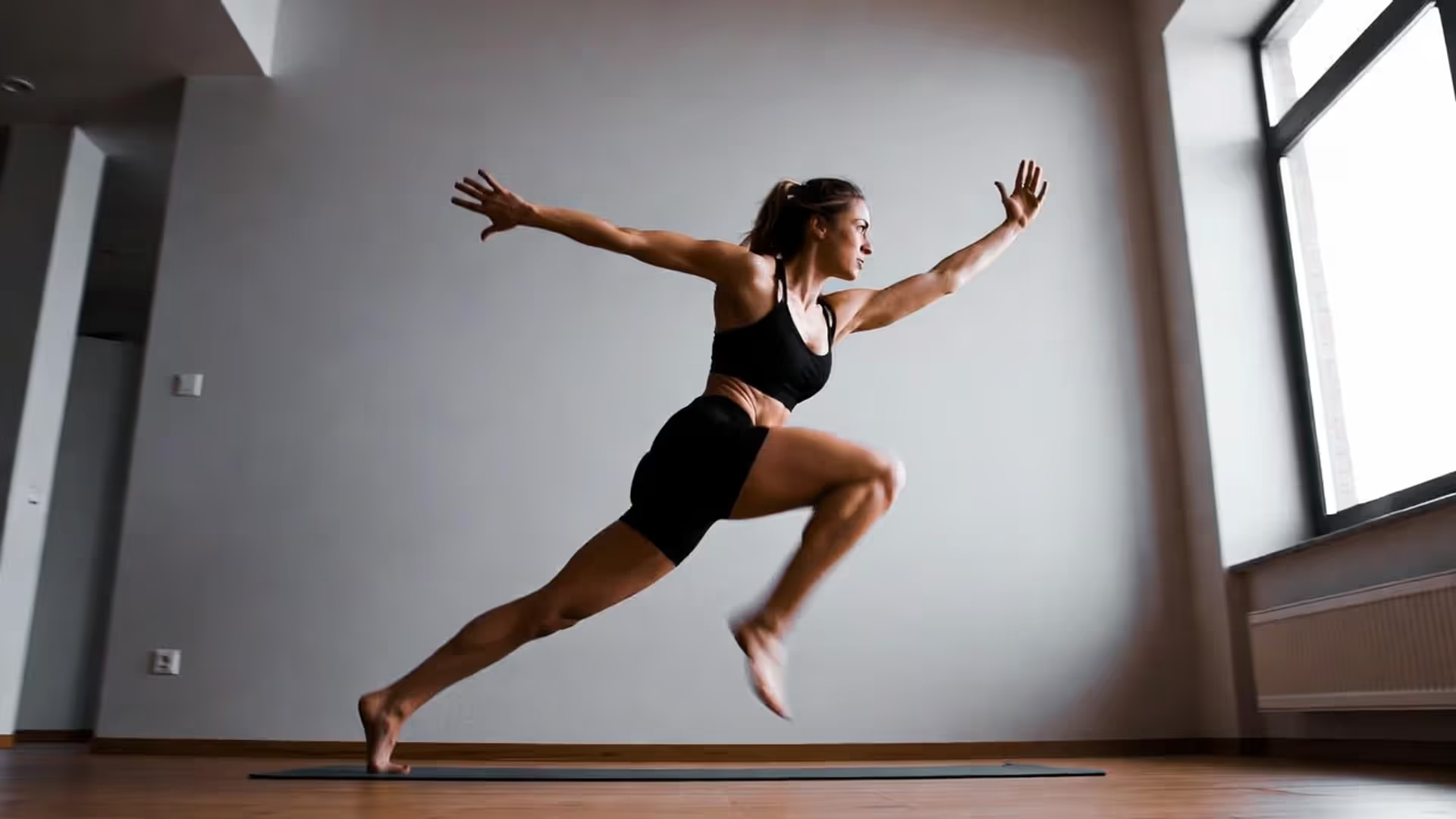
Crescent Lunge (5 breaths per side): Right foot forward from Downward Dog, rear heel airborne, arms overhead. Front thigh approaches horizontal—quad and glute absorb serious load.
Chair → Forward Fold (3 reps): Feet together, hips withdraw, arms up. Three breaths. Exhale, fold. Inhale, rise. Develops eccentric quadricep stamina.
Lateral Plank (3–5 breaths per side): From plank, rotate onto the outer right foot, stack left, extend upper arm. Drop bottom knee if unstable. Obliques, gluteus medius, and rotator cuff engage simultaneously.
Optional: Revolved Crescent for thoracic rotation, Crow hold (3 breaths), or slow Warrior III (5 breaths per side).
Author: Ava Mitchell;
Source: yogapennsylvania.com
25–30 Minutes: Passive Lengthening and Recovery
Don't skip this. Passive stretching on warm tissue generates the largest flexibility gains of the session.
Pigeon (60 sec per side): Right knee forward, shin across the mat, torso descends. Slow exhales directed toward the outer hip.
Seated Forward Fold (60 sec): Legs extended, feet flexed, hinge from the hip crease. Strap around soles if hamstrings restrict the fold.
Reclined Twist (30 sec per side): Supine, right knee across the midline to the left, right arm extends. Gravity wrings compression from the lumbar region.
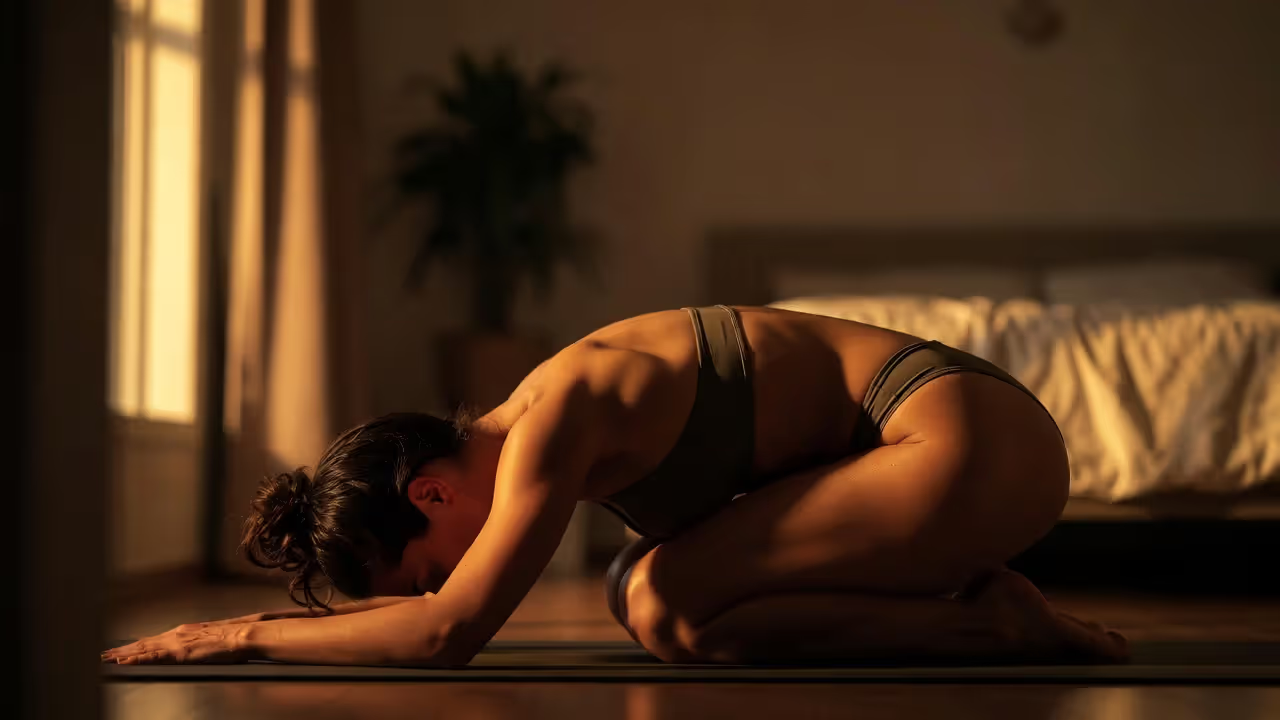
Savasana (90+ seconds): Supine, palms skyward, eyes closed. The parasympathetic system needs this interval to consolidate the session's input.
Author: Ava Mitchell;
Source: yogapennsylvania.com
Modifications for Beginners and Progressions for Intermediate Practice
| Element | Beginner | Intermediate |
| Tempo | Unhurried, methodical | Moderate, breath-locked |
| Transitions | Step one foot at a time | Jump-back or float |
| Hold Length | 3 breaths | 5–8 breaths |
| Peak Postures | Warrior I, II, Chair | Add Crow, Revolved Lunge, Warrior III |
| Lowering | Knees-chest-chin | Full Chaturanga |
| Focus | Positional accuracy | Endurance, seamless linking |
Beginner Adjustments
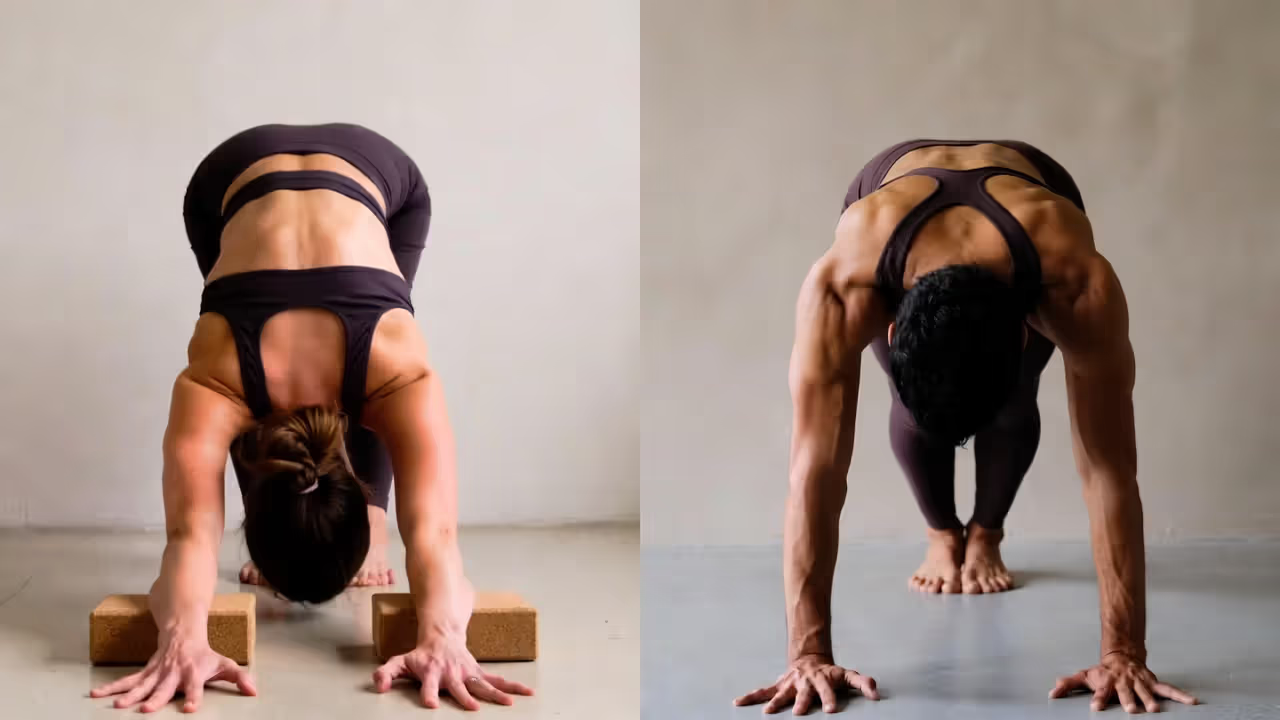
Trim holds by two breaths. Use blocks without hesitation—they elevate the ground so the spine keeps its native curve. Focus on foundational beginner yoga poses—Warrior I, Warrior II, Chair, basic lunges—before attempting single-leg balance or wrist-loaded shapes. If a posture forces you to hold your breath, you've exceeded current working depth.
Author: Ava Mitchell;
Source: yogapennsylvania.com
Intermediate Progressions
Add binds in Extended Side Angle or Revolved Triangle. Experiment with Crow (3 breaths), Side Crow (2 breaths). Extend balance holds to eight breaths. Try eliminating pauses between salutation cycles—link the terminal exhale directly into the next round's opening inhale for an unbroken vinyasa flow sequence that escalates cardiovascular demand.
Building a Sustainable Daily Yoga Routine
Monday: Full 30 min yoga flow — standard effort
Tuesday: 20-min gentle session (warm-up + cooldown only)
Wednesday: Full sequence with intermediate additions
Thursday: Rest or 15-min restorative
Friday: Full sequence, beginner tempo — alignment focus
Saturday: 30-min flow emphasizing standing balances
Sunday: Complete rest
Five active days, two recovery days. After four to six weeks: deeper folds, steadier single-leg stances, less morning hip stiffness.
Savasana is not the end of practice—it is where the practice lands. Without it, the work has nowhere to settle.
— Ava Mitchell
Errors in a 30-Minute Home Session
Sprinting through transitions. The linking movements carry as much training value as the shapes themselves. Control the shift from Warrior II through Chaturanga—don't fling through it.
Abandoning breath cues. One action per respiratory phase. Inhale—arms ascend. Exhale—torso folds. Never stack two movements onto one breath.
Maximum effort every session. Two or three weekly practices should feel moderate. Tendon tissue remodels slower than muscle; daily peak intensity risks overuse irritation in wrists and shoulders.
Truncating Savasana. Ninety seconds minimum. The autonomic nervous system needs the stillness to absorb what you just delivered.
FAQ
Related Stories
Read more
Read more

The content on yogapennsylvania.com is provided for general informational and inspirational purposes only. It is intended to share yoga tips, meditation practices, wellness guidance, retreat experiences, and lifestyle insights, and should not be considered medical, therapeutic, fitness, or professional health advice.
All information, articles, images, and wellness-related materials presented on this website are for general informational purposes only. Individual health conditions, physical abilities, wellness goals, and experiences may vary, and results can differ from person to person.
Yogapennsylvania.com makes no representations or warranties regarding the accuracy, completeness, or reliability of the content provided and is not responsible for any errors or omissions, or for decisions or actions taken based on the information presented on this website. Readers are encouraged to consult qualified healthcare or wellness professionals before beginning any new yoga, meditation, or fitness practice.