

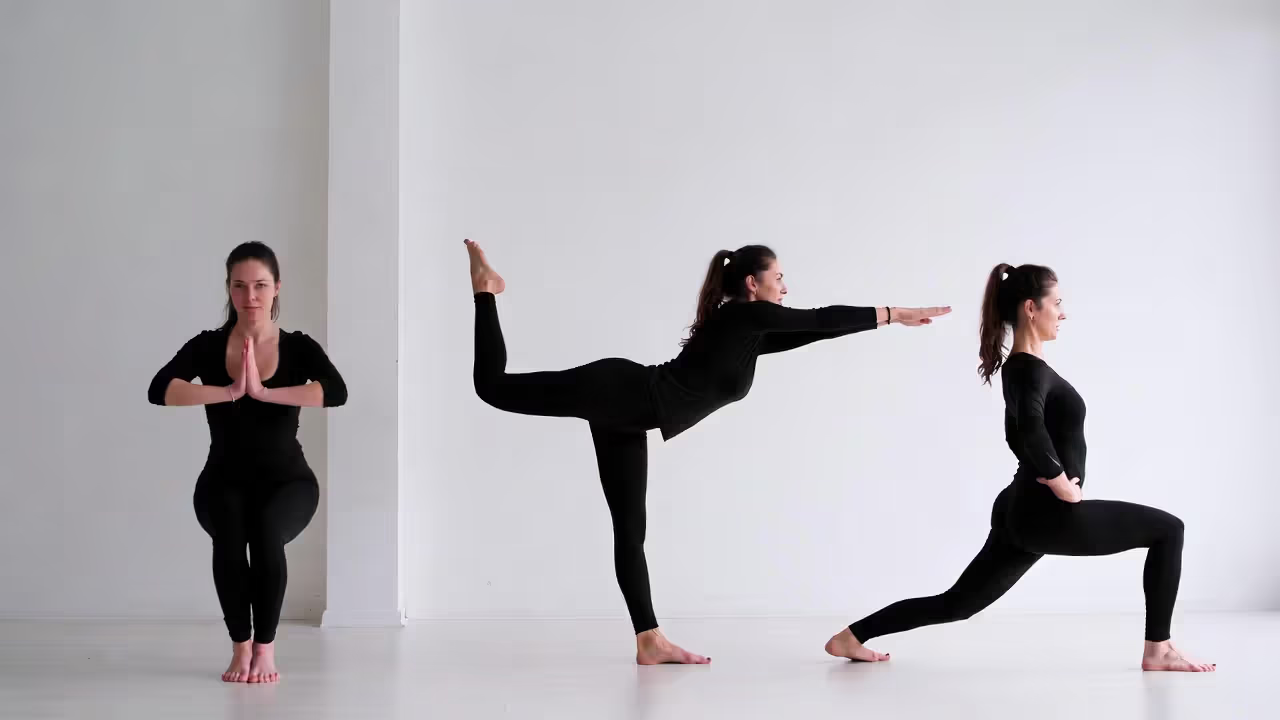
Woman performing Chair Pose in a bright yoga studio.
Yoga for Weight Loss: What Works, What Doesn't, and How to Build a Routine That Delivers

A woman starts a daily flow practice expecting to drop 15 pounds in two months. Eight weeks later, she's stronger, sleeps better, and handles stress differently — but the scale hasn't moved. A man swaps his evening runs for hot yoga three times a week, then celebrates each session with a 500-calorie açaí bowl. He gains weight.
Neither outcome means yoga failed. It means expectations and execution were misaligned. Yoga can contribute meaningfully to body-composition change — but the mechanism isn't what most people assume, and the approach matters far more than the label on the class.
Can Yoga Actually Help You Lose Weight? (What the Research Says)
The honest answer: yes, but not primarily through caloric burn.
A 60-minute vinyasa session burns roughly 300–500 calories for a 155-lb person. Hatha lands closer to 180–250. Restorative: under 150. Compare that to running (500–700) or HIIT circuits (400–600) and the direct energy expenditure from yoga looks modest.
Where it earns its weight-loss value is indirect. A 2016 review in the Journal of Alternative and Complementary Medicine found that regular practitioners showed lower BMI over time compared to non-practitioners — not because they burned more calories on the mat, but because their behavior off the mat shifted.
The mechanisms: reduced cortisol from consistent practice lowers stress-driven eating and visceral fat accumulation. Improved sleep quality (documented across multiple trials) stabilizes hunger hormones — ghrelin and leptin regulate more effectively when sleep improves. Enhanced interoceptive awareness — the ability to distinguish genuine hunger from boredom, anxiety, or habit — reduces unconscious snacking. People who practice regularly tend to eat more deliberately, not because they're told to, but because they're paying closer attention to their bodies.
Daily yoga for weight loss works less through the session itself and more through the cascade of behavioral changes it triggers over weeks and months.

Author: Jackson Wright;
Source: yogapennsylvania.com
Which Yoga Styles Burn the Most Calories (and Which Don't)
| Style | Calories / 60 min (155 lb) | Intensity | Strength Component | Beginner-Friendly |
| Power Vinyasa | 400–550 | High | Strong | Moderate (fast pace) |
| Ashtanga | 350–500 | High | Strong | Low (set sequence, demanding) |
| Bikram / Hot | 350–475 | Moderate–High | Moderate | Moderate (heat adds strain) |
| Hatha | 180–280 | Low–Moderate | Light–Moderate | High |
| Yin | 120–180 | Low | Minimal | High |
| Restorative | 80–150 | Very Low | None | High |
Power yoga for weight loss leads the caloric output chart because it combines sustained muscular engagement with elevated heart rate across the full session. Ashtanga follows closely — the fixed sequence builds progressive intensity, though its rigidity makes it less accessible for newcomers.
Hot yoga deserves a specific note: the heat creates an illusion of extra caloric burn through profuse sweating, but the actual metabolic difference over a non-heated session of equal intensity is roughly 50–80 calories. Most of the additional "weight lost" in a hot class is water that returns with your next glass of water. The heat does increase heart rate and cardiovascular demand, which carries some training benefit — but it's not the fat-burning accelerator that marketing implies.
Yin and restorative styles burn fewer calories but aren't irrelevant. Their contribution comes through the cortisol pathway: lowering chronic stress hormones directly reduces the body's tendency to store abdominal fat. A weekly restorative session alongside three power sessions may produce better long-term results than four power sessions and burnout.
Best Yoga Poses for Weight Loss (Ranked by Muscle Engagement and Intensity)
Standing and Balance Poses (Highest Caloric Demand)
Author: Jackson Wright;
Source: yogapennsylvania.com
These recruit the largest muscle groups — glutes, quads, hamstrings — and demand stabilization from the core, driving the highest per-pose energy expenditure.
Chair Pose (Utkatasana): Essentially a sustained wall sit. Hold for 30–60 seconds and the quads and glutes are under continuous load. Five rounds with short rest intervals create genuine muscular fatigue.
Warrior III (Virabhadrasana III): Single-leg balance with full hip extension. Demands hamstring and glute strength on the standing leg while the core works overtime to prevent rotation. Thirty-second holds per side produce visible effort.
High Lunge with arms overhead: Combines a deep lunge with shoulder engagement. The front quad works eccentrically while the rear hip flexor stretches under load. Dynamic transitions between lunges elevate heart rate rapidly.
Core-Intensive Poses (Targeting the Midsection)
Addressing the yoga to lose belly fat question directly: spot reduction of fat from a specific body area is physiologically impossible. No pose burns fat selectively from the abdomen. However, core-intensive poses build the underlying musculature, improve posture, and create the visual effect of a flatter, more defined midsection as total body fat decreases.
Boat Pose (Navasana): Sustained isometric contraction of the rectus abdominis and hip flexors. Hold 20–30 seconds, release halfway (low boat), return to full expression. Five rounds.
Plank and Side Plank: Plank engages the full anterior chain. Side plank isolates the obliques and challenges shoulder stability. Aim for 30–45 second holds. Forearm variations reduce wrist strain for those building up.
Bicycle Crunches from Supine Twist: Lying on your back, alternating elbow-to-opposite-knee at a controlled pace. Not a traditional yoga pose, but commonly integrated into modern vinyasa and power classes for abdominal engagement.
Flow Sequences That Elevate Heart Rate
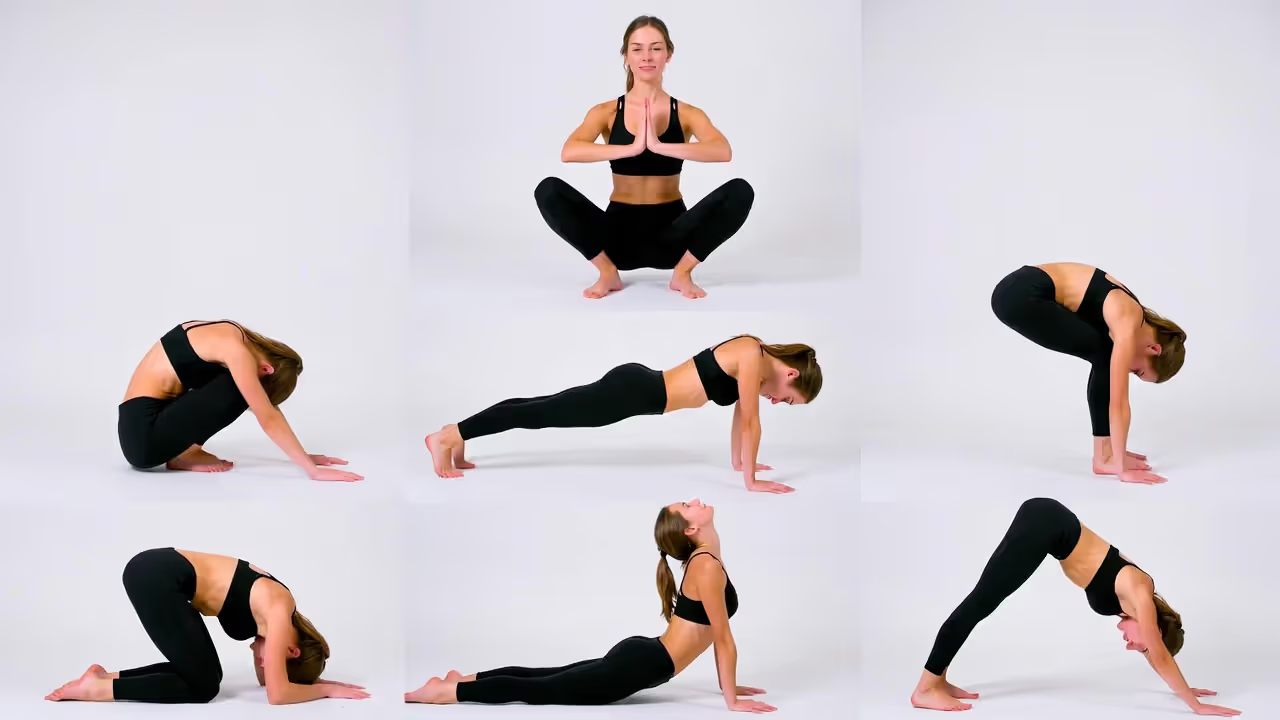
Sun Salutation A (Surya Namaskar A) performed at a brisk 4–5 breath pace per full round creates cardiovascular demand similar to moderate-intensity interval training. Ten continuous rounds take roughly 8–10 minutes and sustain an elevated heart rate throughout.
Sun Salutation B adds Chair Pose and Warrior I, increasing lower-body load per round. Eight rounds of B back-to-back constitutes a legitimate fat burning yoga routine on its own.
A 30-Minute Fat-Burning Yoga Routine You Can Do Daily
Author: Jackson Wright;
Source: yogapennsylvania.com
This session requires no equipment, fits in a living room, and scales from beginner to intermediate through the modifications noted.
Warm-Up (5 min): Cat-Cow (1 min), gentle spinal twists (1 min), Downward Dog pedaling heels (1 min), two slow Sun Salutation A rounds (2 min).
Standing Strength Series (10 min): Chair Pose hold 45 sec → Warrior II right side 45 sec → Warrior II left side 45 sec → High Lunge right 30 sec → High Lunge left 30 sec → Warrior III right 20 sec → Warrior III left 20 sec. Repeat the entire series twice. Beginners: shorten holds to 20–30 sec and skip Warrior III.
Core Block (7 min): Plank hold 45 sec → Side Plank right 30 sec → Side Plank left 30 sec → Boat Pose 30 sec → Low Boat 15 sec → Boat 30 sec → rest 15 sec. Repeat twice. Then: bicycle crunches 30 reps. Beginners: drop to knees for plank, bend the bottom knee in side plank, keep feet on the floor for boat.
Flow Series (5 min): Six rounds of Sun Salutation B at a brisk pace (approximately 50 sec per round). Focus on smooth transitions rather than speed. If six rounds feels excessive, drop to four and add 10 seconds to each hold within the round.
Cool-Down (3 min): Seated forward fold 45 sec, supine twist each side 30 sec, savasana 1 min.
This yoga workout for beginners (with modifications) or intermediate practitioners (full expressions) takes exactly 30 minutes. Done 4–5 times weekly, it provides enough stimulus for measurable strength and cardiovascular adaptation within 6–8 weeks.
The nature of yoga is to shine the light of awareness into the darkest corners of the body.
— Jason Crandell
Why Most People Don't Lose Weight with Yoga (Five Fixable Mistakes)
Choosing only gentle styles and expecting a caloric deficit. A 60-minute yin session burns roughly 150 calories — less than a brisk 30-minute walk. If the goal includes body-composition change, at least half your weekly sessions need to be power, vinyasa, or Ashtanga intensity.
Practicing once or twice per week. Metabolic and hormonal adaptations require frequency. Two sessions per week maintain flexibility. Four or more drive the cortisol reduction, sleep improvement, and behavioral shifts that produce measurable results.
Ignoring what happens after class. A power vinyasa session burns 400–500 calories. A post-class reward smoothie with protein powder, banana, peanut butter, and oat milk can easily hit 500–600. The math doesn't lie. Awareness of post-exercise eating is the single most underrated variable.
Using yoga as the only form of movement. The evidence is clear: combining yoga with walking, resistance training, or any moderate-intensity cardiovascular activity multiplies results. Yoga provides flexibility, stress management, and functional strength. Adding 2–3 weekly walks or bodyweight strength sessions fills the caloric-expenditure gap.
Expecting spot reduction. No quantity of core work eliminates belly fat specifically. Total body-fat reduction — through caloric deficit and consistent movement — eventually reduces abdominal fat. The poses build the muscle underneath; the deficit reveals it.
Yoga vs Other Exercise for Weight Loss: When to Combine
Author: Jackson Wright;
Source: yogapennsylvania.com
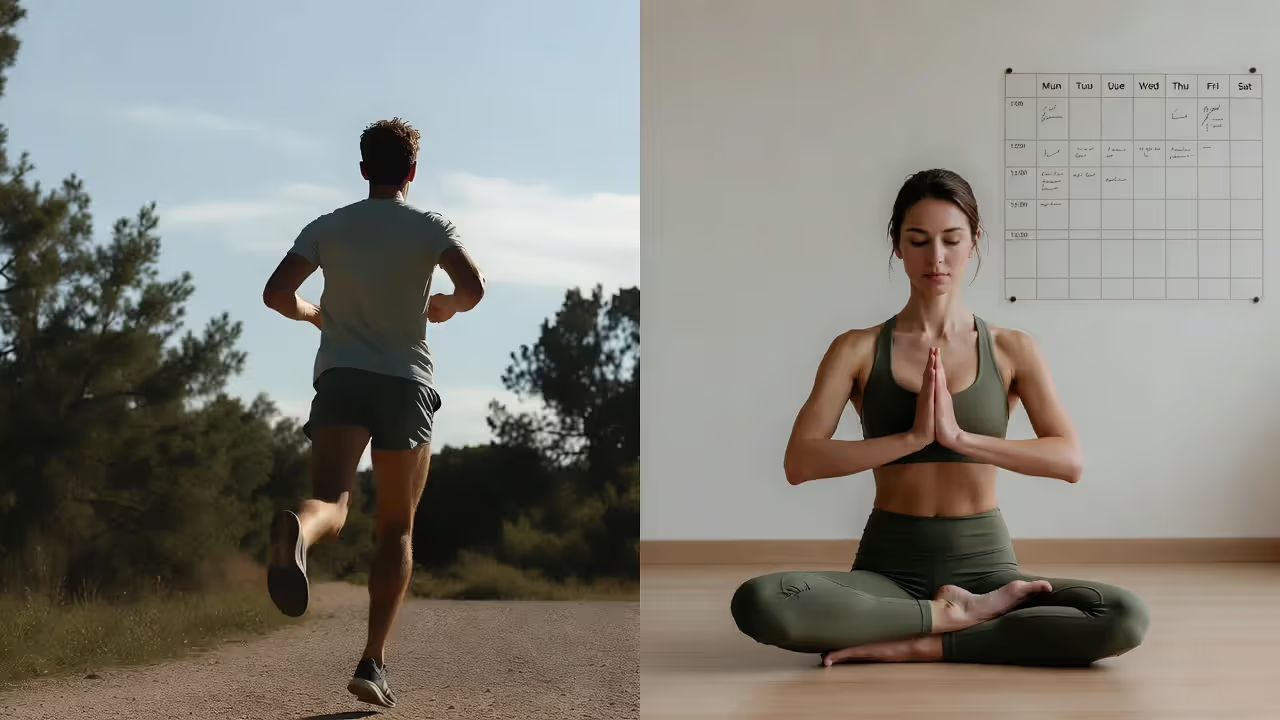
Yoga's caloric output per hour falls below running, cycling, and HIIT for most practitioners. Its advantages are sustainability (lower injury risk), behavioral modification (stress and sleep improvement), and long-term adherence (people stick with the practice longer than most high-intensity programs).
The strongest evidence supports yoga as a complement rather than a standalone fat-loss tool. A practical weekly structure:
Monday, Wednesday, Friday, Saturday: 30-minute power/vinyasa session (the routine above or a comparable class). Tuesday, Thursday: 30–40 minute brisk walk or light resistance training (bodyweight squats, push-ups, rows). Sunday: rest or a gentle restorative session for recovery.
This combination produces 4 strength-and-cardio yoga sessions, 2 complementary movement sessions, and 1 recovery day — a sustainable rhythm that addresses caloric expenditure, muscular adaptation, and stress management simultaneously.
FAQ
Yoga earns its place in a weight-management strategy not by matching the caloric burn of a treadmill but by changing how you eat, sleep, handle stress, and relate to your body over time. Build a routine around power and vinyasa intensities 4–5 times per week, complement it with walking or resistance work, don't undo the session with uncounted post-class calories, and give the behavioral shifts 8–12 weeks to compound. The scale responds to the full picture — not just the hour on the mat.
Related Stories
Read more

Read more



The content on yogapennsylvania.com is provided for general informational and inspirational purposes only. It is intended to share yoga tips, meditation practices, wellness guidance, retreat experiences, and lifestyle insights, and should not be considered medical, therapeutic, fitness, or professional health advice.
All information, articles, images, and wellness-related materials presented on this website are for general informational purposes only. Individual health conditions, physical abilities, wellness goals, and experiences may vary, and results can differ from person to person.
Yogapennsylvania.com makes no representations or warranties regarding the accuracy, completeness, or reliability of the content provided and is not responsible for any errors or omissions, or for decisions or actions taken based on the information presented on this website. Readers are encouraged to consult qualified healthcare or wellness professionals before beginning any new yoga, meditation, or fitness practice.