

High-intensity flow combining strength and cardio.
HIIT Yoga: High-Intensity Flow for Strength, Cardio & Fat Loss

HIIT yoga blends the mindful sequencing of yoga with timed high-intensity bursts, creating a hybrid that pushes cardiovascular limits while retaining some yoga's mobility focus. This format demands respect for your current fitness level—joints take extra stress from quick transitions, and heart rate climbs fast. Get medical clearance first if you have cardiovascular concerns, joint instability, recent injuries, or are pregnant. Stop immediately at dizziness, sharp pain, or excessive breathlessness. The content here reflects general fitness knowledge, not individual prescriptions.
What Is HIIT Yoga and How Does It Work?
HIIT yoga applies high-intensity interval training principles to yoga postures, alternating 30–60 seconds of near-max effort with 15–20 seconds of active recovery or static holds. Sessions run 20–45 minutes, relying solely on bodyweight. A high intensity yoga flow example: rapid chaturanga push-ups for 40 seconds, then child's pose for 20 seconds to reset.
The structure borrows HIIT's proven interval model—short, intense efforts followed by brief recovery—to drive metabolic adaptations, but adapts it to yoga's breath-linked movement. Work phases accelerate traditional flows (sun salutations become explosive), while recovery phases use restorative poses to lower heart rate without stopping completely. This keeps the session continuous, building heat and endurance.
Yoga cardio workout aspects emerge in the dynamic transitions and plyometric elements like jump lunges, which spike heart rate higher than steady vinyasa. It targets intermediate practitioners who already handle basic flows and want to add intensity without gym equipment. Complete beginners often struggle with pacing and form under fatigue.
Many assume HIIT yoga is merely faster yoga. The key difference lies in deliberate timing: intervals force anaerobic effort, creating metabolic demand traditional classes rarely reach. HIIT yoga differs from power yoga, which maintains a vigorous, continuous pace through strength-focused sequences without structured rest intervals. Traditional vinyasa emphasizes breath-synchronized flow and mindfulness, progressing at a moderate rhythm with longer holds—less cardio emphasis, more meditative quality.
The beauty of HIIT yoga is that it challenges your edge without abandoning awareness — intensity builds strength, but breath keeps you honest.
— Sadie Nardini
Benefits of a High-Intensity Yoga Practice
This hybrid approach delivers measurable gains supported by exercise physiology. A fat burning yoga workout in HIIT style creates a significant energy demand through repeated intensity spikes.
Cardiovascular Conditioning Without Equipment
Bursts elevate heart rate to 80–90% of maximum, improving VO2 max—the body's oxygen utilization capacity—similar to running intervals. Research shows interval training enhances aerobic fitness efficiently; one review found HIIT protocols improve VO2 max by 5–15% in 6–12 weeks, often matching longer moderate sessions in less time. No equipment required—just floor space.

Author: Ava Mitchell;
Source: yogapennsylvania.com
Functional Strength and Core Stability
Timed holds and explosive moves under fatigue build endurance in major muscle groups. Core activates continuously to stabilize during transitions or balances. A strength based yoga class format like this emphasizes glutes, quads, shoulders, and deep abdominals more than static yoga, translating to better posture and daily power.
Mobility Gains Under Load
Dynamic sequences stretch tissues while they are warm and engaged, improving range under functional stress. Loaded hip openers or twists enhance joint mobility for real-world movements like bending or rotating. The intensity warms fascia quickly, allowing safer depth than cold static stretching.
Metabolic and Fat-Burning Potential
Post-exercise oxygen consumption (EPOC) keeps metabolism elevated for hours after sessions. Reviews indicate HIIT elicits greater EPOC than steady-state exercise, contributing to higher total calorie burn. A 30-minute session typically expends 300–450 calories (depending on body weight and effort), supporting fat loss in a calorie deficit. Trade-off: recovery demands increase—daily sessions risk overtraining or burnout.
HIIT Yoga vs Power Yoga vs Traditional Vinyasa
Author: Ava Mitchell;
Source: yogapennsylvania.com
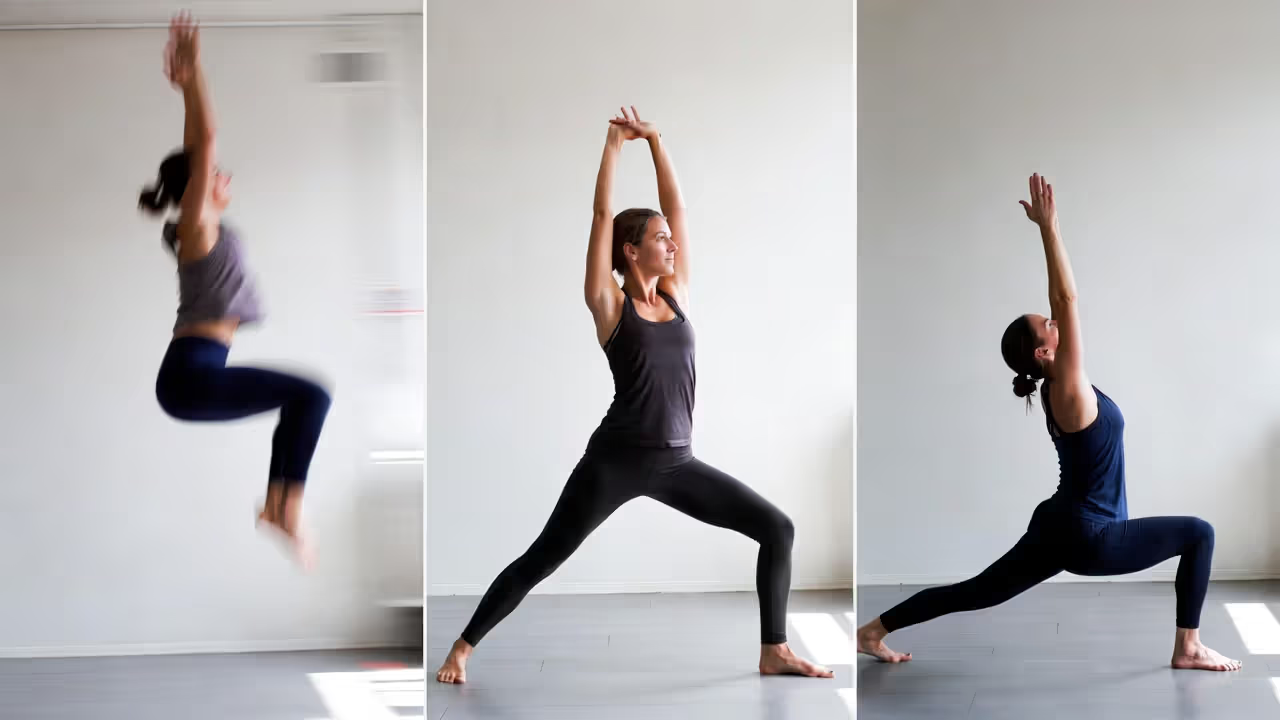
Distinctions clarify which style fits your goals. HIIT yoga prioritizes timed intensity spikes for cardio and metabolism, setting it apart from the others.
| Format | Intensity | Cardio Load | Strength Demand | Best For |
| HIIT Yoga | High, interval-based | Heavy bursts | Moderate to high, explosive | Fat loss, time-efficient conditioning |
| Power Yoga Workout | Sustained vigorous | Moderate | High, continuous holds | Muscle endurance, athletic build |
| Traditional Vinyasa | Moderate, flow-paced | Light to moderate | Low to moderate | Mindfulness, flexibility, stress relief |
Power yoga workout maintains steady athletic effort through extended sequences with minimal rest, focusing on building power and heat. Dynamic yoga sequence in traditional vinyasa flows smoothly with breath as the guide, allowing creative variations and deeper focus on alignment rather than speed or intervals.
30-Minute HIIT Yoga Workout (Step-by-Step Plan)
This no-equipment routine fits a small space. Work intervals: 30–45 seconds at high effort; transitions/recovery: 15–20 seconds. A high intensity yoga flow builds quickly—breathe steadily through nose. Yoga cardio workout intensity peaks in later blocks.
Imagine wrapping up a sedentary workday; this dynamic yoga sequence clears mental fog and energizes the body without needing a gym.
Warm-Up (5 Minutes)
Prime joints and circulation. Dynamic lunges: Step back into lunge, alternate legs 10 reps each side, arms swinging. Plank variations: Hold high plank 20 seconds, then forearm plank 20 seconds. Light flow: Two full sun salutation A's, syncing breath to movement.
Interval Block 1 (Strength Focus)
Chair pulses: Sink into chair pose, pulse hips up-down for 30 seconds. Plank-to-chaturanga reps: From plank, lower halfway to chaturanga, push back up 8–10 times (knees down if needed). Warrior jumps: Warrior I stance, jump-switch feet 20 seconds per side.
Interval Block 2 (Cardio + Core)
Mountain climbers: Plank position, drive knees forward alternately 45 seconds. Twisting lunges: Forward lunge, twist torso over front leg, alternate sides 30 seconds. Side plank crunch: Side plank, crunch top knee toward elbow 20 seconds per side.

Author: Ava Mitchell;
Source: yogapennsylvania.com
Peak Block (Full-Body Burn)
Burpee-to-plank flow: From standing, jump back to plank, hold 5 seconds, jump forward, repeat 30 seconds. Jump switch lunges: Alternating lunge jumps 45 seconds (step if impact bothers knees). Crow hold: Squat, hands down, lift feet into crow 20–30 seconds—or modify with toes on mat.
Cooldown and Recovery
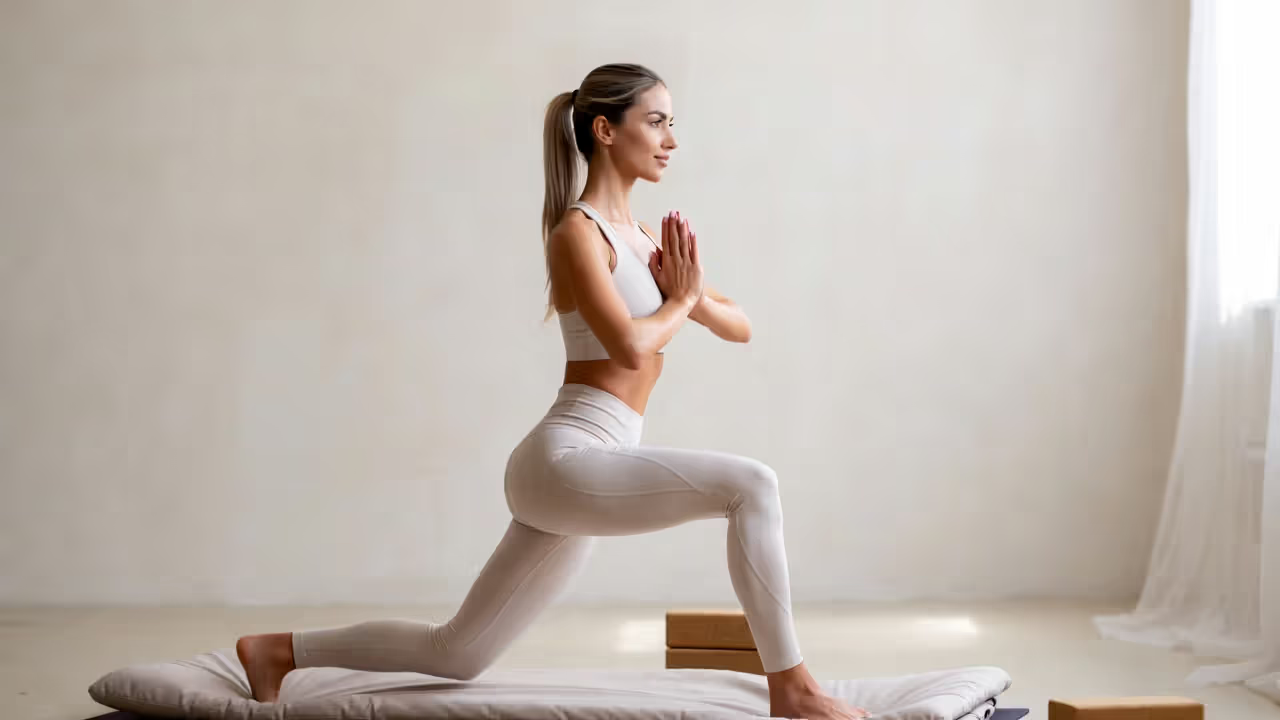
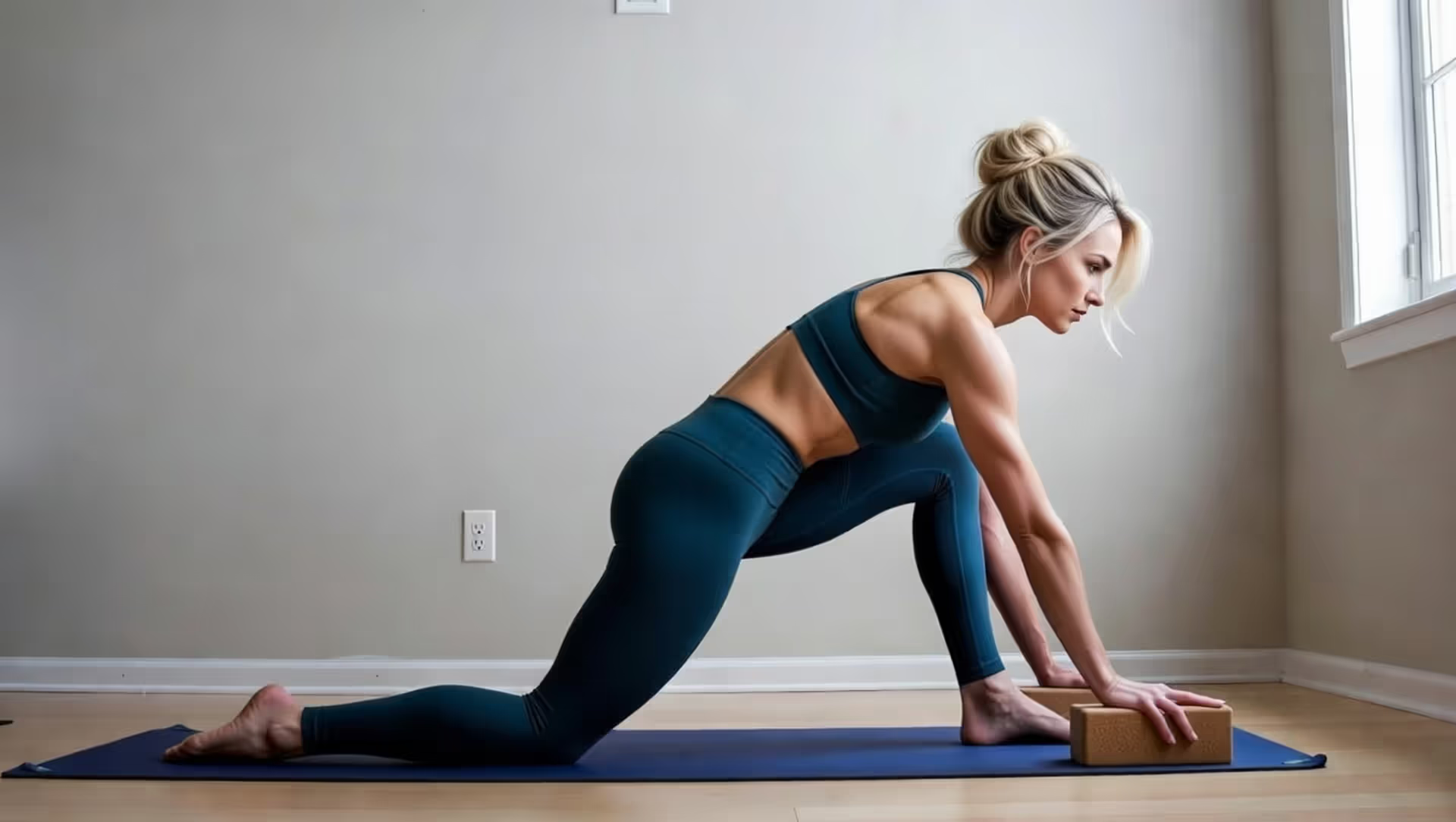
Low lunge stretch: Step into low lunge, sink hips, hold 30 seconds per side. Seated forward fold: Legs extended, hinge forward, hold 60 seconds. Supine twist: Knees to chest, drop to one side, hold 30 seconds each.
Common mistake: rushing transitions, losing alignment. Heuristic: If breath becomes ragged, extend recovery by 5–10 seconds.
Beginner Modifications and Safety Guidelines
Author: Ava Mitchell;
Source: yogapennsylvania.com
Adaptations make a strength based yoga class approachable. Remove jumps: Step forward/back in lunges or warriors. Low-impact: Replace explosive moves with static holds during work intervals.
Wrist protection: Form fists or rest on forearms in planks. Shoulders: Drop knees in chaturanga; avoid full push-up if unstable. Skip if pregnant (high core pressure) or with uncontrolled hypertension (spikes too high).
Checklist:
- Neutral spine throughout—avoid overarching low back
- Breath control—never hold breath during effort
- Controlled landings—soft knees to protect joints
- Stop at sharp pain (fatigue is normal, pain is not)
Edge case: After minor sprain, eliminate jumps entirely until full mobility returns.
Sample Weekly Schedule for Sustainable Results

Author: Ava Mitchell;
Source: yogapennsylvania.com
Consistency beats intensity for long-term adaptation. A fat burning yoga workout integrates best with recovery.
| Day | Activity | Duration | Focus |
| Mon | HIIT Yoga Routine | 30 min | Full body |
| Tue | Gentle Yoga or Brisk Walk | 20 min | Active recovery |
| Wed | HIIT Yoga (modified) | 25 min | Core emphasis |
| Thu | Rest or Light Stretch | - | - |
| Fri | Full HIIT Yoga | 30 min | Cardio peak |
| Sat | Power Yoga Elements | 20 min | Strength focus |
| Sun | Active Rest (Walk/Yoga) | 30 min | Mobility & recovery |
Adjust based on soreness—more rest prevents plateaus or injury.
Who Should Avoid HIIT Yoga?
Pregnancy raises core temperature risks—opt for prenatal flows. Uncontrolled hypertension: Intensity spikes blood pressure dangerously. Acute injury: Delay until healed to avoid aggravation. Severe joint instability: Explosive moves exacerbate knees, ankles, or shoulders.
Monitor closely—persistent dizziness or irregular heartbeat means stop and seek advice.
Frequently Asked Questions
As yoga instructor Koya Webb states, “Yoga HIIT combines the cardiovascular, strength-training, and energetic benefits of HIIT with the flexibility and de-stressing benefits of yoga.”
Consistent sessions gradually increase stamina, sharpen focus, and reshape body composition. Monitor how poses feel stronger week by week, tweak intensity as needed, and fuel properly to maximize gains.
Related Stories
Read more
Read more


The content on yogapennsylvania.com is provided for general informational and inspirational purposes only. It is intended to share yoga tips, meditation practices, wellness guidance, retreat experiences, and lifestyle insights, and should not be considered medical, therapeutic, fitness, or professional health advice.
All information, articles, images, and wellness-related materials presented on this website are for general informational purposes only. Individual health conditions, physical abilities, wellness goals, and experiences may vary, and results can differ from person to person.
Yogapennsylvania.com makes no representations or warranties regarding the accuracy, completeness, or reliability of the content provided and is not responsible for any errors or omissions, or for decisions or actions taken based on the information presented on this website. Readers are encouraged to consult qualified healthcare or wellness professionals before beginning any new yoga, meditation, or fitness practice.