Yoga for Flexibility — Beginner Routines, Targeted Poses, and What to Expect
Yoga for Flexibility: 12 Poses, Two Complete Routines, and Honest Timelines
Most people who start yoga for flexibility quit within six weeks — not because the practice failed them, but because they expected a transformation in two. They watched a YouTube video, couldn't touch their toes on day three, and decided their body "just isn't built for it."
Here's what nobody told them: the first measurable flexibility gains from yoga don't come from your muscles actually lengthening. They come from your nervous system learning to tolerate a deeper stretch without triggering a protective contraction. That shift takes about two to three weeks of consistent practice. Real tissue adaptation takes longer. And the approach matters more than the volume.
This guide covers why yoga outperforms standard stretching for most people, twelve specific poses organized by the body regions that lock up fastest, two complete routines you can follow without a video, honest timelines for results, and the mistakes that keep people stiff even when they're showing up regularly.
Why Yoga Improves Flexibility Differently Than Static Stretching
Grabbing your foot and pulling it toward your glute for thirty seconds after a run is static stretching. It works — modestly. But yoga operates through a different set of mechanisms that tend to produce faster and more durable results for most people.
Three things happen during a held yoga pose that don't happen during a basic gym stretch:
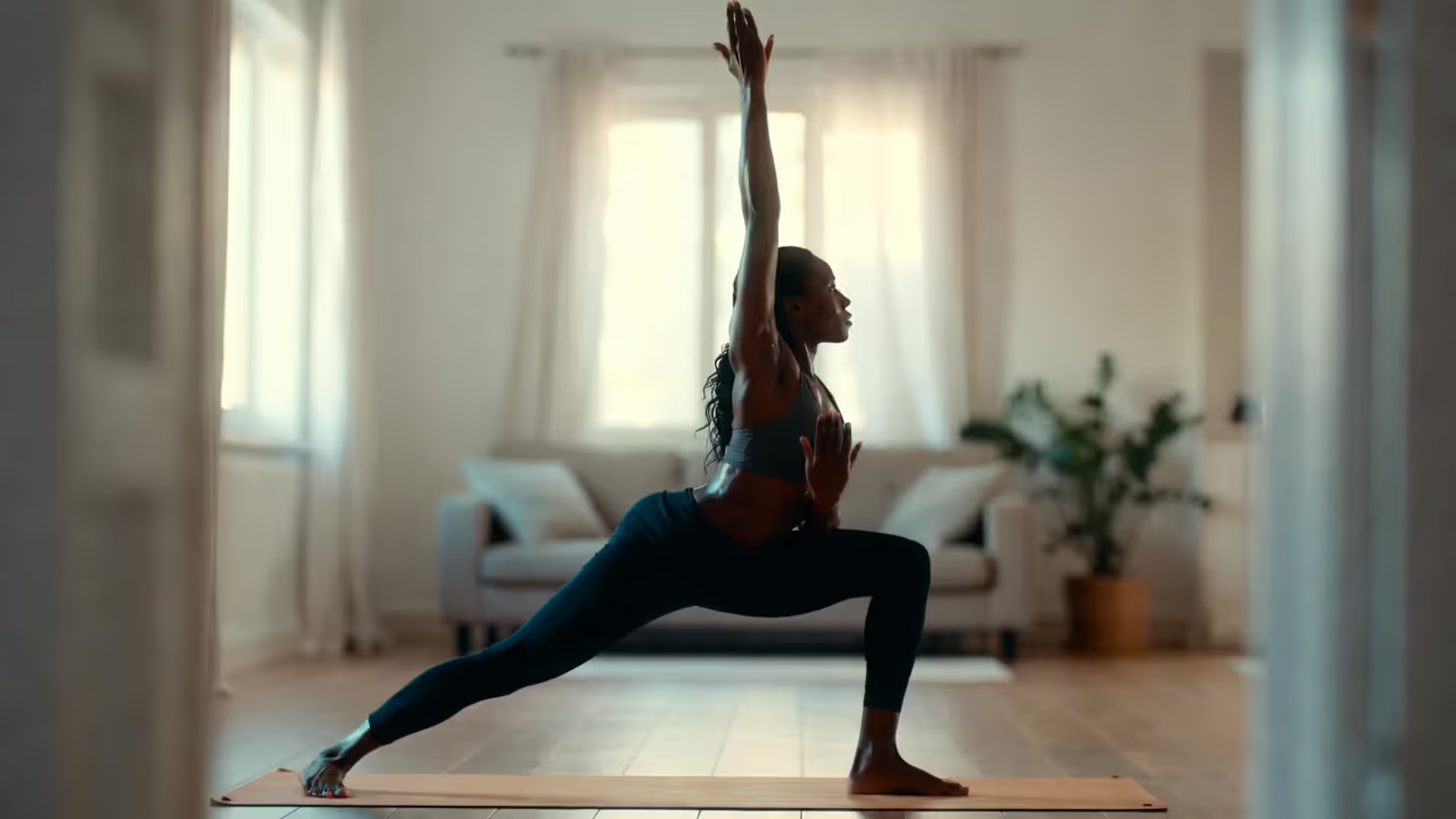
First, active lengthening under load. In a pose like Warrior I, your back hip flexor is stretching while your legs are supporting your body weight. The muscle is lengthening eccentrically — under tension — which stimulates both flexibility and strength simultaneously. A passive stretch skips the strength component entirely.
Second, fascial release. Yoga holds typically last sixty seconds or longer. After roughly the forty-five-second mark, the fascia — the connective tissue sheath wrapping every muscle — begins to deform and release. Short stretches held for fifteen to twenty seconds barely touch the fascial layer.
Movement is life. Life is a process.
— Moshe Feldenkrais
Third, nervous system recalibration. Your muscles don't actually "decide" how far they can stretch. Your brain does. The nervous system sets a protective limit called stretch tolerance — the point at which it says "that's far enough" and triggers a contraction to prevent injury. Yoga, especially when paired with slow breathing, gradually teaches the nervous system to extend that limit. This is why you can feel dramatically more flexible after just two weeks of practice with zero structural change in the muscle tissue itself.
This distinction matters practically. A stretching yoga routine held for appropriate durations with controlled breathing will outperform twice the volume of quick, passive stretches done mindlessly after a workout.
Author: Ava Mitchell;
Source: yogapennsylvania.com
12 Yoga Stretches That Target the Tightest Muscle Groups
These twelve poses are organized by body region and sequenced so you can treat the list as a standalone practice if needed. The table below gives you the reference data; the sections that follow add context on form and common errors.
| Pose (English + Sanskrit) | Target Area | Hold Time | Difficulty | Most Common Form Mistake |
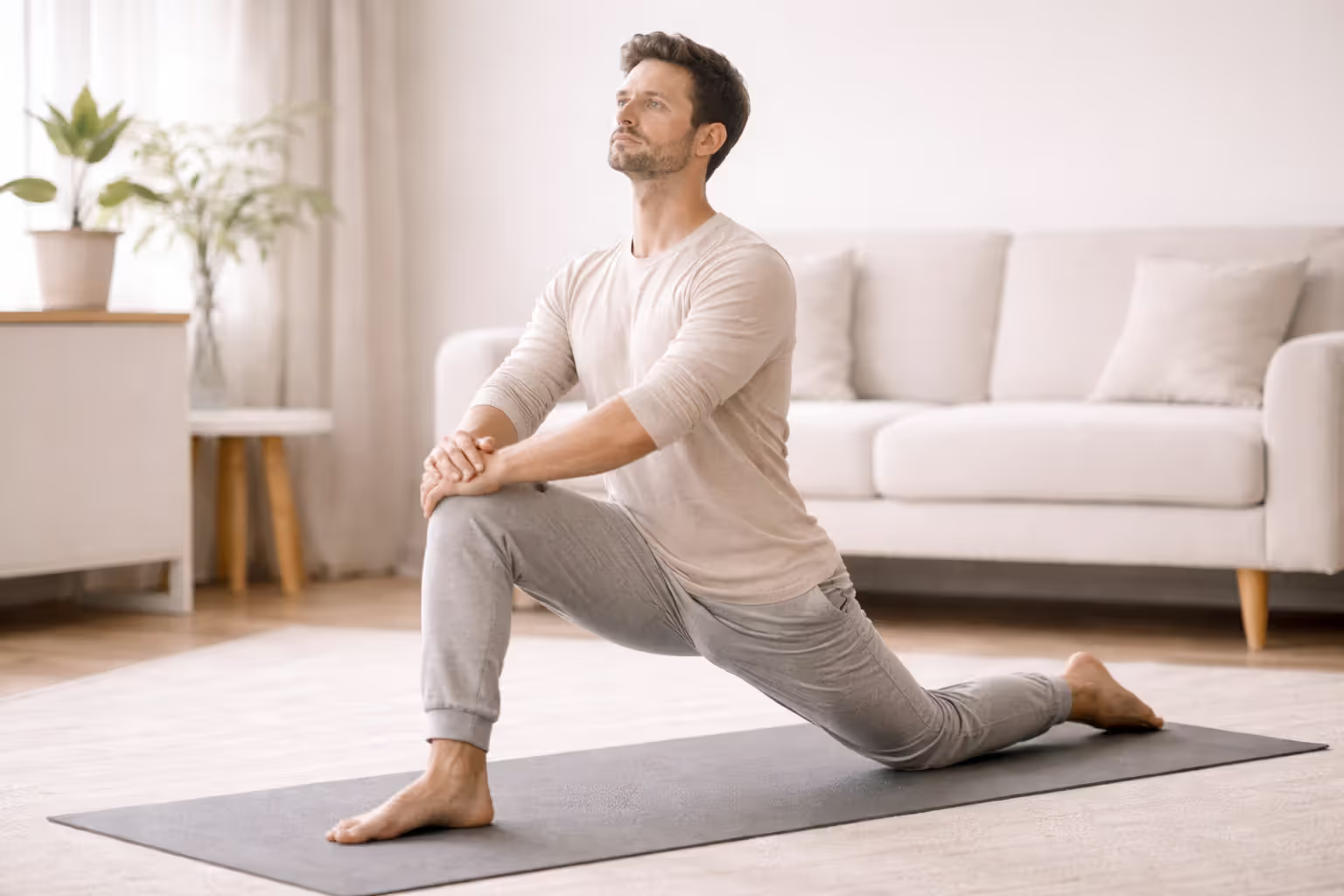
| Low Lunge (Anjaneyasana) | Hip flexors, quads | 60–90 sec/side | Beginner | Letting the front knee drift past the ankle |
| Pigeon Pose (Eka Pada Rajakapotasana) | Deep hip rotators, glutes | 90–120 sec/side | Beginner–Intermediate | Collapsing into the front hip instead of squaring hips forward |
| Reclined Hand-to-Big-Toe (Supta Padangusthasana) | Hamstrings | 60–90 sec/side | Beginner | Lifting the opposite hip off the floor to "reach" the foot |
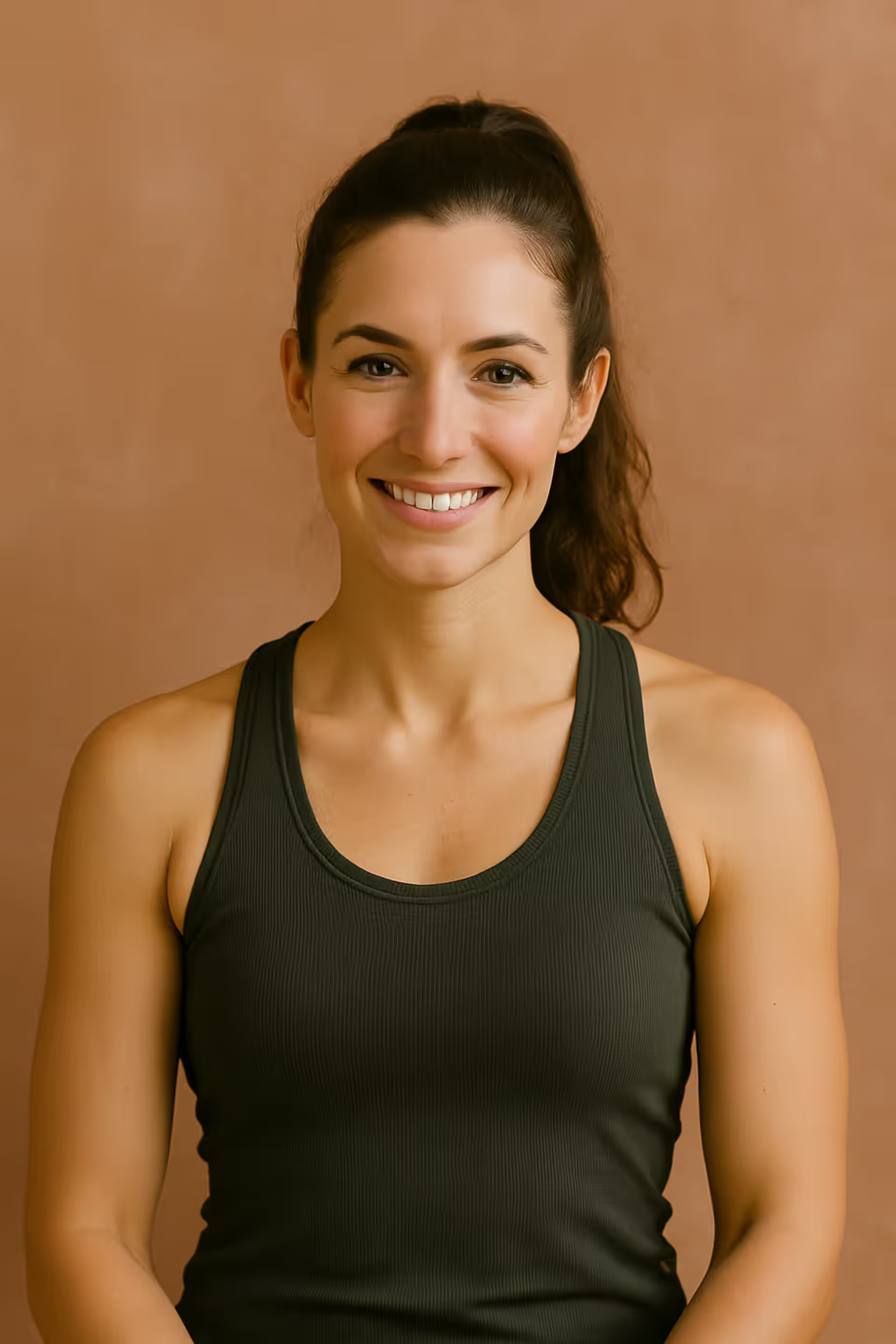
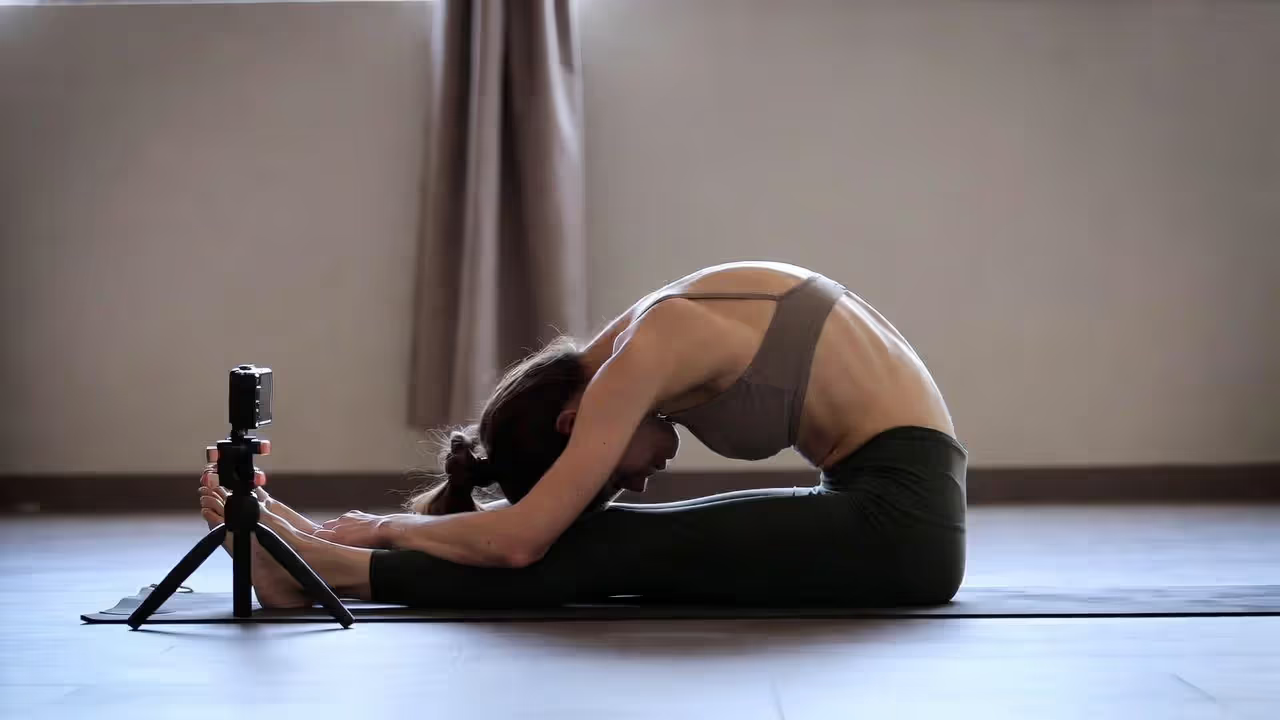
| Wide-Legged Forward Fold (Prasarita Padottanasana) | Inner thighs, hamstrings | 60–90 sec | Beginner | Rounding the upper back instead of hinging from hips |
| Lizard Pose (Utthan Pristhasana) | Hip flexors, inner thighs | 60–90 sec/side | Intermediate | Shoulders creeping up toward ears under tension |
| Thread the Needle | Thoracic spine, shoulders | 45–60 sec/side | Beginner | Rotating from the lower back instead of mid-spine |
| Eagle Arms (Garudasana arms only) | Upper back, rear deltoids | 45–60 sec/side | Beginner | Lifting shoulders toward ears instead of drawing them down |
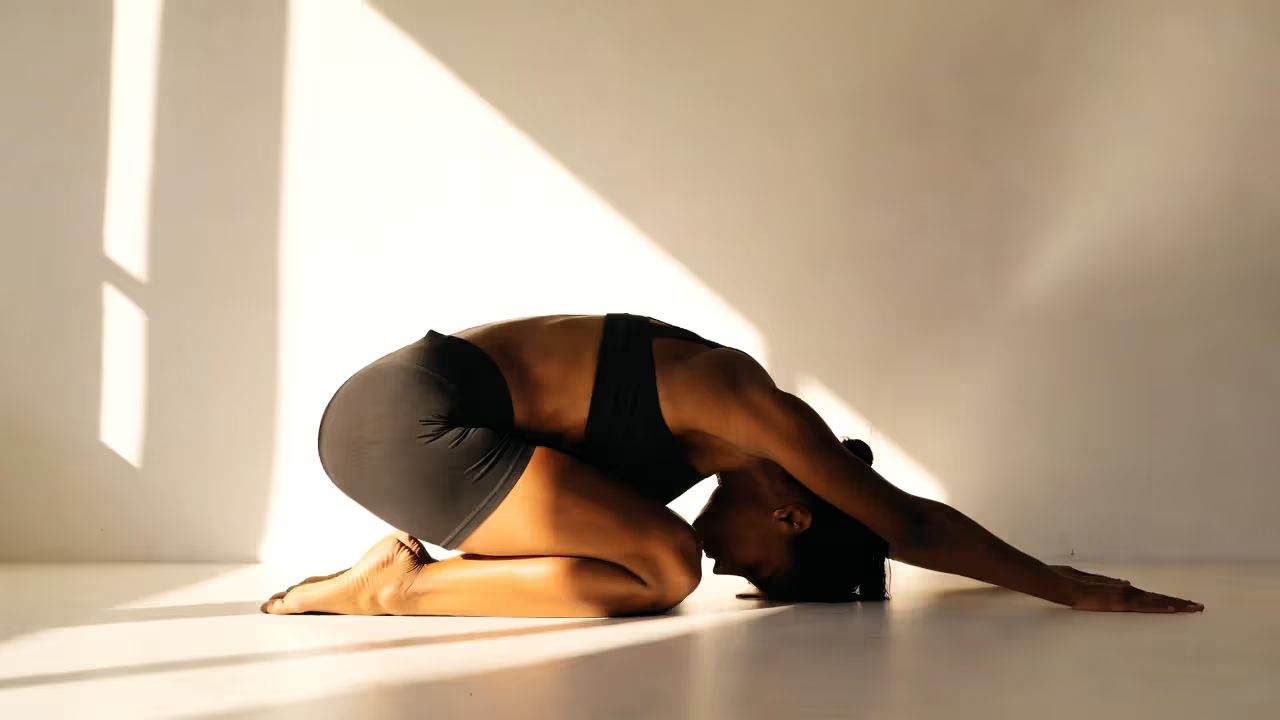
| Puppy Pose (Uttana Shishosana) | Shoulders, chest, thoracic spine | 60–90 sec | Beginner | Dumping weight into the low back instead of reaching through the arms |
| Cat-Cow (Marjaryasana-Bitilakasana) | Full spine | 8–10 rounds | Beginner | Moving too fast — this is a mobilization, not a race |
| Supine Spinal Twist (Supta Matsyendrasana) | Lower back, obliques, hips | 60–90 sec/side | Beginner | Forcing both shoulders flat when the body isn't ready |
| Half Splits (Ardha Hanumanasana) | Hamstrings, calves | 60–90 sec/side | Beginner | Hyperextending the front knee to "look" straighter |
| Reclined Butterfly (Supta Baddha Konasana) | Inner thighs, hip flexors | 90–120 sec | Beginner | Pressing the knees down with hands instead of letting gravity work |
Author: Ava Mitchell;
Source: yogapennsylvania.com
Hips and Hamstrings — Where Most People Are Locked Up
If you sit for more than six hours a day — and most American adults do — your hip flexors and hamstrings are shortened and neurologically "set" at a reduced range. Low Lunge, Pigeon, Reclined Hand-to-Big-Toe, and Half Splits target these areas directly.
The biggest mistake with hip and hamstring yoga stretches for tight muscles is going too deep too fast. Pigeon Pose is particularly risky here. If your hips are genuinely tight, your front knee takes excessive torque when you force the shin parallel to the mat's front edge. A safer starting position: keep the front heel close to the groin and let the hip angle open gradually over weeks, not minutes.
Shoulders and Upper Back — The Desk Worker's Problem Zones
Thread the Needle, Eagle Arms, and Puppy Pose address the rounded-shoulder, forward-head pattern that develops from years of screen work. The thoracic spine (mid-back) stiffens first, then the shoulders compensate by internally rotating, and eventually the neck and jaw pick up tension that started twelve vertebrae lower.
Puppy Pose is the single most effective yoga stretch for the upper body in this list — but only if you actively reach your arms forward while keeping your hips stacked over your knees. Collapsing passively into it compresses the lower back and misses the target entirely.
Spine and Hip Flexors — What Sitting All Day Shortens
Cat-Cow mobilizes the entire spine through flexion and extension. It's not a deep stretch — it's a warm-up that restores segmental movement between vertebrae. Do it slowly. Each round should take a full breath cycle: four-count inhale into Cow, four-count exhale into Cat.
Supine Spinal Twist wrings out the lower back and obliques, areas that stiffen both from sitting and from core-heavy workout routines. Reclined Butterfly opens the front body — hip flexors, inner thighs, and chest — passively, making it ideal for the end of a session when the nervous system is already in a calmer state.
Author: Ava Mitchell;
Source: yogapennsylvania.com
Two Ready-to-Follow Routines — 15-Minute and 30-Minute
The 15-Minute Morning Sequence (6 Poses, No Warm-Up Needed)
This beginner flexibility yoga sequence uses poses gentle enough to do cold — no sun salutations or active warm-up required. Do it before breakfast, before your body has time to stiffen further from morning inactivity.
- Cat-Cow — 8 slow rounds (2 minutes)
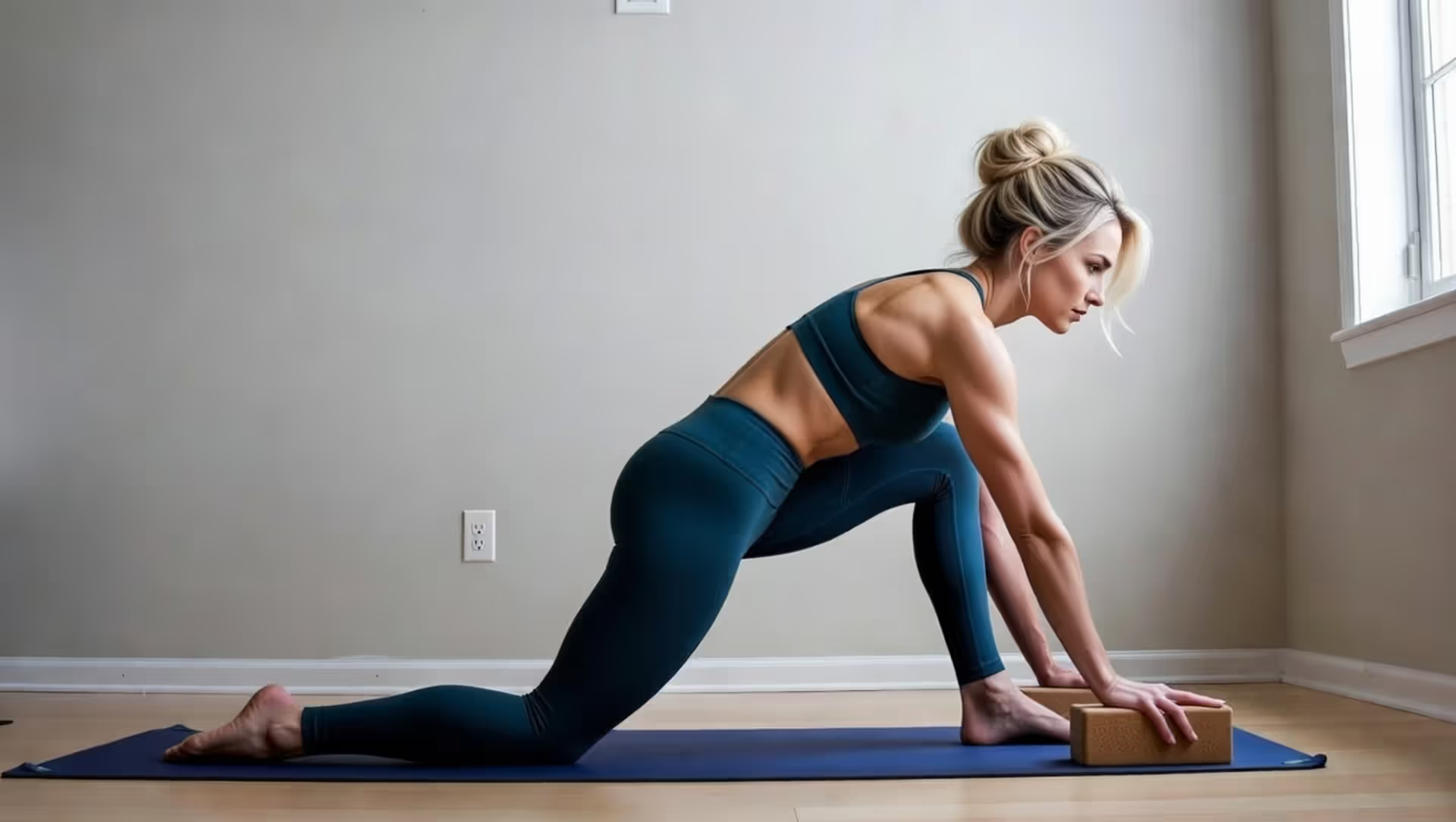
- Low Lunge — 75 seconds per side (3 minutes)
- Half Splits — 60 seconds per side (2.5 minutes)
- Thread the Needle — 50 seconds per side (2 minutes)
- Puppy Pose — 75 seconds (1.5 minutes)
- Reclined Butterfly — 2 minutes
Total: roughly 13–15 minutes depending on transition speed. No props needed, though a folded towel under the back knee in Low Lunge helps if you're on a hard floor.
The 30-Minute Full Body Routine (12 Poses with Active Recovery)
This is the full body stretch yoga session — all twelve poses from the table above, performed in sequence with three brief recovery pauses built in.
- Cat-Cow — 8 rounds
- Low Lunge — 75 sec/side
- Lizard Pose — 70 sec/side
- Pigeon Pose — 90 sec/side — 30-second Child's Pose recovery —
- Half Splits — 70 sec/side
- Wide-Legged Forward Fold — 75 sec
- Reclined Hand-to-Big-Toe — 70 sec/side — 30-second supine rest, knees to chest —
- Thread the Needle — 50 sec/side
- Eagle Arms — 45 sec/side
- Puppy Pose — 75 sec — 30-second Child's Pose recovery —
- Supine Spinal Twist — 70 sec/side
- Reclined Butterfly — 2 minutes
Total: 28–32 minutes. This session works best in the evening or after any workout when muscles are already warm.
How Fast Can You Actually Gain Flexibility? A Week-by-Week Timeline
The phrase "improve flexibility fast" appears constantly in search queries, and it deserves an honest answer rather than a marketing one.
Weeks 1–2: Your nervous system begins adapting. Stretch tolerance increases, meaning poses feel less intense even though your muscles haven't structurally changed. You'll notice you can sink slightly deeper into lunges and forward folds. This phase feels encouraging — don't mistake it for tissue change.
Weeks 3–6: The first real range-of-motion gains. If you're practicing four to five times per week, hamstring and hip flexor stretches will show measurable improvement — roughly one to two inches deeper in a forward fold, for example. Shoulders respond slightly slower because the joint structure is more complex.
Months 2–3: Visible differences in yoga poses. Pigeon starts to feel like a stretch rather than a punishment. Half Splits approaches flat. Friends or a yoga teacher may comment on the change before you fully register it yourself, because adaptation is gradual when you see it daily.
Variables that accelerate or slow this timeline: age (connective tissue becomes less elastic after 35, but the nervous system adapts at any age), hydration (dehydrated fascia resists stretching — drink water, this isn't optional), consistency (four short sessions beat two long ones every time), and starting point (someone who's been sedentary for a decade needs more time than someone who was active but just "tight").
Author: Ava Mitchell;
Source: yogapennsylvania.com
Five Mistakes That Keep People Stiff Despite Regular Practice
Bouncing at end range. Ballistic stretching — pulsing deeper into a pose — triggers the stretch reflex, which is the nervous system's emergency contraction to prevent tearing. You're literally fighting your own protective mechanism. Hold still. Breathe. Let gravity do the work.
Holding your breath during deep stretches. The exhale activates the parasympathetic nervous system, which is the branch that tells muscles to release. Holding your breath does the opposite — it signals tension. If you can't breathe calmly in a pose, you're too deep. Back off until breathing is effortless, then stay there.
Only stretching what already feels flexible. People who can easily touch their toes love forward folds. They spend twenty minutes on hamstrings that don't need the work while ignoring hip flexors and thoracic spine that are screaming for attention. Flexibility training at home should prioritize your weakest ranges, not your most satisfying ones.
Skipping strength at the end range. Flexibility without strength at that range is instability. If you can sink into a deep lunge but your muscles can't actively hold you there, you've created range you can't control — and that's an injury waiting. Active holds (engaging muscles while in a stretched position) build what movement specialists call "usable range."
Practicing once a week and expecting daily-practice results. One sixty-minute class per week produces almost nothing in terms of flexibility gains. The nervous system needs repeated exposure — minimum three sessions per week, ideally five — to recalibrate stretch tolerance. Ten minutes daily will outperform one ninety-minute class every Saturday by a wide margin.
It’s not the daily increase but daily decrease. Hack away at the unessential.
— Bruce Lee
How to Build a Flexibility Training Habit That Sticks at Home
The biggest obstacle to flexibility training at home isn't motivation — it's integration. People treat it as a separate activity that needs its own time slot, its own mental preparation, and its own motivation. It doesn't. Anchor it to something you already do.
The simplest anchor: practice immediately after brushing your teeth in the morning. Teeth brushed → mat unrolled → 15-minute sequence → done before the coffee is ready. The neurological pairing between the existing habit and the new one eliminates the decision fatigue that kills most routines by week three.
Minimum viable session: eight minutes. That's Cat-Cow, one hip opener, one hamstring stretch, and one twist. On days when motivation is zero, eight minutes still counts — and it preserves the streak, which matters more than any single session's intensity.
Track progress with photos, not feelings. Take a picture of your forward fold on day one, then every two weeks. Flexibility changes are too gradual to perceive in real time, and "feeling tight" on a given day can make you believe nothing is working when your range has actually improved significantly. Photos don't lie.
Equipment that actually helps: one yoga block (for supporting your hands when you can't reach the floor) and one strap (for extending your reach in hamstring stretches). Cost: about twelve dollars total. Everything else — wheels, bolsters, fancy mats — is nice to have but unnecessary for the first six months.
FAQ — Yoga and Flexibility Questions Answered
Flexibility isn't a talent. It's an adaptation — one your body will make reliably if you give it consistent, appropriately dosed input. Start with the 15-minute sequence three mornings this week. Anchor it to something you already do. Track it with a photo. And give your nervous system the two to three weeks it needs before deciding whether it's working. The body responds to patience and repetition, not ambition and intensity.
Related Stories
Read more
Read more

The content on yogapennsylvania.com is provided for general informational and inspirational purposes only. It is intended to share yoga tips, meditation practices, wellness guidance, retreat experiences, and lifestyle insights, and should not be considered medical, therapeutic, fitness, or professional health advice.
All information, articles, images, and wellness-related materials presented on this website are for general informational purposes only. Individual health conditions, physical abilities, wellness goals, and experiences may vary, and results can differ from person to person.
Yogapennsylvania.com makes no representations or warranties regarding the accuracy, completeness, or reliability of the content provided and is not responsible for any errors or omissions, or for decisions or actions taken based on the information presented on this website. Readers are encouraged to consult qualified healthcare or wellness professionals before beginning any new yoga, meditation, or fitness practice.