
Tracking Your Core Progress
Yoga for Core Strength Guide

Content
Content
Your core is active every moment — whether sitting, standing, walking, or reaching. A cylinder of muscles surrounds the midsection, acting like a natural internal brace. When this system is weak, compensation patterns emerge: the lower back takes excessive load, posture collapses forward, and everyday movements lose efficiency.
Many people equate “core” with visible abs. In reality, the core is a 360-degree stabilizing structure that supports the spine, transfers force between the upper and lower body, and protects internal organs.
Yoga excels at developing this kind of functional core because it targets deep stabilizers through sustained holds, balance challenges, and breath coordination — layers that traditional crunches and machines often miss.
If your goal is to strengthen the core primarily through yoga (without equipment or endless sit-ups), this guide covers anatomy basics, key poses from beginner to advanced, sample sequences, training frequency, common pitfalls, and supporting science.
What the Core Really Is
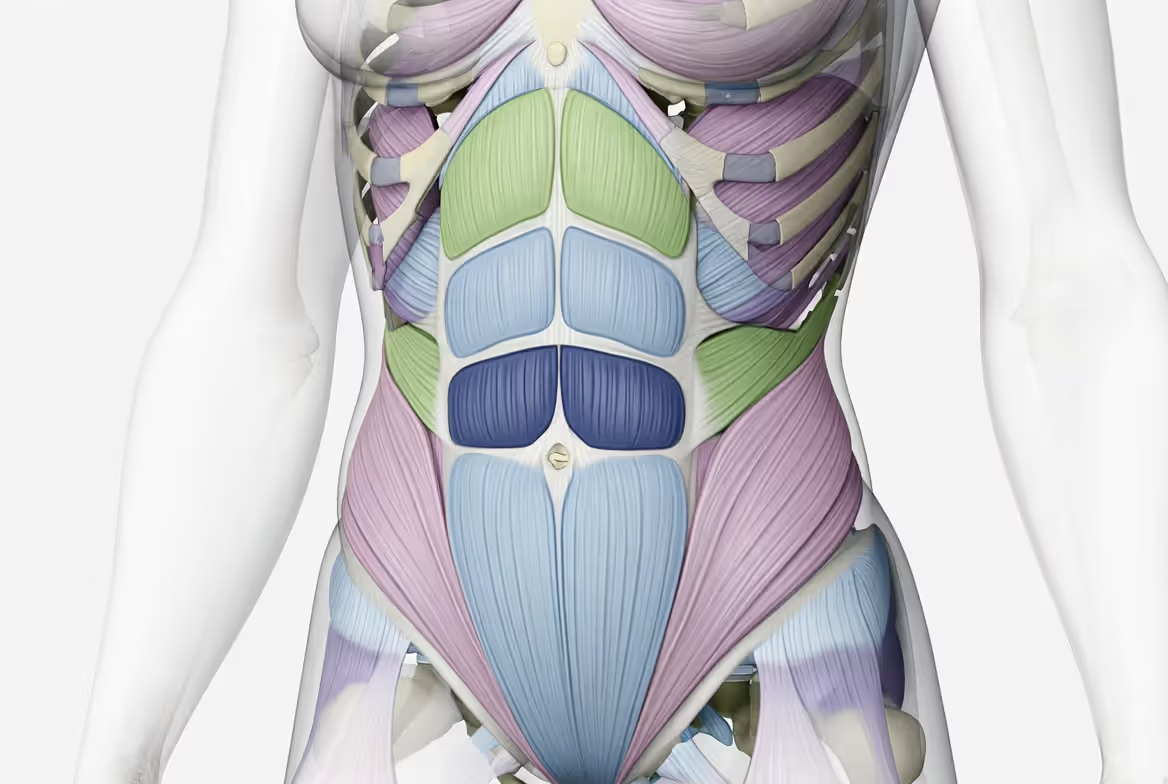
The core is a team of muscles working together:
- Transverse abdominis (TVA) — deepest layer, wraps horizontally like a corset; primary spinal stabilizer.
- Rectus abdominis — front vertical muscle responsible for forward bending (the “six-pack”).
- Internal & external obliques — control rotation and lateral flexion.
- Multifidus — small deep muscles along the spine that stabilize individual vertebrae.
- Pelvic floor — forms the base, works with TVA and diaphragm to regulate intra-abdominal pressure.
→ More on core anatomy: Wikipedia: Core (anatomy)
Author: Jackson Wright;
Source: yogapennsylvania.com
Key benefits of a strong core
Reduced lower back pain, naturally upright posture, improved balance (especially important after age 50), better power transfer in sports and daily tasks, and injury prevention.
Quick self-check: If your lower back fatigues quickly when standing or you notice anterior pelvic tilt in a side-view photo, core stability is likely the limiting factor.
Why Yoga Is Particularly Effective
Yoga rarely produces dramatic hypertrophy (visible muscle size), but it builds outstanding functional strength, control, and resilience.
Yoga is a powerful vehicle for change. As you build strength, you start to believe in your own potential.
— Tiffany Cruikshank
Three reasons yoga stands out:
- Isometric emphasis — long static holds preferentially recruit deep stabilizers (TVA, multifidus) that resist rather than produce motion.
- Balance demand — unstable positions trigger automatic reflexive core activation faster than conscious effort.
- Breath integration — controlled exhalation naturally draws in the transverse abdominis and pelvic floor, creating pre-tension before movement begins.
→ Read more: Wikipedia: Yoga as exercise
Author: Jackson Wright;
Source: yogapennsylvania.com
Essential Yoga Poses for Core Stability
Start at the level where you can maintain proper alignment for the recommended duration.
Beginner
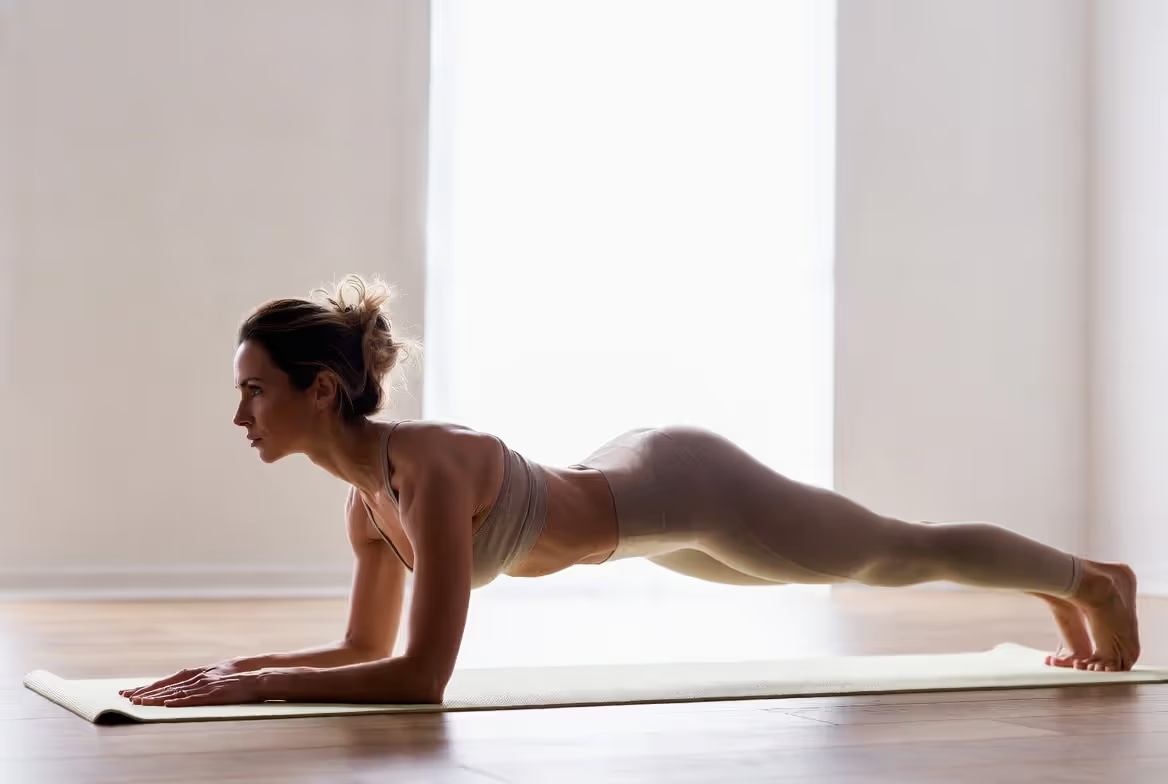
- Forearm Plank — straight line from head to heels, elbows under shoulders. Avoid sagging hips. 20–45 sec
- Boat Pose (Navasana) — knees bent or legs extended, torso back at ~45°. Keep lower back long. 15–30 sec
- Dead Bug — lying on back, lower opposite arm and leg slowly without arching. 6–10 reps/side
- Bird Dog — from all fours, extend opposite arm and leg, keep hips level. 5–8 reps/side
Intermediate
- Side Plank (Vasisthasana) — body in straight line, stack or stagger feet. 20–40 sec/side
- Warrior III (Virabhadrasana III) — balance on one leg, torso and back leg parallel to floor. 15–30 sec
Twisted Chair (Parivrtta Utkatasana) — twist torso, hook elbow outside knee. 20–30 sec/side

Author: Jackson Wright;
Source: yogapennsylvania.com
Advanced
- Crow Pose (Bakasana) — knees on upper arms, lift feet. 5–15 sec
- Dolphin Plank — forearms on floor, hips slightly lifted, press chest forward. Builds on forearm plank.
| Pose | Level | Primary Focus | Hold / Reps | Modification |
| Forearm Plank | Beginner | TVA, rectus | 20–45 sec | Knees down |
| Boat Pose | Beginner | Rectus, hip flexors | 15–30 sec | Feet on floor |
| Dead Bug | Beginner | TVA, obliques | 6–10/side | Smaller range |
| Bird Dog | Beginner | Multifidus, TVA | 5–8/side | Single limb only |
| Side Plank | Intermediate | Obliques, QL | 20–40 sec/side | Bottom knee down |
| Warrior III | Intermediate | Full core + glutes | 15–30 sec | Hands on wall/block |
| Twisted Chair | Intermediate | Obliques, spinal erectors | 20–30 sec/side | No elbow hook |
| Crow Pose | Advanced | TVA, obliques, serratus | 5–15 sec | Toes on block |
High-Impact Plank Variations
- Classic High Plank — push floor away, tuck tailbone slightly.
- Shoulder-Tap Plank — alternate touching opposite shoulder, hips stay still.
- Plank to Downward Dog — flow between positions on exhale, keep spine neutral.
- Side Plank Thread-the-Needle — thread top arm under body for anti-rotation work.
Avoid these mistakes: breath-holding, sagging hips, wrist collapse, chasing time over quality.
Sample Sequences
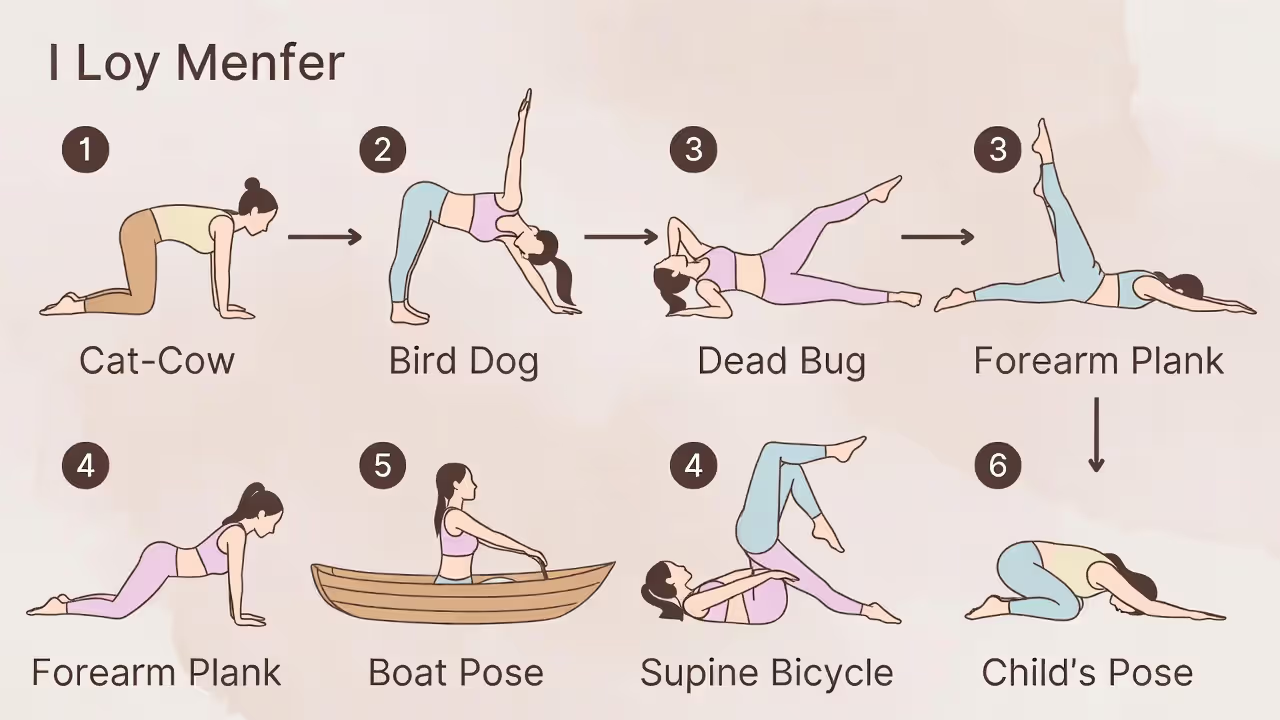
20-Minute Beginner Session
- Cat-Cow → 1 min warm-up
- Bird Dog → 8/side
- Dead Bug → 8/side
- Forearm Plank → 3 × 20–30 sec
- Boat (knees bent) → 3 × 15 sec
- Slow supine bicycle → 10/side
Child’s Pose → 1 min
Author: Jackson Wright;
Source: yogapennsylvania.com
30-Minute Intermediate Flow
3 rounds Sun Salutation A → Forearm Plank holds → Side Plank → Warrior III → Boat pulses → Plank ↔ Down Dog transitions → Twisted Chair → Supine twist finish.
How Often to Train
3–4 sessions per week is ideal. The core (mostly slow-twitch fibers) recovers quickly, so light daily practice (15–20 min) is also fine. If you lift heavy, 2–3 yoga core sessions on non-lifting days work well.
Common Errors to Avoid
- Arching lower back in planks → posteriorly tilt pelvis.
- Holding breath → exhale steadily during effort.
- Prioritizing duration over form → 25 clean seconds beat 60 sloppy ones.
- Skipping rotation & lateral work → include twists and side planks.
The Science Behind Yoga's Impact on Core Strength
Author: Jackson Wright;
Source: yogapennsylvania.com
Understanding the physiological mechanisms of yoga can deepen your practice and motivate consistent effort. At its foundation, yoga influences core development through neuromuscular adaptations, hormonal responses, and biomechanical efficiency. Research highlights how sustained poses enhance muscle endurance in the transverse abdominis and multifidus, which are crucial for spinal integrity. A study in the Journal of Bodywork and Movement Therapies found that regular yoga practitioners exhibit up to 30% greater activation in deep stabilizers compared to non-practitioners, attributing this to isometric contractions that build fatigue resistance without bulk.
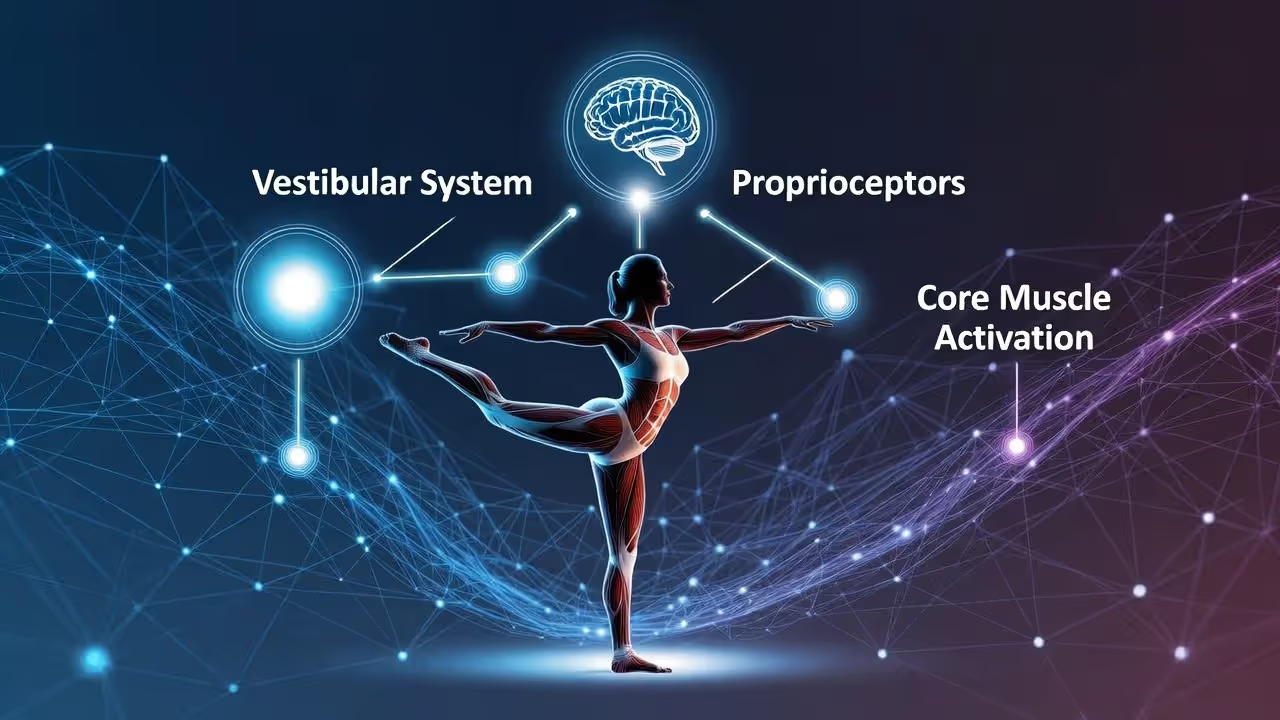
Neurologically, yoga refines proprioception—the body's awareness of position in space. Balance-oriented asanas like Warrior III stimulate the vestibular system and proprioceptive nerves, leading to quicker reflexive engagements of the core during dynamic activities. This translates to real-world benefits, such as better stability on uneven surfaces or during sudden movements, reducing fall risks by as much as 25% in older adults, per findings from the American Journal of Physical Medicine & Rehabilitation.
Hormonally, yoga modulates cortisol levels, the stress hormone that can impede muscle recovery and promote abdominal fat storage. Controlled breathing techniques, integral to core-focused flows, activate the parasympathetic nervous system, lowering cortisol and enhancing growth hormone release for tissue repair. This creates an optimal environment for core resilience, where muscles not only strengthen but also recover faster, allowing progressive overload without overtraining.
Biomechanically, yoga promotes alignment that distributes forces evenly across the torso. Poses emphasizing neutral spine, such as Plank variations, train the core to resist shear and compressive loads, mirroring demands in sports like running or lifting. Electromyography (EMG) studies show that yoga's multi-planar movements—sagittal, frontal, and transverse—engage obliques and rotators more comprehensively than linear gym exercises, fostering balanced development that prevents asymmetries leading to injury.
Incorporating mindfulness amplifies these effects. Focused attention during holds heightens muscle recruitment efficiency, as mental cues like "draw navel to spine" boost TVA firing by 15-20%, according to biofeedback research. Over time, this mind-muscle connection turns core engagement into an automatic habit, extending beyond the mat to posture in daily life.
"Yoga means addition. Addition of energy, strength, and beauty to body, mind, and soul." – Amit Ray
Challenges arise when practitioners overlook progression science. Beginners might plateau if holds remain static; advancing to variations like one-legged planks introduces instability, spiking neural drive and hypertrophy signals. Intermediate yogis benefit from periodization—alternating high-intensity sessions with restorative ones—to avoid adaptation stalls. Advanced individuals can integrate props like blocks or straps to intensify leverage, simulating weighted resistance without external tools.
Evidence from randomized controlled trials supports yoga's superiority for functional core gains. A meta-analysis in PLOS One reviewed 12 studies, concluding that yoga improves core endurance by 22% more effectively than traditional ab routines, with added perks in flexibility and mental well-being. This holistic impact underscores why yoga isn't just exercise but a science-backed pathway to enduring strength.
Yoga is at the core of my health and wellness routine; even if it's only for 10 to 15 minutes I find it helps me to re-center and to focus as well as improve my overall core strength.
— Miranda Kerr
To apply this knowledge, track metrics like hold times or balance duration weekly. Combine with journaling on perceived exertion to fine-tune your approach. Remember, science confirms what ancient traditions knew: yoga's core benefits emerge from patience and integration, not force.
Quick Answers
Consistency matters more than intensity.
Related Stories
Read more
Read more

The content on yogapennsylvania.com is provided for general informational and inspirational purposes only. It is intended to share yoga tips, meditation practices, wellness guidance, retreat experiences, and lifestyle insights, and should not be considered medical, therapeutic, fitness, or professional health advice.
All information, articles, images, and wellness-related materials presented on this website are for general informational purposes only. Individual health conditions, physical abilities, wellness goals, and experiences may vary, and results can differ from person to person.
Yogapennsylvania.com makes no representations or warranties regarding the accuracy, completeness, or reliability of the content provided and is not responsible for any errors or omissions, or for decisions or actions taken based on the information presented on this website. Readers are encouraged to consult qualified healthcare or wellness professionals before beginning any new yoga, meditation, or fitness practice.