Yoga for Flexibility Guide to Safe Progress

Content
Content
The image persists stubbornly in popular imagination. A practitioner folded impossibly in half, forehead touching shins, legs splayed at angles that seem to defy skeletal architecture. Social media feeds overflow with these contortionist displays, creating the impression that flexibility represents yoga's ultimate destination and that achieving impressive ranges of motion requires pushing through discomfort until tissues eventually surrender to determined effort. This misconception drives countless practitioners toward injury, frustration, and abandonment of practices that could genuinely serve their bodies if approached with patience rather than force.
The truth about flexibility reveals something far more nuanced and ultimately more hopeful than the push-harder narrative suggests. Flexibility develops not through conquering resistant tissues but through creating conditions where the nervous system feels safe enough to release protective tension that limits range of motion. This neurological dimension explains why aggressive stretching often produces the opposite of intended results, triggering protective reflexes that increase rather than decrease muscular resistance. Understanding this biological reality transforms how we approach yoga for flexibility, shifting focus from forcing depth to cultivating the safety and awareness that allow genuine, lasting change to emerge organically.
Yoga's traditional approach to flexibility reflects this understanding, emphasizing gradual progression, breath awareness, and respect for the body's current limitations rather than demanding immediate achievement of advanced positions. The practice recognizes that sustainable mobility develops over months and years rather than days and weeks, that tissues adapt to consistent gentle stimulus more effectively than to occasional intense demand, and that the mind-body connection central to yoga practice provides precisely the conditions under which flexibility naturally improves without the injuries that forced stretching so often produces.
The National Center for Complementary and Integrative Health documents growing research interest in yoga's effects on physical function including flexibility, noting that benefits depend significantly on appropriate practice intensity and progression. Similarly, Harvard Health Publishing emphasizes the importance of gradual flexibility development for joint health and injury prevention, cautioning against aggressive stretching approaches that can damage tissues rather than improve their function. These authoritative sources confirm what experienced practitioners have long understood: flexibility flourishes through patience and awareness rather than through determination and force.
Understanding What Flexibility Actually Means
Before exploring how yoga develops flexibility safely, we need clarity about what flexibility actually involves because common understanding often conflates distinct concepts whose differences matter significantly for how we approach practice. The term flexibility gets used loosely to describe several related but separate phenomena including passive range of motion, active mobility, joint health, and tissue extensibility, each of which responds differently to various training approaches and each of which requires specific attention for genuine improvement.
Flexibility in its technical sense refers to the ability of soft tissues including muscles, tendons, ligaments, and fascia to lengthen, allowing joints to move through ranges of motion. This tissue-level capacity represents one component of overall mobility but does not alone determine how freely you can move. A muscle might be capable of lengthening to a particular degree but remain held in shortened position by nervous system activity that keeps it contracted, creating the experience of tightness despite adequate tissue length. This distinction between tissue capacity and neural control explains why some people feel perpetually tight despite years of stretching, their tissues may have adapted but their nervous systems continue signaling contraction.
Mobility encompasses flexibility but extends beyond it to include strength through range of motion, joint health, motor control, and the nervous system regulation that determines how much of your available range you can actually access and use functionally. Someone might demonstrate impressive passive flexibility when a therapist moves their limb but lack the strength and control to achieve similar positions actively, revealing that flexibility without accompanying mobility offers limited functional benefit. Yoga's comprehensive approach addresses all these components simultaneously, developing not just tissue length but the strength, control, and neural regulation that make flexibility genuinely useful for movement and daily function.
Joint range of motion depends on factors beyond soft tissue flexibility including bone structure, cartilage health, joint capsule condition, and anatomical variations that differ among individuals in ways that no amount of stretching can change. Some practitioners will never achieve certain positions regardless of how long or how skillfully they practice because their skeletal architecture simply does not permit those ranges, a reality that aggressive flexibility pursuit often ignores with damaging consequences. Understanding these structural limitations helps practitioners set realistic goals and avoid injuring joints by forcing ranges their bones cannot safely accommodate.
The nervous system's role in flexibility deserves particular emphasis because it explains so much about why traditional flexibility approaches often fail and why yoga's mindful approach often succeeds where mechanical stretching does not. Research indexed through PubMed increasingly demonstrates that stretch tolerance, meaning how much stretch sensation you can experience before reflexive contraction occurs, represents a trainable neurological phenomenon distinct from actual tissue length. This means that much of what we experience as tightness involves neural activity rather than short tissues, and that creating conditions of safety where the nervous system reduces protective tension may improve functional flexibility more effectively than mechanical stretching of tissues that may already be adequately long.
Why Yoga Emphasizes Gradual Progress
Yoga's traditional emphasis on gradual, patient flexibility development reflects accumulated wisdom about how bodies actually adapt to movement demands, wisdom that modern exercise science increasingly validates through research demonstrating that tissues respond better to consistent moderate stimulus than to occasional intense loading. This principle of progressive overload applied gently distinguishes effective flexibility training from the aggressive approaches that produce short-term gains followed by injury and regression.
Connective tissues including tendons, ligaments, and fascia adapt to loading stimulus by gradually remodeling their collagen architecture, a process requiring weeks to months rather than days. When you hold a gentle stretch consistently over time, these tissues slowly reorganize their fiber arrangements to accommodate the new demands, creating genuine structural change that persists because it reflects actual tissue adaptation rather than merely temporary elongation that returns to baseline once stimulus stops. This remodeling process cannot be rushed without risking tissue damage, explaining why aggressive stretching often produces injury rather than the intended improvement.
Time under tension, meaning the duration tissues spend in lengthened positions, matters more than intensity for flexibility development. A gentle stretch held for sixty seconds may produce more adaptation stimulus than an intense stretch held for ten seconds, even though the intense stretch feels like harder work and therefore seems more productive. Yoga's emphasis on sustained holds in accessible positions leverages this principle, creating accumulating stimulus that produces genuine change without the tissue damage that intense stretching risks.
Breath awareness central to yoga practice serves flexibility development through multiple mechanisms beyond simple relaxation. Conscious breathing activates parasympathetic nervous system responses that reduce the muscular tension limiting range of motion. It provides focus that prevents the mind from amplifying discomfort into the fear signals that trigger protective contraction. It creates rhythmic internal movement that gently mobilizes tissues from within. And it develops the interoceptive awareness, meaning sensitivity to internal body signals, that allows practitioners to distinguish productive sensation from warning signals indicating potential harm.
Proprioceptive feedback, meaning sensory information from muscles, tendons, and joints about body position and movement, develops through yoga's slow, mindful approach in ways that support safe flexibility progress. When you move slowly and attentively, you receive more detailed proprioceptive information than when you move quickly or forcefully, allowing finer discrimination between sensations and better recognition of where productive stretch ends and potential injury begins. This enhanced body awareness becomes a protective mechanism that grows stronger with practice, allowing gradually deeper exploration as discrimination improves.
Evidence-Based Benefits of Safe Flexibility Training
The benefits of gradual, safe flexibility work extend far beyond the ability to touch your toes or fold forward impressively, encompassing joint health, movement quality, daily function, and overall wellness in ways that research increasingly documents. Understanding these benefits helps motivate the patient, consistent practice that produces genuine results rather than the dramatic but unsustainable efforts that lead to injury and abandonment.
Improved joint range of motion represents the most obvious flexibility benefit, creating freedom of movement that enhances both athletic performance and daily activities. Adequate hip flexibility makes sitting, squatting, and walking more comfortable. Shoulder mobility allows reaching, lifting, and carrying without compensation patterns that stress other structures. Spinal flexibility supports healthy posture and reduces the loading that contributes to back pain. These functional benefits matter more for most people than achieving impressive yoga poses, though both emerge from the same patient, progressive approach.
- Reduced stiffness and improved ease of movement support daily activities including getting dressed, climbing stairs, reaching overhead, and maintaining comfortable positions during work and leisure.
- Better circulation accompanies flexibility improvements as tissues that can lengthen and release allow blood to flow more freely, supporting both tissue health and recovery from activity.
The Cleveland Clinic emphasizes flexibility's role in joint health and injury prevention, noting that adequate range of motion reduces stress on joint structures and allows more efficient movement patterns that minimize wear over time. These benefits accumulate gradually through consistent practice, creating lasting improvements in how your body feels and functions rather than temporary changes that disappear when practice stops.
Enhanced posture emerges from balanced flexibility that allows the body to organize itself efficiently against gravity without the compensatory patterns that develop when some areas remain restricted while others become hypermobile. Tight hip flexors pull the pelvis forward, stressing the lower back. Restricted chest muscles round the shoulders, straining the neck and upper back. Gentle, progressive flexibility work addressing these common restrictions allows the body to find more neutral, efficient alignment that reduces both discomfort and the structural stress that leads to degenerative changes over time.
Smoother movement patterns develop as flexibility removes restrictions that force compensations, allowing the body to move through intended pathways rather than detouring around tight spots that create inefficient, potentially harmful movement strategies. An athlete with adequate hip mobility can squat with balanced contribution from appropriate muscles rather than overloading the lower back because tight hips prevent proper depth. A desk worker with sufficient thoracic flexibility can rotate their spine to look over their shoulder rather than cranking their neck because their mid-back has become rigid from prolonged sitting.
Author: Lily Patterson;
Source: yogapennsylvania.com
Breath and the Nervous System Connection
The relationship between breathing and flexibility represents one of yoga's most important contributions to movement practice, revealing how conscious respiration influences muscular tension in ways that transform stretching from mechanical tissue pulling into responsive nervous system communication. Understanding this connection explains why yoga often produces flexibility gains that other stretching approaches fail to achieve despite similar or greater mechanical intensity.
Breath regulates autonomic nervous system activity through direct connections between respiratory centers and the neural circuits controlling the balance between sympathetic activation, associated with the stress response and muscular tension, and parasympathetic activity, associated with relaxation and reduced muscle tone. When you consciously slow and deepen your breathing, you shift this balance toward parasympathetic dominance, creating physiological conditions that allow muscles to release tension they hold reflexively when the nervous system perceives threat or stress. This is not metaphorical relaxation but measurable physiological change that directly affects how much your muscles resist lengthening.
Extended exhalation proves particularly effective for reducing muscular tension because the exhalation phase of breathing activates vagal pathways that stimulate parasympathetic responses. Yoga practices emphasizing longer exhales than inhales leverage this connection, creating conditions where muscles relax more completely during stretching than they would with uncontrolled breathing. The simple practice of extending each exhale during stretching can produce noticeable improvements in how far muscles release, demonstrating how breath directly influences flexibility beyond any mechanical tissue effect.
The relaxation response, a term coined by researcher Herbert Benson to describe the physiological state opposite to fight-or-flight activation, characterizes the conditions under which flexibility improves most readily. When the body feels safe, as signaled through relaxed breathing, comfortable environment, and absence of perceived threat, the nervous system reduces the baseline muscular tension it maintains protectively, allowing tissues to lengthen more freely than when stress keeps muscles partially contracted. Yoga's emphasis on creating calm, supportive practice conditions, whether in studios or practicing yoga at home, supports this relaxation response in ways that enhance flexibility beyond what stretching in stressful environments produces.
Interoception, meaning awareness of internal body sensations, develops through yoga's breath-centered approach in ways that support safe flexibility progress. As you become more sensitive to subtle internal signals, you gain finer ability to distinguish between sensations indicating productive stretch and sensations warning of potential harm. This enhanced body literacy serves as a protective mechanism, allowing you to explore near the edges of your range without crossing into territory where injury becomes likely. The breath focus central to yoga practice cultivates this interoceptive sensitivity continuously, building the awareness that makes progressive flexibility development safe.
Yoga Poses Supporting Safe Flexibility Development
Certain categories of yoga poses prove particularly effective for developing flexibility safely when approached with appropriate patience and attention. These poses work not through forcing dramatic ranges but through creating conditions where tissues can gradually adapt and the nervous system can learn to allow greater freedom of movement. Understanding the principles underlying pose selection helps practitioners design effective home practices and evaluate whether class sequences serve their flexibility goals appropriately.
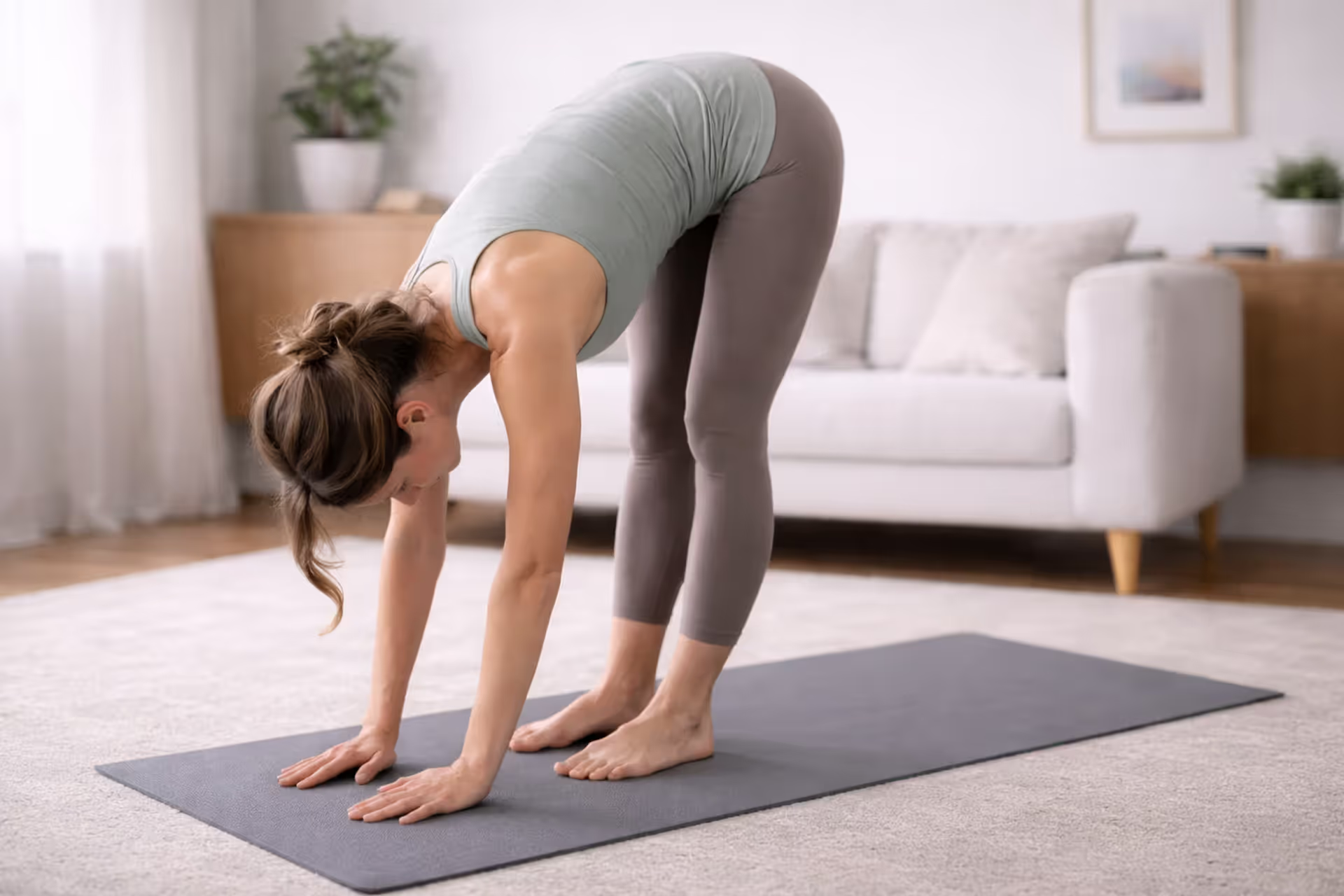
Gentle forward folds including seated poses like Paschimottanasana and standing poses like Uttanasana address posterior chain flexibility, meaning the muscles running along the back of the body from head to heels. These poses should be approached with softened knees rather than locked legs, allowing the spine to lengthen rather than round excessively, and with focus on releasing tension rather than achieving particular depths. The sensation of stretch should feel inviting rather than alarming, gentle enough that breath remains smooth and face remains relaxed. Holding these positions for one to three minutes while breathing consciously creates accumulating stimulus that produces genuine tissue adaptation over weeks and months of consistent practice.
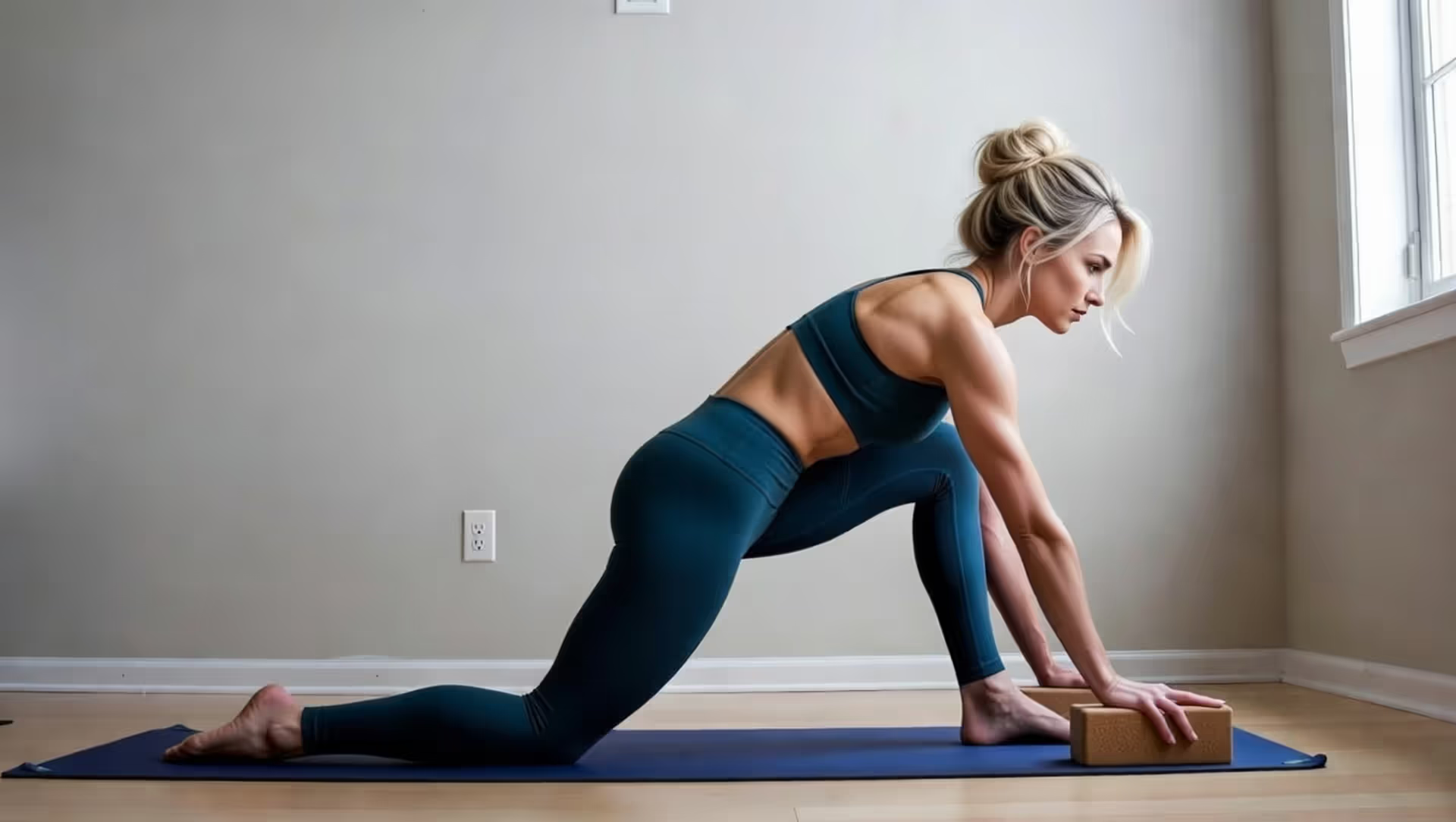
Hip opening poses including variations of Pigeon pose, Lizard pose, and reclined figure-four stretch address the deep hip rotators and flexors that become chronically shortened through prolonged sitting. These areas often hold significant tension both physically and emotionally, making patient, breath-centered approaches particularly important. Forcing hip openers produces reflexive guarding that prevents the release these poses can create when approached gently. Supporting the hips with props including blankets, blocks, or bolsters allows practitioners to find sustainable positions where they can relax and breathe rather than struggling against intensity that triggers protective contraction.
Spinal mobility sequences including gentle twists, lateral bends, and segmental flexion-extension movements address the vertebral joints and surrounding soft tissues that become restricted through sedentary lifestyles and repetitive movement patterns. The spine responds well to variety and gentle exploration rather than to intense sustained positions, making flowing sequences that move the spine through multiple directions often more effective than static stretching for developing spinal flexibility. Cat-Cow movements, gentle seated twists, and supine spinal rotations provide accessible options for maintaining and improving the spinal mobility that supports comfortable daily function.
Hamstring and calf stretches using poses like Supta Padangusthasana with a strap and various wall-supported positions address the posterior leg muscles that commonly restrict both yoga practice and daily activities like walking and stair climbing. These muscles often respond to neural tension patterns from the sciatic nerve rather than simply being mechanically short, making gentle approaches that allow nervous system accommodation often more effective than aggressive stretching that triggers protective responses. Sustained holds with moderate intensity, perhaps using props to reduce strain, allow gradual improvement without the setbacks that forced stretching produces.
Shoulder and chest openers including supported fish pose, doorway stretches, and various arm positions address the anterior shoulder and chest muscles that tighten through computer work, driving, and the forward-oriented activities that dominate modern life. These poses support improved posture by releasing the tissues that pull the shoulders forward and round the upper back, creating space for more upright, efficient alignment that reduces strain on the neck and upper back. Gentle, breath-centered approaches prove essential because forcing shoulder positions can stress the vulnerable rotator cuff structures, producing injury rather than the intended improvement.
Common Mistakes Limiting Flexibility Progress
Understanding the mistakes that undermine flexibility development helps practitioners avoid counterproductive patterns that produce frustration, injury, and abandonment of practices that could serve them well if approached differently. These errors are extremely common, reflecting widespread misunderstanding about how flexibility actually develops and what practices produce lasting improvement.
Pushing past pain represents perhaps the most damaging mistake, reflecting the misconception that discomfort indicates productive work rather than warning of potential harm. The mantra of "no pain, no gain" that pervades fitness culture does not apply to flexibility development, where pain signals typically indicate tissue stress that will produce injury rather than adaptation if continued. Productive stretch sensation feels like gentle tension or pulling without the sharp, burning, or alarming qualities that characterize pain. Learning to distinguish these sensations and respecting pain signals as boundaries rather than barriers to push through protects against the injuries that forced stretching commonly produces.
Comparing flexibility to others creates unrealistic expectations and often drives the competitive forcing that leads to injury. Skeletal structure, connective tissue characteristics, training history, and countless other factors create enormous individual variation in flexibility potential that no amount of effort can overcome. Someone with naturally deep hip sockets will never achieve the external rotation range of someone with shallower sockets regardless of how diligently they practice. Accepting your body's unique architecture and pursuing your personal potential rather than trying to match others' ranges supports sustainable practice that produces genuine progress within your individual parameters.
Holding breath during stretching triggers the stress responses that increase muscular tension and reduce stretch tolerance, undermining the conditions that allow flexibility to improve. This breath-holding often occurs unconsciously when stretch intensity exceeds comfortable levels, providing useful feedback that intensity should be reduced to where breath can flow smoothly. Maintaining conscious, relaxed breathing throughout stretching ensures that neurological conditions support rather than oppose the flexibility development you seek.
— Lily Patterson
Bouncing or forcing stretches, sometimes called ballistic stretching, triggers the stretch reflex, a protective mechanism that contracts muscles when they lengthen rapidly to prevent tearing. This reflex works against flexibility development by increasing the very tension you are trying to reduce. Slow, gradual entry into stretches and sustained holds without bouncing avoid triggering this protective response, allowing muscles to release rather than contract in response to lengthening.
- Inconsistent practice undermines flexibility gains because tissues require repeated stimulus to adapt and quickly return to baseline when stimulus stops, making sporadic intense sessions less effective than regular moderate practice.
- Inadequate warmth, meaning practicing without warming up or in cold environments, increases tissue stiffness and injury risk, making flexibility work less effective and more dangerous than when practiced with appropriately warmed tissues.
The Advantages of Practicing Yoga at Home
Home practice offers unique advantages for flexibility development that studio classes often cannot provide, creating conditions where patient, individualized progress becomes possible without the pressures that drive counterproductive forcing in group settings. Understanding these advantages helps practitioners leverage home practice for flexibility goals even while continuing to attend classes for other purposes.
Practicing yoga at home removes the comparison pressure that studio environments inevitably create regardless of how accepting the studio culture might be. When surrounded by other practitioners, the temptation to match their ranges, to push deeper than your body wants to go, to feel inadequate when others achieve positions you cannot, creates psychological pressure that often translates into physical forcing. At home, with no one to compare to and no one watching, you can practice honestly within your actual current capacity without the ego involvement that drives risky effort in social settings.
Individual pacing becomes possible at home in ways that group classes cannot accommodate. If your hamstrings need five minutes of gentle, breath-centered attention before they release while the class has moved on after thirty seconds, home practice allows you to give your body what it needs rather than what the class schedule permits. This individual pacing proves essential for flexibility development because different bodies require different stimulus durations and different areas within the same body may need vastly different amounts of time to release effectively.
Environmental control at home allows you to create conditions that support the relaxation response on which flexibility improvement depends. Temperature, lighting, sound, and visual environment all influence nervous system state in ways that affect how fully muscles release during stretching. At home, you can practice in warmth that keeps tissues pliable, in lighting that feels calm rather than harsh, in silence or with music that supports relaxation, and in spaces free from the distractions and stimulation that studio environments sometimes present.
Props and support become freely available at home without the limitation of shared studio equipment or the self-consciousness that sometimes prevents practitioners from using props in group settings. Blocks, blankets, bolsters, straps, and walls can all support flexibility practice in ways that make sustainable positions accessible without forcing. Having these supports readily available and feeling comfortable using them without concern about appearing less capable than others allows the supported, patient practice that produces genuine flexibility gains.
Consistency becomes easier when practice does not require travel, scheduling around class times, or the various obstacles that reduce studio attendance. The flexibility gains that matter accumulate through regular practice over months and years rather than through occasional intense sessions. Being able to roll out a mat at home for twenty minutes of consistent daily practice often produces better flexibility outcomes than attending studio classes once or twice weekly when life permits.
Consistency Matters More Than Intensity
The principle that regular moderate practice outperforms occasional intense effort holds particularly true for flexibility development, where tissue adaptation requires sustained stimulus over time and where aggressive approaches trigger protective responses that prevent the gains they seek to force. Understanding this principle helps practitioners set realistic expectations and design sustainable approaches that produce genuine long-term improvement.
Tissue adaptation timelines span weeks to months rather than days, meaning that expecting rapid flexibility gains sets practitioners up for the frustration that leads to either forcing or abandonment. Muscle tissue adapts relatively quickly, showing measurable changes within two to four weeks of consistent stimulus. Tendon and fascial tissues adapt more slowly, requiring four to twelve weeks before significant remodeling occurs. And neural patterns that influence stretch tolerance change gradually through repeated exposure to ranges that the nervous system learns to recognize as safe. These timelines mean that patience measured in months rather than sessions produces the flexibility improvements that impatient approaches cannot achieve regardless of their intensity.
The American Council on Exercise emphasizes that flexibility improvements require consistent practice over time, with research suggesting that stretching at least three times weekly produces measurable gains while less frequent practice may not create sufficient stimulus for adaptation. This frequency requirement favors sustainable moderate approaches over unsustainable intense ones, since few people can maintain the intensity that produces acute discomfort three or more times weekly without burning out or getting injured.
Habit formation supports the consistency that flexibility development requires by making practice automatic rather than requiring daily decisions that willpower must overcome. When flexibility practice becomes a regular part of your routine, happening at consistent times in consistent places with consistent sequences, the neural pathways supporting the habit strengthen until practice feels natural rather than effortful. This habituation allows the sustained consistency that produces real flexibility gains over months and years of accumulated sessions that individually might seem insignificant but that collectively create substantial change.
Realistic expectations about both timelines and outcomes help sustain the consistent practice that produces genuine results. Flexibility improvement happens slowly enough that you cannot perceive it session to session, making outcome-based motivation unreliable for sustaining practice. Process orientation that finds value in the practice itself rather than only in flexibility outcomes supports continuation through the long periods where no visible change occurs but where important adaptation proceeds invisibly. Trust that patient, consistent practice will produce results even when you cannot yet see them sustains the approach that actually works.
Learning to Distinguish Sensation From Pain
The ability to distinguish productive stretch sensation from warning signals indicating potential harm represents a crucial skill for safe flexibility development, one that yoga practice develops through attentive experience over time. This discrimination cannot be learned abstractly but must be discovered through repeated exposure to various sensations while paying close attention to their qualities and consequences.
Productive stretch sensation typically has certain recognizable characteristics including gradual onset rather than sudden appearance, location in the belly of muscles rather than at joints or tendon attachments, manageable intensity that allows continued breathing and facial relaxation, and tendency to ease slightly as hold duration extends and tissues release. These qualities indicate that you have found an appropriate working edge where tissues receive stimulus for adaptation without experiencing the stress that leads to injury.
Warning signals indicating potential harm include sharp or sudden sensations, locations at joints or bony landmarks rather than in soft tissue, intensity that prevents normal breathing or causes facial grimacing, sensations that worsen rather than ease as holds continue, and any numbness, tingling, or electrical qualities suggesting nerve involvement. These signals require immediate response, typically backing off intensity or coming out of positions entirely, regardless of how the position looks or what others in class might be doing.
The nervous system's role in flexibility means that creating conditions of safety allows greater range than conditions of threat, even when tissue capacity remains constant. When your body feels safe, as communicated through relaxed breathing, comfortable intensity, and absence of alarming sensations, the nervous system permits greater range of motion. When threat signals activate protective responses, muscles contract and range reduces regardless of tissue capacity. This means that respecting warning signals and staying within comfortable ranges actually allows more flexibility than forcing deeper positions that trigger protective contraction.
Body literacy develops through paying attention to sensations during practice, gradually building the vocabulary of internal experience that allows finer discrimination between different sensation qualities. This literacy cannot be rushed or taught abstractly but emerges through accumulated attentive practice where you notice what you feel, observe how sensations change, and learn what different qualities indicate about your body's state and needs. The interoceptive awareness that yoga develops serves flexibility progress by making this discrimination increasingly refined over months and years of practice.
Author: Lily Patterson;
Source: yogapennsylvania.com
Flexibility Across the Lifespan
Concerns about aging and flexibility often discourage older practitioners or lead them toward inappropriately aggressive approaches driven by fear of losing mobility. Understanding how flexibility relates to aging helps practitioners of all ages approach their practice appropriately and maintain the mobility that supports independence and quality of life across the lifespan.
Flexibility naturally decreases with age due to changes in connective tissue composition, reduced hydration of tissues, decreased physical activity levels, and accumulation of minor injuries and compensations over decades of life. These changes are real and cannot be entirely prevented, but their impact can be significantly moderated through consistent appropriate practice that maintains stimulus for tissue health and mobility preservation. The question is not whether aging affects flexibility but how much impact practitioners can minimize through sustained attention to mobility throughout their lives.
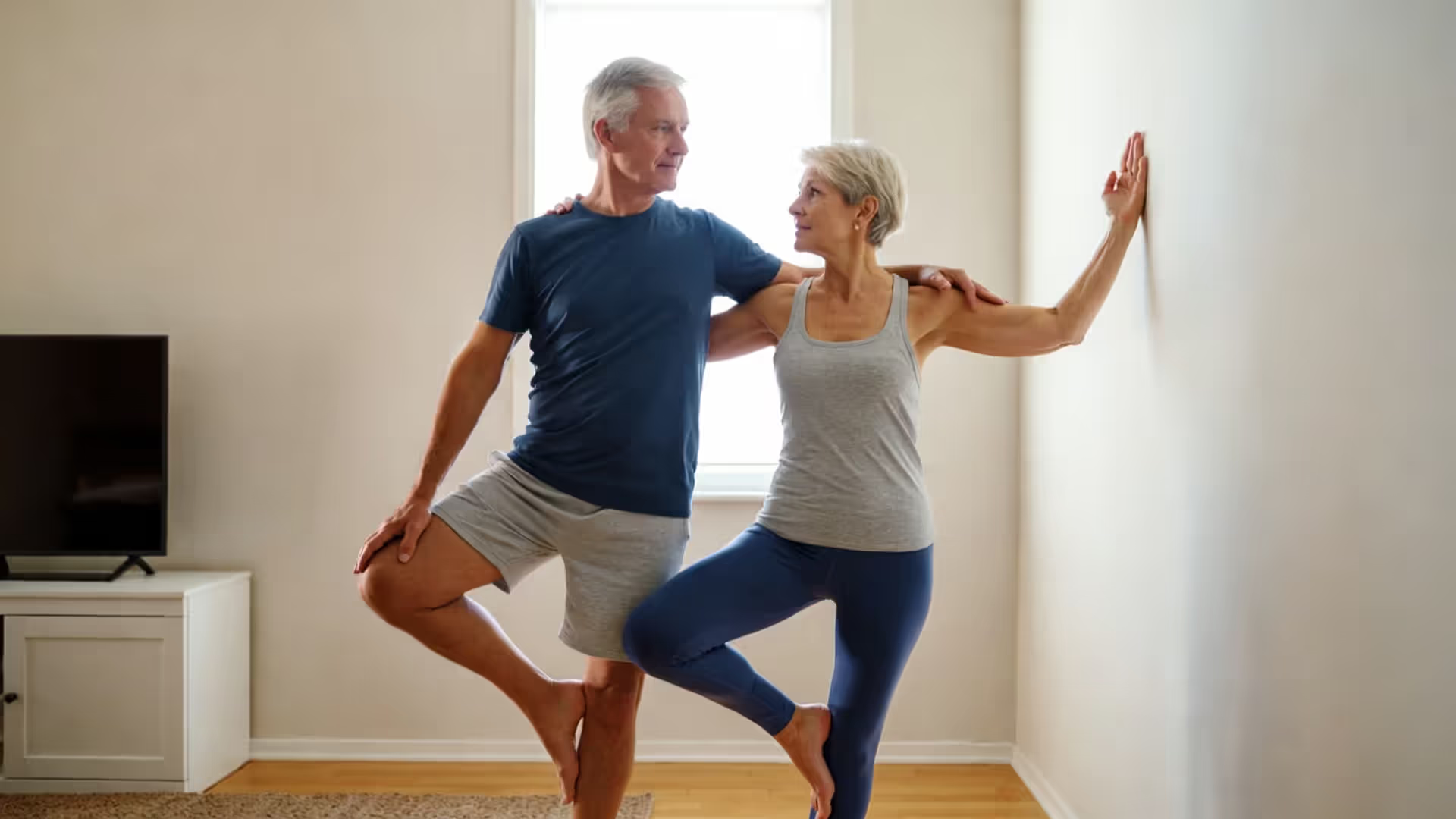
Yoga practice appropriately adapted to individual needs supports mobility across the lifespan more effectively than either neglect or inappropriate intensity. Gentle, regular practice maintains tissue hydration and pliability, preserves neural pathways for movement ranges that would otherwise be lost through disuse, and provides the balance and proprioceptive challenges that reduce fall risk as stability becomes more precarious with age. These benefits require consistency over time rather than intensity in any single session, making sustainable moderate approaches particularly appropriate for older practitioners.
— Lily Patterson
Joint health benefits from appropriate flexibility practice that maintains synovial fluid circulation and cartilage nutrition while avoiding the stress that accelerates degenerative changes. Joints that move through their ranges regularly receive better nutrient delivery and waste removal than joints held in limited ranges by tight surrounding tissues. This joint nourishment supports long-term joint health in ways that sedentary lifestyles cannot provide, reducing the osteoarthritis progression that limits mobility in so many older adults.
Independence preservation represents perhaps the most significant flexibility benefit for aging practitioners, since ability to perform daily activities including dressing, bathing, rising from chairs, and navigating stairs depends substantially on adequate range of motion at hips, knees, shoulders, and spine. Maintaining the flexibility that supports these activities through consistent practice preserves independence that restricted mobility threatens, making flexibility practice an investment in quality of life across remaining years rather than merely an aesthetic or athletic pursuit.
Integrating Flexibility Into Holistic Wellness
Flexibility represents one component of comprehensive wellness that includes strength, cardiovascular health, balance, recovery capacity, stress management, and countless other factors contributing to how well your body serves your life. Understanding flexibility's place within this larger context helps practitioners avoid overemphasizing flexibility at the expense of other important components while integrating flexibility work appropriately into balanced approaches that serve overall wellbeing.
Yoga for flexibility complements strength development because adequate range of motion allows strength to express through full movement rather than being limited by tight tissues that prevent achieving positions where strength could otherwise produce force. A person with strong hip muscles but tight hip flexors cannot fully extend their stride while walking or running, limiting performance regardless of available strength. Conversely, flexibility without strength creates unstable joints vulnerable to injury, making strength and flexibility partners rather than alternatives in functional movement capacity.
Balance and proprioception connect with flexibility through the nervous system pathways that underlie all movement capacity. The body awareness that yoga develops through flexibility practice transfers to balance capacity, while the neural regulation supporting balance influences how tissues lengthen and release during stretching. Practices that integrate flexibility with balance challenges, like many standing yoga poses, develop both capacities simultaneously while building the neurological integration that supports overall movement quality.
Recovery from both daily activity and dedicated exercise benefits from the gentle movement and circulation that flexibility practice provides. Active recovery through gentle yoga accelerates tissue restoration and reduces delayed onset muscle soreness more effectively than complete rest, making flexibility practice a valuable recovery tool for athletes and active people whose training creates accumulated tissue stress requiring resolution.
Stress management connects with flexibility through the autonomic nervous system regulation that yoga practice develops. The parasympathetic activation that breath-centered stretching promotes reduces stress hormone circulation and shifts physiological state toward restoration and recovery. These stress-reducing effects extend beyond immediate practice sessions, creating lasting shifts in baseline nervous system tone that support overall wellness including immune function, sleep quality, and emotional regulation.
A Patient Path Forward
The flexibility you seek develops not through conquering your body but through befriending it, creating conditions where tissue and nervous system feel safe enough to release holding patterns that no amount of forcing can overcome. This patient, aware approach may seem slower than aggressive methods that promise rapid results, but it actually produces change more reliably because it works with biological realities rather than against them. The forced flexibility gains that aggressive stretching sometimes produces typically reverse quickly and often come with injury costs that set overall progress backward.
Your body deserves the respect of patient, attentive practice that honors its current state while creating conditions for gradual improvement. This respect is not passivity or acceptance of limitation but rather strategic wisdom that recognizes how change actually happens and aligns practice accordingly. Tissues adapt to consistent gentle stimulus over time. The nervous system learns to permit greater range when it feels safe. And sustainable practice continues long enough to produce genuine transformation while unsustainable intensity leads to injury or abandonment.
Yoga for flexibility practiced gently and consistently, whether in studios or at home, creates lasting improvements in how your body moves and feels that extend far beyond impressive poses into daily comfort, functional capacity, and long-term mobility preservation. These benefits accumulate gradually through sessions that individually might seem unremarkable but that collectively create substantial change over the months and years of sustained practice. Trust this process even when progress seems invisible, knowing that important adaptation occurs beneath the threshold of perception until one day you notice that positions previously challenging have become accessible without your recognizing exactly when the shift occurred.
The flexibility your body can achieve awaits your patient, consistent attention, ready to emerge when you create the conditions that allow it rather than trying to force it into existence through determination that triggers the very resistance it seeks to overcome. Begin where you are, practice regularly with breath-centered awareness, respect the signals your body provides, and allow the transformation that patient practice produces to unfold in its own time. This approach honors both the wisdom of yoga tradition and the findings of modern movement science, creating a path toward sustainable flexibility that serves your wellness across remaining years of embodied life.
FAQ
Related Stories
Read more
Read more

The content on yogapennsylvania.com is provided for general informational and inspirational purposes only. It is intended to share yoga tips, meditation practices, wellness guidance, retreat experiences, and lifestyle insights, and should not be considered medical, therapeutic, fitness, or professional health advice.
All information, articles, images, and wellness-related materials presented on this website are for general informational purposes only. Individual health conditions, physical abilities, wellness goals, and experiences may vary, and results can differ from person to person.
Yogapennsylvania.com makes no representations or warranties regarding the accuracy, completeness, or reliability of the content provided and is not responsible for any errors or omissions, or for decisions or actions taken based on the information presented on this website. Readers are encouraged to consult qualified healthcare or wellness professionals before beginning any new yoga, meditation, or fitness practice.