
Yoga Workouts That Build Strength Without Bulk

Content
Content
The fitness industry has spent decades selling a particular vision of strength—one measured in pounds lifted, muscles bulging beneath skin, and bodies that announce their power through sheer visual mass. This narrow definition has convinced countless people that building strength requires heavy barbells, protein shakes consumed in industrial quantities, and the gradual accumulation of bulk that transforms physique into something resembling armor. Yet walk into any serious yoga studio, observe practitioners holding challenging postures with apparent ease, and you encounter a different kind of strength entirely—one that does not announce itself through size but reveals itself through control, stability, and the capacity to manage body weight through space with precision that would challenge even dedicated weightlifters.
This alternative pathway to strength has always existed within yoga tradition, though contemporary fitness culture has often dismissed it, categorizing yoga as something you do for flexibility, relaxation, or spiritual exploration rather than for building the physical power that "real" training provides. This dismissal reflects misunderstanding about what strength actually means, how muscle adaptation occurs, and why the controlled resistance that yoga provides creates functional capacity that transfers to daily life and athletic performance in ways that isolated muscle hypertrophy often fails to match.
Research from the National Center for Complementary and Integrative Health confirms that yoga practice produces measurable improvements in muscular strength alongside its better-known benefits for flexibility, balance, and stress reduction. These strength gains occur through mechanisms distinct from traditional resistance training, recruiting stabilizing musculature that conventional exercises often neglect and creating neuromuscular adaptations that enhance coordination, joint stability, and movement efficiency. Understanding how yoga builds strength without bulk helps you appreciate why this ancient practice deserves serious consideration as a primary or complementary approach to physical conditioning, particularly for those seeking functional capacity rather than aesthetic transformation measured in inches of circumference.
The misconception that yoga serves only flexibility and relaxation persists despite mounting evidence to the contrary. Practitioners who maintain consistent yoga practice develop observable strength that manifests not just on the mat but in everyday activities—carrying heavy bags, climbing flights of stairs, maintaining posture through long workdays, and moving with the physical confidence that adequate strength provides. This strength development occurs gradually, almost imperceptibly, without the dramatic visual transformation that weightlifting produces but with functional improvements that prove equally valuable for quality of life and physical capability.
Understanding Strength Beyond the Mirror
The conflation of strength with muscle size reflects a particular training philosophy rather than physiological necessity. Hypertrophy—the technical term for muscle fiber enlargement—represents one adaptation pathway that resistance training can trigger, but it is neither the only adaptation nor necessarily the most useful for everyday function. Strength without corresponding bulk emerges when training emphasizes neuromuscular efficiency rather than tissue expansion, when muscles learn to recruit more fibers more effectively rather than simply growing larger to compensate for inefficient activation patterns.
Harvard Health Publishing has documented how functional strength—the capacity to move your body effectively through real-world tasks—depends more on coordination, stability, and integrated muscle recruitment than on isolated muscle size. The person who can rise from a deep squat while carrying groceries, catch themselves when stumbling on uneven terrain, or maintain upright posture through long workdays demonstrates strength that serves life, regardless of whether their muscles photograph impressively at the beach.
Yoga develops this functional strength through several mechanisms that distinguish it from hypertrophy-focused training:
- Neuromuscular recruitment patterns that teach muscles to fire in coordinated sequences rather than isolation, creating integrated strength that transfers across movement contexts
- Endurance-based loading that builds fatigue resistance and sustained capacity rather than maximum single-effort output
- Joint stability development that strengthens the smaller muscles surrounding joints, creating resilience against injury and degeneration
- Proprioceptive refinement that enhances body awareness, allowing more precise and efficient movement with less wasted energy
The American Council on Exercise explains that strength gains without significant hypertrophy occur when training volume and intensity fall below the threshold that triggers substantial muscle growth while still providing sufficient stimulus for neural and connective tissue adaptation. Yoga workouts typically operate in exactly this training zone, creating progressive overload through leverage manipulation, time under tension, and increasingly challenging positions rather than through adding external weight that would push intensity toward hypertrophy-promoting levels.
The distinction between different types of strength matters practically for anyone choosing how to invest limited training time. Maximum strength—the ability to produce force against very heavy loads—requires training with heavy weights and develops the capacity to lift maximally in specific movement patterns. This type of strength serves powerlifters, strongman competitors, and those whose activities require moving external loads that approach their maximum capacity. Functional strength—the ability to control your own body effectively through varied movements and sustained activities—develops through different mechanisms and serves the much larger population whose physical demands involve managing body weight through space, maintaining positions against gravity, and performing repeated submaximal efforts throughout daily life.
The visual difference between these strength types explains much of the confusion surrounding yoga's strength-building potential. Maximum strength training, particularly when combined with nutrition strategies that support muscle growth, produces visible hypertrophy that announces physical capability to observers. Functional strength training, including yoga practice, produces less visible adaptation while creating physical capacity that manifests through performance rather than appearance. Neither approach is superior—they simply serve different goals and produce different outcomes.
How Yoga Creates Resistance Without Weights
The physics of yoga postures creates resistance through mechanisms that feel different from lifting weights but that load muscles with comparable intensity when practiced with proper form and appropriate challenge levels. Your own body weight, which you carry constantly and therefore might assume creates no training stimulus, becomes a significant resistance source when distributed across reduced support points or positioned against gravity through unfavorable leverage angles.
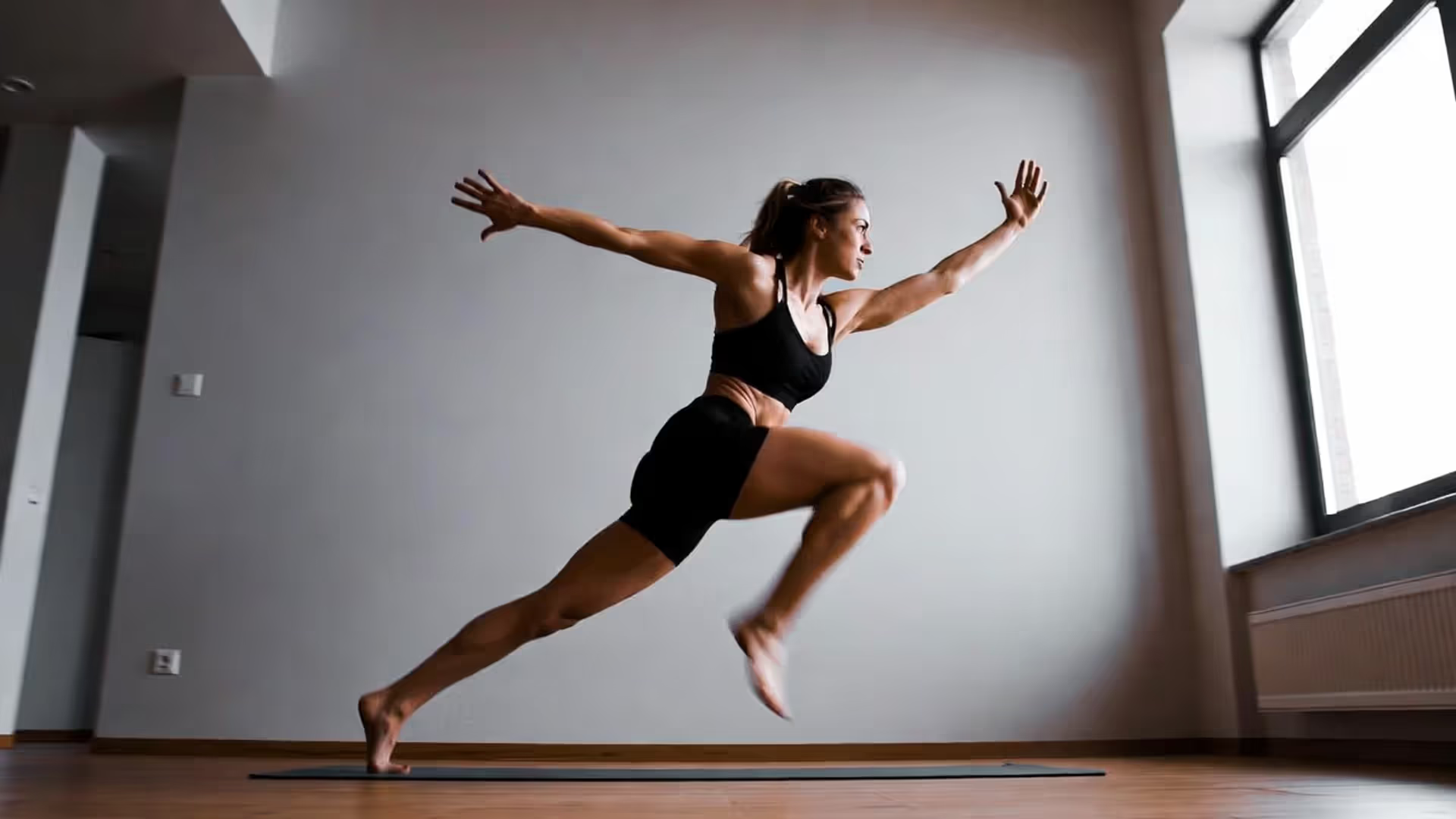
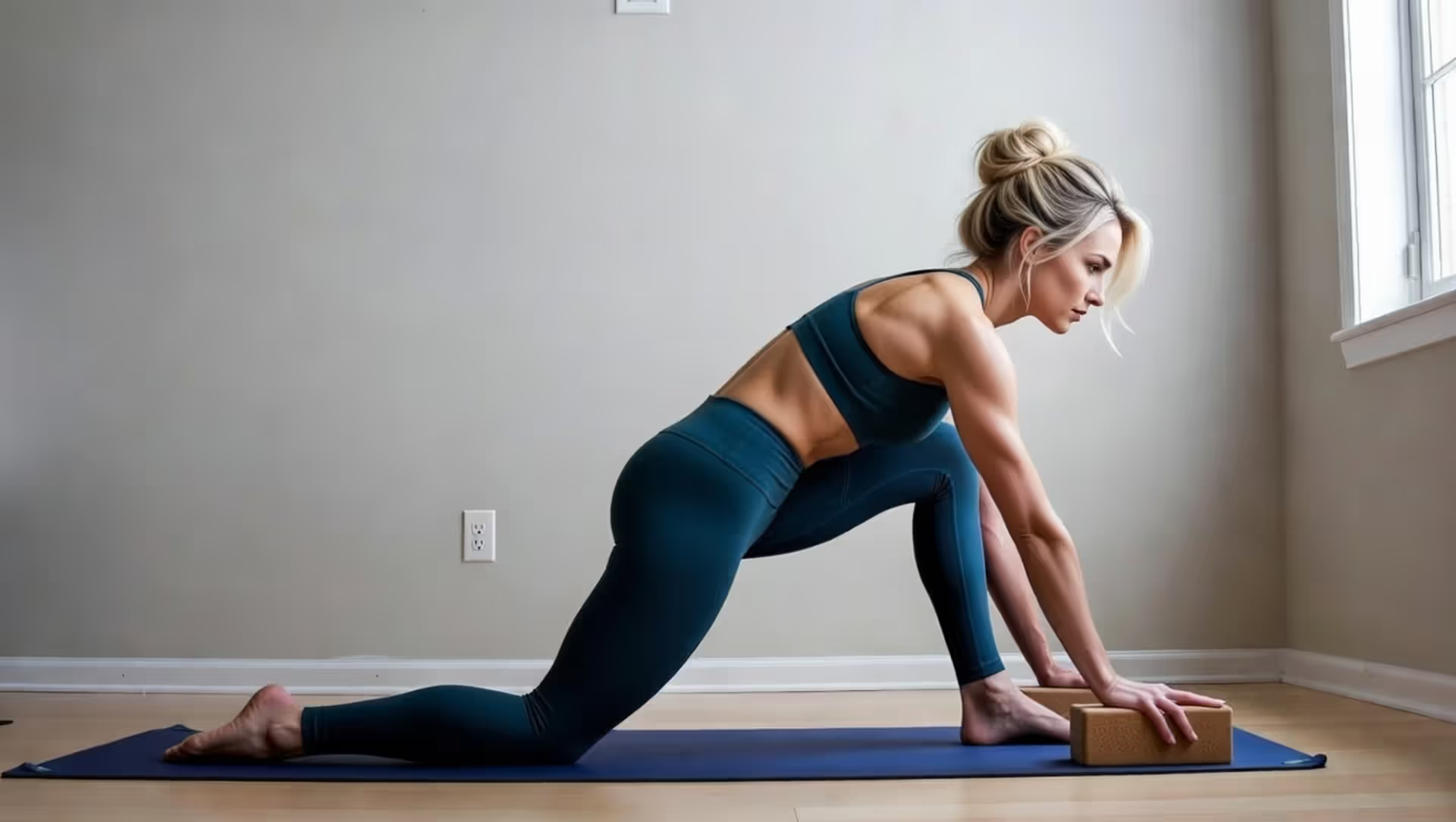
Consider the transition from standing upright to holding a low lunge with arms extended overhead. The same body weight that felt inconsequential while standing now creates substantial load on your quadriceps, hip flexors, glutes, and spinal erectors—not because the weight changed but because the mechanical relationships between gravity, joint angles, and muscle insertion points shifted to create resistance that muscles must actively overcome. This leverage-based loading allows infinite progression through positional refinement rather than requiring external equipment, making yoga workouts accessible anywhere your body can fit.
Research published on PubMed has examined how different contraction types contribute to strength development, distinguishing between concentric contractions (muscles shortening against resistance), eccentric contractions (muscles lengthening under load), and isometric contractions (muscles generating force without changing length). Yoga practice incorporates all three contraction types, often within single postures and transitions:
The concentric phase appears when you push up from a low position, lift a limb against gravity, or draw yourself into a challenging pose. The eccentric phase emerges when you lower slowly and controlledly, maintaining muscular engagement while allowing joints to move through range. The isometric phase—perhaps yoga's most distinctive strength-building mechanism—occurs when you hold postures statically, maintaining muscular tension without movement for durations that create deep fatigue and trigger adaptation.
Time under tension, a variable that strength coaches recognize as crucial for muscular adaptation, naturally extends during yoga practice because postures are typically held rather than performed for brief repetitions. Holding Warrior II for ten breaths subjects your quadriceps to continuous load lasting perhaps ninety seconds—a duration that would be exceptional in conventional strength training where sets typically last twenty to sixty seconds. This extended time under tension creates particular stimulus for muscular endurance and connective tissue resilience while keeping intensity below levels that would maximize hypertrophic response.
The gravity-based loading that yoga employs also creates multi-directional resistance that free weight training struggles to replicate. When you hold a standing balance posture, gravity pulls you downward while your muscles must resist in multiple planes to maintain position—not just opposing the vertical pull but also correcting for lateral sway, rotational drift, and the countless micro-adjustments that balance requires. This multi-planar resistance develops strength through movement patterns that transfer to real-world activities where forces rarely arrive from convenient, predictable directions.
— Jackson Wright
The concept of mechanical disadvantage explains how yoga creates significant resistance from modest loads. When you perform a push-up with hands directly below shoulders, the mechanical advantage of that position makes the movement relatively easy. Shift your hands forward toward your hips, as occurs in the yoga transition from plank to chaturanga, and the same body weight becomes dramatically harder to control because the changed leverage places muscles at mechanical disadvantage. Yoga systematically employs these leverage variations to create progressive challenge without adding external weight.
Plank Variations: Engineering Core Stability
The plank position and its variations represent yoga's most concentrated core strength work, creating demands on the entire anterior chain—from shoulder stabilizers through deep abdominal layers to hip flexors—that few other exercises match for comprehensive activation with minimal equipment requirements. Unlike crunches or sit-ups that train the rectus abdominis through spinal flexion, planks develop the core's primary functional role: resisting unwanted movement while maintaining neutral spinal position against destabilizing forces.
Standard plank position places your body in a straight line from heels to head, supported only by hands and toes while gravity attempts to collapse your midsection toward the floor. Maintaining this alignment requires continuous engagement of the transverse abdominis (the deepest abdominal layer that wraps your trunk like a corset), the internal and external obliques (which resist rotational forces), the rectus abdominis (which prevents lumbar hyperextension), and the erector spinae (which maintains spinal position from the posterior side). This multi-muscle coordination creates functional core strength that transfers directly to real-world activities requiring trunk stability under load.
Side plank shifts weight distribution to create rotational challenge, demanding that obliques work asymmetrically to prevent the unsupported hip from dropping toward the floor. This unilateral loading addresses strength imbalances between sides while creating intensity that bilateral positions cannot match because the same muscles must do the work with half the contact points. Forearm plank reduces the shoulder stability demand while maintaining or increasing core challenge, making it accessible for those with wrist sensitivity while offering progression through extended holds or dynamic additions like hip dips or knee drives.
The Cleveland Clinic emphasizes how core strength supports spinal health and prevents low back pain—among the most common complaints in adult populations. Plank-based yoga practices develop exactly the muscular patterns that protect against these issues, creating resilient trunks that maintain healthy position through sitting, standing, lifting, and the countless movements that daily life requires. This postural support represents strength that serves you continuously rather than only during designated workout periods.
Dynamic plank variations add movement to the static hold, creating both strength and coordination challenges that static positions alone cannot provide. Plank to downward dog transitions—flowing between the two positions with controlled breath—develop shoulder strength through the full range while maintaining core engagement throughout. Knee-to-elbow movements from plank position add hip flexor and oblique demand while challenging the coordination between upper and lower body that functional movement requires. These dynamic variations prevent the plateau that extended static holds eventually produce while adding variety that maintains practice engagement.
The progression pathway through plank variations allows practitioners of any starting level to find appropriate challenge and advance systematically. Beginners might hold standard plank for fifteen seconds before fatigue compromises form, while advanced practitioners might flow through dynamic plank sequences for minutes at a time. This scalability makes plank-based practice accessible for yoga at home where external coaching cannot adjust intensity in real-time—you simply work at your current capacity and progress naturally as that capacity expands.
Author: Jackson Wright;
Source: yogapennsylvania.com
Warrior Sequences: Lower Body Power Through Stance
The Warrior sequence—Virabhadrasana I, II, and III in Sanskrit—represents yoga's most recognizable lower body strength work, creating leg and hip demands through deep stances and extended holds that accumulate fatigue despite using no weight beyond your own body. These postures develop strength through the full lower extremity while simultaneously challenging balance, hip mobility, and the integrated coordination between legs and core that functional movement requires.
Warrior I places you in a deep lunge with the back foot angled and both hips rotating toward the front of your mat, creating quadriceps demand in the front leg while stretching and strengthening the hip flexors of the rear leg. The depth of your stance determines intensity—a shallow lunge places modest demand while a deep position with front thigh approaching parallel creates loading that rivals weighted squats for muscular challenge. Holding this position while maintaining upright torso and extended arms adds postural demand that full-body strength training rarely matches.
Warrior II rotates your hips to face the side of your mat, opening into a wide stance with arms extended horizontally and gaze directed over the front fingertips. This position creates sustained load on both legs—the front leg working in a position similar to a wall sit while the rear leg maintains extended support—while simultaneously challenging shoulder endurance and core stability. The horizontal arm position, seemingly simple, creates shoulder fatigue within minutes of sustained hold, developing the muscular endurance that supports healthy shoulder function through daily activities.
Warrior III introduces single-leg balance while extending the torso and lifted leg parallel to the floor, creating a position that challenges every muscle from standing foot through crown of head. The standing leg's hip stabilizers work continuously to prevent lateral collapse while quadriceps and glutes maintain knee and hip extension against gravitational pull. The lifted leg's glutes and hamstrings engage isometrically to maintain horizontal position while spinal erectors and deep core muscles stabilize the cantilevered torso. This integrated full-body demand exemplifies how yoga for strength creates comprehensive conditioning without isolating muscles into artificial training patterns.
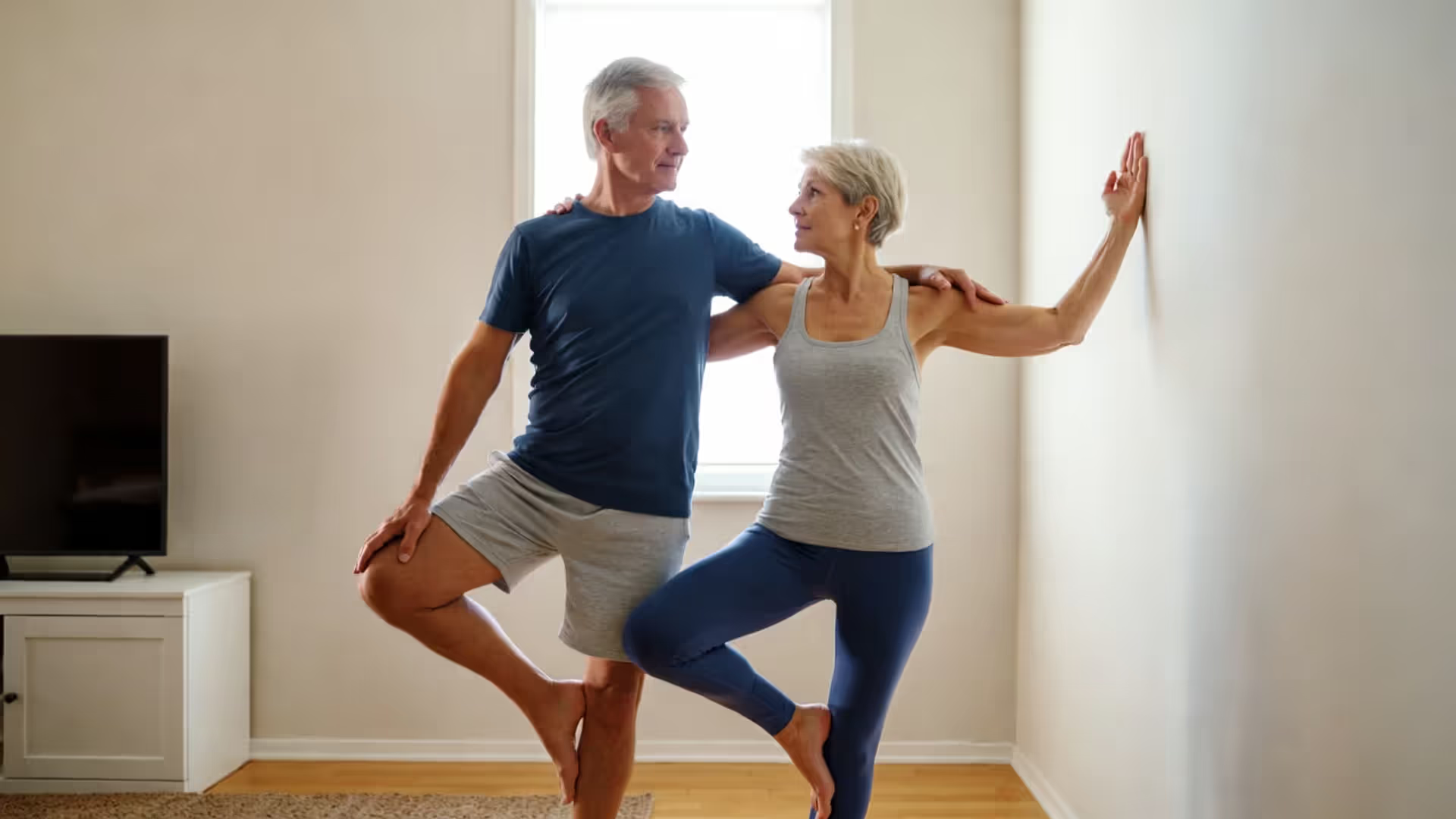
The proprioceptive challenge of Warrior III deserves particular attention for its contribution to functional strength development. Proprioception—the sense of body position in space—deteriorates with age and inactivity, contributing to fall risk and movement uncertainty that limit physical capability regardless of muscle strength. Single-leg balance postures like Warrior III train the neuromuscular systems responsible for postural control, developing the rapid corrective responses that prevent falls and enable confident movement through varied terrain. This balance training represents strength development in its broadest sense—not just muscle capacity but the integrated sensory-motor function that allows muscles to apply their strength effectively.
The Warrior sequence also develops mental strength through the sustained discomfort that extended holds create. The burning in your front thigh during minute two of Warrior II, the shake that develops in your standing leg during Warrior III, the effort required to maintain lifted arms when shoulders are screaming for rest—these experiences train your capacity to remain present and functional despite discomfort, a psychological strength that transfers to any challenging circumstance. This mental dimension of yoga for strength often proves as valuable as the physical adaptations for practitioners facing demanding lives.
Chair Pose: The Isometric Foundation
Utkatasana—chair pose—might be yoga's purest expression of isometric strength development, creating a sustained squat hold that builds muscular endurance, joint resilience, and mental fortitude simultaneously. The position appears simple: standing with feet together, hips dropped back and down as if sitting into an invisible chair, arms extended overhead, spine maintaining its natural curves despite the temptation to round forward. Yet holding this position for ten, twenty, or thirty breaths reveals intensity that belies the posture's unassuming appearance.
The quadriceps bear primary load in chair pose, maintaining knee flexion against gravitational pull that would otherwise collapse you to the floor. Unlike dynamic squats where muscles contract and relax rhythmically, the sustained hold eliminates recovery moments, creating continuous demand that fatigues even conditioned legs within relatively brief durations. This extended time under tension develops the muscular endurance necessary for prolonged activity—hiking uphill, cycling sustained climbs, or simply moving through long days without lower extremity fatigue limiting your capacity.
Hip and knee alignment deserve careful attention during chair pose to ensure that strength development occurs without joint strain. Your knees should track over your toes without collapsing inward—a pattern called valgus collapse that stresses knee ligaments and indicates hip weakness that the pose itself can help correct when practiced with proper alignment cues. Your pelvis should maintain relatively neutral position rather than tipping into excessive anterior tilt that would compress lumbar vertebrae.
Yoga Journal provides educational resources explaining how chair pose develops both strength and the body awareness necessary to maintain healthy joint alignment through challenging positions—a combination that most strength training fails to address because external loads encourage compensation patterns rather than requiring the intrinsic stability that bodyweight practice develops.
Variations of chair pose allow progression and targeted development. Twisted chair adds rotational demand that challenges obliques while maintaining the lower body isometric hold. Chair pose with heels lifted shifts emphasis toward calves and challenges balance through reduced base of support. Pulsing movements—small lifts and drops within the chair position—add dynamic load while maintaining the overall postural challenge. These variations prevent adaptation plateau while adding variety that maintains engagement through extended practice.
The transferability of chair pose strength to daily activities makes this posture particularly valuable for functional fitness. The strength to lower into and rise from chairs, toilets, and car seats without using hands for assistance—a capacity that many adults lose prematurely—develops directly through chair pose practice. The ability to maintain squat positions while gardening, playing with children, or working at ground level depends on exactly the isometric lower body strength that Utkatasana builds. This real-world relevance distinguishes yoga for strength from training approaches that develop capacity relevant only within gym contexts.
Arm Balances: Upper Body Strength Through Leverage
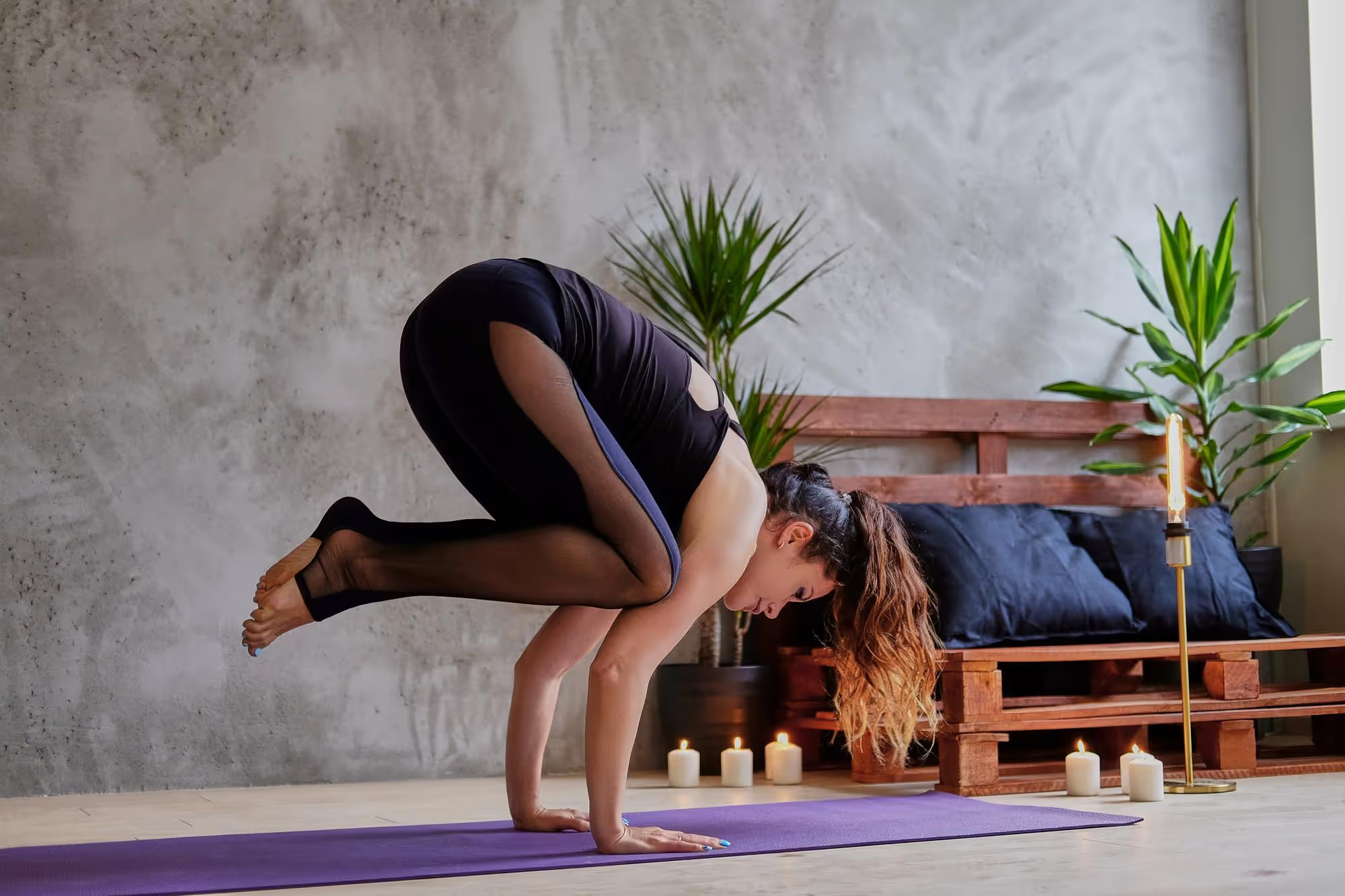
Arm balances—positions where hands support body weight with feet lifted from the floor—represent yoga's most dramatic strength expressions, demonstrating upper body and core capacity through positions that seem to defy gravitational logic. Yet these impressive postures develop through progressive practice rather than requiring prerequisite strength that only gym training provides. The pathway to arm balances builds exactly the capacities these positions require, creating shoulder stability, wrist conditioning, and core integration through preparatory work that constitutes legitimate strength training in its own right.
The mechanics of arm balance involve weight distribution rather than pure lifting power. Crow pose (Bakasana), typically the first arm balance practitioners achieve, requires you to shift your center of gravity forward over your hands until feet naturally lift—less a feat of pressing strength than a puzzle of positional arrangement that allows relatively modest arm strength to support entire body weight. Understanding this leverage principle removes the mystique from arm balances while revealing the core stability and body awareness that actual success requires.
Scapular stability—the capacity to maintain proper shoulder blade position against load—develops progressively through yoga practice and proves essential for arm balance safety and success. The serratus anterior muscle, which keeps shoulder blades flat against the ribcage during pushing movements, often remains underdeveloped in people who do not practice pushing patterns regularly. Plank holds, chaturanga transitions, and downward dog all strengthen this crucial stabilizer, building the foundation that arm balances eventually require while providing legitimate upper body conditioning regardless of whether you ever attempt advanced postures.
Wrist conditioning deserves particular attention for anyone pursuing arm balance practice, especially those practicing yoga at home without teacher guidance to correct problematic mechanics. The wrists bear loads during arm balances that they rarely experience in daily life, and inadequate preparation can create strain or injury. Graduated loading through push-up variations, wrist circles, and extended table-top holds builds the connective tissue resilience that allows safe progression toward more demanding positions.
The chaturanga transition—lowering from plank to a low push-up position with elbows tucked close to the ribs—represents yoga's most demanding regular upper body challenge and serves as the primary shoulder and arm strengthener in most flow practices. When performed correctly, with shoulders remaining above or slightly forward of the elbows and with body maintaining plank alignment throughout the descent, chaturanga builds the pushing strength and shoulder stability that arm balances require. When performed sloppily, with shoulders dropping below elbows and with core disengaged, chaturanga creates shoulder strain without corresponding benefit. Learning proper chaturanga form—ideally with qualified instruction—establishes the upper body foundation for both immediate strength development and eventual arm balance achievement.
Side crow, flying pigeon, and other intermediate arm balances add rotational and asymmetrical challenges that develop strength through patterns that standard pushing exercises cannot replicate. These postures require not just arm and shoulder strength but the core integration and body awareness to maintain complex positions against gravity's pull. The strength developed through arm balance practice transfers to activities requiring upper body stability and control—from rock climbing to carrying awkward loads to simply pushing yourself up from the floor with confidence and ease.
| Pose/Category | Primary Muscles Worked | Strength Benefits |
| Plank variations | Core (transverse abdominis, obliques, rectus abdominis), shoulders | Trunk stability, spinal protection, anti-rotation strength |
| Warrior I & II | Quadriceps, hip flexors, glutes, shoulders | Lower body endurance, hip stability, sustained postural strength |
| Warrior III | Standing leg stabilizers, glutes, hamstrings, core | Single-leg balance, full-body integration, proprioceptive development |
| Chair pose (Utkatasana) | Quadriceps, hip flexors, spinal erectors | Isometric leg endurance, functional squat strength |
| Chaturanga | Chest, triceps, anterior shoulders, serratus anterior | Pushing strength, shoulder stability, upper body control |
| Arm balances (Crow, Side Crow) | Shoulders, wrists, deep core, hip flexors | Upper body strength, core integration, body awareness |
Protecting Joints Through Intelligent Loading
Strength training's injury risks often emerge from excessive load on joints that lack adequate stability or mobility to handle the demands imposed upon them. Heavy squats stress knees; overhead presses challenge shoulder integrity; deadlifts load spinal structures. Yoga's bodyweight-based approach reduces absolute loads while developing the stability, mobility, and body awareness that protect joints when they do encounter significant forces—whether during other training or simply through the accumulated demands of active living.
The stabilizer muscles surrounding joints—small muscles that control joint position rather than producing powerful movement—receive particular development through yoga practice because postures require holding positions rather than just moving through them. Your rotator cuff muscles, which stabilize the shoulder joint, must work continuously during downward dog or plank rather than just during the lifting phase of a shoulder press. Your hip stabilizers maintain pelvic position through standing balances rather than just activating during the pushing phase of leg exercises. This continuous demand creates proportional development of stabilizers relative to prime movers, reducing the imbalances that contribute to joint dysfunction and injury.
The Cleveland Clinic explains how joint stability depends on coordinated function among muscles, ligaments, tendons, and the nervous system controlling them—a system that yoga develops comprehensively rather than targeting components in isolation. Connective tissue resilience, often neglected in training programs focused on muscular strength, develops through the sustained loading and multi-angle stresses that yoga postures provide, creating tissues better prepared for the varied demands that life and activity impose.
Postural awareness transfers from yoga practice into daily life, helping you maintain joint-healthy positions during sitting, standing, and movement rather than collapsing into patterns that accumulate strain over time. The person who has spent thousands of hours attending to spinal alignment during practice naturally maintains better alignment while working at a desk or driving a car, reducing the cumulative loads that contribute to degenerative changes in joints and discs.
— Jackson Wright
The mobility component of yoga practice contributes to joint protection by ensuring that joints can access their full intended range of motion. When joints lose mobility through disuse or injury, compensatory patterns develop that place abnormal stresses on adjacent structures. A hip that cannot fully extend forces the lumbar spine to hyperextend during walking; a thoracic spine that cannot rotate forces the shoulder to compensate during throwing or reaching. Yoga's emphasis on full-range movement prevents and addresses these mobility restrictions, allowing joints to function as designed rather than forcing compensatory patterns that accumulate damage over time.
The gradual loading progression inherent in yoga practice allows connective tissues to adapt alongside muscular development. Tendons and ligaments adapt more slowly than muscles to training stimulus, which creates injury risk when rapid strength gains enable loading that connective tissues cannot yet handle. The patient progression of yoga practice—advancing gradually over months and years rather than pushing maximally each session—allows connective tissue adaptation to keep pace with muscular development, creating integrated physical capacity rather than muscular strength that exceeds the structural integrity supporting it.
Building Your Strength Practice at Home
The accessibility of yoga for strength development means that effective training requires no gym membership, specialized equipment, or even significant space—just enough room to extend your limbs in all directions and a surface that provides stable footing. This accessibility removes common barriers to consistent training while allowing practice integration into daily life rather than requiring dedicated travel to training facilities.
Effective home practice for strength development involves several considerations:
- Session length matters less than consistency. Twenty minutes practiced five days weekly produces better results than hour-long sessions practiced sporadically when motivation and schedule align.
- Pose sequencing should progress from simpler to more demanding positions, allowing adequate warm-up before challenging holds and ensuring that fatigue does not compromise form during technical postures.
- Rest intervals between demanding holds allow partial recovery while maintaining the elevated physiological state that makes subsequent efforts productive.
- Frequency of practice determines adaptation rate. Strength development requires regular stimulus—ideally every other day minimum—with recovery periods between sessions working the same muscle groups intensively.
The National Institutes of Health notes that home-based exercise programs show comparable effectiveness to supervised training when practitioners maintain consistency and appropriate intensity—both achievable through yoga practice once you have learned proper form for key postures. Initial instruction from qualified teachers, whether in person or through reputable video instruction, establishes the technical foundation that safe home practice requires, after which independent practice becomes both effective and sustainable.
Progressive overload—the training principle that adaptation requires gradually increasing demands—occurs in yoga through several mechanisms: extending hold durations, deepening postures within safe ranges, reducing rest between demanding positions, and advancing to more challenging pose variations. A practice that felt exhausting initially becomes manageable after weeks of consistent effort, signaling readiness to increase demands through these progression variables rather than through adding external weight.
Creating a dedicated practice space at home, even if modest, supports consistency by reducing the friction between intention and action. A corner where your mat can remain unrolled, props within arm's reach, and visual cues that remind you of your commitment—these environmental supports make practice more likely to occur than situations requiring setup and cleanup for each session. The convenience of yoga at home extends beyond time savings to include the psychological accessibility that comes from practice being immediately available rather than requiring travel and preparation.
Tracking your practice through a simple journal or app helps maintain consistency and allows you to notice progress that might otherwise escape attention. Recording what poses you practiced, how long you held them, and how they felt creates data that reveals patterns—perhaps you skip practice when stressed, or certain poses consistently improve while others plateau. This awareness enables adjustment that optimizes your training rather than blindly repeating whatever you did before.
Yoga and Traditional Strength Training: Complementary Approaches
Positioning yoga as alternative to gym-based strength training creates a false dichotomy that serves neither approach well. The two methodologies develop different capacities through different mechanisms, and combining them produces more comprehensive physical development than either achieves alone. Understanding their respective contributions helps you design training that serves your specific goals rather than defaulting to one approach through unfamiliarity with what the other offers.
Traditional resistance training excels at developing maximum strength—the capacity to generate force against significant external loads—and at targeted hypertrophy when increased muscle size serves your goals. If you need to lift heavy objects regularly, build visible muscle for aesthetic purposes, or develop sport-specific power for activities involving high force production, conventional strength training offers efficiencies that yoga cannot match.
Yoga workouts excel at developing integrated strength that transfers across movement contexts, mobility that allows full joint range of motion, body awareness that enables efficient and safe movement, and nervous system regulation that supports recovery and stress management. These capacities complement traditional strength training by improving the quality of movement you bring to weight training, reducing injury risk, and accelerating recovery between sessions.
Many serious athletes and fitness practitioners combine approaches: strength training for maximum force development and yoga for mobility, stability, and recovery. This combination addresses a wider range of physical capacities than either approach alone while allowing intensity management that prevents overtraining. Hard strength sessions followed by recovery-oriented yoga practices create training rhythm that builds capacity without accumulating fatigue that eventually forces extended rest.
The sustainability comparison favors yoga for many practitioners. The injury rates associated with heavy resistance training, while manageable with proper technique and programming, exceed those of yoga practice, and the accumulated wear from decades of heavy loading creates joint concerns that bodyweight practice largely avoids. For those prioritizing long-term physical capacity over maximum strength achievement, yoga offers a pathway that maintains training viability into advanced age when heavy lifting becomes increasingly risky.
— Jackson Wright
The nervous system effects differ substantially between approaches. Heavy strength training creates sympathetic nervous system activation—the fight-or-flight response—that persists beyond the training session and accumulates with frequent high-intensity work. Yoga practice, particularly when including breathwork and relaxation components, activates parasympathetic response that supports recovery and counteracts the chronic stress that modern life imposes. This nervous system regulation represents a dimension of wellness that conventional strength training does not address and may actively undermine when practiced excessively without adequate recovery.
The accessibility comparison favors yoga for those without gym access or equipment budget. Effective strength training using weights requires either gym membership or substantial home equipment investment, creating barriers that prevent many people from engaging consistently. Yoga requires only floor space and body weight, making effective practice available to anyone regardless of economic circumstances or geographic location. This accessibility democratizes strength development in ways that equipment-dependent training cannot match.
Avoiding Common Mistakes in Strength-Focused Practice
The effectiveness and safety of yoga for strength development depends on technical execution that beginners often compromise through unfamiliarity with proper alignment, rushing through transitions, or pushing intensity beyond current capacity. Recognizing common errors helps you avoid them while building the technical foundation that allows progressive challenge without accumulating strain or injury.
Rushing transitions between postures eliminates the eccentric loading that provides significant strength stimulus while increasing injury risk by moving joints through range without muscular control. The slow, controlled descent from standing to forward fold develops hamstring and spinal erector strength through eccentric loading; collapsing quickly through the same motion provides no training stimulus and risks muscle strain. Treating transitions as opportunities for strength development rather than as brief intervals between "real" poses transforms your entire practice into comprehensive conditioning.
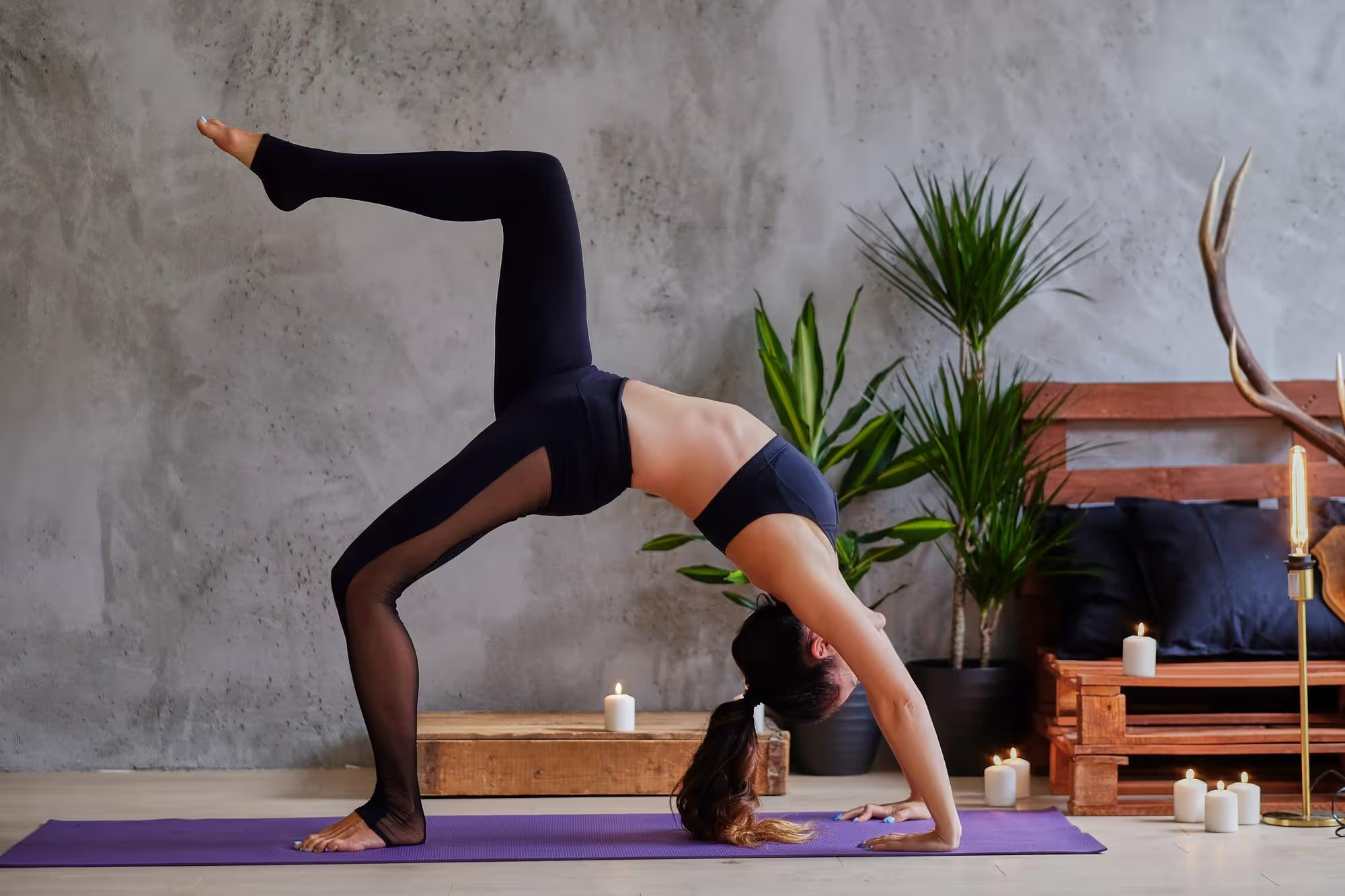
Poor alignment reduces effectiveness while increasing injury risk. Knees that collapse inward during standing poses stress ligament structures while indicating hip weakness that proper alignment would help correct. Shoulders that creep toward ears during arm work create neck tension while indicating poor scapular control. Lumbar spines that hyperextend during backbends compress discs while indicating inadequate core engagement. Learning correct alignment for your body—which may differ from textbook positioning due to individual anatomical variation—establishes the foundation for effective practice.
Breath holding during challenging positions increases blood pressure, reduces oxygen delivery to working muscles, and creates unnecessary tension throughout the body. The temptation to hold breath emerges most strongly when effort intensifies, making this exactly the moment when maintaining smooth breath flow matters most. If you cannot breathe steadily during a posture, you are likely working beyond current capacity and should reduce intensity until breath flow returns to normal.
Overloading joints before adequate preparation creates strain and injury that interrupts practice and potentially causes lasting damage. Wrists that have never supported body weight require graduated exposure before arm balances become safe. Shoulders that lack stability should develop through supported positions before attempting demanding holds. Patience with progressive preparation prevents the setbacks that overeager practitioners regularly experience.
Comparing yourself to other practitioners or to idealized images creates psychological pressure that leads to overreaching and injury. Every body arrives at practice with different history, proportions, and capacity, meaning that the same pose looks different in different bodies while providing equivalent benefit. Working at your own appropriate level—regardless of what others in the room are doing—ensures that your practice builds rather than damages your physical capacity.
Neglecting recovery between demanding sessions undermines adaptation and increases injury risk. Muscles rebuild and strengthen during rest, not during training itself, meaning that insufficient recovery prevents the very adaptations you seek. If you practice strength-focused yoga daily, vary the intensity and focus so that the same muscles are not loaded maximally in consecutive sessions. Allow at least forty-eight hours between sessions targeting the same muscle groups with high intensity.
Author: Jackson Wright;
Source: yogapennsylvania.com
Integrating Strength-Based Yoga Into a Wellness Lifestyle
Physical strength exists not as isolated quality but as one element within the integrated system of capacities that comprehensive wellness requires. Strength without mobility creates stiffness that restricts movement and accumulates strain. Strength without recovery creates fatigue that undermines performance and quality of life. Strength without body awareness creates patterns that serve training metrics while neglecting functional capacity. The yoga approach to strength development naturally integrates these complementary qualities rather than pursuing strength in isolation from the context that makes it meaningful.
Recovery and rest deserve equal emphasis to training effort within any strength development program. Muscles adapt during rest periods following training stimulus, not during the training itself, meaning that inadequate recovery undermines the very adaptations you seek. Yoga practices that emphasize restoration—gentle movement, extended holds in supported positions, conscious relaxation techniques—support recovery processes while maintaining connection to practice rather than treating rest days as complete cessation of physical attention.
Mental focus developed through yoga practice extends beyond the mat to support strength development in any context. The capacity to maintain attention during sustained challenge, to notice and release unnecessary tension, to observe sensation without panic—these mental skills transfer to all training environments and life circumstances where physical demands require psychological resilience. This mental dimension of strength often determines performance outcomes more than physical capacity alone, particularly during extended efforts or when fatigue accumulates.
Harvard Health Publishing discusses how comprehensive approaches to physical fitness—incorporating strength, flexibility, balance, and cardiovascular capacity—produce better health outcomes than narrow focus on any single fitness component. Yoga workouts naturally integrate these qualities within single practices, building strength while simultaneously developing the flexibility, balance, and body awareness that complete physical fitness requires. This integration efficiency makes yoga particularly valuable for practitioners with limited training time who cannot afford to dedicate separate sessions to different fitness components.
Nutrition supports strength development by providing the protein necessary for muscle repair and the overall energy that training demands. While yoga practitioners need not consume the extreme protein quantities that bodybuilders target, adequate protein intake—generally 0.7 to 1 gram per pound of body weight daily for those engaged in regular strength training—ensures that training stimulus translates into actual adaptation. Whole food sources of protein, consumed throughout the day rather than concentrated in single meals, optimize availability for the continuous repair processes that strength development requires.
Sleep represents perhaps the most undervalued component of strength development, with research consistently demonstrating that inadequate sleep impairs muscle recovery, reduces training performance, and increases injury risk. The relaxation practices embedded in yoga tradition—including the savasana that typically concludes sessions—support sleep quality by activating parasympathetic nervous system response and training the capacity to release tension consciously. This sleep support represents an indirect contribution to strength development that purely physical training approaches often neglect.
Stress management affects strength development through hormonal pathways that either support or undermine muscular adaptation. Chronic stress elevates cortisol levels that break down muscle tissue and impair recovery, creating physiological headwinds that training must overcome. The stress-reducing effects of yoga practice—documented in numerous studies—create hormonal environments that favor muscular adaptation, making the same training stimulus more effective than it would be in chronically stressed states. This stress management represents a systemic support for strength development that extends beyond the direct muscular effects of the poses themselves.
The Long Path of Sustainable Strength
Building strength through yoga follows a timeline measured in months and years rather than days and weeks. The adaptations that create lasting capacity—strengthened connective tissues, refined neuromuscular patterns, improved joint stability—occur gradually through consistent practice rather than rapidly through intense effort. This timeline may disappoint those seeking quick transformation but ultimately produces more durable results than aggressive programs that create initial gains but cannot be sustained.
The sustainability of yoga practice contributes to long-term strength development by enabling consistent training across years and decades rather than cycles of intense effort followed by injury, burnout, or loss of interest. A practice you genuinely enjoy and can maintain indefinitely accumulates more total training stimulus than approaches you abandon after months of reluctant compliance. Finding yoga workouts that feel rewarding rather than punishing supports the long-term consistency that strength development actually requires.
Progress measurement in strength-focused yoga differs from the quantified tracking that gym training enables. You cannot simply add weight to measure improvement; instead, you notice increased ease in previously challenging positions, extended capacity in timed holds, accessibility of postures that previously felt impossible, and reduced fatigue during practices that once exhausted you. These qualitative markers provide meaningful feedback about adaptation even without numerical metrics that would allow precise tracking.
— Jackson Wright
The practice itself transforms as strength develops. Postures that initially required maximum effort become comfortable enough to allow attention toward refinement rather than mere survival. Sequences that once demanded rest between poses become flowing continuous practices. Options that seemed impossibly advanced—arm balances, deep backbends, extended one-legged stands—gradually become accessible as the strength, stability, and body awareness they require accumulate through consistent practice.
Age-related strength decline, while inevitable, proceeds more slowly in those who maintain consistent training throughout life. The preservation of muscle mass, joint mobility, and neuromuscular function that yoga practice supports creates physical capacity that enables active engagement with life into advanced age. The practitioners who continue moving well in their seventies, eighties, and beyond have typically maintained consistent practice for decades, building reserves of strength and capability that age depletes more slowly than it depletes untrained bodies.
Beginning Where You Are
The strength-building potential of yoga remains available regardless of your current fitness level, age, or training history. Postures can be modified to match present capacity while still providing sufficient challenge to trigger adaptation. Practice duration can begin brief and extend as conditioning improves. Intensity can remain gentle during initial weeks while you learn proper alignment and build foundational strength that allows safe progression to more demanding work.
The only prerequisite is willingness to begin and consistency to continue. Yoga at home requires no equipment beyond a surface that prevents slipping—even a carpet or lawn serves adequately. The time requirement can be as brief as fifteen minutes daily during initial phases, expanding as practice becomes established and the benefits become apparent enough to motivate extended investment.
The strength you build will not announce itself through visual transformation that impresses casual observers. Instead, it will reveal itself through enhanced capacity to move through daily life—climbing stairs without fatigue, carrying groceries without strain, playing with children or grandchildren without pain, maintaining upright posture through long workdays, and moving through space with the confident ease that physical capability provides. This functional strength serves life rather than serving mirrors, creating wellness that operates continuously rather than demonstrating itself only during designated exhibition.
The adaptations you seek have already begun in the bodies of countless practitioners who started exactly where you are—uncertain, perhaps skeptical, possibly doubtful that yoga could provide the strength development that seemed to require heavy weights and grinding effort. They discovered what research confirms and experience teaches: that bodyweight resistance, applied consistently through intelligently designed postures, creates strength that serves life comprehensively and sustainably.
The practice awaits your beginning. The mat unrolls. The breath begins. The strength develops—gradually, sustainably, comprehensively—creating physical capacity that serves your life for years to come rather than peaking briefly and fading. This is yoga for strength: patient, intelligent, integrated, and ultimately transformative in ways that extend far beyond the muscles it develops. The path opens before you, accessible and waiting, requiring only that you step onto it and begin.
FAQ
Related Stories
Read more
Read more

The content on yogapennsylvania.com is provided for general informational and inspirational purposes only. It is intended to share yoga tips, meditation practices, wellness guidance, retreat experiences, and lifestyle insights, and should not be considered medical, therapeutic, fitness, or professional health advice.
All information, articles, images, and wellness-related materials presented on this website are for general informational purposes only. Individual health conditions, physical abilities, wellness goals, and experiences may vary, and results can differ from person to person.
Yogapennsylvania.com makes no representations or warranties regarding the accuracy, completeness, or reliability of the content provided and is not responsible for any errors or omissions, or for decisions or actions taken based on the information presented on this website. Readers are encouraged to consult qualified healthcare or wellness professionals before beginning any new yoga, meditation, or fitness practice.