
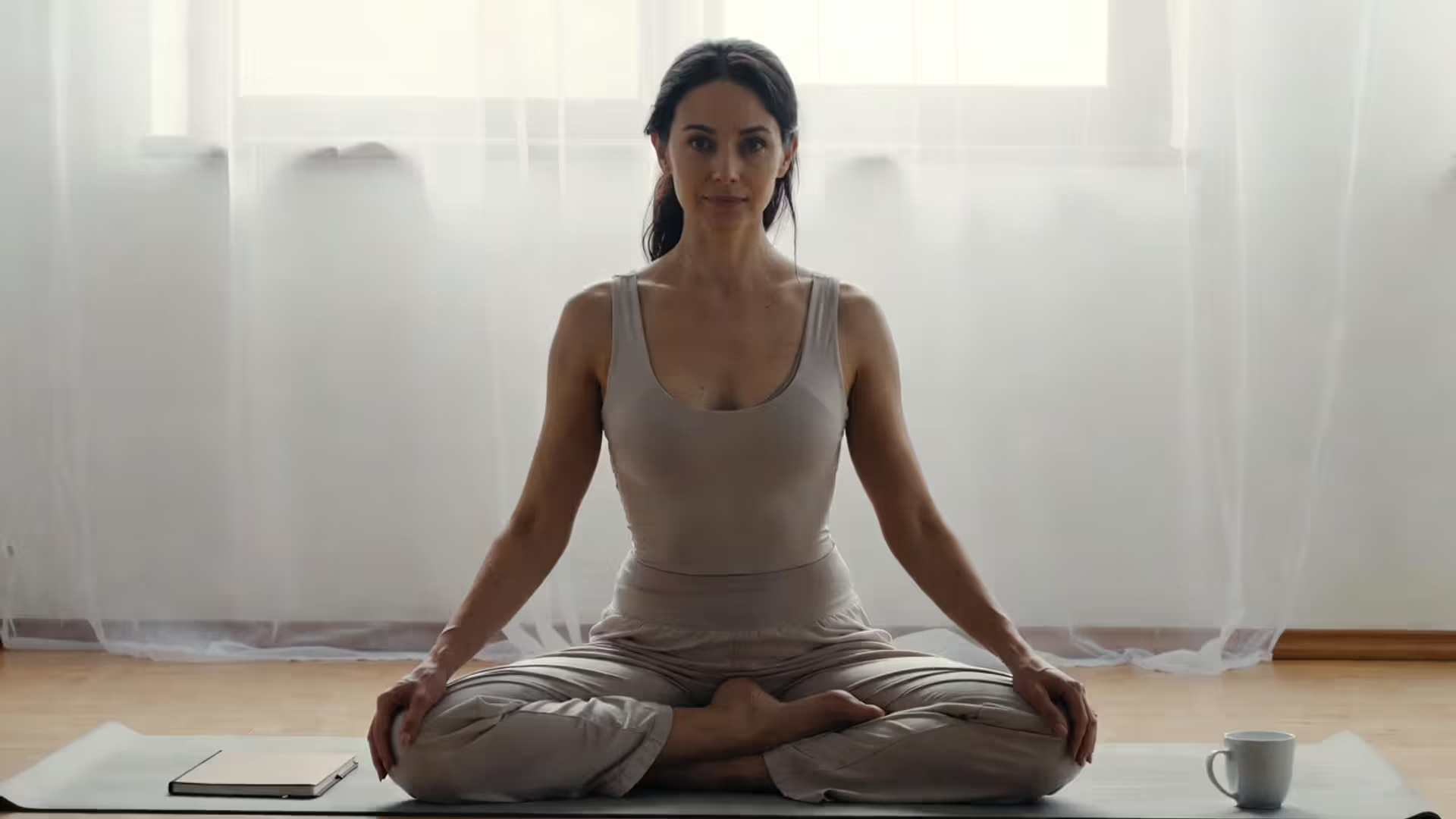
Beyond the mat — how practice transforms daily life
How Yoga Changes Your Lifestyle Over Time

People come to yoga for different reasons. Some want flexibility. Others seek stress relief. Many just need to move their bodies. Almost none expect what actually happens.
Within weeks or months of consistent practice, something shifts. The changes begin on the mat — increased flexibility, better balance, growing strength. But they don't stay there. Practitioners report sleeping better, eating differently, responding to stress with more composure. Relationships improve. Anxiety loosens. A pervasive sense of wellbeing emerges that has little to do with touching your toes. This is what happens when you practice yoga daily — transformation that extends far beyond fitness.
This isn't mystical thinking or placebo effect. Neuroscience now explains mechanisms that yogis intuited millennia ago. Yoga literally changes your brain structure, your nervous system function, your hormonal balance, and your gene expression. These biological changes cascade into psychological shifts, which ripple into behavioral changes, which transform how you live. The physical, mental, and emotional benefits of yoga work together as an integrated system.
The scope of yoga's effects surprises researchers. A practice originally designed for spiritual liberation turns out to be one of the most comprehensive interventions for yoga for mental health and physical wellness ever developed. It addresses chronic pain, anxiety, depression, insomnia, cardiovascular disease, inflammation, and trauma — through a single integrated practice. No pharmaceutical achieves this breadth.
But statistics and studies miss the lived experience. Ask someone who has practiced consistently for years what yoga has done for them, and you'll hear stories of transformation that transcend fitness metrics. They'll describe becoming different people — calmer, more present, more themselves. They'll struggle to separate the physical benefits from the mental, the mental from the emotional, because in practice these aren't separate.
This article explores how yoga changes your life across three interconnected domains: physical, mental, and emotional. The science supports remarkable claims. The experience confirms them.
Physical Transformation: The Body Awakens
Beyond Flexibility: What Really Changes
The yoga benefits for physical health extend far beyond the flexibility that first attracts most practitioners. While increased range of motion is real and valuable, it's actually among the less important physical adaptations yoga produces. Understanding the full scope of yoga benefits for flexibility and strength reveals why this practice transforms bodies so completely.
Strength development. Yoga builds functional strength through sustained isometric contractions and eccentric loading. Holding Warrior II for two minutes demands leg strength comparable to weighted lunges. Chaturanga develops pushing strength. Arm balances require significant upper body power. This isn't the maximum strength of powerlifting, but it's genuine, functional capacity to move and control your body — contributing to lasting yoga for energy and vitality.
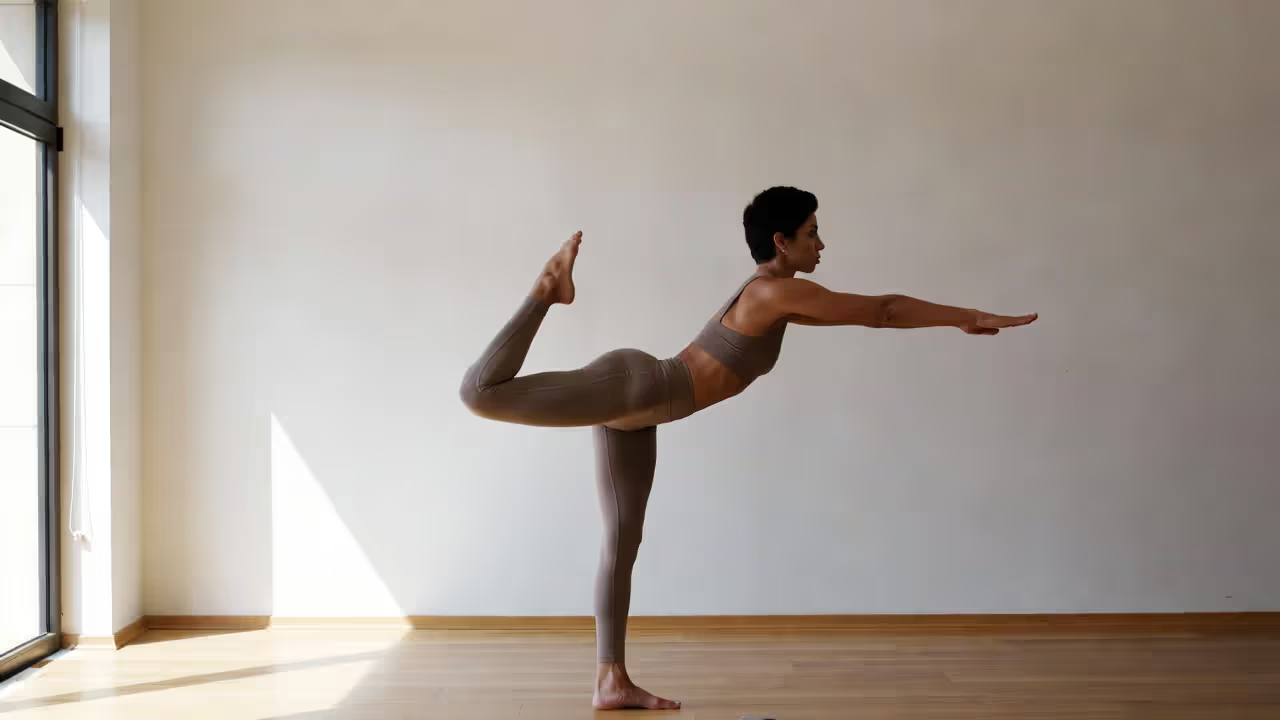
Balance and proprioception. Standing poses, single-leg balances, and inversions dramatically improve proprioception— your body's sense of its position in space. This awareness reduces fall risk (critical as we age), improves athletic performance, and creates more efficient movement patterns in daily life. Research shows yoga improves balance more effectively than most conventional exercise programs.
Author: Ava Mitchell;
Source: yogapennsylvania.com
Posture correction. Modern life creates predictable postural distortions: forward head position from screens, rounded shoulders from sitting, tight hip flexors from chairs. Yoga for posture and back pain systematically addresses these patterns through poses that open the chest, strengthen the back, and lengthen the hip flexors. Better posture isn't just aesthetic — it reduces pain, improves breathing, and affects mood (research shows upright posture improves emotional states).
Pain reduction. Chronic back pain, the leading cause of disability worldwide, responds remarkably well to yoga. Multiple studies show yoga outperforms conventional exercise and matches physical therapy for back pain relief. The mechanisms include strengthening supporting muscles, improving flexibility, reducing inflammation, and changing pain processing in the brain. Similar effects extend to neck pain, headaches, arthritis, and fibromyalgia.
Cardiovascular health. While not aerobically intensive, yoga meaningfully improves cardiovascular function. Regular practice reduces blood pressure, improves heart rate variability (a key marker of cardiac health), lowers resting heart rate, and reduces inflammatory markers associated with heart disease. A meta-analysis found yoga comparable to conventional exercise for cardiovascular risk reduction.
The Nervous System Reset
Perhaps yoga's most significant physical effect operates through the autonomic nervous system — the unconscious system regulating heart rate, digestion, respiratory rate, and stress response. This is why yoga for chronic stress relief works at such a fundamental level.
Understanding the autonomic balance. Your nervous system has two branches: sympathetic (fight-or-flight) and parasympathetic (rest-and-digest). Modern life chronically activates the sympathetic branch — constant deadlines, digital notifications, financial worries, relationship stress. This chronic activation keeps cortisol elevated, inflammation high, and recovery impaired.
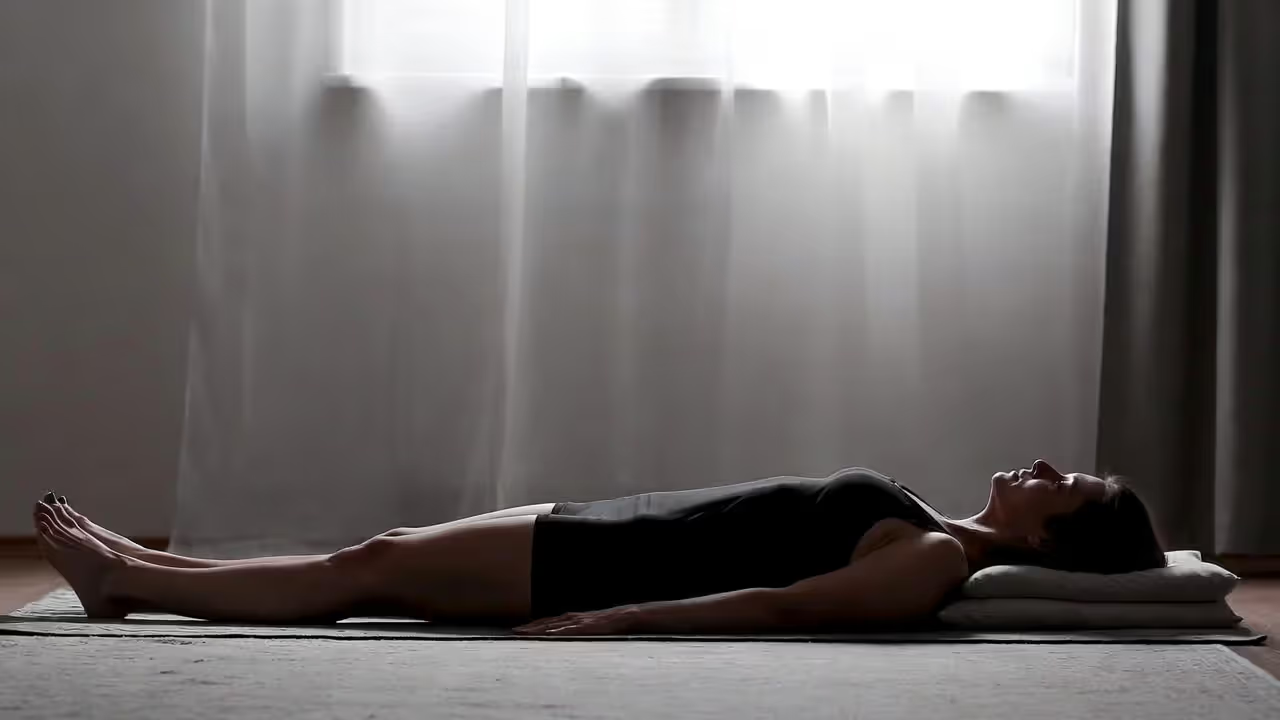
Yoga's parasympathetic activation. Unlike most exercise (which activates the sympathetic system), yoga specifically activates the parasympathetic branch. Slow breathing, extended exhales, and sustained relaxation poses directly stimulate the vagus nerve, the primary parasympathetic pathway. This isn't relaxation as absence of activity — it's active training of the nervous system's calming response.
Author: Ava Mitchell;
Source: yogapennsylvania.com
Measurable vagal tone improvement. Heart rate variability (HRV) — the variation in time between heartbeats — measures vagal tone and parasympathetic function. Higher HRV indicates better stress resilience, emotional regulation, and overall health. Studies consistently show yoga increases HRV, indicating genuine nervous system retraining rather than temporary relaxation.
The downstream effects. Improved parasympathetic function cascades through virtually every body system:
- Sleep deepens (the body must shift to parasympathetic dominance to sleep well)
- Inflammation decreases (chronic sympathetic activation promotes inflammation)
- Immune function strengthens (immune response requires parasympathetic balance)
- Hormonal balance improves (chronic stress disrupts thyroid, sex hormones, and more)
We used to think of yoga as stretching with breathing. Now we understand it as one of the most powerful interventions for autonomic nervous system regulation ever developed. The physical poses are delivery mechanisms for neurological training that affects every system in the body.
— Dr. Stephen Porges, Professor of Psychiatry, Creator of Polyvagal Theory, University of North Carolina
Physical Benefits Timeline: Long Term Benefits of Practicing Yoga
What practitioners typically experience over time reveals the long term benefits of practicing yoga:
Weeks 1-4: Increased body awareness, reduced muscle tension after practice, improved sleep on practice days, initial flexibility gains.
Months 1-3: Noticeable flexibility improvement, reduced chronic pain, better posture awareness, increased energy, more consistent sleep improvement.
Months 3-6: Significant strength gains, major flexibility changes, pain often substantially reduced or eliminated, exercise feels different (more intuitive, less forced).
Months 6-12: Body composition changes visible, movement quality transformed, physical confidence increased, practice becomes natural rather than effortful.
Years 1+: Physical benefits stabilize at high level, maintenance becomes easier, body feels fundamentally different than before yoga, age-related decline slowed. These long-term benefits of practicing yoga explain why dedicated practitioners rarely abandon their practice.
Mental Transformation: The Mind Clarifies
Attention and Focus
The mental benefits of yoga begin with attention. Every pose requires focus — awareness of alignment, breath, sensation. This continuous attention training transfers to life off the mat, creating the foundation for yoga for mental clarity and yoga for mindfulness and focus.
Concentration improvement. Studies using cognitive tests show yoga practitioners demonstrate better sustained attention, faster processing speed, and improved working memory compared to controls. These gains appear even in short-term studies, suggesting rapid neuroplasticity. Yoga and mindfulness programs leverage this effect systematically.
Present-moment awareness. Yoga's emphasis on bodily sensation anchors attention in the present moment. The wandering mind — ruminating on past, worrying about future — returns repeatedly to breath and body. This present-focus, practiced thousands of times, becomes the default mode rather than the exception.
Reduced mental chatter. The characteristic mental noise — constant commentary, evaluation, planning — gradually quiets with practice. Not through suppression, but through developing the capacity to observe thoughts without engagement. The mind becomes less cluttered, creating space for clarity.
Decision-making quality. With reduced mental noise and improved present-moment awareness, decision-making shifts. Choices become more considered, less reactive. The pause between stimulus and response lengthens. Practitioners report fewer impulsive decisions they later regret.
Neuroplasticity: The Brain Changes
Brain imaging studies reveal structural changes in regular yoga practitioners — scientific evidence for how yoga benefits for mind and body create lasting transformation:
Gray matter increases. Areas associated with body awareness (somatosensory cortex), self-awareness (insular cortex), and stress regulation (prefrontal cortex) show increased gray matter density in experienced practitioners.
Amygdala changes. The amygdala — the brain's fear and threat detection center — shows reduced reactivity in yoga practitioners. This correlates with decreased anxiety and improved emotional regulation, explaining why yoga for stress and anxiety produces such reliable results.
Hippocampus protection. The hippocampus, critical for memory and learning, typically shrinks with chronic stress and aging. Yoga appears to protect hippocampal volume, potentially explaining yoga's cognitive benefits.
Default mode network quieting. The brain's default mode network — active during mind-wandering and self-referential thinking — shows reduced activity in meditators and yoga practitioners. This correlates with reduced rumination and increased present-moment awareness.
Stress Response Transformation
Yoga for stress and anxiety fundamentally changes how you respond to stress:
Cortisol reduction. Chronic stress elevates cortisol, which damages nearly every body system when sustained. Studies consistently show yoga reduces cortisol levels — not just during practice, but at baseline. The stress hormone set-point lowers.
Stress perception shifts. Remarkably, yoga changes not just physiological stress response but the perception of events as stressful. Situations that previously triggered anxiety become manageable. The threshold for stress activation rises.
Recovery acceleration. When stress does occur, practitioners recover faster. The spike in cortisol and sympathetic activation resolves more quickly. Resilience — the capacity to weather difficulty and return to baseline — increases.
Anticipatory stress reduction. Much human stress is anticipatory — worrying about future events that may never occur. Yoga's present-moment focus reduces this anticipatory suffering, often the largest component of total stress experience.
Sleep Transformation
Sleep improvement is among yoga's most consistent and valued benefits:
Sleep onset. The relaxation response trained through yoga helps the body and mind transition into sleep more easily. Racing thoughts that prevent sleep quiet more readily.
Sleep quality. Deep sleep stages increase with regular yoga practice. Sleep becomes more restorative even when duration remains constant.
Sleep continuity. Nighttime wakings decrease. The nervous system, trained to maintain parasympathetic activation, sustains sleep states more effectively.
Insomnia treatment. Clinical trials show yoga effectively treats insomnia, with benefits comparable to or exceeding sleep medications — without side effects or dependency.
Emotional Transformation: The Heart Opens
Emotional Awareness Develops
The emotional benefits of yoga begin with something unexpected: most people start practice disconnected from their emotional lives. Years of suppression, distraction, and cognitive override have created separation from feeling states. Modern life encourages this disconnection — emotions interfere with productivity, complicate relationships, and create discomfort we'd rather avoid. So we learn to not-feel, to push through, to stay in our heads and out of our bodies.
Yoga reverses this disconnection, not through therapy or self-help techniques, but through the simple act of paying attention to physical sensation. This is why yoga for anxiety and depression works differently than cognitive approaches alone.
Interoception improvement. Interoception — awareness of internal body sensations — is closely linked to emotional awareness. This isn't metaphor: emotions manifest physically before we consciously recognize them. Anxiety tightens the chest and shoulders. Grief heavies the limbs. Joy lightens the body. Fear contracts the belly. These physical manifestations occur whether or not we're aware of them.
Yoga's continuous attention to sensation develops the capacity to notice these physical manifestations of emotion. The chest tightness that once registered only as "stress" becomes recognizable as anxiety. The heaviness that seemed like fatigue reveals itself as sadness. This body-based awareness provides information cognitive monitoring misses.
Feeling without drowning. As emotional awareness increases, so does the capacity to experience emotions without being overwhelmed by them. This is crucial — many people avoid emotional awareness precisely because they fear being overwhelmed. Yoga develops the container that makes emotional experience safe.
The witnessed emotion loses some of its charge. There's a difference between being angry and being aware of anger arising in the body. Both involve anger, but the second includes space around the anger — room for choice about response. Practitioners report feeling more, but suffering less from their feelings. The emotions are more present, more fully experienced, yet less destabilizing.
Emotional vocabulary expands. Greater awareness enables greater differentiation. Instead of generic "bad" or "stressed," practitioners identify specific emotions: disappointment, frustration, anxiety, grief, loneliness, overwhelm. This specificity matters tremendously. Generic "stress" offers no guidance for response. But disappointment suggests unmet expectations to examine. Loneliness suggests connection needs. Overwhelm suggests boundaries needed. Differentiation enables appropriate response.
Reduced emotional suppression. The habitual pushing-away of uncomfortable emotions gradually relaxes. Emotions can be felt, processed, and released rather than stored. This reduces the cumulative burden of unfelt feeling that many people carry — decades of grief not processed, anger not expressed, fear not acknowledged. Yoga creates conditions for this backlog to gradually clear.
Trauma and stored emotion. The body stores not just recent emotional experience but unprocessed material from years and decades past. Muscle tension patterns often correspond to emotional holding. The tight jaw holding back words never spoken. The locked hips holding grief. The armored chest protecting against heartbreak. As yoga releases physical holding, the associated emotional content surfaces. This can be challenging but is ultimately healing — completing cycles that were interrupted.
Emotional Regulation: Yoga for Emotional Balance
Beyond awareness, yoga develops the capacity to work skillfully with emotions — true yoga for emotional balance:
Reactivity decreases. The gap between emotional trigger and behavioral response widens. There's time to choose response rather than react automatically. This is the difference between snapping at a partner because irritation arose, and noticing irritation arising and choosing whether and how to express it. Patterns of reactive behavior — snapping at loved ones, making impulsive decisions from fear, numbing through substances or screens — become less compelling as the space between stimulus and response expands.

Author: Ava Mitchell;
Source: yogapennsylvania.com
Distress tolerance increases. Uncomfortable emotions become more tolerable. The urge to immediately escape discomfort diminishes. This tolerance is crucial for psychological growth, which requires staying present with difficulty rather than avoiding it. You cannot work through what you cannot tolerate being with. Yoga develops this tolerance organically — holding challenging poses despite discomfort trains capacity to stay present with unpleasant experience.
Self-soothing capacity. The ability to calm yourself when distressed develops through practice. The breath techniques, the body awareness, the parasympathetic activation — these become available tools for emotional regulation. Anxiety arising? You know how to activate calming response. Agitation building? You know how to ground through body awareness. This self-soothing capacity reduces dependence on external regulation (other people, substances, distraction).
Positive emotions increase. While much focus falls on reducing negative states, yoga also increases positive emotional experience. Studies show yoga practitioners report more frequent positive emotions: contentment, gratitude, joy, serenity, love, connection. These aren't forced through positive thinking — they emerge naturally as the nervous system rebalances and emotional capacity expands.
Emotional stability emerges. The emotional weather becomes less extreme. Fewer dramatic highs and lows; more sustained equanimity. This isn't flatness or numbness — emotions still arise fully — but they're held in a larger container of stability. The self that experiences emotion feels more solid, more capable of holding whatever arises. Life's inevitable difficulties become workable rather than catastrophic.
“Yoga works with emotion through the body in ways talk therapy alone cannot access. Trauma, grief, anxiety — these live in the nervous system, not just the mind. By changing physiology, by literally shifting the body's holding patterns, yoga releases emotional material that words can't reach.”
— People come to yoga for different reasons. Some want flexibility. Others seek stress relief. Many just need to move their bodies. Almost none expect what actually happens. Within weeks or months of consistent practice, something shifts. The changes begin on the mat — increased flexibility, better balance, growing strength. But they don't stay there. Practitioners report sleeping better, eating differently, responding to stress with more composure. Relationships improve. Anxiety loosens. A pervasive sense of wellbeing emerges that has little to do with touching your toes. This is what happens when you practice yoga daily — transformation that extends far beyond fitness. This isn't mystical thinking or placebo effect. Neuroscience now explains mechanisms that yogis intuited millennia ago. Yoga literally changes your brain structure, your nervous system function, your hormonal balance, and your gene expression. These biological changes cascade into psychological shifts, which ripple into behavioral changes, which transform how you live. The physical, mental, and emotional benefits of yoga work together as an integrated system. The scope of yoga's effects surprises researchers. A practice originally designed for spiritual liberation turns out to be one of the most comprehensive interventions for yoga for mental health and physical wellness ever developed. It addresses chronic pain, anxiety, depression, insomnia, cardiovascular disease, inflammation, and trauma — through a single integrated practice. No pharmaceutical achieves this breadth. But statistics and studies miss the lived experience. Ask someone who has practiced consistently for years what yoga has done for them, and you'll hear stories of transformation that transcend fitness metrics. They'll describe becoming different people — calmer, more present, more themselves. They'll struggle to separate the physical benefits from the mental, the mental from the emotional, because in practice these aren't separate. This article explores how yoga changes your life across three interconnected domains: physical, mental, and emotional. The science supports remarkable claims. The experience confirms them. Physical Transformation: The Body Awakens Beyond Flexibility: What Really Changes The yoga benefits for physical health extend far beyond the flexibility that first attracts most practitioners. While increased range of motion is real and valuable, it's actually among the less important physical adaptations yoga produces. Understanding the full scope of yoga benefits for flexibility and strength reveals why this practice transforms bodies so completely. Strength development. Yoga builds functional strength through sustained isometric contractions and eccentric loading. Holding Warrior II for two minutes demands leg strength comparable to weighted lunges. Chaturanga develops pushing strength. Arm balances require significant upper body power. This isn't the maximum strength of powerlifting, but it's genuine, functional capacity to move and control your body — contributing to lasting yoga for energy and vitality. Balance and proprioception. Standing poses, single-leg balances, and inversions dramatically improve proprioception— your body's sense of its position in space. This awareness reduces fall risk (critical as we age), improves athletic performance, and creates more efficient movement patterns in daily life. Research shows yoga improves balance more effectively than most conventional exercise programs. Posture correction. Modern life creates predictable postural distortions: forward head position from screens, rounded shoulders from sitting, tight hip flexors from chairs. Yoga for posture and back pain systematically addresses these patterns through poses that open the chest, strengthen the back, and lengthen the hip flexors. Better posture isn't just aesthetic — it reduces pain, improves breathing, and affects mood (research shows upright posture improves emotional states). Pain reduction. Chronic back pain, the leading cause of disability worldwide, responds remarkably well to yoga. Multiple studies show yoga outperforms conventional exercise and matches physical therapy for back pain relief. The mechanisms include strengthening supporting muscles, improving flexibility, reducing inflammation, and changing pain processing in the brain. Similar effects extend to neck pain, headaches, arthritis, and fibromyalgia. Cardiovascular health. While not aerobically intensive, yoga meaningfully improves cardiovascular function. Regular practice reduces blood pressure, improves heart rate variability (a key marker of cardiac health), lowers resting heart rate, and reduces inflammatory markers associated with heart disease. A meta-analysis found yoga comparable to conventional exercise for cardiovascular risk reduction. The Nervous System Reset Perhaps yoga's most significant physical effect operates through the autonomic nervous system — the unconscious system regulating heart rate, digestion, respiratory rate, and stress response. This is why yoga for chronic stress relief works at such a fundamental level. Understanding the autonomic balance. Your nervous system has two branches: sympathetic (fight-or-flight) and parasympathetic (rest-and-digest). Modern life chronically activates the sympathetic branch — constant deadlines, digital notifications, financial worries, relationship stress. This chronic activation keeps cortisol elevated, inflammation high, and recovery impaired. Yoga's parasympathetic activation. Unlike most exercise (which activates the sympathetic system), yoga specifically activates the parasympathetic branch. Slow breathing, extended exhales, and sustained relaxation poses directly stimulate the vagus nerve, the primary parasympathetic pathway. This isn't relaxation as absence of activity — it's active training of the nervous system's calming response. Measurable vagal tone improvement. Heart rate variability (HRV) — the variation in time between heartbeats — measures vagal tone and parasympathetic function. Higher HRV indicates better stress resilience, emotional regulation, and overall health. Studies consistently show yoga increases HRV, indicating genuine nervous system retraining rather than temporary relaxation. The downstream effects. Improved parasympathetic function cascades through virtually every body system: Digestion improves (the gut requires parasympathetic activation to function properly) Sleep deepens (the body must shift to parasympathetic dominance to sleep well) Inflammation decreases (chronic sympathetic activation promotes inflammation) Immune function strengthens (immune response requires parasympathetic balance) Hormonal balance improves (chronic stress disrupts thyroid, sex hormones, and more) “We used to think of yoga as stretching with breathing. Now we understand it as one of the most powerful interventions for autonomic nervous system regulation ever developed. The physical poses are delivery mechanisms for neurological training that affects every system in the body.” Physical Benefits Timeline: Long Term Benefits of Practicing Yoga What practitioners typically experience over time reveals the long term benefits of practicing yoga: Weeks 1-4: Increased body awareness, reduced muscle tension after practice, improved sleep on practice days, initial flexibility gains. Months 1-3: Noticeable flexibility improvement, reduced chronic pain, better posture awareness, increased energy, more consistent sleep improvement. Months 3-6: Significant strength gains, major flexibility changes, pain often substantially reduced or eliminated, exercise feels different (more intuitive, less forced). Months 6-12: Body composition changes visible, movement quality transformed, physical confidence increased, practice becomes natural rather than effortful. Years 1+: Physical benefits stabilize at high level, maintenance becomes easier, body feels fundamentally different than before yoga, age-related decline slowed. These long-term benefits of practicing yoga explain why dedicated practitioners rarely abandon their practice. The mind quiets, clarity emerges Mental Transformation: The Mind Clarifies Attention and Focus The mental benefits of yoga begin with attention. Every pose requires focus — awareness of alignment, breath, sensation. This continuous attention training transfers to life off the mat, creating the foundation for yoga for mental clarity and yoga for mindfulness and focus. Concentration improvement. Studies using cognitive tests show yoga practitioners demonstrate better sustained attention, faster processing speed, and improved working memory compared to controls. These gains appear even in short-term studies, suggesting rapid neuroplasticity. Yoga and mindfulness programs leverage this effect systematically. Present-moment awareness. Yoga's emphasis on bodily sensation anchors attention in the present moment. The wandering mind — ruminating on past, worrying about future — returns repeatedly to breath and body. This present-focus, practiced thousands of times, becomes the default mode rather than the exception. Reduced mental chatter. The characteristic mental noise — constant commentary, evaluation, planning — gradually quiets with practice. Not through suppression, but through developing the capacity to observe thoughts without engagement. The mind becomes less cluttered, creating space for clarity. Decision-making quality. With reduced mental noise and improved present-moment awareness, decision-making shifts. Choices become more considered, less reactive. The pause between stimulus and response lengthens. Practitioners report fewer impulsive decisions they later regret. Neuroplasticity: The Brain Changes Brain imaging studies reveal structural changes in regular yoga practitioners — scientific evidence for how yoga benefits for mind and body create lasting transformation: Gray matter increases. Areas associated with body awareness (somatosensory cortex), self-awareness (insular cortex), and stress regulation (prefrontal cortex) show increased gray matter density in experienced practitioners. Amygdala changes. The amygdala — the brain's fear and threat detection center — shows reduced reactivity in yoga practitioners. This correlates with decreased anxiety and improved emotional regulation, explaining why yoga for stress and anxiety produces such reliable results. Hippocampus protection. The hippocampus, critical for memory and learning, typically shrinks with chronic stress and aging. Yoga appears to protect hippocampal volume, potentially explaining yoga's cognitive benefits. Default mode network quieting. The brain's default mode network — active during mind-wandering and self-referential thinking — shows reduced activity in meditators and yoga practitioners. This correlates with reduced rumination and increased present-moment awareness. Stress Response Transformation Yoga for stress and anxiety fundamentally changes how you respond to stress: Cortisol reduction. Chronic stress elevates cortisol, which damages nearly every body system when sustained. Studies consistently show yoga reduces cortisol levels — not just during practice, but at baseline. The stress hormone set-point lowers. Stress perception shifts. Remarkably, yoga changes not just physiological stress response but the perception of events as stressful. Situations that previously triggered anxiety become manageable. The threshold for stress activation rises. Recovery acceleration. When stress does occur, practitioners recover faster. The spike in cortisol and sympathetic activation resolves more quickly. Resilience — the capacity to weather difficulty and return to baseline — increases. Anticipatory stress reduction. Much human stress is anticipatory — worrying about future events that may never occur. Yoga's present-moment focus reduces this anticipatory suffering, often the largest component of total stress experience. Sleep Transformation Sleep improvement is among yoga's most consistent and valued benefits: Sleep onset. The relaxation response trained through yoga helps the body and mind transition into sleep more easily. Racing thoughts that prevent sleep quiet more readily. Sleep quality. Deep sleep stages increase with regular yoga practice. Sleep becomes more restorative even when duration remains constant. Sleep continuity. Nighttime wakings decrease. The nervous system, trained to maintain parasympathetic activation, sustains sleep states more effectively. Insomnia treatment. Clinical trials show yoga effectively treats insomnia, with benefits comparable to or exceeding sleep medications — without side effects or dependency. Emotional Transformation: The Heart Opens Emotional Awareness Develops The emotional benefits of yoga begin with something unexpected: most people start practice disconnected from their emotional lives. Years of suppression, distraction, and cognitive override have created separation from feeling states. Modern life encourages this disconnection — emotions interfere with productivity, complicate relationships, and create discomfort we'd rather avoid. So we learn to not-feel, to push through, to stay in our heads and out of our bodies. Yoga reverses this disconnection, not through therapy or self-help techniques, but through the simple act of paying attention to physical sensation. This is why yoga for anxiety and depression works differently than cognitive approaches alone. Interoception improvement. Interoception — awareness of internal body sensations — is closely linked to emotional awareness. This isn't metaphor: emotions manifest physically before we consciously recognize them. Anxiety tightens the chest and shoulders. Grief heavies the limbs. Joy lightens the body. Fear contracts the belly. These physical manifestations occur whether or not we're aware of them. Yoga's continuous attention to sensation develops the capacity to notice these physical manifestations of emotion. The chest tightness that once registered only as "stress" becomes recognizable as anxiety. The heaviness that seemed like fatigue reveals itself as sadness. This body-based awareness provides information cognitive monitoring misses. Feeling without drowning. As emotional awareness increases, so does the capacity to experience emotions without being overwhelmed by them. This is crucial — many people avoid emotional awareness precisely because they fear being overwhelmed. Yoga develops the container that makes emotional experience safe. The witnessed emotion loses some of its charge. There's a difference between being angry and being aware of anger arising in the body. Both involve anger, but the second includes space around the anger — room for choice about response. Practitioners report feeling more, but suffering less from their feelings. The emotions are more present, more fully experienced, yet less destabilizing. Emotional vocabulary expands. Greater awareness enables greater differentiation. Instead of generic "bad" or "stressed," practitioners identify specific emotions: disappointment, frustration, anxiety, grief, loneliness, overwhelm. This specificity matters tremendously. Generic "stress" offers no guidance for response. But disappointment suggests unmet expectations to examine. Loneliness suggests connection needs. Overwhelm suggests boundaries needed. Differentiation enables appropriate response. Reduced emotional suppression. The habitual pushing-away of uncomfortable emotions gradually relaxes. Emotions can be felt, processed, and released rather than stored. This reduces the cumulative burden of unfelt feeling that many people carry — decades of grief not processed, anger not expressed, fear not acknowledged. Yoga creates conditions for this backlog to gradually clear. Trauma and stored emotion. The body stores not just recent emotional experience but unprocessed material from years and decades past. Muscle tension patterns often correspond to emotional holding. The tight jaw holding back words never spoken. The locked hips holding grief. The armored chest protecting against heartbreak. As yoga releases physical holding, the associated emotional content surfaces. This can be challenging but is ultimately healing — completing cycles that were interrupted. Emotional Regulation: Yoga for Emotional Balance Beyond awareness, yoga develops the capacity to work skillfully with emotions — true yoga for emotional balance: Reactivity decreases. The gap between emotional trigger and behavioral response widens. There's time to choose response rather than react automatically. This is the difference between snapping at a partner because irritation arose, and noticing irritation arising and choosing whether and how to express it. Patterns of reactive behavior — snapping at loved ones, making impulsive decisions from fear, numbing through substances or screens — become less compelling as the space between stimulus and response expands. Distress tolerance increases. Uncomfortable emotions become more tolerable. The urge to immediately escape discomfort diminishes. This tolerance is crucial for psychological growth, which requires staying present with difficulty rather than avoiding it. You cannot work through what you cannot tolerate being with. Yoga develops this tolerance organically — holding challenging poses despite discomfort trains capacity to stay present with unpleasant experience. Self-soothing capacity. The ability to calm yourself when distressed develops through practice. The breath techniques, the body awareness, the parasympathetic activation — these become available tools for emotional regulation. Anxiety arising? You know how to activate calming response. Agitation building? You know how to ground through body awareness. This self-soothing capacity reduces dependence on external regulation (other people, substances, distraction). Positive emotions increase. While much focus falls on reducing negative states, yoga also increases positive emotional experience. Studies show yoga practitioners report more frequent positive emotions: contentment, gratitude, joy, serenity, love, connection. These aren't forced through positive thinking — they emerge naturally as the nervous system rebalances and emotional capacity expands. Emotional stability emerges. The emotional weather becomes less extreme. Fewer dramatic highs and lows; more sustained equanimity. This isn't flatness or numbness — emotions still arise fully — but they're held in a larger container of stability. The self that experiences emotion feels more solid, more capable of holding whatever arises. Life's inevitable difficulties become workable rather than catastrophic. “Yoga works with emotion through the body in ways talk therapy alone cannot access. Trauma, grief, anxiety — these live in the nervous system, not just the mind. By changing physiology, by literally shifting the body's holding patterns, yoga releases emotional material that words can't reach.” Relationship Transformation The emotional benefits extend beyond individual experience into the realm of relationships. Many practitioners report that yoga changes not just how they feel but how they connect with others. Presence in connection. The capacity to be fully present — cultivated through thousands of hours on the mat — transfers to relationships. Conversations become less distracted, more engaged. The mind that habitually planned what to say next, or drifted to worries, learns to stay with the person in front of it. Partners feel truly heard, sometimes for the first time in years. Children receive attention rather than divided presence. Reduced reactivity with others. The same emotional regulation that helps with internal states reduces reactive patterns with others. Fewer arguments spiral out of control because one party has the capacity to pause rather than escalate. Conflicts resolve more constructively when at least one person can maintain nervous system regulation. The knee-jerk defensiveness that damages relationships becomes less automatic. Compassion increases. Yoga philosophy emphasizes interconnection and compassion. But beyond philosophy, the actual practice seems to develop compassion — studies show increased empathy and prosocial behavior in practitioners. This may result from reduced stress (stressed people have less capacity for compassion) or from the practice of extending kindness toward one's own body and experience, which naturally extends outward. Boundary clarity. Increased self-awareness clarifies where self ends and other begins. Codependent patterns — taking responsibility for others' emotions, losing self in relationship, seeking identity through others — become visible. With visibility comes choice. Healthy boundaries become maintainable without guilt because they're recognized as necessary rather than selfish. Attachment patterns shift. Psychologists identify attachment styles — secure, anxious, avoidant, disorganized — that develop in childhood and persist into adult relationships. These patterns are notoriously resistant to change. Yet practitioners sometimes report shifts in these deep patterns. The safety developed through practice — the secure base of a regulated nervous system — can gradually shift anxious attachment toward security. The body-awareness can help avoidant types reconnect with feeling states they've cut off. These changes happen slowly, over years, but represent some of yoga's most profound effects. Conflict as growth. Relationships inevitably involve conflict. Yoga changes the relationship to conflict itself. Rather than something to avoid or dominate, conflict becomes workable — an opportunity for growth and deeper understanding. The capacity to stay present with discomfort enables staying present with relationship difficulty. This doesn't eliminate conflict but transforms it from threat to teacher. [Image 3] Caption: Practice becomes lifestyle, lifestyle becomes transformation Generation prompt: Person in everyday life situation showing yoga-influenced calm and presence, perhaps in busy environment but maintaining centered composure, subtle suggestion of inner peace amid external activity, modern urban or workplace setting, candid lifestyle photography feel, 16:9 aspect ratio Lifestyle Ripple Effects: How Yoga Improves Daily Life How Daily Habits Transform The benefits of yoga lifestyle extend beyond formal practice into every daily choice. Understanding how yoga improves daily life reveals why practitioners describe transformation, not just fitness improvement: Eating patterns shift. Many practitioners report spontaneous changes in eating habits. Not through willpower or diet rules, but through increased body awareness. You notice how foods actually make you feel. Heavy, processed foods lose appeal. Fresh, nourishing foods become more attractive. Mindless eating decreases. Substance use changes. Alcohol consumption often decreases without deliberate decision. Practitioners report alcohol interferes with practice and the feeling states yoga cultivates. Similar patterns appear with caffeine dependence, nicotine, and other substances. The need for external mood modification decreases as internal regulation improves. Screen time reduces. The present-moment awareness developed through yoga highlights the dissociative quality of excessive screen time. The pull toward distraction weakens. Deliberate technology use replaces compulsive checking. Sleep prioritization. As sleep quality improves and its value becomes apparent, sleep moves up the priority list. Late nights for marginal activities seem less appealing. The body's need for rest becomes respected rather than overridden. Movement throughout the day. Body awareness extends beyond formal practice. Sitting too long feels uncomfortable. The body requests movement. Stretching, walking, conscious positioning become natural rather than forced health behaviors. These yoga habits for a healthy lifestyle integrate seamlessly into daily routines. The Mindfulness Spillover The attentional skills developed through yoga practice generalize into every aspect of life: Awareness while eating. Meals become more conscious. Taste, texture, hunger, and satisfaction receive attention. Eating speeds slow. Portions naturally regulate. Awareness while working. Focus improves. Multitasking decreases. Tasks receive fuller attention. Productivity often increases despite fewer forced hours. Awareness in conversation. Listening improves. The planning of responses while another speaks diminishes. Presence in dialogue increases connection quality. Awareness of mental patterns. Habitual thoughts become visible. Negative self-talk, catastrophizing, rumination — patterns operating unconsciously for decades become observable. Observation is the first step toward change. Values and Priorities Shift Perhaps most profoundly, regular practice creates complete yoga lifestyle transformation — shifting what matters: Achievement orientation softens. The drive for external validation and accomplishment, while still present, becomes less dominant. Process matters more; outcome attachment loosens. Relationship priority increases. Connection with loved ones moves up the priority hierarchy. Career success at relationship expense loses appeal. Material desires moderate. Consumption as identity or coping strategy loses power. Enough becomes easier to recognize. Simplicity gains attractiveness. Present focus strengthens. Future planning continues, but obsessive future-orientation decreases. Life becomes something lived now rather than deferred to some imagined later. Service orientation develops. Interest in contributing beyond self grows. How can practice benefit others? What does the world need? These questions arise naturally. The Science Behind the Transformation Mechanisms of Change Understanding how yoga produces these changes helps appreciate their depth: Bottom-up processing. Unlike cognitive therapies that work "top-down" (changing thoughts to change feelings), yoga works "bottom-up" — changing physiology to change experience. The body leads; the mind follows. This pathway accesses material cognitive approaches cannot reach. Vagal tone improvement. The vagus nerve, connecting brain to body, is directly stimulated by yoga practices — particularly slow breathing, extended exhales, and specific poses. Improved vagal tone underpins many of yoga's benefits. GABA increase. Gamma-aminobutyric acid (GABA), the brain's primary calming neurotransmitter, increases after yoga practice. Low GABA is associated with anxiety and depression; yoga raises it without medication. Inflammation reduction. Chronic inflammation underlies numerous diseases and contributes to depression and cognitive decline. Yoga reduces inflammatory markers, protecting both physical and mental health. Gene expression changes. Perhaps most remarkably, yoga appears to affect gene expression — particularly genes related to stress response and inflammation. These epigenetic changes may explain yoga's deep and lasting effects. Research Quality and Confidence The scientific evidence for yoga's benefits has strengthened considerably: Randomized controlled trials. Thousands of RCTs now examine yoga for various conditions. The research has moved beyond pilot studies to rigorous trials with active control groups. Meta-analyses. Systematic reviews synthesizing multiple studies confirm benefits for anxiety, depression, chronic pain, cardiovascular health, and quality of life. Mechanism studies. Research increasingly explains how yoga produces effects, moving beyond "it works" to "here's why." This mechanistic understanding increases confidence in findings. Limitations acknowledged. Quality research acknowledges yoga research challenges: difficulty blinding participants, variability in yoga interventions, self-selection bias. Effects may be smaller than some studies suggest, but the overall direction is clear. Making Transformation Happen What Consistent Practice Requires The benefits described require consistent practice. Occasional yoga classes produce temporary effects. Lasting transformation through a daily yoga lifestyle requires: Frequency over intensity. Three 20-minute sessions weekly likely produce more benefit than one 90-minute class. Regularity matters more than duration. Duration for depth. While short sessions have value, longer practices (45+ minutes) access deeper nervous system states. Both have places in a complete practice. Time horizon. Significant transformation requires months, not weeks. Studies typically show benefits strengthening through 3, 6, and 12 months. Patience is required. Practice, not just attendance. Benefits come from actual engagement, not just showing up. Physical presence without mental presence produces less. Styles That Support Transformation While all yoga offers benefits, some styles particularly support yoga lifestyle transformation: Hatha yoga — foundational approach emphasizing poses held with awareness; accessible for most levels; strong for building physical foundation. Vinyasa yoga — flowing sequences linking breath and movement; cardiovascular and strength benefits; builds heat and focus. Yin yoga — long-held passive poses targeting connective tissue; deep relaxation and flexibility; excellent for nervous system regulation. Restorative yoga — supported poses held for extended periods; profound relaxation; powerful for stress recovery and sleep. Ashtanga yoga — set sequence practiced with discipline; builds strength, flexibility, and focus; requires commitment. An integrated approach using multiple styles addresses different needs and prevents the imbalance any single style might create. Many yoga programs online offer style variety within single subscriptions. Home Practice Development While studio classes provide teaching and community, home practice accelerates transformation: Daily access. Home practice enables daily engagement impossible if dependent on class schedules. Online yoga classesremove barriers to consistency. Personal responsiveness. Practice can respond to current needs rather than following predetermined class plans. Self-reliance. Home practice develops capacity independent of external resources. Integration. Practice becomes part of life rather than something done elsewhere. Starting home practice can feel daunting. The best online yoga programs provide structured progressions for beginners. Beginning with even 10-15 minutes daily using affordable online yoga classes builds the habit that later expands. Look for yoga wellness programs that include variety of styles and difficulty levels. Many practitioners find that yoga subscription programs provide the structure and accountability that studio membership once offered — often at fraction of the cost. Frequently Asked Questions How long does it take to notice yoga's benefits? Physical changes — reduced tension, improved sleep, increased energy — often appear within 2-4 weeks of regular practice (3+ times weekly). Mental benefits like reduced anxiety and improved focus typically emerge within 4-8 weeks. Deeper emotional transformation and lifestyle shifts generally require 3-6 months of consistent practice. The full scope of benefits described in this article develops over 1-2+ years. However, individual variation is significant — some people experience dramatic shifts quickly; others find gradual accumulation. Consistency matters more than timeline. Missing a week matters less than abandoning practice entirely. Progress isn't linear; plateaus and setbacks occur. Trust the process while remaining realistic about timeframes. Can yoga replace therapy for mental health issues? Yoga for mental health is a powerful complement to therapy but generally shouldn't replace professional treatment for significant conditions like clinical depression, severe anxiety disorders, PTSD, or any condition requiring medication. That said, yoga often enhances therapy outcomes — studies show yoga plus therapy outperforms therapy alone for many conditions. For subclinical issues (mild anxiety, general stress, difficulty with emotional regulation), yoga alone may be sufficient. Yoga accesses the body-based components of mental health that talk therapy alone cannot address. The ideal approach for most people combines: professional help for diagnosis and treatment, yoga for nervous system regulation and body-based healing, and lifestyle factors (sleep, nutrition, connection) for foundation. Consult mental health professionals for guidance on your specific situation. Which type of yoga is best for mental and emotional benefits? For stress reduction and anxiety: gentle hatha, yin, or restorative yoga emphasizes parasympathetic activation. Slow movements, long holds, and emphasis on relaxation directly train the calming response — this is optimal yoga for stress and anxiety. For depression: more active styles like vinyasa or power yoga may help by increasing energy, building confidence, and generating endorphins. The combination of movement and mindfulness addresses depression from multiple angles. For emotional processing: trauma-informed yoga specifically designed for emotional release and regulation. These classes move slowly, offer choices, and create safety for emotional experience. For yoga for mental clarity: any style practiced with strong attention focus. The concentration aspect matters more than the specific poses. For comprehensive benefits: rotating between styles addresses different needs. Vigorous practice some days, restorative others, with consistency being the common thread. Many yoga programs online offer variety to address different needs on different days. Do I need to adopt yoga philosophy to get the benefits? No — the physical, mental, and emotional benefits of yoga occur regardless of philosophical engagement. You can practice purely as exercise and still experience stress reduction, flexibility improvement, and mental clarity. The poses and breathing work on your nervous system whether or not you accept any spiritual framework. That said, many practitioners find the philosophical dimensions enrich their experience over time. Concepts like non-attachment, presence, and interconnection often resonate after extended practice, even for those initially skeptical. The philosophy isn't required but can deepen benefits for those who engage it. Practice what feels authentic. Ignore what doesn't resonate. The benefits don't require belief — they require practice. Why do some people experience emotional releases during yoga? Yoga can trigger unexpected emotional experiences — crying during hip openers, anxiety during backbends, grief during savasana. This occurs because emotions are stored in the body, not just the mind. Chronic muscle tension often holds unfelt feeling. When yoga releases physical holding patterns, the associated emotions surface. Hip muscles frequently hold grief and sadness (hence emotional hip openers). Chest and shoulders hold grief and heartbreak. Core holds fear and vulnerability. These aren't metaphorical — tension literally develops in response to emotion, and releasing tension releases feeling. This process is generally healthy — completing emotional cycles that were interrupted. However, it can feel overwhelming. If emotional releases become destabilizing, consider trauma-informed yoga classes, practicing with a therapist's support, or modifying poses that consistently trigger overwhelming response. Gradual, supported release serves better than flooding. Conclusion: The Invitation Yoga offers something remarkable: a single practice that simultaneously addresses physical health, mental clarity, and emotional wellbeing. No other intervention achieves this scope. Medications target specific symptoms. Exercise primarily addresses physical fitness. Therapy works with mind. Yoga integrates all three domains through direct work with the body-mind system. The transformation isn't mystical — it's biological. Yoga changes your nervous system, your brain structure, your hormonal balance, and your gene expression. These changes cascade into psychological shifts, behavioral changes, and ultimately a different experience of living. The long term benefits of practicing yoga extend far beyond what most practitioners anticipate when they first unroll a mat. But the transformation is also more than biological. People who practice consistently for years often describe something harder to quantify — a fundamental shift in who they are and how they experience life. They're calmer, yes. More flexible, certainly. But also more present, more compassionate, more themselves. The yoga lifestyle benefits documented in this article — improved sleep, better eating, enhanced relationships, shifted values — aren't forced through discipline. They emerge naturally from changed physiology and psychology. You don't have to try to care more about relationships or less about achievement. Practice changes the underlying system, and values shift organically. This transformation is available to anyone willing to practice consistently. Not perfectly — consistently. Not intensely — regularly. The body responds to sustained input. The nervous system retrains over time. The changes compound. The invitation is simple: begin, and continue. Start wherever you are, with whatever style appeals, for whatever duration you can manage. Online yoga classes make starting easier than ever — no commute, no intimidating studio, no expensive memberships required. Add frequency before adding duration. Trust the process even when benefits aren't immediately apparent. Maintain practice through the plateaus. Yoga has changed millions of lives. Not through magic, but through systematic training of the body-mind system toward greater health, clarity, and ease. Your practice awaits.
Relationship Transformation
The emotional benefits extend beyond individual experience into the realm of relationships. Many practitioners report that yoga changes not just how they feel but how they connect with others.
Presence in connection. The capacity to be fully present — cultivated through thousands of hours on the mat — transfers to relationships. Conversations become less distracted, more engaged. The mind that habitually planned what to say next, or drifted to worries, learns to stay with the person in front of it. Partners feel truly heard, sometimes for the first time in years. Children receive attention rather than divided presence.
Reduced reactivity with others. The same emotional regulation that helps with internal states reduces reactive patterns with others. Fewer arguments spiral out of control because one party has the capacity to pause rather than escalate. Conflicts resolve more constructively when at least one person can maintain nervous system regulation. The knee-jerk defensiveness that damages relationships becomes less automatic.
Compassion increases. Yoga philosophy emphasizes interconnection and compassion. But beyond philosophy, the actual practice seems to develop compassion — studies show increased empathy and prosocial behavior in practitioners. This may result from reduced stress (stressed people have less capacity for compassion) or from the practice of extending kindness toward one's own body and experience, which naturally extends outward.
Boundary clarity. Increased self-awareness clarifies where self ends and other begins. Codependent patterns — taking responsibility for others' emotions, losing self in relationship, seeking identity through others — become visible. With visibility comes choice. Healthy boundaries become maintainable without guilt because they're recognized as necessary rather than selfish.
Attachment patterns shift. Psychologists identify attachment styles — secure, anxious, avoidant, disorganized — that develop in childhood and persist into adult relationships. These patterns are notoriously resistant to change. Yet practitioners sometimes report shifts in these deep patterns. The safety developed through practice — the secure base of a regulated nervous system — can gradually shift anxious attachment toward security. The body-awareness can help avoidant types reconnect with feeling states they've cut off. These changes happen slowly, over years, but represent some of yoga's most profound effects.
Conflict as growth. Relationships inevitably involve conflict. Yoga changes the relationship to conflict itself. Rather than something to avoid or dominate, conflict becomes workable — an opportunity for growth and deeper understanding. The capacity to stay present with discomfort enables staying present with relationship difficulty. This doesn't eliminate conflict but transforms it from threat to teacher.
Lifestyle Ripple Effects: How Yoga Improves Daily Life
How Daily Habits Transform
The benefits of yoga lifestyle extend beyond formal practice into every daily choice. Understanding how yoga improves daily life reveals why practitioners describe transformation, not just fitness improvement:
Eating patterns shift. Many practitioners report spontaneous changes in eating habits. Not through willpower or diet rules, but through increased body awareness. You notice how foods actually make you feel. Heavy, processed foods lose appeal. Fresh, nourishing foods become more attractive. Mindless eating decreases.
Substance use changes. Alcohol consumption often decreases without deliberate decision. Practitioners report alcohol interferes with practice and the feeling states yoga cultivates. Similar patterns appear with caffeine dependence, nicotine, and other substances. The need for external mood modification decreases as internal regulation improves.
Screen time reduces. The present-moment awareness developed through yoga highlights the dissociative quality of excessive screen time. The pull toward distraction weakens. Deliberate technology use replaces compulsive checking.
Sleep prioritization. As sleep quality improves and its value becomes apparent, sleep moves up the priority list. Late nights for marginal activities seem less appealing. The body's need for rest becomes respected rather than overridden.
Movement throughout the day. Body awareness extends beyond formal practice. Sitting too long feels uncomfortable. The body requests movement. Stretching, walking, conscious positioning become natural rather than forced health behaviors. These yoga habits for a healthy lifestyle integrate seamlessly into daily routines.
The Mindfulness Spillover
The attentional skills developed through yoga practice generalize into every aspect of life:
Awareness while eating. Meals become more conscious. Taste, texture, hunger, and satisfaction receive attention. Eating speeds slow. Portions naturally regulate.
Awareness while working. Focus improves. Multitasking decreases. Tasks receive fuller attention. Productivity often increases despite fewer forced hours.
Awareness in conversation. Listening improves. The planning of responses while another speaks diminishes. Presence in dialogue increases connection quality.
Awareness of mental patterns. Habitual thoughts become visible. Negative self-talk, catastrophizing, rumination — patterns operating unconsciously for decades become observable. Observation is the first step toward change.
Values and Priorities Shift
Perhaps most profoundly, regular practice creates complete yoga lifestyle transformation — shifting what matters:
Achievement orientation softens. The drive for external validation and accomplishment, while still present, becomes less dominant. Process matters more; outcome attachment loosens.
Relationship priority increases. Connection with loved ones moves up the priority hierarchy. Career success at relationship expense loses appeal.
Material desires moderate. Consumption as identity or coping strategy loses power. Enough becomes easier to recognize. Simplicity gains attractiveness.
Present focus strengthens. Future planning continues, but obsessive future-orientation decreases. Life becomes something lived now rather than deferred to some imagined later.
Service orientation develops. Interest in contributing beyond self grows. How can practice benefit others? What does the world need? These questions arise naturally.
The Science Behind the Transformation
Mechanisms of Change
Understanding how yoga produces these changes helps appreciate their depth:
Bottom-up processing. Unlike cognitive therapies that work "top-down" (changing thoughts to change feelings), yoga works "bottom-up" — changing physiology to change experience. The body leads; the mind follows. This pathway accesses material cognitive approaches cannot reach.
Vagal tone improvement. The vagus nerve, connecting brain to body, is directly stimulated by yoga practices — particularly slow breathing, extended exhales, and specific poses. Improved vagal tone underpins many of yoga's benefits.
GABA increase. Gamma-aminobutyric acid (GABA), the brain's primary calming neurotransmitter, increases after yoga practice. Low GABA is associated with anxiety and depression; yoga raises it without medication.
Inflammation reduction. Chronic inflammation underlies numerous diseases and contributes to depression and cognitive decline. Yoga reduces inflammatory markers, protecting both physical and mental health.
Gene expression changes. Perhaps most remarkably, yoga appears to affect gene expression — particularly genes related to stress response and inflammation. These epigenetic changes may explain yoga's deep and lasting effects.
Research Quality and Confidence
The scientific evidence for yoga's benefits has strengthened considerably:
- Randomized controlled trials. Thousands of RCTs now examine yoga for various conditions. The research has moved beyond pilot studies to rigorous trials with active control groups.
- Meta-analyses. Systematic reviews synthesizing multiple studies confirm benefits for anxiety, depression, chronic pain, cardiovascular health, and quality of life.
- Mechanism studies. Research increasingly explains how yoga produces effects, moving beyond "it works" to "here's why." This mechanistic understanding increases confidence in findings.
- Limitations acknowledged. Quality research acknowledges yoga research challenges: difficulty blinding participants, variability in yoga interventions, self-selection bias. Effects may be smaller than some studies suggest, but the overall direction is clear.
Making Transformation Happen
What Consistent Practice Requires
The benefits described require consistent practice. Occasional yoga classes produce temporary effects. Lasting transformation through a daily yoga lifestyle requires:
Frequency over intensity. Three 20-minute sessions weekly likely produce more benefit than one 90-minute class. Regularity matters more than duration.
Duration for depth. While short sessions have value, longer practices (45+ minutes) access deeper nervous system states. Both have places in a complete practice.
Time horizon. Significant transformation requires months, not weeks. Studies typically show benefits strengthening through 3, 6, and 12 months. Patience is required.
Practice, not just attendance. Benefits come from actual engagement, not just showing up. Physical presence without mental presence produces less.
Styles That Support Transformation
While all yoga offers benefits, some styles particularly support yoga lifestyle transformation:
Hatha yoga — foundational approach emphasizing poses held with awareness; accessible for most levels; strong for building physical foundation.
Vinyasa yoga — flowing sequences linking breath and movement; cardiovascular and strength benefits; builds heat and focus.
Yin yoga — long-held passive poses targeting connective tissue; deep relaxation and flexibility; excellent for nervous system regulation.
Restorative yoga — supported poses held for extended periods; profound relaxation; powerful for stress recovery and sleep.
Ashtanga yoga — set sequence practiced with discipline; builds strength, flexibility, and focus; requires commitment.
An integrated approach using multiple styles addresses different needs and prevents the imbalance any single style might create. Many yoga programs online offer style variety within single subscriptions.
Home Practice Development
While studio classes provide teaching and community, home practice accelerates transformation:
Daily access. Home practice enables daily engagement impossible if dependent on class schedules. Online yoga classesremove barriers to consistency.
Personal responsiveness. Practice can respond to current needs rather than following predetermined class plans.
Self-reliance. Home practice develops capacity independent of external resources.
Integration. Practice becomes part of life rather than something done elsewhere.
Starting home practice can feel daunting. The best online yoga programs provide structured progressions for beginners. Beginning with even 10-15 minutes daily using affordable online yoga classes builds the habit that later expands. Look for yoga wellness programs that include variety of styles and difficulty levels. Many practitioners find that yoga subscription programs provide the structure and accountability that studio membership once offered — often at fraction of the cost.
Frequently Asked Questions
Conclusion: The Invitation
Yoga offers something remarkable: a single practice that simultaneously addresses physical health, mental clarity, and emotional wellbeing. No other intervention achieves this scope. Medications target specific symptoms. Exercise primarily addresses physical fitness. Therapy works with mind. Yoga integrates all three domains through direct work with the body-mind system.
The transformation isn't mystical — it's biological. Yoga changes your nervous system, your brain structure, your hormonal balance, and your gene expression. These changes cascade into psychological shifts, behavioral changes, and ultimately a different experience of living. The long term benefits of practicing yoga extend far beyond what most practitioners anticipate when they first unroll a mat.
But the transformation is also more than biological. People who practice consistently for years often describe something harder to quantify — a fundamental shift in who they are and how they experience life. They're calmer, yes. More flexible, certainly. But also more present, more compassionate, more themselves.
The yoga lifestyle benefits documented in this article — improved sleep, better eating, enhanced relationships, shifted values — aren't forced through discipline. They emerge naturally from changed physiology and psychology. You don't have to try to care more about relationships or less about achievement. Practice changes the underlying system, and values shift organically.
This transformation is available to anyone willing to practice consistently. Not perfectly — consistently. Not intensely — regularly. The body responds to sustained input. The nervous system retrains over time. The changes compound.
The invitation is simple: begin, and continue. Start wherever you are, with whatever style appeals, for whatever duration you can manage. Online yoga classes make starting easier than ever — no commute, no intimidating studio, no expensive memberships required. Add frequency before adding duration. Trust the process even when benefits aren't immediately apparent. Maintain practice through the plateaus.
Yoga has changed millions of lives. Not through magic, but through systematic training of the body-mind system toward greater health, clarity, and ease.
Your practice awaits.
Related Stories

Read more
Read more



The content on yogapennsylvania.com is provided for general informational and inspirational purposes only. It is intended to share yoga tips, meditation practices, wellness guidance, retreat experiences, and lifestyle insights, and should not be considered medical, therapeutic, fitness, or professional health advice.
All information, articles, images, and wellness-related materials presented on this website are for general informational purposes only. Individual health conditions, physical abilities, wellness goals, and experiences may vary, and results can differ from person to person.
Yogapennsylvania.com makes no representations or warranties regarding the accuracy, completeness, or reliability of the content provided and is not responsible for any errors or omissions, or for decisions or actions taken based on the information presented on this website. Readers are encouraged to consult qualified healthcare or wellness professionals before beginning any new yoga, meditation, or fitness practice.