

Yoga practitioner rehydrating and eating after an intense class.
Yoga Recovery Nutrition: What to Eat and Drink After Practice for Faster Recovery

She finishes a 90-minute hot vinyasa class, feels incredible, and drives home without eating or drinking anything beyond a few sips of water. By evening, she has a dull headache, her shoulders are stiff, and she's ravenously hungry — reaching for whatever's fastest, which turns out to be cereal and crackers. The session was demanding enough to warrant real replenishment. What she gave her body was essentially nothing.
Yoga recovery nutrition doesn't need to be complicated. But it does need to be intentional — and calibrated to what your session actually demanded, not borrowed from a bodybuilding article or ignored entirely because yoga "isn't a real workout."
Why Yoga Requires Its Own Recovery Approach (Not Just Gym Advice Recycled)
Standard post-workout guidance — consume 20–40g protein within 30 minutes, slam a shake, eat a big meal — was developed for resistance training and endurance sports. Those activities primarily damage muscle fibers through concentric and eccentric loading under heavy resistance or sustained high heart rates.
Yoga creates a different physiological demand. Deep stretches and prolonged holds (pigeon pose held for two minutes, for instance) produce micro-tears in connective tissue — fascia, tendons, and ligaments — not just muscle belly. This connective tissue recovers more slowly than muscle and responds better to collagen-supporting nutrients and anti-inflammatory compounds than to the whey-and-creatine approach that dominates gym culture.
Additionally, yoga activates the parasympathetic nervous system during practice — especially in the final 10–15 minutes (savasana, seated meditation). This shifts the body into a "rest and digest" state that actually primes it for nutrient absorption. Slamming a dense protein shake the moment you roll up the mat can work against that state, causing digestive discomfort rather than efficient fuel uptake.
Hot and power styles add another layer: fluid and electrolyte losses that rival moderate cardio. A 90-minute heated session can produce 1–2 liters of sweat. Replacing that volume with plain water alone doesn't restore sodium, potassium, or magnesium — the minerals that prevent the post-class headache-and-fatigue pattern described above.
Muscle recovery after yoga, in short, requires a different playbook than muscle recovery after deadlifts.
The Post-Yoga Eating Window: Timing, Hunger Signals, and What Your Body Actually Needs

Author: Connor Evans;
Source: yogapennsylvania.com
After Gentle or Restorative Sessions (Low Intensity)
A 60-minute hatha or restorative class doesn't deplete glycogen stores or create significant tissue damage. Your body doesn't need emergency refueling. A normal meal within 1–2 hours is sufficient. If you practiced mid-morning, lunch handles it. If you practiced in the evening, dinner does the work.
The one exception: if you skipped a meal before class and your blood sugar is genuinely low. In that case, a small snack — a banana, a handful of almonds, some yogurt — bridges the gap. But routine recovery eating after gentle sessions is unnecessary and can contribute to caloric surplus over time.
After Power, Vinyasa, or Hot Sessions (Moderate–High Intensity)
These demand more. A small meal or substantial snack combining protein and complex carbohydrates within 45–60 minutes supports tissue repair and glycogen replenishment. The rigid "30-minute anabolic window" popularized in bodybuilding circles is largely debunked for general fitness, but consuming post yoga recovery foods within an hour remains a sensible target for intense sessions.
A practical note about nausea: many practitioners feel queasy eating immediately after inversions, deep twists, or heated sessions. This is normal — blood flow patterns and digestive motility need 15–20 minutes to normalize. Wait until the sensation passes. Forcing food down while your stomach is still in "practice mode" leads to bloating and poor absorption.
Rule of thumb: if your session was under 45 minutes and gentle, your next regular meal is enough. If it was 60+ minutes at moderate-to-high intensity, eat a protein-carb combination within the hour.
Take care of your body. It’s the only place you have to live.
— Jim Rohn
Best Post-Yoga Recovery Foods by Nutrient Function
| Nutrient Function | Specific Foods | Portion Guidance | When to Eat |
| Protein (tissue repair) | Eggs, Greek yogurt, lentils, chicken, tofu, cottage cheese | 15–25g protein (approx. 2 eggs, 1 cup yogurt, or 4 oz chicken) | Within 60 min after demanding classes |
| Complex Carbohydrates (glycogen) | Sweet potato, oats, brown rice, banana, quinoa | 30–50g carbs (1 medium sweet potato or 1 cup cooked oats) | Paired with protein post-session |
| Anti-Inflammatory Compounds (joints/fascia) | Turmeric + black pepper, tart cherry juice, berries, ginger | 1 tsp turmeric, 8 oz tart cherry juice, or 1 cup mixed berries | Daily habit, not session-specific |
| Electrolytes (rehydration) | Coconut water, salted watermelon, bone broth, electrolyte tablets | 12–16 oz coconut water or 1 cup broth | During and within 30 min after hot/power sessions |
| Healthy Fats (sustained energy + inflammation) | Avocado, walnuts, salmon, flaxseed, olive oil | 1/4 avocado, small handful walnuts, or 3 oz salmon | With post-session meal |
A quick combination that covers multiple categories: two scrambled eggs with half an avocado on whole-grain toast, plus a glass of water with a pinch of sea salt. Takes five minutes. Provides protein, complex carbs, healthy fat, and electrolytes in a single plate.
Addressing the protein after yoga workout question specifically: most practitioners need 15–25g of protein after an intense session — significantly less than the 40–50g recommended for heavy lifting. A 150-lb person practicing vinyasa 4–5 times weekly should aim for roughly 0.6–0.8g of protein per pound of body weight daily (90–120g total), spread across meals. The post-session window doesn't need to carry the majority of that load.
Hydration Beyond Water: Electrolytes, Timing, and How Much You Actually Need

Author: Connor Evans;
Source: yogapennsylvania.com
Water is the baseline but not the complete answer — especially after heated or prolonged sessions. These hydration tips for yogis address the full picture.
Before class: Drink 16–20 oz of water in the 2 hours before practice. Avoid chugging a full bottle in the 15 minutes beforehand — a sloshing stomach during twists and forward folds is distracting and uncomfortable.
During class: Small sips between sequences. Aim for 8–12 oz across a 60-minute session, more in hot environments. Don't wait until you feel thirsty — thirst signals arrive after dehydration has already begun affecting performance.
After class: Replace 16–24 oz of fluid for every pound of body weight lost during the session. Most people don't weigh themselves pre- and post-class, so a practical proxy: if your urine is dark yellow within two hours of finishing, you're underhydrated.
Why water alone falls short after hot sessions: Sweat contains sodium (roughly 500–1,000 mg per liter), potassium, and magnesium. Replacing volume without minerals dilutes your blood electrolyte concentration further — a phenomenon called hyponatremia in extreme cases. A simple fix: add a pinch of sea salt (roughly 200 mg sodium) and a squeeze of lemon to 16 oz of water. Or use coconut water, which provides approximately 400 mg potassium and 250 mg sodium per 16 oz serving.
Commercial electrolyte tablets (Nuun, LMNT, Liquid IV) range from $0.50–$1.50 per serving and deliver a more precise mineral balance. They're worth the cost if you practice hot or power styles three or more times per week.
Anti-Inflammatory Foods That Support Joint and Connective Tissue Health
Author: Connor Evans;
Source: yogapennsylvania.com
Yoga's repetitive loading on wrists, shoulders, hips, and spine — plus the sustained tension on fascia during deep stretches — creates a repair demand that's more connective-tissue-oriented than most exercise. Anti inflammatory foods for yogis target this specific need.
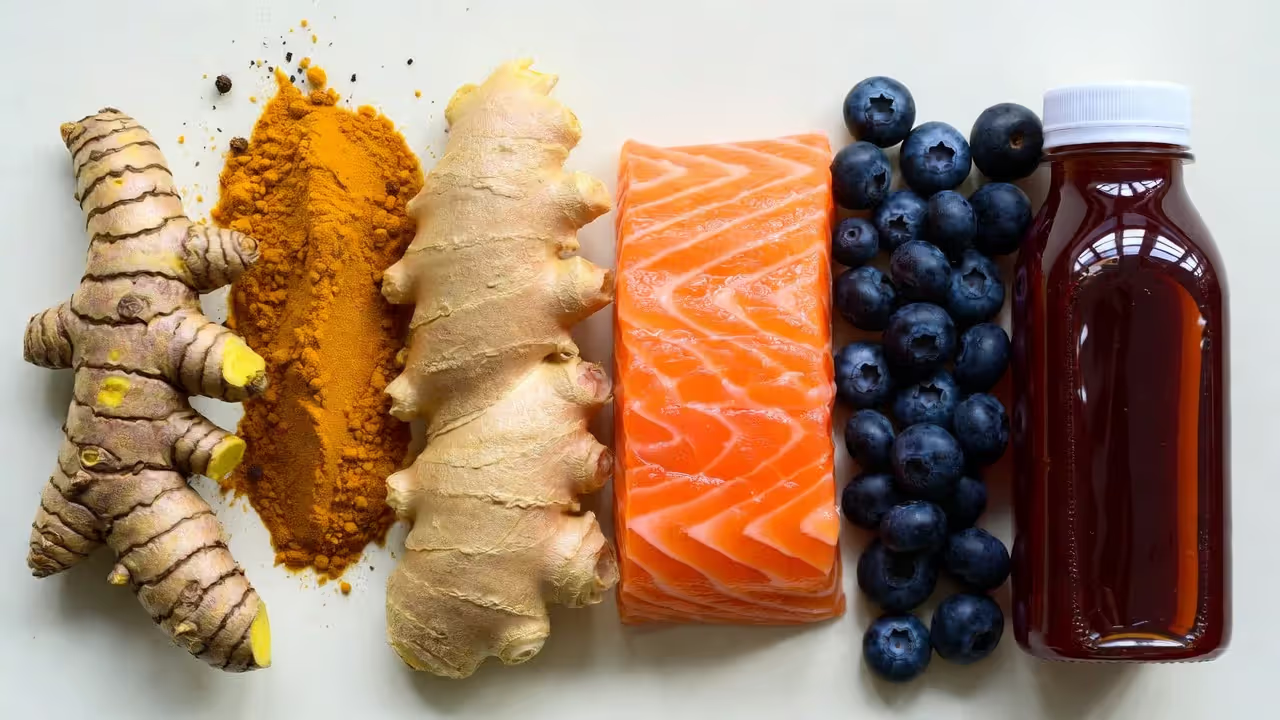
Turmeric with black pepper. Curcumin (the active compound in turmeric) is a well-documented anti-inflammatory, but its bioavailability without piperine (from black pepper) is very low — roughly 2% absorption. Add a pinch of black pepper whenever you use turmeric, whether in a golden milk latte, scrambled eggs, or a smoothie. Dose: 1 teaspoon of ground turmeric daily.
Omega-3 fatty acids. Fatty fish (salmon, sardines, mackerel), walnuts, chia seeds, and ground flaxseed. Omega-3s modulate the inflammatory cascade at a cellular level. Two servings of fatty fish per week, or 1–2 tablespoons of ground flax daily for plant-based practitioners, reaches the effective range.
Tart cherry juice. One of the few recovery foods with direct clinical support for reducing delayed-onset soreness. An 8 oz glass of unsweetened tart cherry concentrate diluted in water, consumed daily, has shown measurable reduction in inflammatory markers across multiple trials. Not cheap (~$0.80–$1.50 per serving), but effective.
Ginger and berries. Ginger reduces prostaglandin-mediated inflammation — 1 inch of fresh ginger in tea or a smoothie provides a therapeutic dose. Blueberries, strawberries, and blackberries deliver anthocyanins that support vascular health and reduce oxidative stress.
An honest note on expectations: these foods produce cumulative effects over weeks and months of consistent intake. Eating turmeric once after a hard session won't eliminate tomorrow's soreness. Building these items into your regular rotation creates a baseline of lower systemic inflammation that supports recovery across all sessions.
Common Nutrition Mistakes That Slow Recovery for Yoga Practitioners

Author: Connor Evans;
Source: yogapennsylvania.com
Undereating protein. Plant-based practitioners are most vulnerable. A day of oatmeal, a salad, a grain bowl, and an apple might total only 40–50g of protein — well below the 80–120g range that supports active tissue repair. If you don't track occasionally, you probably don't know your intake. Spend three days logging meals in an app to check your baseline.
Skipping post-session fuel entirely. "It's just yoga" is a common justification. A 75-minute power vinyasa class burns 350–500 calories and stresses connective tissue throughout the body. Treating it as though it doesn't warrant replenishment delays adaptation and increases next-day stiffness.
Smoothies that are sugar bombs disguised as health food. A typical studio-adjacent smoothie: banana, mango, agave, coconut milk, a handful of granola, and a scoop of whey. That's 60–80g of sugar and 500+ calories. A better ratio: protein powder, half a banana, a tablespoon of nut butter, spinach, and unsweetened almond milk. Half the sugar, equivalent protein, more micronutrients.
Caffeine immediately after class. Coffee stimulates the sympathetic nervous system — the opposite of what your body just spent 10 minutes in savasana trying to activate. Waiting 60–90 minutes post-session before consuming caffeine preserves the parasympathetic refueling window. Yoga and diet balance includes timing stimulants, not just choosing the right foods.
Ignoring electrolytes after hot or humid classes. Plain water doesn't replace minerals lost through heavy sweating. The headache-and-fatigue pattern that many hot yoga practitioners experience 3–4 hours post-class is often a sodium deficit, not a caloric one.
Overthinking recovery for gentle sessions. A 30-minute restorative class doesn't require a refueling protocol. Eating normally and staying hydrated is sufficient. Applying high-intensity nutrition strategies to low-demand classes creates unnecessary dietary complexity and caloric excess.
FAQ
Yoga recovery nutrition comes down to matching your intake to your session's actual demand. Gentle classes need nothing special — eat your next meal, drink water, move on. Intense sessions benefit from a protein-carb combination within the hour and electrolyte-aware hydration. Build anti-inflammatory foods into your weekly rotation for cumulative connective-tissue support, check your protein totals occasionally, and resist both extremes: ignoring recovery entirely or overcomplicating it for sessions that didn't warrant the effort.
Related Stories
Read more

Read more


The content on yogapennsylvania.com is provided for general informational and inspirational purposes only. It is intended to share yoga tips, meditation practices, wellness guidance, retreat experiences, and lifestyle insights, and should not be considered medical, therapeutic, fitness, or professional health advice.
All information, articles, images, and wellness-related materials presented on this website are for general informational purposes only. Individual health conditions, physical abilities, wellness goals, and experiences may vary, and results can differ from person to person.
Yogapennsylvania.com makes no representations or warranties regarding the accuracy, completeness, or reliability of the content provided and is not responsible for any errors or omissions, or for decisions or actions taken based on the information presented on this website. Readers are encouraged to consult qualified healthcare or wellness professionals before beginning any new yoga, meditation, or fitness practice.