

Woman sitting on a yoga mat in the morning doing calm breathing with a phone set aside.
Yoga Lifestyle Benefits: How Consistent Practice Changes Your Mind and Mood

A woman in her mid-thirties starts doing 15 minutes of yoga before work. She's not chasing a handstand or training for a retreat. She just noticed she was snapping at her kids by 7 AM and wanted something to take the edge off. Six weeks in, the morning reactivity has dropped. She sleeps better. She catches herself breathing deliberately during a tense meeting — a skill she never consciously learned but picked up from the mat.
That kind of quiet, cumulative shift is what yoga lifestyle benefits actually look like for most people. Not dramatic transformation. Not Instagram flexibility. Just a measurable change in how you handle the ordinary friction of ordinary life.
What "Yoga Lifestyle" Actually Means (Beyond the Mat)
The phrase gets thrown around loosely, so here's a working definition: a holistic yoga lifestyle means integrating the principles of the practice — breath awareness, intentional movement, present-moment attention, and self-regulation — into how you operate outside of class. It's the difference between doing yoga on Tuesdays and Thursdays and living in a way that's shaped by what yoga teaches.
That integration typically rests on four pillars: physical movement (asana), breathwork (pranayama), focused attention or meditation (dharana/dhyana), and conscious intentional choices around sleep, food, and screen consumption. You don't need to adopt all four at once. Most people start with movement and gradually notice the other elements weaving in as their routine matures.
A useful distinction: someone who attends three classes a week is exercising. Someone who pauses to take five slow breaths before responding to a stressful email is operating from a yoga-informed lifestyle. The physical component matters — but it's the behavioral spillover that produces the most durable change.
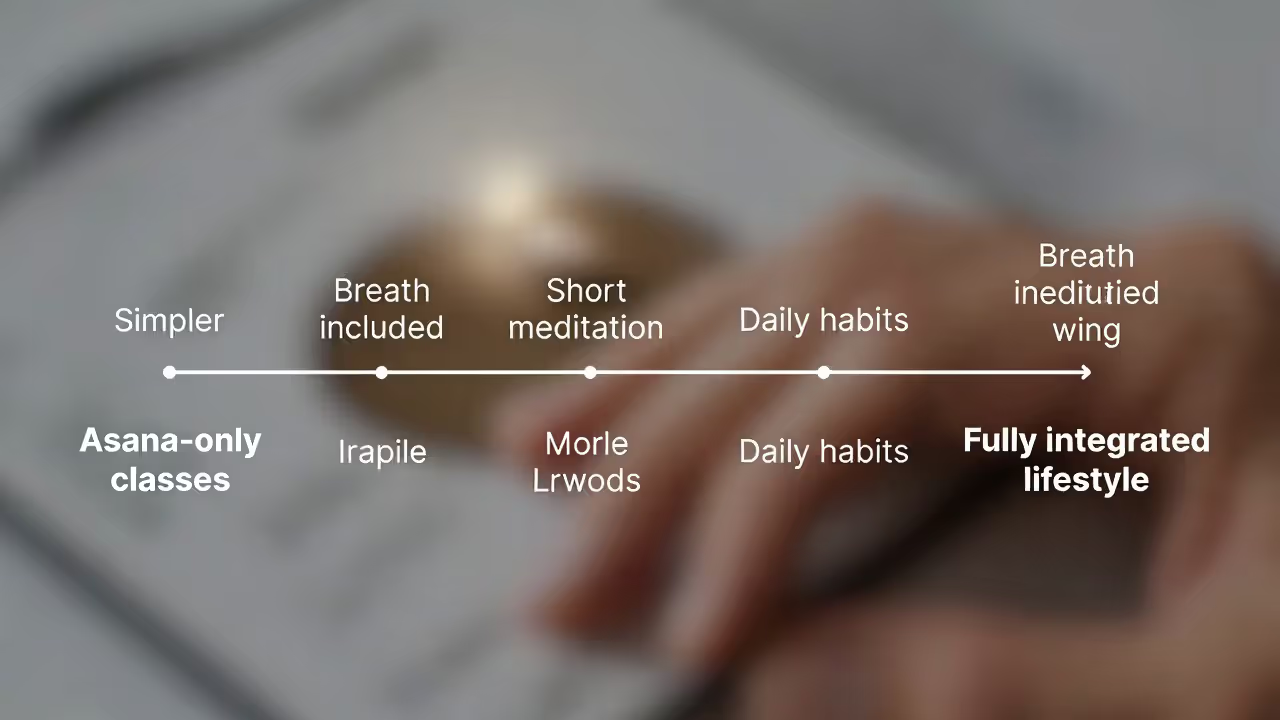
Think of it as a spectrum. On one end: asana-only, gym-style classes with no breathwork or meditation. On the other: a fully integrated approach where movement, respiratory training, and present-moment awareness inform how you sleep, eat, respond to conflict, and manage attention throughout the day. Most people land somewhere in the middle and gradually shift toward integration as the benefits become self-evident.
Author: Connor Evans;
Source: yogapennsylvania.com
Mental and Emotional Shifts That Build Over Time
How Yoga Affects Stress Response and Nervous System Regulation
Yoga's strongest evidence base is in stress physiology. Sustained practice — particularly sequences that combine movement with controlled breathing — activates the parasympathetic nervous system and improves vagal tone. In practical terms, this means your body gets better at downshifting from fight-or-flight mode.
A 2017 meta-analysis in the Journal of Clinical Psychology found consistent cortisol reductions among participants practicing yoga three or more times per week for at least eight weeks. The effect size was moderate — comparable to structured aerobic exercise — but the mechanism differed. Where running reduces cortisol through exertion and endorphin release, yoga for stress management works primarily through breath-driven vagal stimulation and sustained attention to physical sensation.
Realistic timelines: most people notice reduced background tension within 2–3 weeks of routine (even 10–15 minutes). Measurable changes in resting heart rate variability — a reliable marker of stress resilience — typically emerge around 6–8 weeks. Deeper shifts in baseline anxiety levels tend to require 3–6 months of consistent work.
Emotional Awareness, Reactivity, and Mood Stability
The mental benefits of yoga extend beyond stress metrics into how you relate to your own emotional states. Regular practice builds interoceptive awareness — the ability to notice internal signals (tight jaw, shallow breath, clenched stomach) before they escalate into reactive behavior.
The emotional benefits of yoga are less about feeling perpetually calm and more about widening the gap between stimulus and response. You still feel frustration when someone cuts you off in traffic. The difference is a half-second pause that lets you choose your reaction instead of defaulting to a horn blast and an elevated heart rate for the next twenty minutes.
This isn't mystical. It's a trained skill. The mat is a controlled environment where you rehearse noticing discomfort (a long hold, a challenging balance) without immediately reacting. Over weeks and months, that pattern generalizes to situations off the mat — difficult conversations, deadline pressure, parenting moments that test every nerve.
One often-overlooked dimension: yoga appears to reduce rumination — the repetitive, circular thinking pattern that fuels anxiety and depressive episodes. A 2020 study in Frontiers in Psychiatry found that an 8-week program combining asana and breathwork reduced self-reported rumination scores by 25–30% in participants with elevated baseline anxiety. The proposed mechanism: sustained attention to bodily sensation competes with and interrupts the mental loops that sustain worry.
Daily Yoga Habits That Stick (and Common Mistakes That Kill Consistency)

Author: Connor Evans;
Source: yogapennsylvania.com
The number one predictor of long-term gain isn't style, intensity, or class quality. It's frequency. A 12-minute day-to-day routine produces more cumulative effect than a 90-minute class twice a week — because the nervous system responds to regular stimulus, not occasional deep dives.
Practical framework for building daily yoga habits:
Start at 10–15 minutes. Attach the practice to an existing anchor — right after brushing teeth, right before the morning coffee, immediately after the kids leave for school. Consistency of timing matters more than duration.
Morning vs evening: morning practice tends to set a calmer baseline for the day. Evening practice helps with sleep onset but is more vulnerable to schedule erosion (dinner runs late, energy drops, you skip it). Pick whichever you'll actually protect.
Mistakes that derail people most often:
Overcommitting early. Signing up for a 30-day challenge or a 60-minute daily target before the habit is established. Two weeks in, you miss a day, feel like you've failed, and quit entirely. Better approach: commit to 10 minutes for 21 days. Extend only after the habit feels automatic.
Treating yoga as exercise only. If the mat time is purely physical — strength, flexibility, sweat — the stress-management and emotional-regulation benefits stay shallow. Even five minutes of seated breathing or a brief body scan at the end makes a disproportionate difference.
Relying on motivation. Motivation is high the first week and gone by week three. Structure and environmental cues (mat already unrolled, app already open, alarm already set) outlast willpower every time.
Skipping breathwork. Pranayama is the least glamorous and most impactful element for mental health outcomes. Two minutes of extended-exhale breathing (inhale 4 counts, exhale 6–8 counts) before or after asana accelerates every benefit discussed in this article.
The body benefits from movement, and the mind benefits from stillness.
— Sakyong Mipham
Yoga and Mindfulness Living: What the Integration Looks Like in Practice
Yoga and mindfulness living overlap heavily, but the integration is specific, not abstract. Here's what it looks like in actual real-world scenarios:
Commuting: using red lights or subway stops as cues for three deliberate breaths. Not to "be zen," but to interrupt the compulsive phone-checking or mental rehearsal of the workday before it starts.
Conflict: noticing that your shoulders have crept toward your ears during a difficult conversation, then consciously releasing them. That physical cue — learned through hundreds of hours of noticing bodily tension on the mat — becomes an emotional regulation tool in real time.
Eating: pausing for one slow breath before the first bite. Not as a ritual, but as a genuine transition from "doing mode" to "receiving mode." People who practice this consistently report eating less and enjoying food more — not because of willpower, but because attention to physical sensation changes the experience.
Screen time: recognizing the shallow, rapid breathing pattern that accompanies 45 minutes of doomscrolling, and using that recognition as a signal to stop. The awareness itself is the intervention. You don't need a screen-time app if your own nervous system has learned to flag the problem before it spirals.
None of this requires chanting, incense, or a particular belief system. It requires a routine that trains you to notice what's happening in your body — and yoga builds that capacity more systematically than almost anything else. The transfer from mat to life isn't automatic, though. It happens faster when you intentionally look for opportunities to apply the skills. Some instructors suggest picking one "awareness anchor" per week — say, breath-checking at every red light — and rotating to a new one once the old habit is established.
What Yoga Doesn't Fix (Honest Limitations and When to Seek More)

Author: Connor Evans;
Source: yogapennsylvania.com
Yoga reduces stress effectively. It improves emotional regulation, sleep quality, and subjective well-being across dozens of controlled trials. It does not, however, treat clinical depression, anxiety disorders, PTSD, or other diagnosed mental health conditions as a standalone intervention.
The evidence is strong for yoga as an adjunct — something that enhances the effectiveness of therapy, medication, or structured treatment. The evidence is weak for yoga as a replacement for professional care when a diagnosable condition is present.
A practical boundary: if your general mood doesn't improve after 8–10 weeks of consistent routine, or if you're experiencing persistent sadness, panic episodes, or intrusive thoughts, the appropriate next step is a licensed therapist or physician — not longer mat time or a more advanced class.
Yoga also won't compensate for chronic sleep deprivation, poor nutrition, social isolation, or an abusive work environment. It's a powerful tool within a broader system. Treating it as a cure-all sets unrealistic expectations and leads to disillusionment when the deeper issues remain unresolved.
One common pattern worth flagging: someone starts yoga during a difficult period, feels better for several weeks, and then assumes the underlying problem has been resolved. The practice was managing symptoms — not addressing root causes. If you remove the yoga and the distress returns quickly, that's a signal that additional support (therapeutic, relational, environmental) is needed alongside the mat work.
Comparing Yoga to Other Lifestyle Practices for Stress and Well-Being
Author: Connor Evans;
Source: yogapennsylvania.com
| Dimension | Yoga | Meditation Only | Aerobic Exercise | Breathwork Only | Talk Therapy |
| Stress reduction evidence | Strong (meta-analyses) | Strong | Strong | Moderate (growing) | Strong |
| Emotional regulation | High (body + breath + attention) | High (attention-focused) | Moderate (indirect) | Moderate | High (insight-focused) |
| Physical fitness benefit | Moderate (flexibility, strength) | None | High | None | None |
| Minimum effective time | 10–15 min daily | 10 min daily | 20–30 min, 3x/week | 5–10 min daily | 50 min weekly |
| Monthly cost range (US) | $0–$200 | $0–$30 (apps) | $0–$80 (gym) | $0–$30 (apps) | $100–$800+ |
| Barrier to entry | Low (home practice possible) | Very low | Low–moderate | Very low | Moderate (access, cost, stigma) |
Yoga's advantage is breadth: it combines physical, respiratory, and attentional training in a single session. Its disadvantage relative to therapy is depth — it builds self-regulation skills but doesn't provide the diagnostic framework or relational processing that clinical work offers. The most resilient approach for most people combines two or three of these modalities rather than relying on any one.
A practical observation from instructors who also hold therapy credentials: yoga and talk therapy complement each other unusually well. Yoga builds the body-awareness foundation that makes therapeutic insight more accessible, while therapy provides the cognitive scaffolding to understand what the body is signaling. Neither fully replaces the other.
FAQ
The real return on a yoga practice isn't measured in pose progression or flexibility benchmarks. It's measured in how you handle a stressful Tuesday afternoon — whether you catch the tight jaw and shallow breath before they become a headache and a short temper. Building daily yoga habits anchored in breathwork and body awareness produces compounding returns over months and years. Start shorter than you think you should, protect the habit with structure rather than willpower, and treat the mat as a laboratory for skills you'll use everywhere else.
Related Stories

Read more

Read more



The content on yogapennsylvania.com is provided for general informational and inspirational purposes only. It is intended to share yoga tips, meditation practices, wellness guidance, retreat experiences, and lifestyle insights, and should not be considered medical, therapeutic, fitness, or professional health advice.
All information, articles, images, and wellness-related materials presented on this website are for general informational purposes only. Individual health conditions, physical abilities, wellness goals, and experiences may vary, and results can differ from person to person.
Yogapennsylvania.com makes no representations or warranties regarding the accuracy, completeness, or reliability of the content provided and is not responsible for any errors or omissions, or for decisions or actions taken based on the information presented on this website. Readers are encouraged to consult qualified healthcare or wellness professionals before beginning any new yoga, meditation, or fitness practice.