
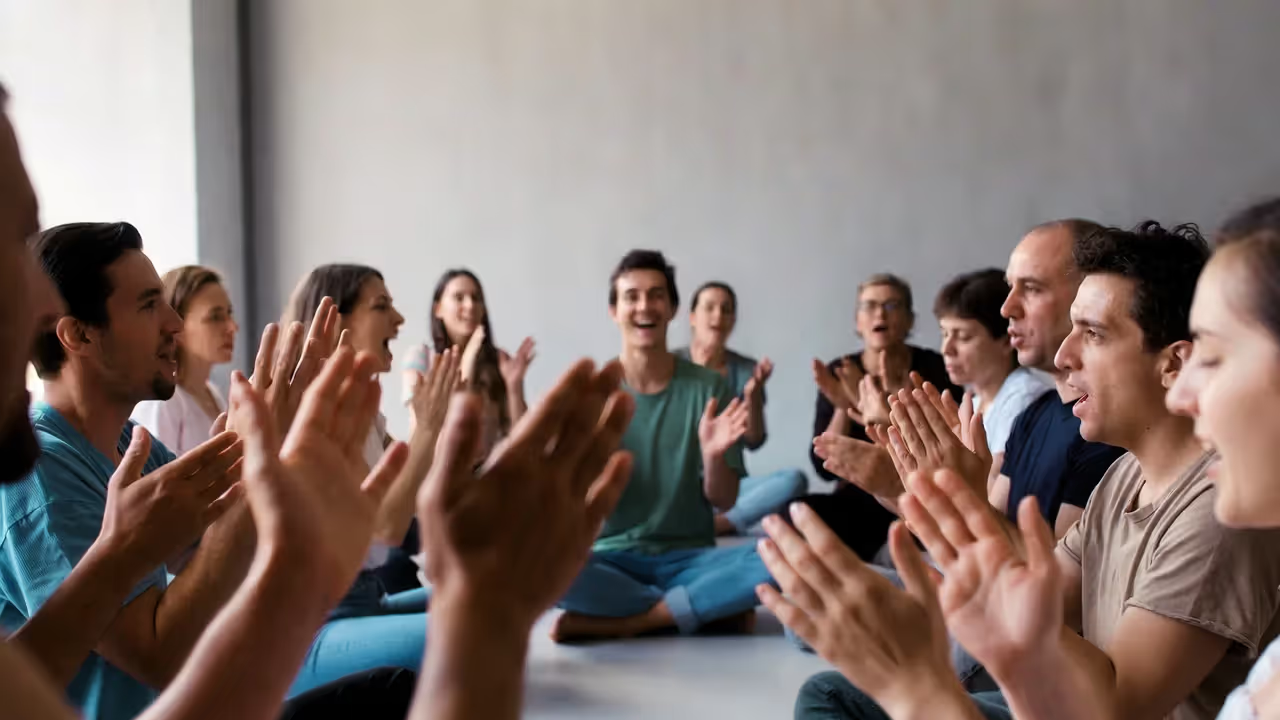
Group of adults standing in a circle, clapping and laughing during a laughter yoga session
Laughter Yoga Guide to Benefits Exercises Practice

Content
Content
Picture a room full of adults standing in a circle, clapping rhythmically, catching each other's gaze, and laughing — not at a joke, but on purpose. No punchline. No comedy routine. Just deliberate, full-bodied sound that starts out awkward and, within about ninety seconds, turns genuinely uncontrollable.
That's laughter yoga. It sounds absurd until you try it — and then it sounds absurd and you can't stop doing it.
What Is Laughter Yoga?
The method combines intentional laughing with yogic deep breathing (pranayama) and playful movement. The core premise: your body doesn't distinguish between a genuine belly laugh and one you initiate on purpose. Both activate the same physiological cascade — diaphragm engagement, oxygen intake surge, endorphin release, cortisol reduction.
You don't need jokes, comedy, or even a sense of humor. You start as a physical drill — forced, mechanical, and a little ridiculous. Within minutes, the simulated response shifts into something real, partly because looking at another person who's also faking it is inherently funny. The room's energy does most of the heavy lifting.
A typical gathering blends three elements: breathwork drawn from traditional yoga, structured laughing drills, and guided meditation. No mats, no poses, no flexibility required.
Where Laughter Yoga Came From (and Who Created It)
Dr. Madan Kataria, a Mumbai-based physician, launched the first club in 1995 with five people in a public park. His initial approach relied on shared jokes — which worked for about two weeks before the participants ran out of clean material.
The pivot: working with his wife Madhuri, a yoga teacher, he developed drills that triggered laughing through body movement, breathing patterns, and childlike playfulness instead of humor. Today, these clubs operate in over 100 countries, and the approach has moved into hospitals, corporate wellness programs, senior care, and schools.
We don't laugh because we're happy — we're happy because we laugh.
— Dr. Madan Kataria
What Happens in a Typical Laughter Yoga Session?
Meetings usually run 30 to 60 minutes, though shorter 10- to 15-minute formats work for office settings or individual routines.
| Phase | Duration | What Happens |
| Warm-up | 3–5 min | Rhythmic clapping, "ho-ho ha-ha-ha" chanting, gentle stretching, deep breaths |
| Active phase | 15–25 min | Guided drills combining movement, gaze, and intentional laughing |
| Guided meditation | 5–10 min | Free-flowing, unstructured release — lying down or seated, eyes closed |
| Relaxation | 3–5 min | Guided breathing, body scan, or silent rest (similar to yoga nidra) |
The Core Elements: Clapping, Chanting, Eye Contact, Play
Author: Jackson Wright;
Source: yogapennsylvania.com
Every gathering begins with rhythmic clapping — palms flat, fingers touching, creating both sound and mild acupressure stimulation. Participants chant "ho-ho ha-ha-ha" in unison, which primes the diaphragm and establishes a shared rhythm.
Direct gaze is the secret engine. Looking at another person while laughing triggers mirror neurons — the same mechanism that makes yawning contagious. It's almost impossible to maintain the performance while locking eyes with someone. The act collapses into something genuine within seconds.
Between drills, participants return to a baseline breathing and laughter practice: two deep breaths, then a round of clapping and chanting. This reset prevents fatigue and keeps the energy structured rather than chaotic.
Guided Laughter Meditation and Relaxation
The laughter meditation session is the part most people don't expect. After the structured drills, everyone lies down or sits and simply allows whatever arises — without prompts or instructions. Some people giggle softly. Others roar. Some cry. The shift from controlled to spontaneous feels like the difference between swimming in a pool and being carried by a current.
The closing segment is 3–5 minutes of guided relaxation: slow breathing, a body scan, and stillness.
A 10-minute mini-routine you can try right now: 2 minutes of rhythmic clapping and "ho-ho ha-ha-ha" → 3 minutes of greeting drill (laugh while waving or shaking hands with imaginary people) → 3 minutes of free-form meditation lying on your back → 2 minutes of slow breathing with eyes closed.
Benefits of Laughter Yoga (What the Research Suggests)
The claims range from well-supported to speculative. Here's where the evidence actually stands.

Author: Jackson Wright;
Source: yogapennsylvania.com
Stress Relief, Mood, and Social Connection
The strongest research supports this approach as a stress relief technique. A 2020 systematic review in the Journal of Educational and Health Promotion analyzed 10 controlled trials and found consistent reductions in anxiety, perceived stress, and depression scores — particularly in group-based interventions lasting four weeks or more.
The mechanism is straightforward: sustained laughing reduces cortisol and adrenaline while increasing serotonin and endorphin activity. A single 20-minute round can produce measurable changes in salivary cortisol. The social component amplifies the effect — shared humor and connection reduce isolation and activate oxytocin pathways.
For people dealing with chronic stress, this offers something most stress relief yoga techniques don't: zero skill barrier. You don't need to learn poses, control your breath precisely, or sit still. You just laugh.
Physical Effects: Breathing, Energy, Light Cardio
Sustained laughing engages the diaphragm more deeply than normal breathing. Regular participation increases oxygen intake, improves lung capacity over time, and provides a mild cardiovascular workout — roughly equivalent to brisk walking in heart rate elevation.
A 2017 study in Complementary Therapies in Medicine found that eight weeks of this type of training improved forced expiratory volume in elderly participants. The breathing component — alternating between deep inhalation and forced exhalation — functions as natural respiratory conditioning.
What Evidence Is Strong vs. Still Emerging
| Claimed Benefit | What Studies Typically Measure | Evidence Strength | Practical Takeaway |
| Stress and anxiety reduction | Salivary cortisol, perceived stress scales, anxiety inventories | Strong (multiple RCTs) | Reliable as a low-barrier daily routine |
| Mood improvement | Depression scales, happiness self-reports | Moderate (consistent but smaller sample sizes) | Works best with regular commitment over 4+ weeks |
| Social connection and reduced loneliness | Loneliness scales, cohesion measures | Moderate | Most effective in shared settings |
| Immune function | NK cell activity, immunoglobulin levels | Emerging (limited, small studies) | Promising but not clinically proven |
| Pain management | Pain perception scales | Emerging | May help with pain tolerance; not a treatment |
| Cardiovascular benefit | Heart rate, blood pressure | Emerging | Light physical activation, not a substitute for cardio |
Laughter Yoga Exercises You Can Try (Beginner-Friendly)
You don't need a certified leader to start. These drills work on your own or with others, require no equipment, and take 15–20 minutes total.

Author: Jackson Wright;
Source: yogapennsylvania.com
Warm-Up (1–2 Minutes)
Stand with feet hip-width apart. Clap your hands in a 1-2, 1-2-3 rhythm while chanting "ho-ho ha-ha-ha" with each clap sequence. After 30 seconds, add gentle side-to-side swaying. Take two deep breaths — inhale through the nose, exhale with an audible "haaaaa." Repeat the clapping cycle once more. Your diaphragm should feel engaged and slightly warm.
Classic Drills (Step-by-Step)
Greeting. Walk around the room (or stand in place) and "greet" imaginary people — wave, bow, shake hands — while laughing. No words. Just sounds and gestures. This breaks the initial self-consciousness faster than anything else.
Milkshake. Mime holding two glasses. "Pour" one into the other, then "drink" while laughing. The absurdity of the mime is the point — it gives your brain an action to focus on instead of the awkwardness.
Lion. Open your mouth wide, stick your tongue out fully, extend your hands like claws, and roar-laugh. This comes from simhasana (lion's breath) in traditional yoga. It releases jaw tension and tends to produce deep belly laughs.
Gradient. Start with a quiet smile. Slowly build to a giggle, then a chuckle, then a full laugh, then the loudest, most exaggerated version you can manage. Hold the peak for 10 seconds, then wind back down. This teaches dynamic control over intensity.
Humming. Close your mouth and laugh through a hum — "hmmm-hmmm-hmmm." Place your hands on your chest or throat to feel the vibration. Calming rather than energizing — good for people who feel overwhelmed by loud shared settings.
Silent. Open your mouth wide and laugh with no sound. Exaggerate the facial expressions and body movement. Harder than it looks — it forces your diaphragm to work intensely without vocal cord support.
Heart-to-Heart. Stand facing a partner (or a mirror). Place your right hand over your heart. Laugh gently while holding a steady gaze. This shifts the energy from playful to intimate. It often triggers genuine emotional responses — some people tear up, others feel a surge of warmth.
Argument. Point at your partner and "argue" — jabbing your finger, shaking your head, gesturing emphatically — but replace all words with laughing. This reframes conflict energy as play.
Cooldown: Meditation, Breath, and Relaxation
Lie down or sit comfortably. Close your eyes. Let any remaining giggles surface without forcing them. If nothing comes, simply breathe. After 3–5 minutes of unstructured free-flowing release, transition to slow breathing: inhale for 4 counts, hold for 2, exhale for 6. Rest in silence for 1–2 minutes.
Before you begin — checklist:
- Enough space to extend your arms without hitting anything
- Water within reach
- Comfortable, non-restrictive clothing
- If joining others: a brief "permission to be silly" agreement — everyone commits to suspending self-judgment for the duration
Group Laughter Therapy vs. Practicing Alone
Why Shared Settings Feel Easier

Author: Jackson Wright;
Source: yogapennsylvania.com
The urge to laugh is contagious — literally. A UCL study showed that hearing it activates the premotor cortex, priming your brain to join in before you consciously decide to. In a room with others, this contagion effect does the motivational work for you.
Group laughter therapy provides accountability and social connection that working alone can't replicate. For people dealing with isolation or social anxiety, the collective element may be more therapeutic than the drills themselves.
Going solo works but requires more discipline and produces less intensity. A useful path: start with others to learn the format and build comfort, then maintain the habit independently between meetups.
How to Find or Lead a Gathering
Local clubs meet in community centers, parks, studios, and online. Dr. Kataria's Laughter Yoga International maintains a directory. Many meetups are free or donation-based.
To lead, no formal certification is required — though Certified Laughter Yoga Leader training (a two-day course) provides structure and facilitation skills. For workplace or care facility settings: keep the first gathering under 20 minutes, use consent-based language ("join in if you'd like"), and debrief afterward to normalize the range of reactions people have.
Safety, Modifications, and Who Should Be Cautious
This approach carries minimal risk for most people. It's low-impact, self-paced, and requires no physical prerequisites. That said, a few situations warrant attention.
If You Have Pain, Recent Surgery, Pregnancy, or Cardio/Respiratory Concerns
Strong abdominal contractions during intense laughing can strain surgical incisions, aggravate hernias, or increase intra-abdominal pressure. If you've had abdominal or thoracic surgery within 6–8 weeks, stick to gentle humming or skip high-intensity drills.
Pregnant individuals in the second and third trimester should opt for gentler movements. People with uncontrolled high blood pressure, severe COPD, or recent cardiac events should consult their physician — the cardiovascular activation, while mild, is real.
Stop or modify if you notice: dizziness or lightheadedness, sharp pain anywhere in the torso, shortness of breath beyond normal exertion, a spike in anxiety or emotional distress that doesn't ease within a few minutes.
Making Laughter Yoga a Habit (Realistic Plans)
7-Day Starter Plan (5–15 Minutes Per Day)
Author: Jackson Wright;
Source: yogapennsylvania.com
Day 1: 5 minutes. Clapping warm-up + greeting drill only. Goal: break the ice with yourself.
Day 2: 7 minutes. Warm-up + milkshake + gradient. Notice what feels natural vs. forced.
Day 3: 10 minutes. Warm-up + lion + silent + 2-minute free-form meditation.
Day 4: Rest day. Just do 2 minutes of "ho-ho ha-ha-ha" clapping whenever you feel like it.
Day 5: 12 minutes. Full warm-up + 3 drills of your choice + meditation + breathing cooldown.
Day 6: 15 minutes. Run through the complete mini-routine format. Try inviting one other person.
Day 7: Reflect. What shifted? Energy, mood, sleep, social comfort? Decide on a sustainable weekly cadence — most people benefit from 3–4 rounds per week.
Pairing With Breathwork, Gentle Yoga, or Mindfulness
This approach integrates naturally with complementary routines. A common pairing: 10 minutes of the drills followed by 10 minutes of seated meditation. The laughing clears mental clutter and physical tension, making stillness afterward noticeably deeper.
For stress management, alternating active laughing days with breathwork (box breathing, 4-7-8 breathing, or alternate nostril breathing) creates a well-rounded toolkit. Both target the vagus nerve through different pathways — one through vigorous engagement, the other through deliberate calm.
FAQ
This asks very little of you: a few minutes, a willingness to feel ridiculous, and enough floor space to lie down afterward. The research supports real benefits for stress, mood, and social connection — especially with consistent commitment. Start with the 7-day plan, run through three or four drills, and pay attention to how you feel 30 minutes later. The worst-case scenario is that you spent ten minutes laughing for no reason. That's not a bad worst case.
Related Stories

Read more
Read more

The content on yogapennsylvania.com is provided for general informational and inspirational purposes only. It is intended to share yoga tips, meditation practices, wellness guidance, retreat experiences, and lifestyle insights, and should not be considered medical, therapeutic, fitness, or professional health advice.
All information, articles, images, and wellness-related materials presented on this website are for general informational purposes only. Individual health conditions, physical abilities, wellness goals, and experiences may vary, and results can differ from person to person.
Yogapennsylvania.com makes no representations or warranties regarding the accuracy, completeness, or reliability of the content provided and is not responsible for any errors or omissions, or for decisions or actions taken based on the information presented on this website. Readers are encouraged to consult qualified healthcare or wellness professionals before beginning any new yoga, meditation, or fitness practice.