


Food probably occupies your attention less than your phone does during meals. You scroll through social media between bites, wolf down breakfast while driving, and barely remember tasting dinner by the time you've cleared your plate. Mindful eating yoga presents an alternative—treating each meal as a chance to practice awareness instead of multitasking through nourishment.
What Is Mindful Eating Yoga?
Mindful eating yoga combines ancient yogic wisdom with present-moment eating awareness, establishing a foundation for experiencing meals through full engagement rather than rules or guilt. The approach pulls from yoga's core teachings about consciousness, breathing techniques, and unified mind-body experience, translating these concepts into how you choose, make, and enjoy food.
Yoga philosophy's relationship with nourishment extends well beyond selecting vegetables over processed foods. Ancient yogic writings examine food categories, consumption rhythms, and dietary influence on mental clarity. The Bhagavad Gita sorts foods by their consciousness effects. Patanjali's Yoga Sutras explore contentment (santosha) and introspection (svadhyaya)—both critical when investigating eating habits without condemning yourself.
The distinction between awareness and restriction defines this practice fundamentally. Diet programs dictate external guidelines about food types, timing, and quantities. Mindful eating yoga develops inner recognition so you identify genuine hunger, detect satisfaction moments, and witness emotional patterns without reflexively following them. You're building capacities instead of obeying prohibitions.
Unity between mind and body creates the practice cornerstone. Yoga training teaches subtle sensation recognition—distinguishing beneficial stretching from potential injury, separating vitality from exhaustion. These identical noticing abilities transfer to nourishment: differentiating bodily hunger from emotional desires, identifying comfortable satisfaction before excess, monitoring how particular foods influence vitality and mental state.
The Foundations of Conscious Eating Practice
Conscious eating practice demands building fundamental behaviors that transform you from mechanical feeding to attentive participation. These basics develop steadily through repeated application instead of materializing spontaneously.
Slowing Down and Engaging the Senses

Author: Ava Mitchell;
Source: yogapennsylvania.com
Rapid consumption blocks your nervous system from receiving satisfaction messages, which require roughly 20 minutes to achieve conscious recognition. Creating slower rhythms allows genuine tasting experiences instead of mere intake.
Deliberately activate every sense. Study colors and plating arrangements before your initial taste. Inhale meal aromas—scent comprises substantial flavor experience. Register textures while chewing. Attend to eating sounds. Experience complete flavor by masticating deliberately and inserting pauses between mouthfuls.
Consider this example: You're consuming an apple. Rather than chomping mindlessly while browsing your phone, you first hold it, studying color shifts and surface irregularities. You breathe in its scent—fresh, faintly sugary. Your initial bite creates clear cracking sounds. You chew deliberately, tracking how taste evolves throughout mastication, how moisture emerges, how consistency changes from firm to soft.
Recognizing Hunger vs Habit
Bodily hunger appears as stomach feelings, mild dizziness, depleted vitality, or concentration challenges. Pattern-based consumption occurs at designated times without hunger consideration, prompted by routines (television viewing, desk work), feelings (tension, monotony, isolation), or simply food presence.
Begin separating these by stopping before consumption to evaluate genuine hunger using a 1-10 range, where 1 signals starving and 10 indicates painful fullness. Target eating around 3-4 (moderate hunger) and stopping near 6-7 (pleasant satisfaction). This straightforward evaluation disrupts reflexive consumption sequences.
A frequent error: believing you should delay eating until extreme hunger strikes. Severe hunger renders mindful consumption virtually impossible—you're entirely concentrated on rapid filling rather than awareness engagement.
Gratitude and Intention Before Meals
Establishing quick intentions preceding consumption transforms your mental condition from scattered to focused. This requires neither elaborate ceremonies nor spiritual components—a brief pause suffices.
Recognize food origins: individuals who cultivated, transported, and cooked it. Reflect on the event sequence delivering this nourishment to your setting. This appreciation interrupts the assumption-based consumption pattern and builds respect.
5-Minute Mindful Meal Ritual:
- Take a seat (avoid standing or mobile eating)
- Complete three full breaths, becoming completely present
- Survey your meal without criticism—hues, presentation, serving sizes
- Identify one grateful element connected to this nourishment
- Establish a basic intention: "I'll maintain awareness" or “I'll recognize satisfaction”
- Start consuming deliberately, preserving the intention
Mindful Eating Meditation: A Step-by-Step Guide

Author: Ava Mitchell;
Source: yogapennsylvania.com
Structured meditation exercises cultivate the recognition you'll use during everyday meals. These activities strengthen attention capabilities in managed environments before attempting awareness during more complex eating contexts.
3-Minute Pre-Meal Breathing Practice
Prior to consumption, pause for centering through quick breath recognition:
- Rest comfortably at your eating surface, palms settled lightly
- Lower your eyelids or direct vision downward
- Complete three deliberate, full breaths, sensing abdominal expansion and release
- Identify any holding patterns in jaw, shoulders, or midsection—direct breath toward these zones
- Resume visual focus and shift to consumption with the peaceful awareness you've established
This exercise engages your parasympathetic nervous response (rest-and-digest activation), enhancing physical digestion while generating mental capacity for recognition.
Guided Raisin Exercise (Classic Mindfulness Practice)
This conventional mindfulness activity shows how much information you routinely overlook during consumption:
Select one raisin (or any compact food piece). Grasp it as though encountering it initially. Study its shade variations, creases, light reflection patterns. Register its feel—adhesive, uneven, yielding. Inhale it, detecting any fragrance. Position it on your tongue without biting, registering feelings. Start chewing extremely deliberately, counting 20-30 chews before swallowing. Track how taste transforms, how saliva production occurs, the swallowing urge before complete mastication.
This activity usually requires 3-5 minutes for one raisin—exposing how minimal attention you ordinarily invest in food. You cannot consume every meal this deliberately, but the activity reveals the recognition range accessible.
The real meditation is how you live your life.
— Jon Kabat-Zinn
Body Scan for Hunger Awareness
Before consumption, examine your physical form to determine actual hunger against alternative eating motivations:
Beginning at your crown, mentally examine downward through your form. Register any holding patterns, unease, or feelings. Upon reaching your midsection, stop. Do you sense true hunger—hollowness, soft rumbling, vitality decrease? Or do you register neutrality, possibly slight fullness from previous consumption? Verify your energy status, emotional state, and throat (occasionally thirst disguises itself as hunger).
This 2-3 minute exercise supports eating responding to bodily requirements instead of external signals (timepieces, social contexts, food accessibility).
| Step | Focus | Purpose | Duration |
| Pre-Meal Breathing | Breath recognition, physical relaxation | Engage parasympathetic response, establish presence | 3 minutes |
| Raisin Exercise | Sensory specifics, consumption mechanics | Build attention toward eating participation | 5 minutes |
| Hunger Body Scan | Bodily feelings, hunger evaluation | Separate hunger from alternative motivations | 2-3 minutes |
| Gratitude Pause | Recognition, nourishment sources | Transform from assumption to appreciation mindset | 1-2 minutes |
Emotional Eating Awareness Through Yoga Philosophy

Author: Ava Mitchell;
Source: yogapennsylvania.com
Emotional consumption occurs when you employ food for feeling management instead of bodily nourishment. You consume when tense, unstimulated, isolated, worried, or even joyful—not from physical requirement but because eating offers momentary comfort or enjoyment.
Recognizing motivations demands truthful self-watching without severe condemnation. Typical emotional consumption triggers encompass work tension, partnership difficulties, social worry, isolation, monotony, exhaustion, and festivities. Monitor sequences: Do you search cupboards following challenging work conversations? Consume frozen desserts when experiencing loneliness? Continuously snack while viewing entertainment?
The tension and nourishment link functions through various systems. Stress chemicals (cortisol) amplify appetite, especially for calorie-dense comfort selections. Consumption stimulates brain reward centers, delivering temporary satisfaction that diverts from emotional unease. The chewing action itself can decrease holding patterns.
Implementing non-condemnation (ahimsa concept) becomes critical. Ahimsa, commonly understood as non-harm or gentleness, extends to self-treatment. Criticizing yourself for emotional consumption generates extra tension, which frequently prompts additional emotional consumption—a destructive pattern.
Instead, witness emotional consumption with interest: "I'm seeking sweets. I'm not bodily hungry. What sensation am I experiencing presently? What do I genuinely require?" Occasionally you authentically need the sweet. Occasionally you need relationship, relaxation, or emotion expression.
The Role of the Yamas and Niyamas
The yamas (ethical guidelines) and niyamas (individual practices) from Patanjali's Yoga Sutras present functional structures for aware nourishment:
Satya (authenticity): Maintain honesty regarding hunger status, emotional conditions, and how foods genuinely influence you against how you believe they should influence you.
Aparigraha (non-accumulation): Abandon the pattern to accumulate food on your serving or consume everything simply from availability. Select what you require.
Saucha (purity/cleanliness): Pick foods that authentically support you, weighing quality without becoming fixated or inflexible.
Santosha (satisfaction): Experience contentment with meals without perpetually pursuing the subsequent taste sensation or evaluating your meal against perfect versions.
Tapas (commitment): Sustain regular awareness exercises even when challenging, while preventing harsh self-enforcement that punishes instead of develops.
Intuitive Eating Yoga: What's the Connection?
Author: Ava Mitchell;
Source: yogapennsylvania.com
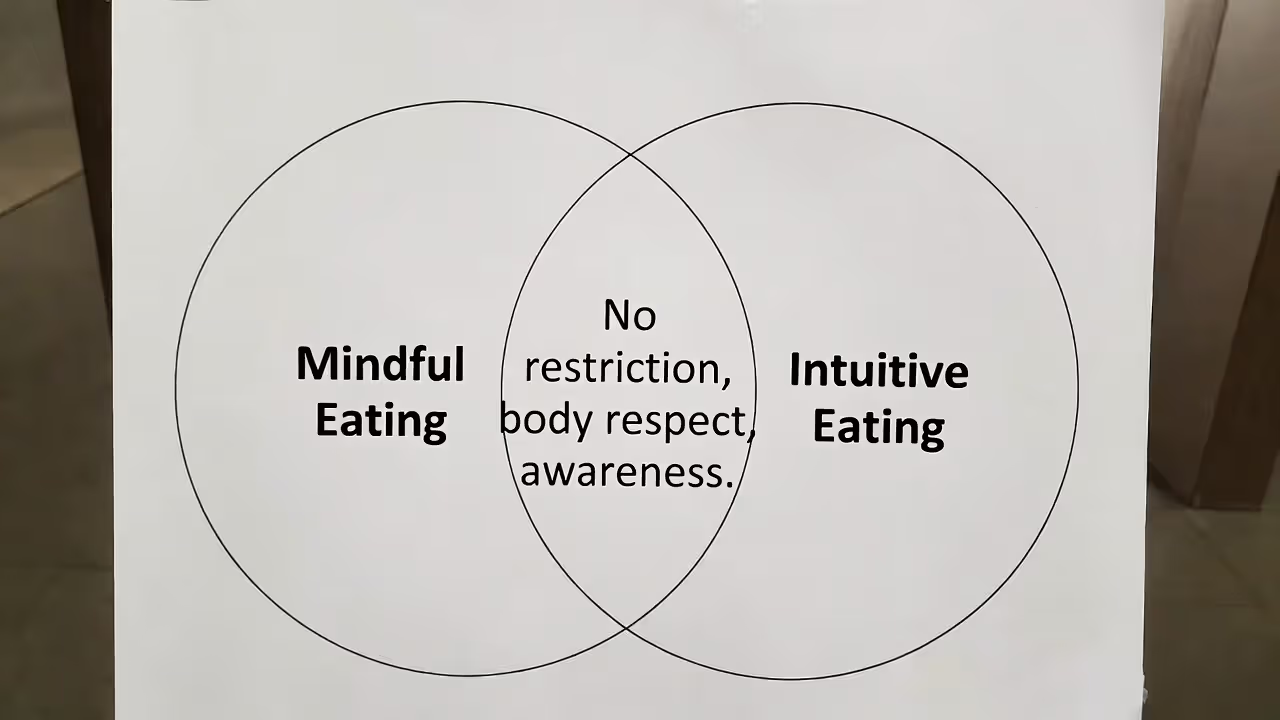
Intuitive consumption and mindful eating yoga overlap significantly while preserving separate characteristics. Comprehending both clarifies what you're implementing and reasoning.
Intuitive consumption, created by nutrition specialists Evelyn Tribole and Elyse Resch, highlights hunger and satisfaction signals, unrestricted eating permission, and diet mentality dismissal. You develop trust in your physical signals regarding food selection, timing, and quantity.
Mindful eating yoga incorporates contemplative recognition exercises and yogic concepts into consumption participation. While intuitive consumption concentrates mainly on bodily and psychological hunger/satisfaction, mindful eating yoga integrates meditation methods, breath recognition, and wider consciousness cultivation.
Both methods dismiss diet culture—the widespread conviction system valuing slimness above wellness, encouraging food limitation, and moralizing consumption selections. Both stress self-reliance and physical respect instead of external regulations and strict management.
Self-reliance grows as you consistently attend to bodily messages and respect them. Initially, you might consume beyond satisfaction or select foods that don't genuinely fulfill you. Through repetition, you discover through immediate participation what functions for your distinct physical form.
| Mindful Eating | Intuitive Eating | Overlap |
| Concentration on current-moment recognition during consumption | Priority on respecting hunger/satisfaction messages and physical wisdom | Both dismiss restriction and external nourishment regulations |
| Integrates meditation and yogic concepts | Mental structure addressing diet culture harm | Both cultivate self-reliance and physical respect |
| Focus on sensory participation and awareness | Examines emotional consumption and nourishment connections | Both acknowledge mind-body unity |
| Applicable with any nourishment approach | Particularly dismisses limitation and food judgment | Both develop recognition without condemnation |
Eating with Awareness Techniques You Can Use Daily
Converting mindful consumption from structured exercise to everyday existence demands straightforward, maintainable methods that don't require flawless performance.
Daily Awareness Checklist:
A helpful guideline: if implementing these methods generates tension or resembles another restriction program, you're attempting excessively. Begin with one method. Exercise it until it seems organic. Then incorporate another.
Yoga and Nutrition Habits for Long-Term Change
Lasting alteration in yoga and nutrition habits surfaces from regular small exercises instead of extreme immediate transformations. The objective isn't flawlessness but steady capacity building.
Regularity over limitation means frequent mindfulness exercise matters beyond strict food regulations. Exercise awareness at three weekly meals instead of pursuing perfect mindfulness at every consumption and surrendering when you predictably fall short.
Establishing ceremonies generates helpful frameworks. Allocate one daily meal as your "aware meal"—possibly morning consumption when you're minimally hurried. Create a straightforward pre-meal ceremony: three breaths, appreciation recognition, intention establishment. Repetition conditions your nervous system to transition into recognition mode.
Recording exercise supports self-recognition without becoming fixated monitoring. Following meals, quickly record: hunger status before consumption, foods taken, satisfaction status following consumption, feelings present, and any observations. This information exposes sequences—perhaps you omit morning meals and overconsume at midday, or particular foods energize you while others generate sluggishness.
Group support quickens learning. Participate in mindful consumption circles, join workshops, or simply discuss your exercise with companions. When you express your participation and receive others' perspectives, recognition intensifies. Responsibility supports maintaining regularity during beginning habit establishment.
Benefits of Mindful Eating Yoga (Realistic Expectations)
Author: Ava Mitchell;
Source: yogapennsylvania.com
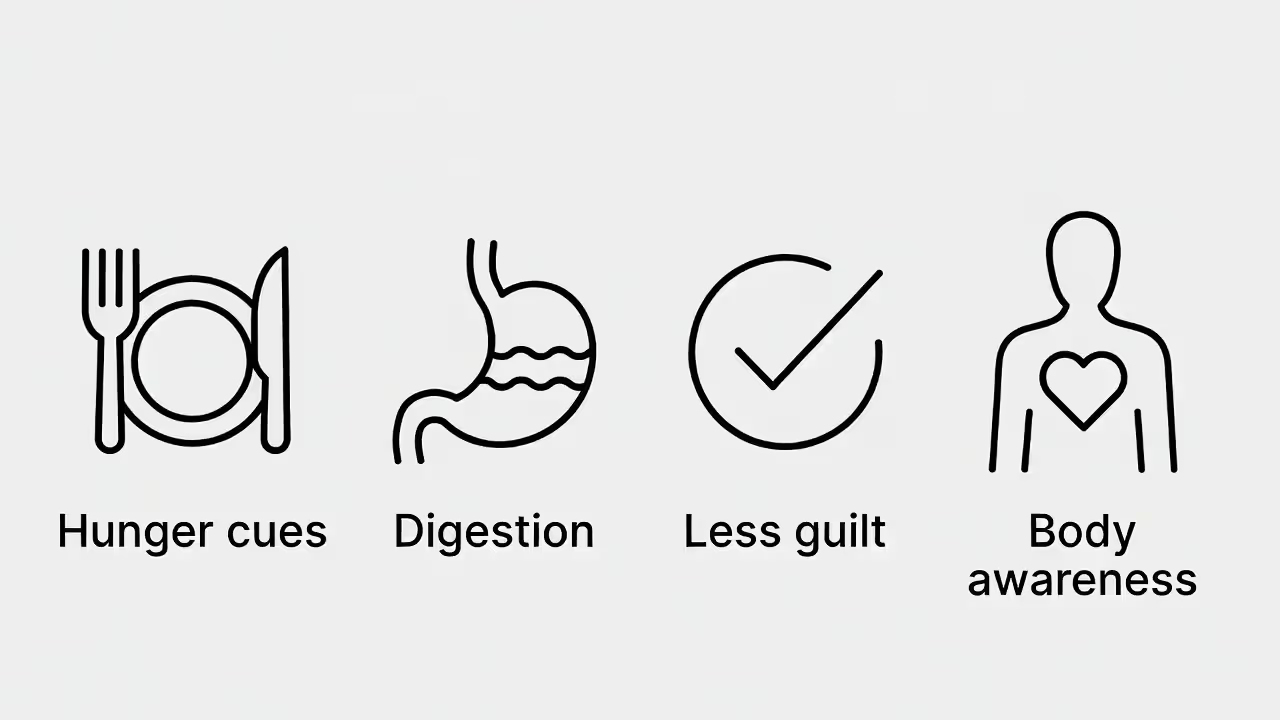
Implementing mindful eating yoga generates particular advantages when sustained regularly across duration. Establishing practical expectations blocks dissatisfaction and supports maintainable exercise.
Enhanced recognition develops initially and most obviously. You'll identify hunger messages sooner, register fullness before overconsumption, pinpoint emotional consumption motivations, and witness how varied foods influence your vitality and mental state. This recognition itself represents valuable advancement even before actions transform significantly.
Superior digestion through slower consumption permits appropriate nourishment breakdown and signals your nervous system when you've consumed sufficiently. Complete mastication decreases digestive burden. Consuming while relaxed (parasympathetic engagement) instead of tense (sympathetic engagement) advances nutrient absorption.
Decreased tension around nourishment surfaces as you abandon strict regulations and self-condemnation. Nourishment becomes fuel and satisfaction instead of moral conflict. You discontinue classifying foods as "virtuous" or "sinful," decreasing shame and worry around consumption.
Enhanced physical connection grows as you exercise attending to bodily feelings connected to hunger, fullness, satisfaction, and how foods influence you. This body awareness reaches beyond consumption—many individuals describe generally improved physical recognition in activity and relaxation.
These advantages exclude guaranteed size reduction. Some individuals reduce size, some sustain size, some increase size. Mindful eating yoga concentrates on cultivating healthy nourishment and physical connections, not reaching particular physical dimensions.
When we practice mindful eating, we learn to return to the present moment and truly experience our food.
— Jan Chozen Bays
Common Mistakes When Practicing Conscious Eating
Converting mindful consumption into another restriction program constitutes the most typical error. If you're employing recognition as a size-reduction tactic or management instrument, you're overlooking the principle. Mindfulness serves recognition and reception, not control and domination.
Flawlessness undermines maintainable exercise. You won't consume mindfully at every consumption. You'll occasionally consume while scattered, take in beyond fullness, or consume emotionally. These aren't shortcomings—they're human participations and chances to witness without condemnation.
Disregarding genuine hunger serving mindfulness generates difficulties. If you're authentically hungry and postpone consumption to exercise "flawless" mindfulness, you're damaging yourself. Mindful consumption incorporates respecting hunger quickly.
Anticipating immediate alteration establishes you for letdown. Transforming decade-old consumption sequences demands duration, tolerance, and regular exercise. You're retraining neural connections and building new capacities. This occurs steadily through repetition, not immediately through understanding.
Employing mindfulness to validate limitation or management pursues diet culture masked as wellness. If your mindful consumption exercise incorporates strict regulations, nourishment fear, or physical dissatisfaction as main drivers, you're probably exercising disordered consumption beneath a mindfulness designation.
7-Day Starter Plan for Mindful Eating
Author: Ava Mitchell;
Source: yogapennsylvania.com
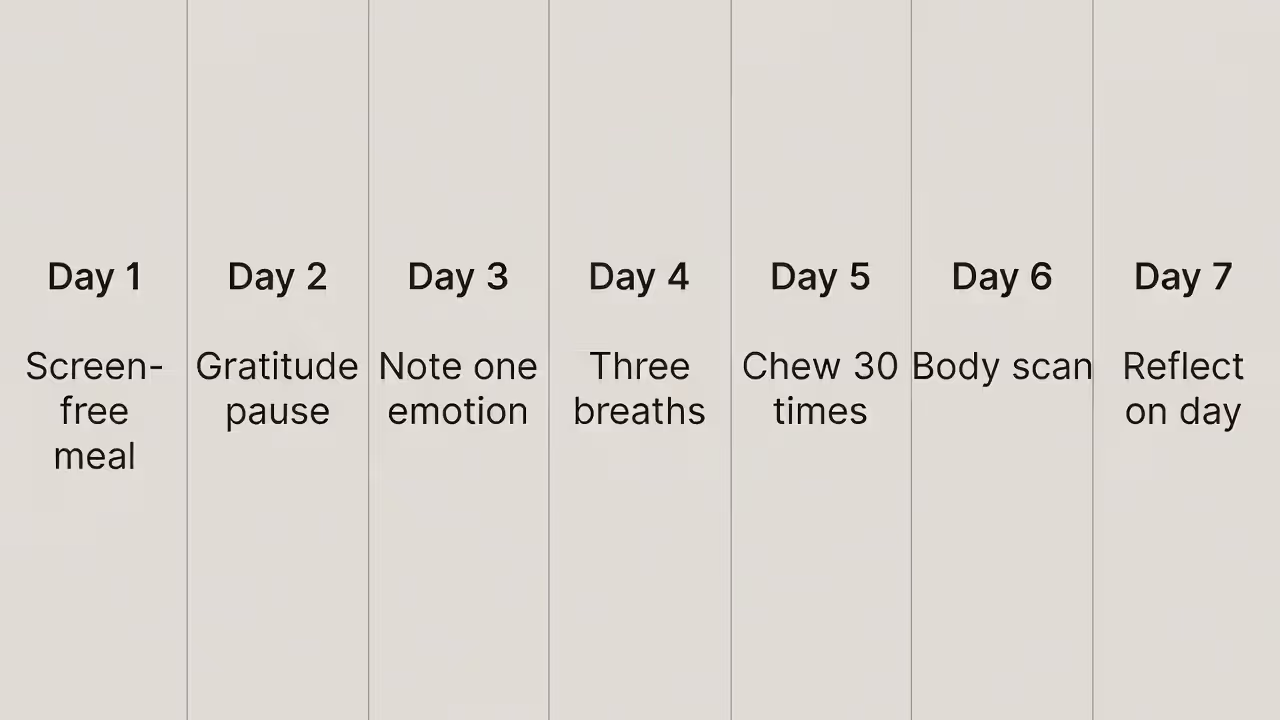
This week-duration scheme presents aware consumption exercises progressively, constructing capacities without overwhelming you. Don't fixate on flawlessness—concentrate on attempting each exercise and registering what occurs.
Day 1: Display-Free Consumption
Select one meal to consume without any displays—no phone, television, computer, or reading substances. Simply rest with your nourishment and consume. Register how this seems different from scattered consumption. What do you witness about flavor, satisfaction, or rhythm?
Day 2: Appreciation Ceremony
Before your selected meal, stop for 30 seconds. Recognize one element of this meal you're appreciative for—could be the cultivator who raised ingredients, the individual who cooked it, or simply possessing nourishment accessible. Register if this quick appreciation exercise transforms your consumption participation.
Day 3: Emotional Motivation Recording
Throughout the duration, whenever you consume or sense tempted to consume, quickly record: present feeling, hunger status (1-10), what prompted the consumption desire. Don't condemn—simply witness and document. Examine sequences in the evening.
Day 4: Breath Before Mouthful
Before beginning your meal, complete three deliberate, full breaths. Sense your midsection expand with each intake, discharge holding patterns with each release. Then start consumption, attempting to sustain this peaceful recognition throughout the meal.
Day 5: Deliberate Mastication
Select one meal to exercise chewing each mouthful 20-30 times before swallowing. This seems ridiculously deliberate initially. Register how flavor transforms with prolonged mastication, how rapidly you ordinarily swallow, and whether consuming more deliberately influences satisfaction.
Day 6: Physical Examination
Before consumption, invest 2 minutes examining your physical form from crown to midsection. What bodily feelings signal hunger? How does your midsection genuinely sense? Are you participating genuine bodily hunger or consuming for alternative reasoning?
Day 7: Contemplation
Examine your duration. Which exercises seemed most beneficial? What did you discover about your consumption sequences? Select one exercise to persist into subsequent duration. Acknowledge your readiness to investigate recognition without condemnation.