
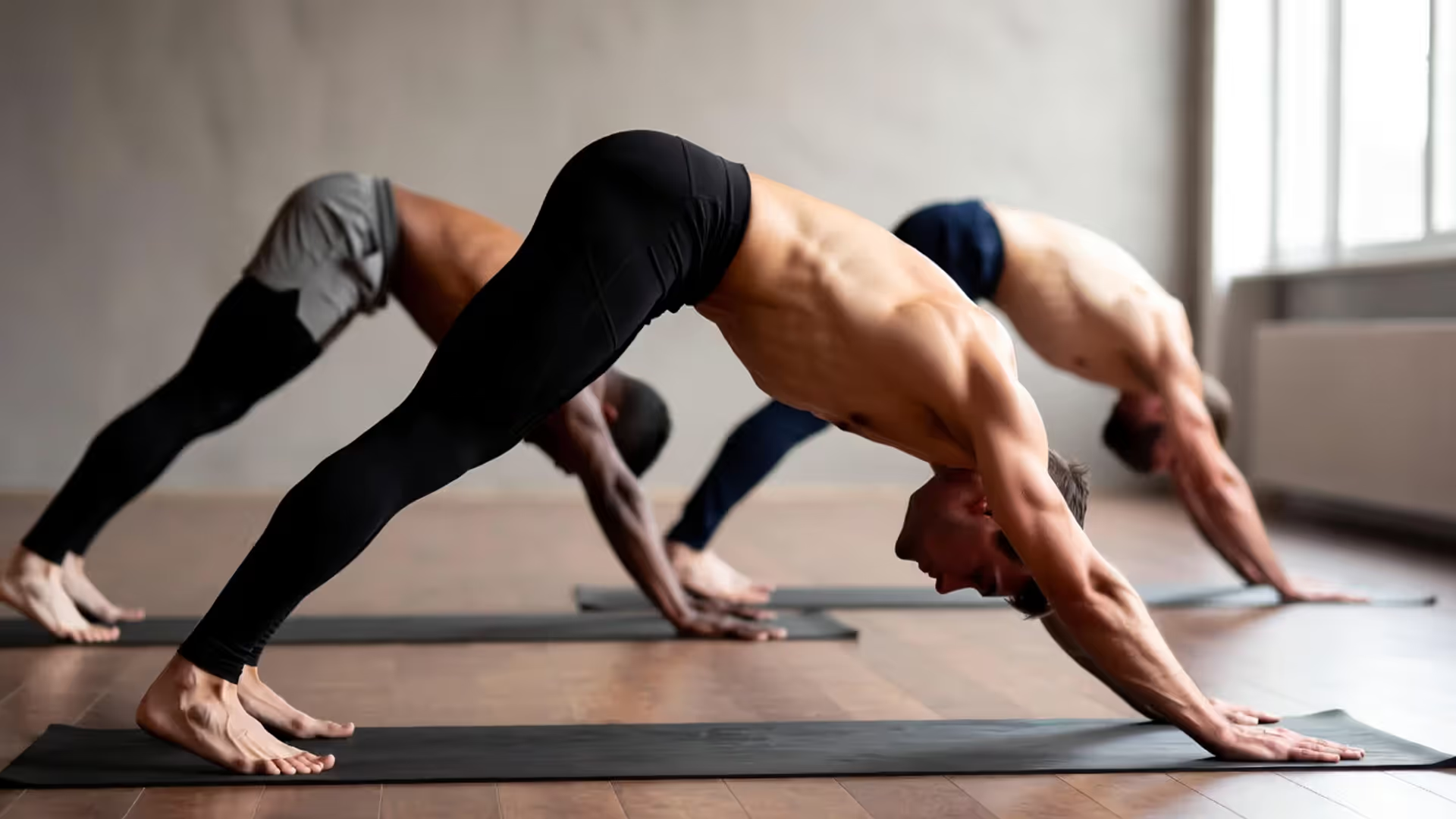
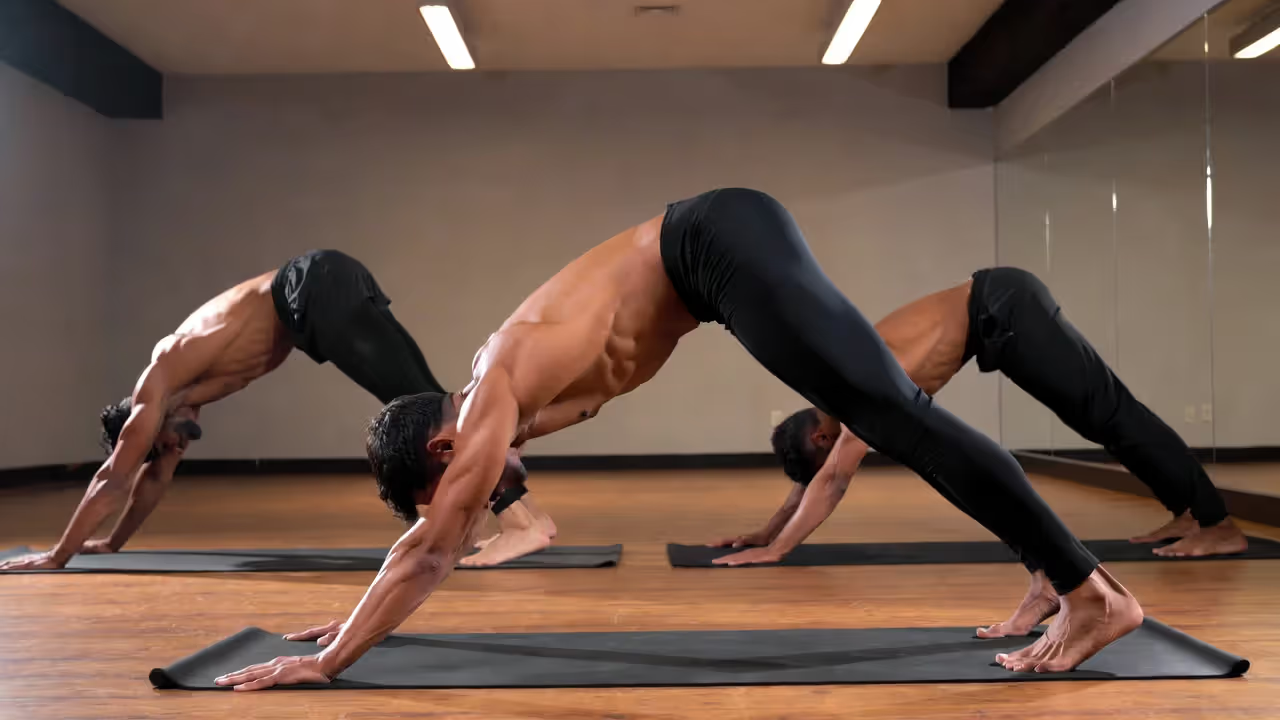
Man in fitted yoga leggings practicing downward dog in a studio, with other men wearing different yoga pant styles.
Yoga Pants for Men Guide to Fit Fabric Style
A guy walks into a yoga studio wearing basketball shorts. Ten seconds into his first downward dog, the shorts ride up past his knees, the drawstring digs into his waist, and the cotton is already soaked. He spends the rest of class adjusting. This happens constantly — and it's entirely avoidable.
The right pair of purpose-built bottoms changes everything about how a man moves through a practice. This guide covers types, fabrics, fit details, activity-based picks, and the fitting mistakes that cost people money.
Why More Men Are Wearing Yoga Pants
A decade ago, the men's side of any activewear store was cargo shorts and baggy sweats. That's shifted. Performance-oriented bottoms now account for a growing share of mens yoga wear, driven partly by CrossFit and functional fitness pushing snug-fit gear into the mainstream.
The practical reasons are straightforward. Fitted bottoms eliminate bunching during deep stretches. Supportive panels stabilize muscles during long holds. Sweat-wicking materials keep skin dry in heated rooms. And unlike cotton sweats, modern synthetics don't gain two pounds of water weight mid-class.
The performance difference is most noticeable during floor transitions. Loose shorts ride up in shoulderstand. Baggy sweats catch under your knees in pigeon pose. Purpose-built bottoms stay where they belong while you focus on the movement rather than your wardrobe.
There's also the athleisure factor. A well-fitted pair crosses over from studio to coffee shop to airport without looking out of place. The category of mens athleisure yoga pants barely existed five years ago — now it's one of the fastest-growing segments in men's activewear. The line between performance gear and casual clothing has effectively disappeared for most men under 45.
Types of Yoga Pants for Men: Leggings, Tights, Joggers, and More
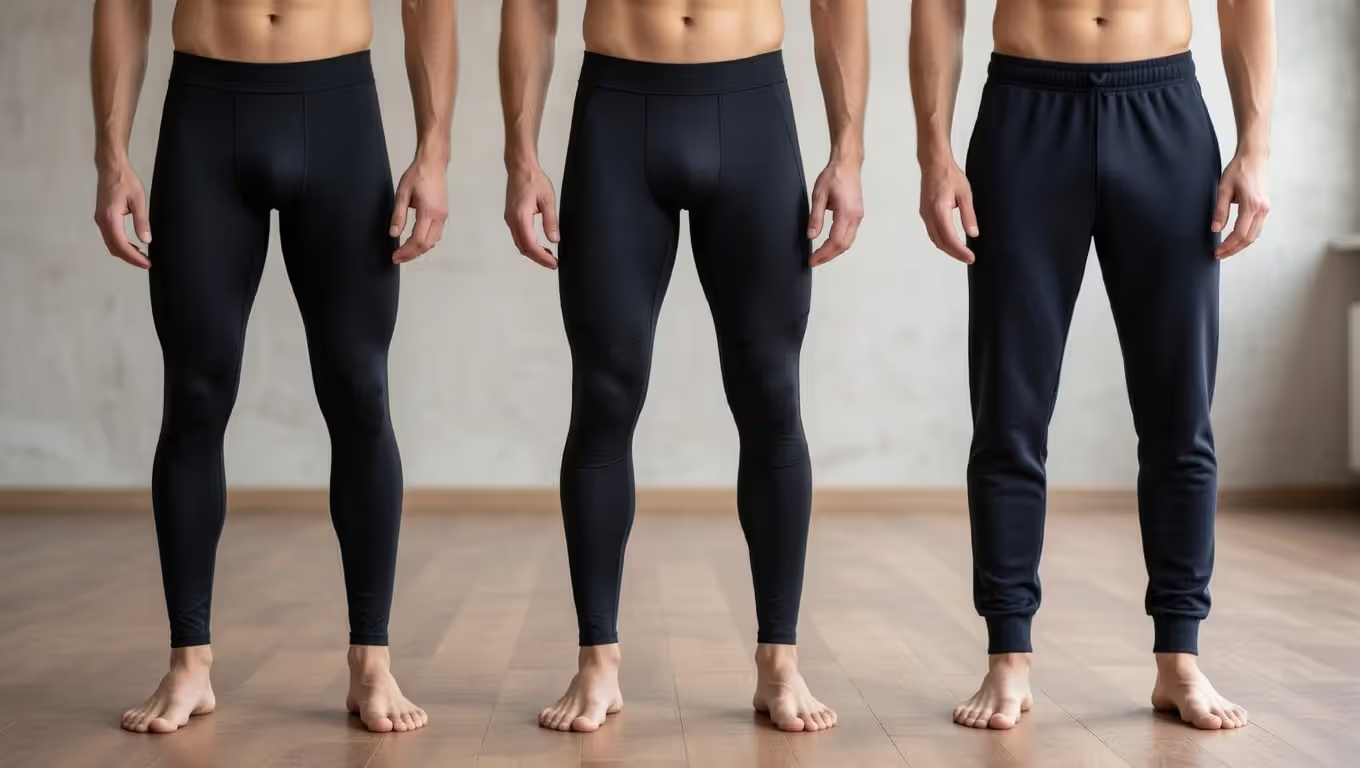
Not all bottoms serve the same purpose. The three main categories each solve a different problem.
Author: Ava Mitchell;
Source: yogapennsylvania.com
Mens Yoga Leggings (Compression Fit)
These sit tight against the skin from waist to ankle. The snug fit promotes blood flow, reduces muscle vibration during holds, and gives a teacher clear sight lines to correct your alignment — which matters more than most people realize.
Best suited for hot classes and power vinyasa where excess material becomes a liability. Many men layer shorts over them for coverage. That combination — a fitted base layer underneath, loose shorts on top — is the most popular setup in heated studios across the U.S. You'll see it in roughly 60–70% of male practitioners at any Bikram or hot vinyasa class.
Workout Tights for Men
Tights overlap with leggings but tend toward heavier compression and reinforced panels at the knees and quads. They're built for multi-sport use: lifting, HIIT, and plyometrics alongside mat work.
The key difference from dedicated leggings is material weight. Tights use thicker constructions (typically 250–300 GSM) compared to leggings (180–220 GSM). That added density provides more muscle stabilization but trades off some airflow. For a heated room, leggings win. For a strength-focused hybrid class, tights hold up better under load.
Relaxed and Athleisure Options
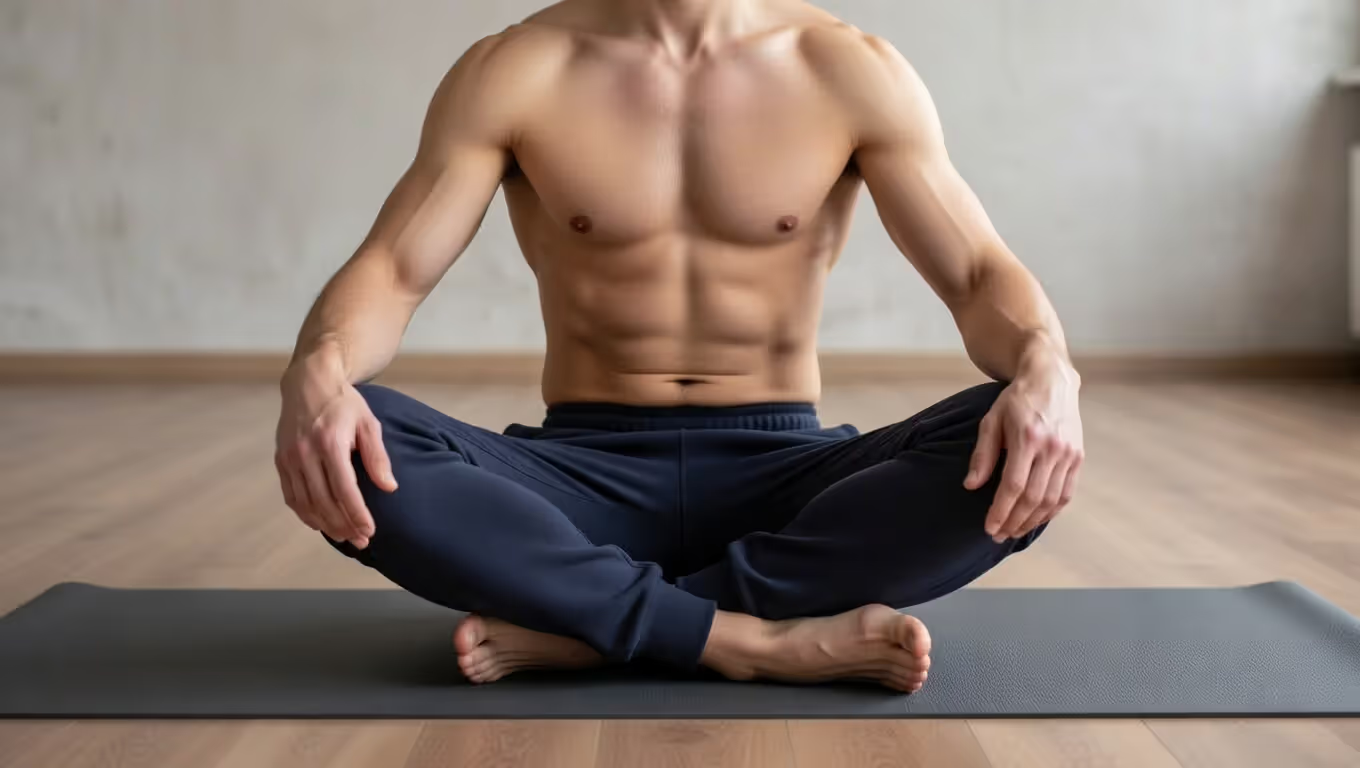
Jogger-style bottoms with tapered ankles and elastic cuffs bridge the gap between performance and street style. These are the go-to for men who want to move freely in class but also run errands afterward without changing. Most feature a blend of polyester and elastane with a brushed interior — soft enough for all-day wear, functional enough for moderate practice.
The trade-off is precision. Loose material can obstruct a teacher's view of knee alignment and won't provide any supportive squeeze. For restorative or yin sessions — where you're mostly on the floor in passive stretches — that's fine. For fast-paced flows, a tighter cut works harder for you.
| Type | Fit | Best For | Pros | Considerations |
| Compression leggings | Skin-tight, ankle-length | Hot yoga, power vinyasa | Full range of motion, sweat control, alignment visibility | May need shorts layered on top for coverage |
| Workout tights | Snug, reinforced panels | Strength training, HIIT, hybrid classes | Heavier muscle support, durable construction | Less breathable in heated rooms |
| Jogger-style pants | Relaxed taper, elastic cuffs | Restorative yoga, casual wear, travel | Studio-to-street versatility, no layering needed | No compression, fabric may bunch in deep poses |
How to Choose the Best Yoga Pants for Men
Three factors matter most: fabric, fit, and functional details. Get those right and the brand becomes secondary.
Author: Ava Mitchell;
Source: yogapennsylvania.com
Fabric Guide: What Makes Breathable Yoga Clothing for Men
The material determines 80% of your comfort. When shopping for breathable yoga clothing for men, prioritize fiber composition over brand name. Here's what separates good options from poor ones.
Nylon-spandex blends (80/20 or 75/25): The gold standard for active use. Nylon provides durability and a smooth hand feel; spandex delivers stretch and snap-back recovery. This combination channels moisture efficiently and holds its shape after hundreds of washes. Most premium brands use this ratio. One reliable indicator of quality: if the tag lists the exact spandex percentage (e.g., "18% Lycra"), the manufacturer is transparent about construction. Vague terms like "stretch blend" with no percentages usually signal a cheaper build.
Polyester-elastane blends: Slightly cheaper to produce, almost as effective. Polyester resists UV and dries faster than nylon but can trap odors over time — a real issue if you practice five or six days a week. Look for versions with anti-microbial treatment if you tend to sweat heavily. The best polyester blends feel nearly identical to nylon on the skin; the difference only shows up after months of repeated use.
Cotton blends: Soft and comfortable at rest, but cotton absorbs moisture instead of channeling it away. A 60/40 cotton-poly blend works for gentle home practice. For anything heated or vigorous, skip it entirely. Cotton also stretches out permanently over time — those baggy knees after two months of wear are not a defect; they're what cotton does under repeated load.
What "4-way stretch" actually means: Material that extends both lengthwise and crosswise, then returns to shape. Most quality activewear has this. If a product doesn't specify stretch direction, it's likely 2-way only — fine for walking, inadequate for deep lunges and hip openers.
Fit, Support, and Coverage
Tightness level runs a spectrum. Light pressure (15–20 mmHg) suits long-hold yin sessions. Medium (20–30 mmHg) handles power flows and heated rooms. Heavy squeeze is overkill for mat work — save it for post-workout recovery sleeves.
Rise matters more than people expect. Mid-rise sits at the navel and works for most body types. High-rise panels prevent the waistband from rolling down during forward folds — a persistent annoyance that low-rise options almost always cause.
A gusseted crotch (a diamond-shaped insert at the inseam junction) eliminates the pulling sensation during wide-stance poses. If you've ever felt restricted in warrior II, a missing gusset is likely the reason.
Waistband security comes from a wide elastic band, ideally with an internal drawstring. Thin bands fold over during inversions. A drawstring alone isn't enough — the band itself needs width to distribute pressure evenly.
When men stop adjusting their clothes, they start adjusting their breath, their alignment, and their focus. The right gear disappears — and that’s exactly the point.
— Mark Stephens, yoga teacher
Pre-purchase checklist:
- 4-way stretch material
- Sweat-wicking treatment
- Squat-proof opacity (no show-through when bent)
- Flatlock or bonded seams (no chafing)
- Secure, wide waistband with drawstring
Pockets, Seams, and Durability
Flatlock seams lie flat against skin instead of creating a raised ridge. This prevents the raw-skin irritation that conventional stitching causes during repetitive movement. Check inner thigh seams especially — that's where chafing hits first.
Hidden side pockets or a small back-waistband pocket handle keys and cards without creating bulk. Large cargo-style pockets have no place on fitted performance bottoms — they interfere with hip flexion and ruin the silhouette.
Anti-odor technology (silver-ion or zinc-based treatments) extends the life of each wear between washes. This matters for anyone practicing daily, since frequent laundering degrades elastane faster than any other factor.
Best Picks by Activity
Author: Ava Mitchell;
Source: yogapennsylvania.com
For Hot Rooms
Breathable materials are non-negotiable here. Look for mesh ventilation zones behind the knees or along the inner thighs. Lightweight leggings in the 150–190 GSM range keep you cool. Dark colors hide sweat marks. Avoid anything with a fleece lining — it sounds obvious, but off-season clearance deals catch people every year.
For Strength Training and Cross-Training
Reinforced tights with flatlock seams handle barbell contact and box jumps. A higher GSM construction (250+) resists pilling from abrasive gym surfaces. Opacity matters here since deep squats test every seam. If the material turns sheer at full depth, return them.
For Travel and Athleisure
Jogger-cut options in a nylon blend look clean enough for a flight or a lunch meeting and perform well in a hotel gym. Wrinkle resistance and quick-dry properties matter more for travel than tightness does. Two pairs of lightweight joggers can cover a full week of movement if you rinse them in the sink nightly. Look for a slim taper that doesn't pool at the ankle — a clean silhouette makes the difference between "athletic" and "sloppy" in non-gym settings.
For Beginners
Start with a mid-priced jogger or a semi-fitted straight-leg option. Tight-fitting gear works better once you know your preferred practice style. Spending $90 on leggings before you've committed to a regular schedule is a common and expensive mistake. A $30–$45 pair from a reputable athletic brand gives you everything you need for the first three months — upgrade once you know whether you gravitate toward heated vinyasa or relaxed floor work.
| Activity | Recommended Style | Key Features to Prioritize |
| Hot yoga | Lightweight compression leggings | Mesh vents, sub-190 GSM fabric, dark colors |
| Strength / cross-training | Reinforced tights | 250+ GSM, squat-proof, flatlock seams |
| Travel / athleisure | Nylon-blend joggers | Wrinkle-resistant, quick-dry, tapered fit |
| Beginners | Semi-fitted jogger or straight-leg | Mid-price, 4-way stretch, wide waistband |
Common Mistakes When Buying
Choosing cotton for heated practice. Cotton absorbs up to 27 times its weight in water. In a 95°F room, you'll be wearing a wet towel by the halfway mark.
Ignoring inseam length. A 28-inch inseam pools at the ankle on a 5'8" frame. Excess material bunches behind the knee and limits ankle mobility. Measure your actual inseam — don't guess from jeans sizing, which often runs longer. Most brands offer 28", 30", and 32" options; choosing the wrong one transforms an otherwise good pair into something unwearable.
Buying maximum compression for a gentle class. Heavy tightness restricts rib expansion during pranayama (breathwork). For slow, breath-centered sessions, lighter pressure is better.
Skipping the squat test in the fitting room. Drop into a full squat under fluorescent light. If you can see skin tone through the material, the weave is too loose. This is the single most reliable quality check you can do in-store.
Assuming all "moisture-wicking" claims are equal. Budget polyester with a basic treatment dries slower and retains odor faster than nylon-spandex with embedded antimicrobial tech. Read the fiber composition label, not just the marketing copy.
Author: Ava Mitchell;
Source: yogapennsylvania.com
How Should Yoga Pants for Men Fit?
Snug but not constricting. You should feel gentle, even contact against the skin without numbness, tingling, or visible muffin-top at the waist.
The 3-movement fitting test:
Squat. Drop to full depth. The waistband should stay in place — no sliding, no folding. Material at the knees and seat should stretch without turning translucent.
Forward fold. Hinge at the hips and reach for the floor. The rear seam shouldn't ride uncomfortably. The waist shouldn't gap away from the lower back.
Lunge. Step one foot forward into a deep lunge. No pulling at the inner thigh. No restriction in hip flexion. The cuff (if present) shouldn't ride up past mid-calf.
If all three movements feel unrestricted and everything stays opaque, the fit works.
Care and Maintenance Tips
Cold water only — heat breaks down elastane fibers and kills stretch recovery. Wash on a gentle cycle or hand-wash after each use.
Skip softener entirely. Softeners coat synthetic fibers with a waxy residue that blocks sweat-wicking properties. Within three washes, your high-performance garment acts like cheap cotton.
Air dry flat or hang on a drying rack. Tumble drying accelerates elastane breakdown and can cause permanent shrinkage in blended constructions. If you need them dry fast, a fan pointed at the hanging garment works in under two hours.
Turn them inside out before washing to protect the outer finish and reduce pilling from contact with zippers on other items in the load.
Frequently Asked Questions
Finding the right pair comes down to matching material and fit to your actual practice. Heated room? Lightweight nylon-spandex leggings. Strength hybrid? Reinforced tights. Casual studio sessions? Tapered joggers. Run each candidate through the squat-fold-lunge test before you commit, check the label for fiber ratios, and wash cold without softener. That combination of informed shopping and basic care keeps your gear performing for years instead of months. One good pair that matches your practice will always outperform three cheap ones that don't.
Related Stories

Read more
Read more


The content on yogapennsylvania.com is provided for general informational and inspirational purposes only. It is intended to share yoga tips, meditation practices, wellness guidance, retreat experiences, and lifestyle insights, and should not be considered medical, therapeutic, fitness, or professional health advice.
All information, articles, images, and wellness-related materials presented on this website are for general informational purposes only. Individual health conditions, physical abilities, wellness goals, and experiences may vary, and results can differ from person to person.
Yogapennsylvania.com makes no representations or warranties regarding the accuracy, completeness, or reliability of the content provided and is not responsible for any errors or omissions, or for decisions or actions taken based on the information presented on this website. Readers are encouraged to consult qualified healthcare or wellness professionals before beginning any new yoga, meditation, or fitness practice.