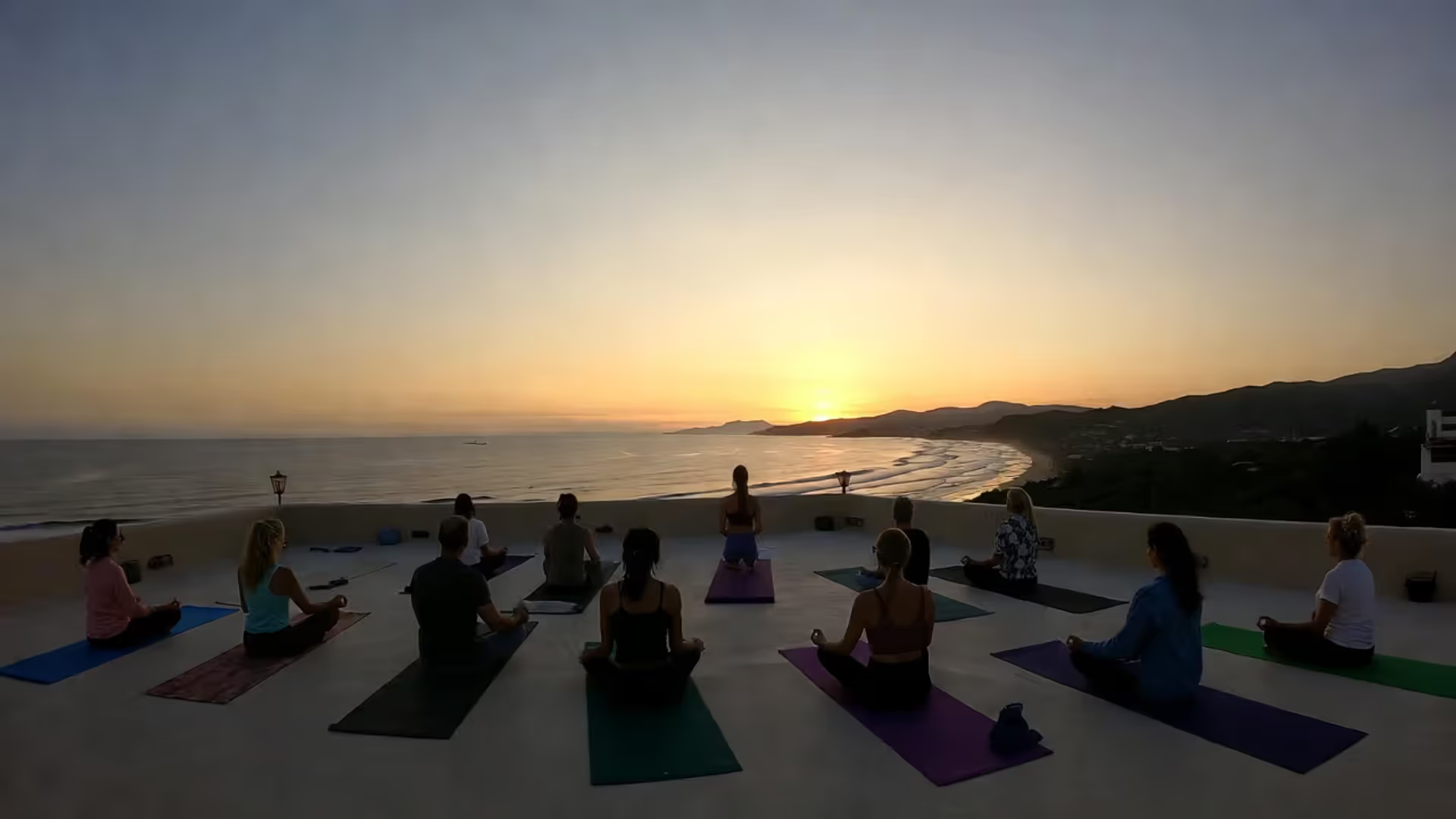
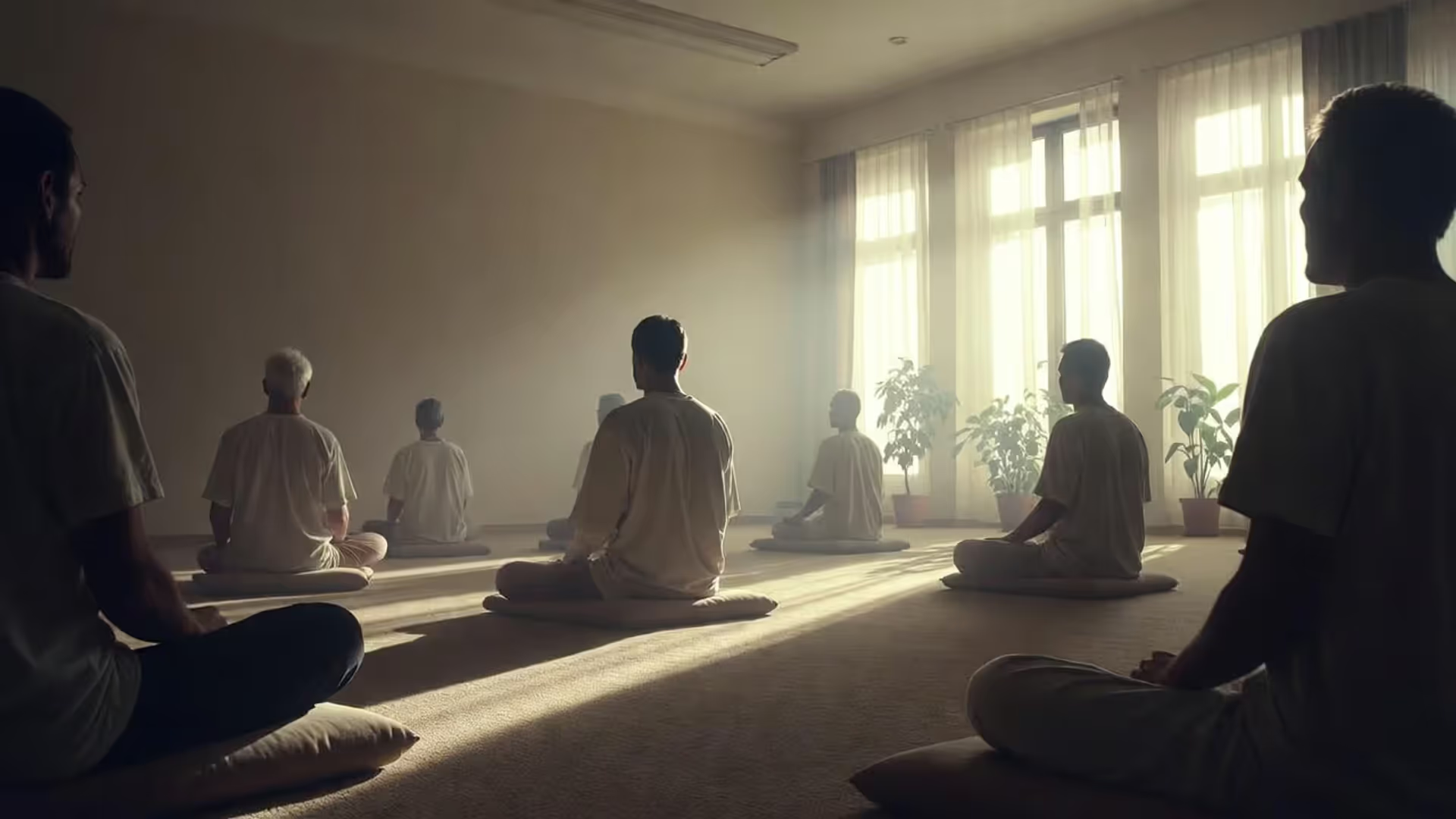

Deciding to attend a meditation retreat marks a significant commitment—you're signing up to sit with your mind for days without the usual escape routes of Netflix, work emails, or social media. The challenge isn't finding a retreat; it's navigating dozens of options that range from austere 10-day silent programs to weekend spa-like experiences.
What Is a Meditation Retreat?
A meditation retreat removes you from routine environments and establishes dedicated conditions for sustained contemplative practice. Unlike dropping into a weekly meditation class, retreats immerse you completely in practice from morning wake-up through evening sessions, creating momentum impossible to achieve through scattered daily sits at home.
Structured schedules eliminate decision fatigue and external demands. You're told when to wake, eat, meditate, and sleep. This regimentation sounds restrictive but actually frees mental energy otherwise spent managing logistics. Your only job: show up and practice.
Digital detox forms a non-negotiable element of legitimate retreats. Expect to surrender phones, laptops, and tablets upon arrival. No checking weather, news, or whether your partner remembered to feed the cat. This disconnection triggers withdrawal symptoms initially—phantom phone buzzing, compulsive reaching for devices that aren't there—before settling into unexpected relief.
Duration varies from intensive weekends (2-3 days) through standard week-long formats (5-7 days) to extended commitments exceeding 30 days. Shorter programs suit beginners testing the waters or busy professionals grabbing brief respites. Longer retreats allow progression beyond initial resistance into states requiring sustained practice to access.
Types of Meditation Retreats in the USA
American meditation centers offer distinct approaches reflecting various Buddhist lineages, secular mindfulness movements, and contemporary adaptations. These differences profoundly affect your experience.
Silent Meditation Retreat USA
Author: Jackson Wright;
Source: yogapennsylvania.com
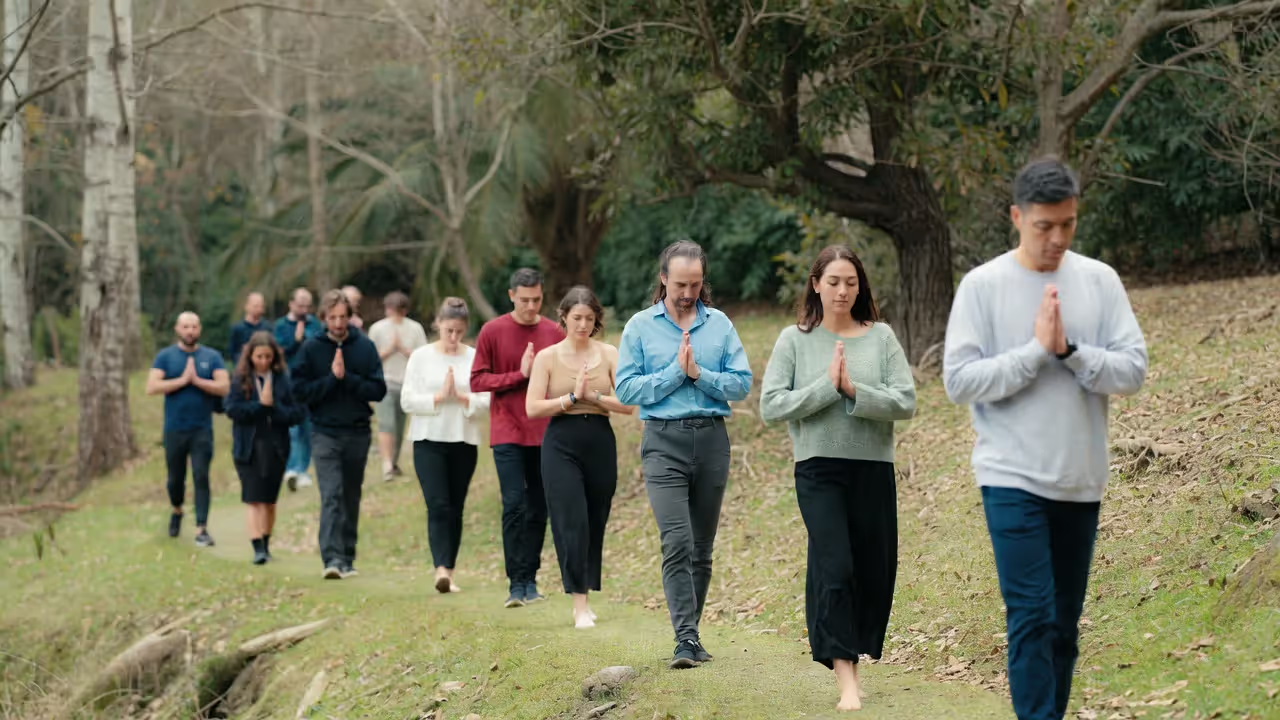
Silent retreats enforce "noble silence"—complete verbal abstinence except during teacher consultations or group instructions. You pass people on walking paths without acknowledgment. Meals happen in collective quiet. Days unfold without small talk, complaints, or casual connection.
Eliminating phones and reading extends the silence beyond speech. You can't fill awkward moments scrolling or escape uncomfortable feelings by diving into novels. Some centers prohibit journaling extensively, eye contact, or even physical exercise beyond designated walking meditation. The point: nowhere to hide from direct experience.
Daily meditation schedules typically demand 8-12 hours of formal practice alternating between seated sessions (45-60 minutes) and walking periods (20-30 minutes). Your day consists almost entirely of observing breath, body sensations, or consciousness itself with minimal variation.
Vipassana Retreat USA
Vipassana programs follow specific formats, most commonly the 10-day course structure popularized by S.N. Goenka's organization. These retreats teach insight meditation—systematic body scanning designed to develop equanimity toward physical sensations and, by extension, all experience.
The 10-day format remains fixed at traditional centers. You commit fully or don't attend—no leaving after five days because it's harder than expected. The first three days focus exclusively on breath awareness (anapana) to develop concentration. Days four through ten introduce the scanning technique (vipassana proper).
Donation-based operations distinguish Goenka centers from most American retreats. There's no registration fee. Accommodation, meals, and instruction are provided freely, supported entirely by donations from past students. After completing your course, you can contribute whatever amount makes sense for your financial situation, or nothing at all.
Mindfulness Retreat USA
Mindfulness retreats typically emphasize secular applications—stress reduction, emotional regulation, present-moment awareness—without Buddhist religious frameworks. These programs attract people interested in meditation's practical benefits who feel uncomfortable with traditional Buddhist contexts.
Guided practices feature more verbal instruction than austere silent retreats. Teachers explain techniques thoroughly, provide frequent meditation guidance, and maintain accessible relationships with students rather than holding distant authority positions.
Gentler schedules accommodate people new to intensive practice. You might meditate 4-6 hours daily instead of 10, with optional sessions, longer breaks, and freedom to rest when physical or mental fatigue becomes counterproductive.
The best way to capture moments is to pay attention. This is how we cultivate mindfulness.
— Jon Kabat-Zinn
Weekend Meditation Retreat
Weekend formats compress retreat experiences into Friday evening through Sunday afternoon, allowing participation without using vacation days. You arrive after work Friday, practice intensively Saturday and Sunday, then return to normal life Monday morning.
These abbreviated programs serve as periodic resets rather than deep transformative work. A quarterly weekend retreat maintains practice momentum and provides community connection without the scheduling challenges of week-long commitments.
The lower barrier to entry—both time and financial—makes weekend retreats ideal for testing intensive practice before committing to longer programs. If you find two days unbearable, you've learned something important about your readiness without sacrificing a full vacation week.
| Retreat Type | Typical Length | Silence Required | Best For |
| Silent Retreat | 3-10 days | Complete noble silence | Experienced practitioners, intensive inner work |
| Vipassana | 10 days (standardized) | Noble silence throughout | Systematic technique training, traditional format |
| Mindfulness | 3-7 days | Partial or none | Newcomers, secular preferences, gentle introduction |
| Weekend | 2-3 days | Varies by location | Limited schedules, first experiences, regular renewal |
Meditation Retreat for Beginners: What to Know

Author: Jackson Wright;
Source: yogapennsylvania.com
First-time retreat participants frequently misjudge what they're signing up for. Extended meditation proves far more challenging than anticipated—physically uncomfortable, mentally exhausting, and emotionally intense even when you arrive enthusiastic and well-intentioned.
Is a Silent Retreat Too Intense for Beginners?
Silent retreats can absolutely work for beginners, but success depends heavily on choosing appropriate programs and maintaining realistic expectations. The silence itself rarely constitutes the primary difficulty—most people adapt within 24-48 hours. The combination of silence plus 8-12 hours daily meditation plus confronting unfiltered mental patterns creates the challenge.
Beginner-friendly silent retreats exist with modified schedules (6-8 hours instead of 10-12), abundant instruction, and teachers readily available for consultation. These differ dramatically from intensive retreats designed for experienced practitioners where teachers assume you understand basic technique and can navigate difficulties independently.
Consider your meditation history honestly. If you've never sat for more than 15 minutes consecutively, jumping into 10 days of hour-long sits might prove overwhelming. Better to start with a weekend mindfulness program or 3-5 day introductory retreat before attempting full-intensity formats.
How to Prepare for Your First Retreat
First Retreat Preparation:
Physical conditioning matters more than people realize. Your body needs preparation for sitting cross-legged or on a chair for hours daily. Start sitting on your meditation cushion at home for progressively longer periods. Notice where your body tightens, which muscles fatigue, and how posture affects sustainability.
Mental preparation includes tempering expectations. You probably won't achieve enlightenment, experience perfect peace, or solve all your problems. You will get uncomfortable, bored, restless, and irritated. The practice involves working skillfully with these states, not transcending them magically.
Popular Spiritual Retreat Centers in the USA

Author: Jackson Wright;
Source: yogapennsylvania.com
Geography offers diverse retreat environments across the country, each providing distinct atmospheric qualities and access to different teaching lineages.
Mountain retreat centers like Spirit Rock Meditation Center in California or Shambhala Mountain Center in Colorado provide elevation, panoramic views, and crisp air conducive to alert practice. Higher altitudes affect some people—expect increased fatigue and hydration needs during intensive sitting.
Forest hermitages including Bhavana Society in West Virginia or Clouds in Water Zen Center in Minnesota offer seclusion within natural settings. These smaller facilities typically host intimate groups (10-30 people) in rustic conditions emphasizing simplicity.
Coastal mindfulness centers such as Insight Meditation Society in Massachusetts or Wat Metta in California combine ocean or lake proximity with well-established teaching programs. Water environments provide calming ambient sounds and scenic walking meditation paths.
Monastic settings like Abhayagiri Buddhist Monastery in California or Birken Forest Buddhist Monastery in British Columbia (accessible to many US practitioners) allow laypeople to practice alongside resident monastics, experiencing traditional Theravada monastery protocols and schedules.
| Region | Typical Retreat Style | Average Cost | Best Season |
| West Coast | Insight, Zen, mindfulness | $600-1,300/week | Spring, fall (summer heat inland) |
| Mountain West | Shambhala, Tibetan traditions | $500-1,100/week | Summer, early fall (winter inaccessible) |
| Northeast | Vipassana, insight meditation | $800-1,600/week | Late spring through early fall |
| Southeast | Theravada, secular mindfulness | $400-950/week | Fall through spring (avoid humid summers) |
| Southwest | Desert contemplative, nonsectarian | $500-1,050/week | Winter, early spring (extreme summer heat) |
What a Typical Meditation Retreat Schedule Looks Like
Daily rhythms establish themselves quickly at retreat centers, with minor variations across different facilities and teaching approaches.
Standard Retreat Day:
5:30 AM - Wake-up bell rings
6:00 AM - First sitting meditation (60 minutes)
7:00 AM - Walking meditation or gentle yoga (30 minutes)
7:30 AM - Breakfast in silence
9:00 AM - Sitting meditation (60 minutes)
10:00 AM - Walking meditation (30 minutes)
10:30 AM - Sitting meditation (60 minutes)
12:00 PM - Lunch and extended rest period
2:00 PM - Sitting meditation (45 minutes)
3:00 PM - Walking meditation (45 minutes)
4:00 PM - Sitting meditation (45 minutes)
5:00 PM - Light dinner or tea only
6:00 PM - Sitting meditation (45 minutes)
7:00 PM - Dharma talk or meditation instruction (60 minutes)
8:15 PM - Final sitting meditation (30-45 minutes)
9:00 PM - Return to sleeping quarters, silence continues
This schedule totals approximately 8-9 hours of formal meditation practice. Rest periods, meals, and dharma talks provide breaks, though silence persists throughout. The repetitive structure eliminates daily decision-making, allowing complete attention on practice rather than logistical concerns.
How Much Does a Meditation Retreat Cost in the USA?
Author: Jackson Wright;
Source: yogapennsylvania.com
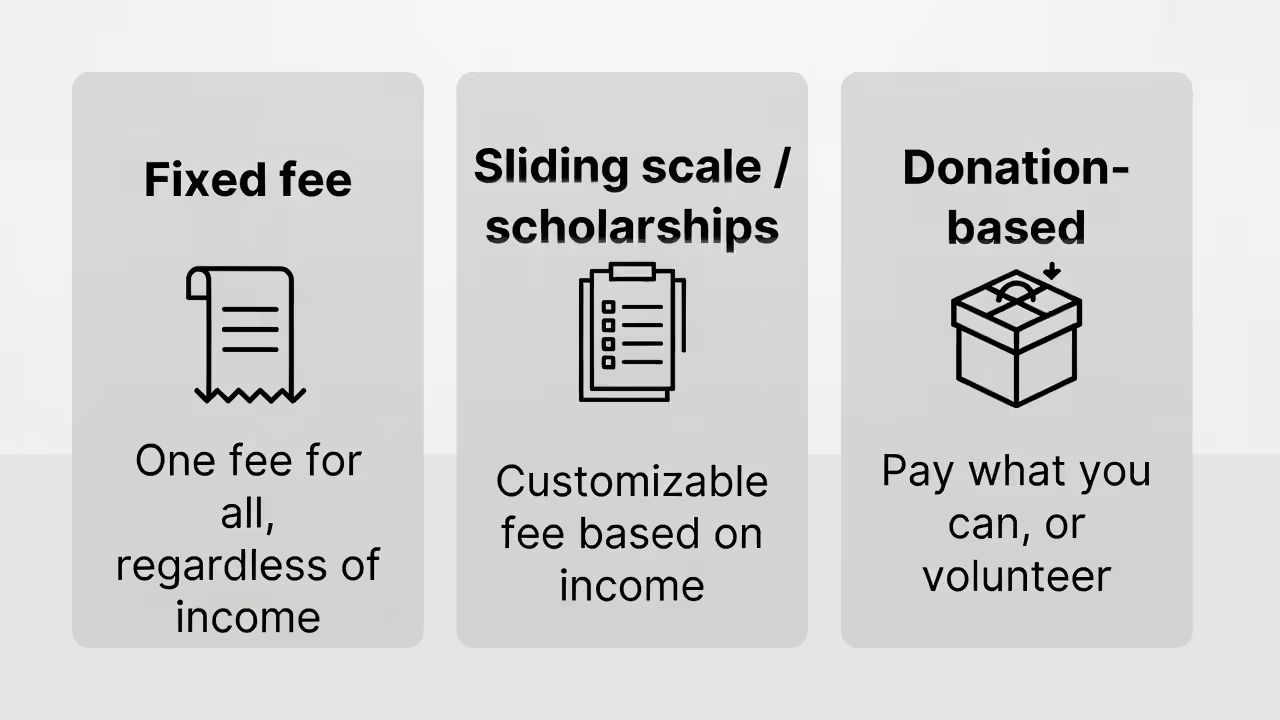
Pricing varies substantially based on location desirability, facility quality, program duration, and organizational philosophy. Understanding cost structures helps with realistic budgeting.
Weekend retreats generally range $200-$800 depending on the center's location and accommodation type. Urban centers near major cities charge premium rates; rural facilities offer lower pricing. Shared dormitory rooms cost less than private accommodations.
Week-long programs (5-7 days) typically run $800-$2,500 at established meditation centers. This usually covers shared housing, vegetarian meals, instruction, and facility access. Private rooms add $200-$500 to base costs. Upscale retreat centers with resort-like amenities can exceed $3,000 weekly.
Donation-based Vipassana centers following Goenka's tradition provide everything—accommodation, food, instruction—completely free. Students donate afterward based on their financial capacity and gratitude for the teaching. Typical donations range $200-$500, though any amount or nothing is acceptable. This model makes intensive meditation accessible regardless of income.
Cost Components:
- Accommodation: Shared rooms minimize expenses; private rooms command 30-50% premiums. A few centers offer camping at reduced rates.
- Meals: Included universally. Expect simple vegetarian fare, often vegan, with attention to dietary restrictions.
- Instruction: Built into retreat fees at most centers. Donation-based programs conceptually separate teaching from logistics.
- Transportation: Never included. Factor in airfare or fuel costs, potentially adding $150-$1,200 depending on distance and travel method.
- Incidentals: Minimal since you need virtually nothing during retreat. Budget for travel snacks, perhaps a meditation cushion if you lack one.
Luxury meditation retreats exist at $2,500-$7,000+ weekly, offering spa services, gourmet cuisine, upscale rooms, and resort amenities. These blend meditation with vacation, serving different needs than traditional intensive practice environments.
Benefits of Attending a Meditation Retreat
Participants commonly report specific shifts following retreat experiences, though outcomes vary widely based on practice commitment, individual circumstances, and retreat intensity.
Increased concentration capacity emerges from sustained attention training. Spending days repeatedly redirecting wandering attention strengthens focus muscles. Many people notice improved work concentration and reduced distractibility lasting weeks or months post-retreat.
Stress reduction occurs both during retreats (removing yourself from stressors) and after (developing better stress response patterns). The nervous system gets extended rest from chronic activation, potentially lowering baseline anxiety levels.
Emotional clarity develops through observing feelings arise and dissolve without immediate reaction or suppression. You might gain insight into emotional triggers, recognize habitual patterns, or process unresolved experiences that surface during extended sitting.
Community bonds form even in silent environments. Practicing alongside others creates shared understanding and mutual support. Some people maintain friendships or practice partnerships initiated at retreats for years afterward.
These represent possibilities, not guarantees. Meditation retreats create conditions supporting such outcomes, but results depend on individual effort, aptitude, timing, and often factors beyond anyone's control.
How to Choose the Right Meditation Retreat

Author: Jackson Wright;
Source: yogapennsylvania.com
Selecting appropriate retreats requires honest evaluation of meditation experience, schedule constraints, financial resources, and learning style preferences.
Based on Experience Level
Complete beginners benefit most from retreats explicitly welcoming first-timers, offering extra instruction, modified schedules, and accessible teachers. Weekend mindfulness programs or beginner-specific courses provide gentler entry points than standard 10-day intensive formats.
Intermediate practitioners maintaining regular daily practice can handle conventional silent retreats or Vipassana courses. You possess sitting endurance and technique familiarity necessary for longer meditation periods and less frequent instruction.
Advanced practitioners often seek extended retreats (2-4 weeks), intensive schedules, specific teachers, or advanced techniques beyond foundational practices taught in standard programs.
Based on Time Availability
Limited vacation days point toward weekend retreats or 3-5 day programs that don't exhaust annual leave. You'll experience intensive practice without major schedule disruption.
Flexible schedules allow choosing optimal retreat lengths. Seven to ten days provides sufficient time to move beyond initial adjustment period into substantive practice deepening.
Based on Budget
Constrained budgets benefit from donation-based Vipassana centers, work-exchange programs (helping with center operations in exchange for reduced fees), or regional facilities with lower costs than prestigious national centers.
Moderate budgets accommodate most standard meditation centers. Expect $100-$200 daily all-inclusive at mid-range establishments.
Larger budgets open luxury options blending meditation with wellness amenities, though consider whether extra comforts support or distract from practice goals.
Based on Teaching Style
Research instructor backgrounds and approaches. Some teachers emphasize precise technique; others encourage exploratory flexibility. Secular mindfulness instructors differ from traditional Buddhist teachers in presentation style and philosophical framing.
Review teacher biographies, sample available dharma talks online, and contact centers directly with questions about teaching philosophy before committing.
Selection Framework:
Common Misconceptions About Meditation Retreats
Several persistent myths about meditation retreats either deter interested people or create problematic expectations for participants.
Believing advanced experience is required ignores how many retreats specifically target beginners. Numerous centers offer introductory programs designed for people new to meditation. Starting with shorter, more guided formats makes complete sense.
Assuming inherent religiosity overlooks the wide range of secular mindfulness retreats operating without Buddhist religious elements. You can learn meditation techniques without adopting Buddhist beliefs or participating in religious ceremonies. Many programs present meditation as mental training divorced from spiritual tradition.
Thinking all retreats require silence misunderstands format diversity. Many programs maintain partial silence, optional silence, or incorporate group discussions and social interaction. Silent retreats represent one approach among many available options.
Worrying you'll be trapped if difficulties arise rarely reflects actual center policies. Most facilities allow early departure for emergencies or significant struggles. Ethical retreat centers prioritize participant wellbeing over completion rates. That said, leaving when challenged undermines potential benefits from working through difficulty.