
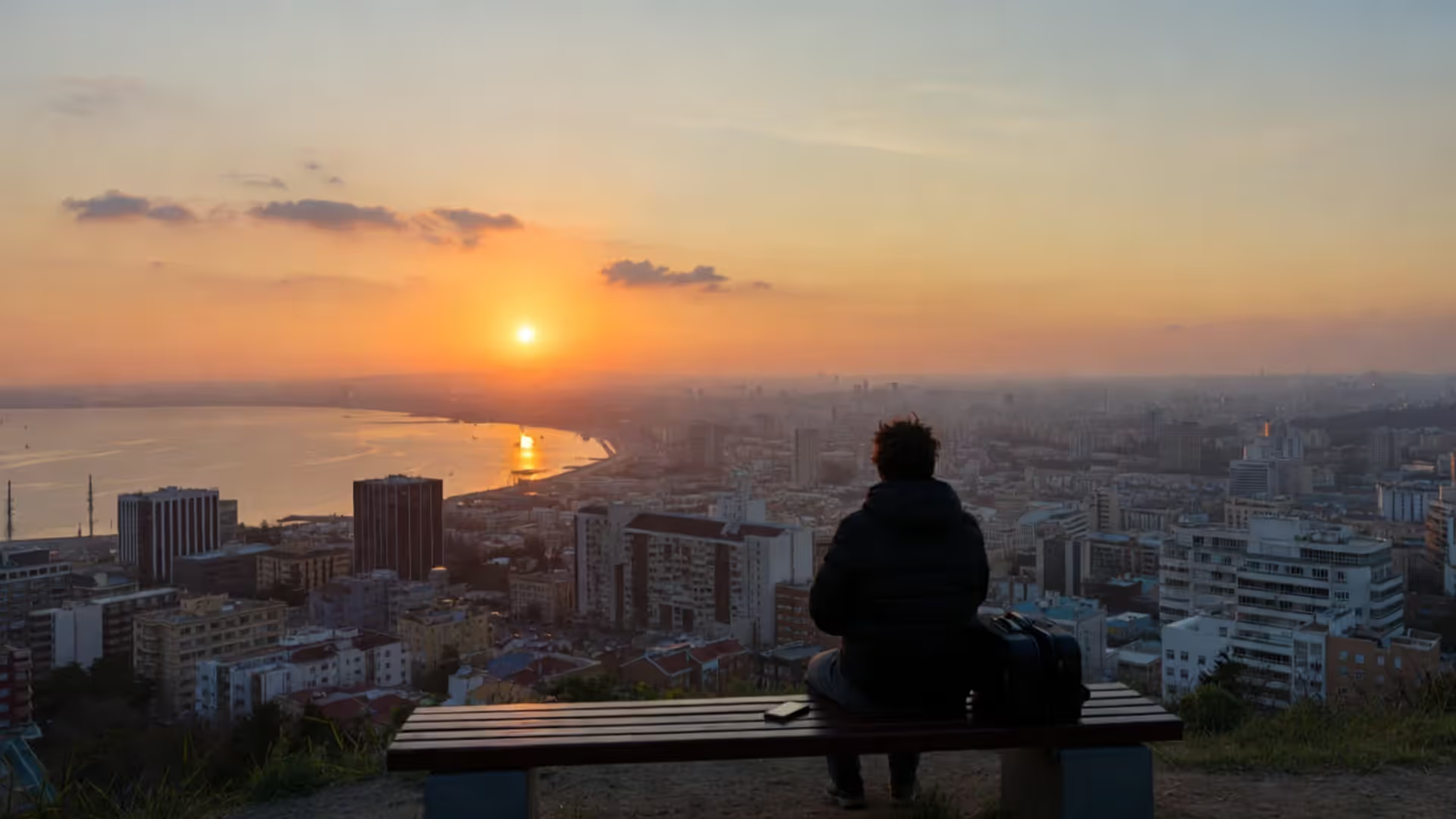
Traveler sitting quietly overlooking a coastal city with phone put away.
Mindfulness Travel: How to Plan Trips That Leave You Rested, Not Depleted

You return from a ten-day European vacation with 4,000 photos, a suitcase full of souvenirs, and the distinct feeling that you need a vacation from your vacation. You saw six cities in nine days. You ate at restaurants you found on Instagram while standing in line. You checked email at breakfast. You argued with your partner about the itinerary twice. The trip was objectively full — and subjectively exhausting.
This is the problem that mindfulness travel addresses. Not by sending you to a monastery or requiring you to meditate at sunrise (though those are options), but by changing how you relate to the experience of being somewhere new.
What Mindfulness Travel Actually Means (and What It Doesn't)
The concept is simpler than the language suggests: traveling with intentional attention, deliberate pacing, and genuine engagement with where you are — instead of rushing through a checklist of attractions while mentally planning what comes next.
This approach is not a product category. It's not a type of resort, a specific destination, or a package you purchase. It's an orientation — a decision to prioritize depth of experience over volume of activity.
The distinction from wellness tourism matters. Wellness travel is product-centered: spa treatments, juice cleanses, infrared saunas, branded health protocols. You consume services. A conscious travel lifestyle, by contrast, doesn't require purchasing anything special. It requires paying attention differently.
It also differs from simply booking a meditation retreat and calling the trip "mindful." A retreat is one format. You can practice the same principles during a weekend road trip to a neighboring state, a family beach vacation, or a solo city break. The quality of attention you bring determines whether a trip is mindful — not the destination or the price tag.
Standard Vacation vs Mindful Trip vs Slow Travel: How the Approaches Compare
| Dimension | Standard Vacation | Mindfulness Travel | Slow Travel |
| Daily pacing | Fast — maximize time | Moderate — one anchor activity per day | Slow — extended stays, no rushing |
| Activity density | 4–6 planned items per day | 1–2 planned, rest organic | 1 or fewer planned |
| Technology use | Constant (navigation, photos, social media) | Deliberate boundaries | Minimal by default |
| Planning style | Tightly scheduled | Loosely structured with buffer time | Minimal advance planning |
| Typical stress pattern | Builds across the trip | Decreases after day 1–2 | Low throughout |
| Post-trip feeling | Exhausted, overstimulated | Rested, mentally clear | Deeply grounded but requires long duration |
| Cost impact | Variable (activity-heavy spending) | Neutral to lower (fewer paid attractions) | Lower daily cost, but longer trips add up |
| Best suited for | Short PTO, bucket-list goals | Any trip length, any destination | 2+ weeks, flexible schedules |
Where slow travel wellness and mindfulness travel overlap: both reject the "see everything" approach in favor of depth. Where they diverge: slow travel is primarily about duration and geographic immersion — staying in one place for weeks. The mindful approach centers on attention quality, and it works on a three-day weekend just as well as a month-long sabbatical.
Five Mindful Travel Practices You Can Use on Any Trip
Single-Tasking Your Itinerary (One Anchor Experience Per Day)

Author: Connor Evans;
Source: yogapennsylvania.com
Choose one primary experience per day and let everything else happen organically. Monday's anchor is the Uffizi. Tuesday's is a cooking class. Wednesday's is a hike. That's it — three planned activities across three days. The space between them fills naturally with wandering, conversation, meals discovered by accident, and the kind of unscripted encounters that become the trip's best memories.
The common objection: "I paid for this trip — I need to maximize it." The reframe: you maximize by going deeper, not wider. Spending three unhurried hours at one museum produces richer memory and less fatigue than sprinting through four.
Arrival Rituals That Reset Your Nervous System
The first 60 minutes at a new destination set the tone. Most travelers immediately start navigating — checking in, finding food, orienting themselves. An arrival ritual interrupts that reactive mode.
Practical version: after dropping bags at your room, sit somewhere for five minutes without your phone. A balcony, a bench outside the hotel, a café with a sidewalk table. Watch the street. Listen to the ambient sound. Let your nervous system register that you've arrived before you start doing things. This tiny pause reduces the frantic energy that compounds over multi-day trips.
Tech Boundaries That Actually Stick
Full digital detox is unrealistic for most people and unnecessary. Functional boundaries work better: phone stays in the bag during meals. No social media posting until evening (or the day after). Navigation apps only — no email, no news, no scrolling during transit.
The rule that produces the biggest shift: take ten photos per day maximum. This forces you to choose what's worth capturing rather than photographing everything reflexively. You see more when you're not looking through a screen.
Eating as a Practice (Not Just Fuel)

Author: Connor Evans;
Source: yogapennsylvania.com
Sit down for every meal. Order one dish rather than sampling five. Put the phone away from the table. Finish chewing before speaking. These aren't spiritual exercises — they're attention practices that transform the most frequent activity of any trip into an experience rather than a transaction.
A concrete scenario: you're in Lisbon. Instead of rushing through lunch to make a 2 PM tour, you walk into a neighborhood restaurant without a Yelp rating, sit at a table by the window, and eat slowly for 45 minutes. You notice the bread, the olive oil, the light. This meal becomes one of the trip's defining moments — not because the food was extraordinary, but because your attention was.
Daily Reflection Without Journaling Pressure
Not everyone wants to journal. A simpler alternative: each evening, answer one question mentally or in a single sentence. "What surprised me today?" That's it. No gratitude lists. No long-form reflection. One observation that anchors the day before sleep reshuffles the memory.
Mindful Vacation Ideas by Trip Type and Budget
Urban Mindfulness (City Trips Without the Rush)
Pick one neighborhood per day and walk it without a destination. Enter the shops that catch your eye. Sit in a park. Follow the side streets. Cities reveal themselves to people who aren't trying to cover ground.
Specific ideas: a single-museum day in New York (the Met alone can fill eight hours without rushing). A morning at a farmers market in Portland followed by nothing planned. A dawn walk across a bridge in San Francisco before the crowds. Budget: standard city-trip costs — lodging and food. Activities are primarily free or low-cost because you're doing fewer of them.
Nature Immersion (Mountains, Coast, Desert)
National parks with single-trail days instead of multi-park itineraries. A coastal rental where the daily plan is: walk, read, swim, cook. A desert camp where silence is the primary feature.
Specific ideas: one week in a cabin near Acadia National Park, hiking one trail per day with afternoons free. Three days on the Oregon coast with no plan beyond the tide schedule. A long weekend at a desert property near Joshua Tree with no wifi. Budget: $100–$250/night for rental accommodation plus food. Minimal activity spending.
The real voyage of discovery consists not in seeking new landscapes, but in having new eyes.
— Marcel Proust
Structured Meditation Travel Experiences (Retreats and Programs)
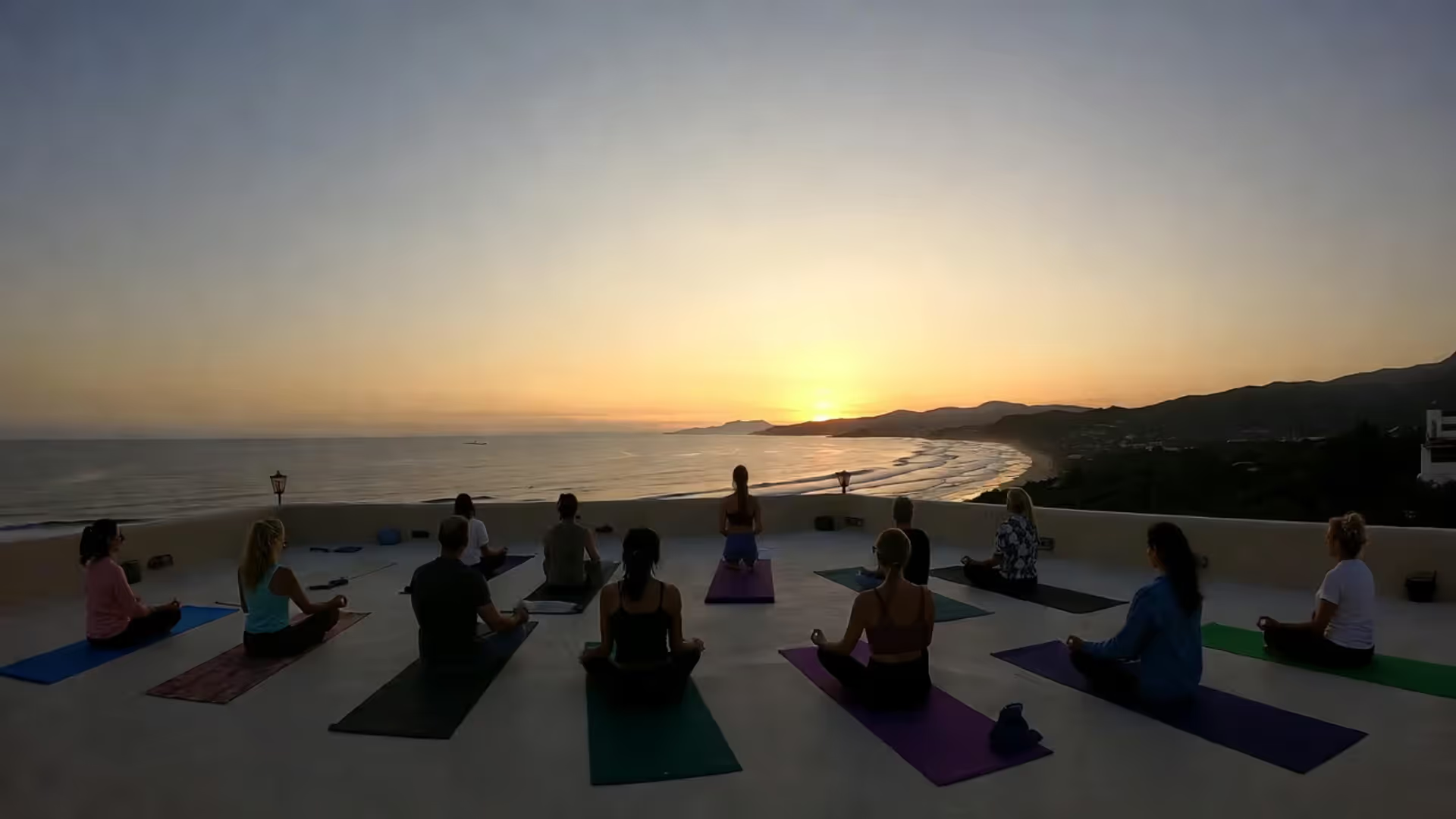
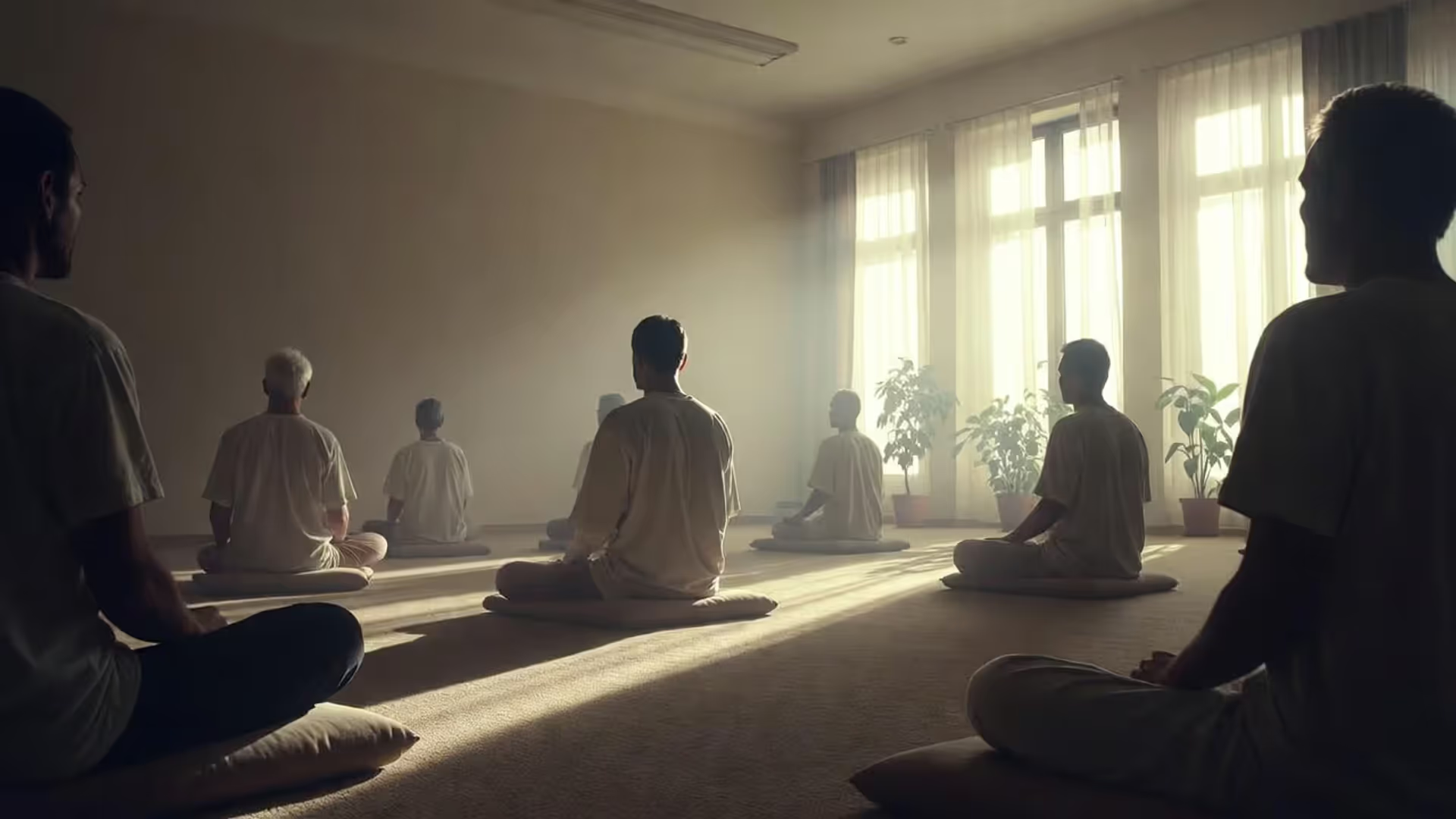
For those who want a guided framework, meditation travel experiences provide built-in structure: Vipassana silent retreats (free, donation-based, 10 days), guided meditation retreats at dedicated centers ($1,500–$5,000/week), and monastery guest stays ($50–$150/night in the U.S., less internationally). These formats remove planning entirely — someone else sets the schedule, prepares the food, and creates the container. The trade-off: less freedom, more structure, and a narrower experience that may not suit everyone.
How to Plan a Stress-Free Travel Experience (Logistics That Support Presence)

Author: Connor Evans;
Source: yogapennsylvania.com
The paradox of stress free travel experiences: they require more planning upfront, not less. Reducing on-trip stress means making more decisions before departure.
Fewer accommodations. Two to three home bases across a two-week trip instead of seven hotel changes. Every check-in/check-out cycle burns 2–3 hours and resets your orientation. Reducing transitions reduces cognitive load.
Buffer days. Insert one unplanned day after every two or three active days. This is the hardest advice for first-timers to follow because it feels wasteful. It's not — it's where recovery and spontaneity live. The buffer day produces the unplanned walk, the accidental restaurant, the conversation with a stranger that becomes the story you tell for years.
Over-budget by 20%. Financial anxiety on the road is the fastest way to undermine presence. If your trip budget is $3,000, plan as though it's $3,600. The surplus eliminates the constant mental arithmetic — "Can I afford this restaurant? Should I take the cab or walk 40 minutes?" — that pulls attention away from the experience.
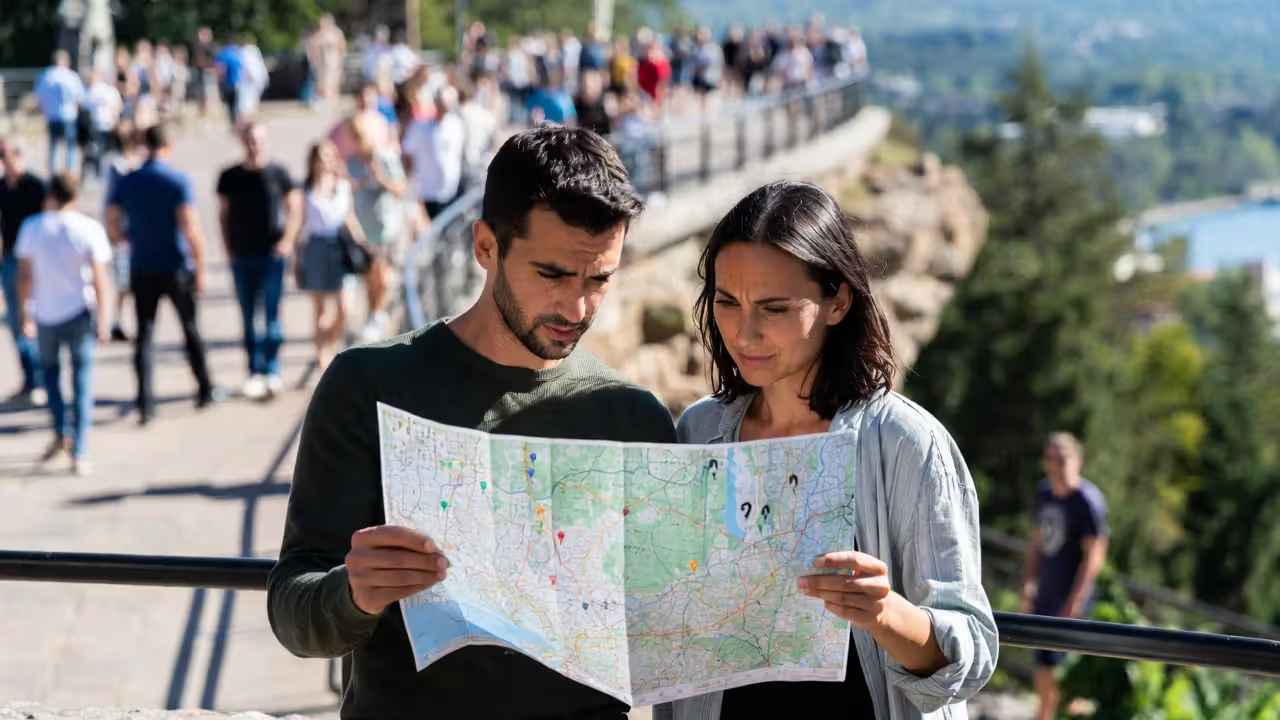
Cap daily planned activities at two or three. Decide this before the trip and treat it as a rule, not a guideline. When you arrive and see twelve interesting things on the map, the rule prevents the slide back into checklist mode.
Choose direct flights even at higher cost. Layovers add 3–6 hours of airport stress, increase luggage-loss risk, and start the trip in reactive mode. An extra $100–$200 for a direct route is one of the highest-return investments in trip quality.
Common Mistakes That Turn Mindful Trips Into Stressful Ones
Author: Connor Evans;
Source: yogapennsylvania.com
Romanticizing discomfort. Cold showers, 4 AM meditation bells, sleeping on a wooden platform — none of these are required. Discomfort for its own sake isn't mindfulness. If austere conditions stress you more than they ground you, choose a comfortable environment and practice attention there.
Over-planning the mindfulness itself. Scheduling a meditation block at 7 AM, a journaling session at 10, a walking meditation at 2, and an evening reflection at 8 creates a second itinerary that's just as rigid as the sightseeing one. Pick one or two practices and let the rest happen naturally.
Going too remote without logistical preparation. A cabin with no cell service sounds peaceful until your car breaks down on a dirt road 30 miles from the nearest town. Isolation without infrastructure creates the kind of anxiety that makes presence impossible. If going remote, ensure reliable transportation, a basic emergency plan, and someone who knows your location.
Forcing a partner into your pacing without discussion. You want one activity per day. Your partner wants four. Neither is wrong — but failing to negotiate before departure guarantees conflict. Discuss pacing expectations explicitly during planning, and build in solo time if your styles differ significantly.
Abandoning the approach on day two because it feels boring. The opening day of reduced stimulation often triggers restlessness. This is normal — your nervous system is adjusting from a high-input daily life to a low-input environment. The boredom usually lifts by day three as your attention capacity expands. Quitting on day two means leaving right before the shift.
FAQ
The most restful trips share a pattern: fewer activities, more attention, deliberate pacing, and enough unstructured time for the unexpected to happen. You don't need a special destination, a meditation app, or a retreat booking. You need a willingness to do less per day than your instinct tells you to, a phone that stays in your bag more often than it comes out, and the patience to sit with the brief boredom that arrives before the deeper attention kicks in. Plan the logistics tightly. Then let the experience unfold loosely. The trip you remember most vividly won't be the one where you saw the most — it will be the one where you were actually present for what you saw.
Related Stories
Read more

Read more

The content on yogapennsylvania.com is provided for general informational and inspirational purposes only. It is intended to share yoga tips, meditation practices, wellness guidance, retreat experiences, and lifestyle insights, and should not be considered medical, therapeutic, fitness, or professional health advice.
All information, articles, images, and wellness-related materials presented on this website are for general informational purposes only. Individual health conditions, physical abilities, wellness goals, and experiences may vary, and results can differ from person to person.
Yogapennsylvania.com makes no representations or warranties regarding the accuracy, completeness, or reliability of the content provided and is not responsible for any errors or omissions, or for decisions or actions taken based on the information presented on this website. Readers are encouraged to consult qualified healthcare or wellness professionals before beginning any new yoga, meditation, or fitness practice.