
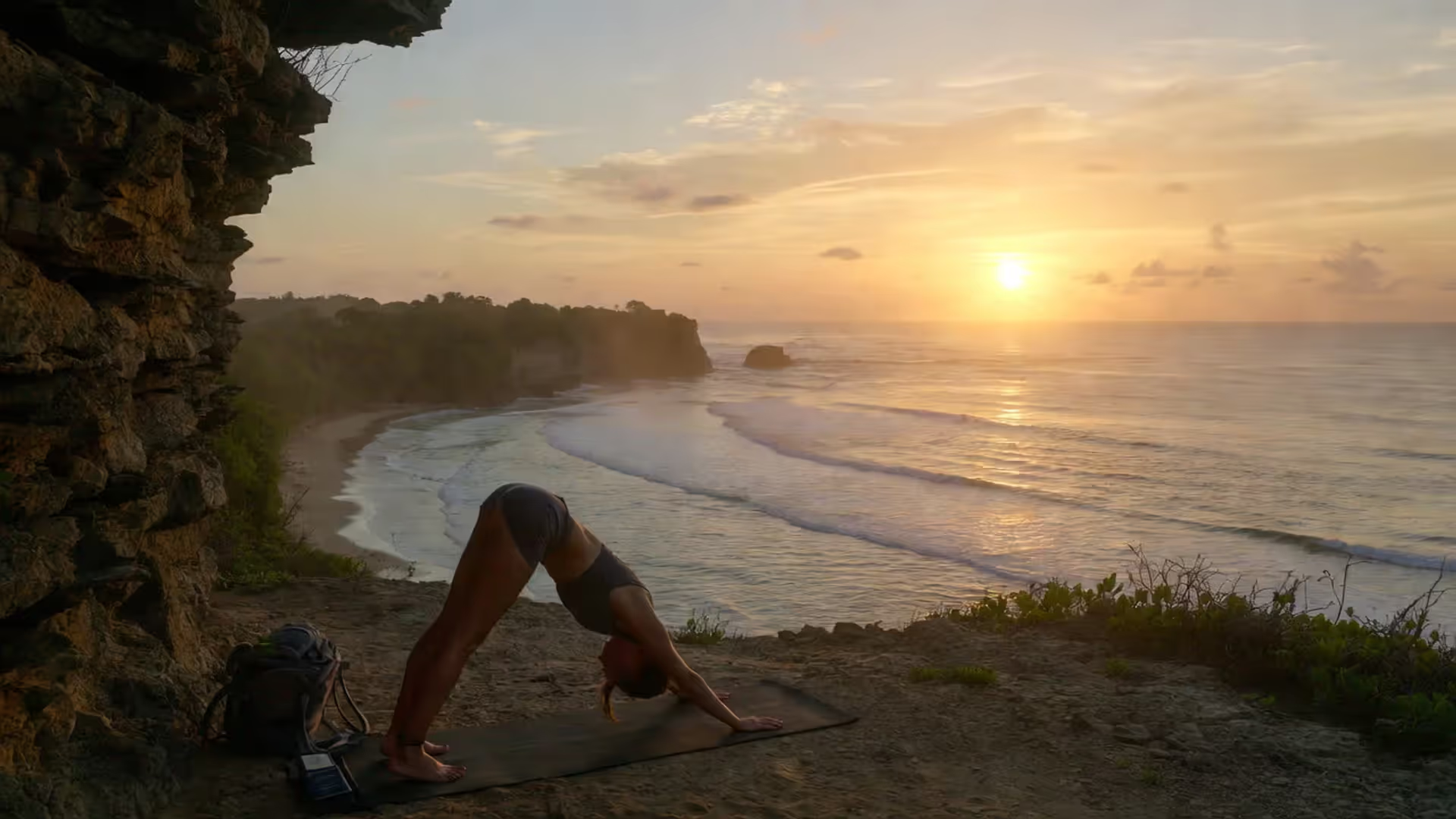
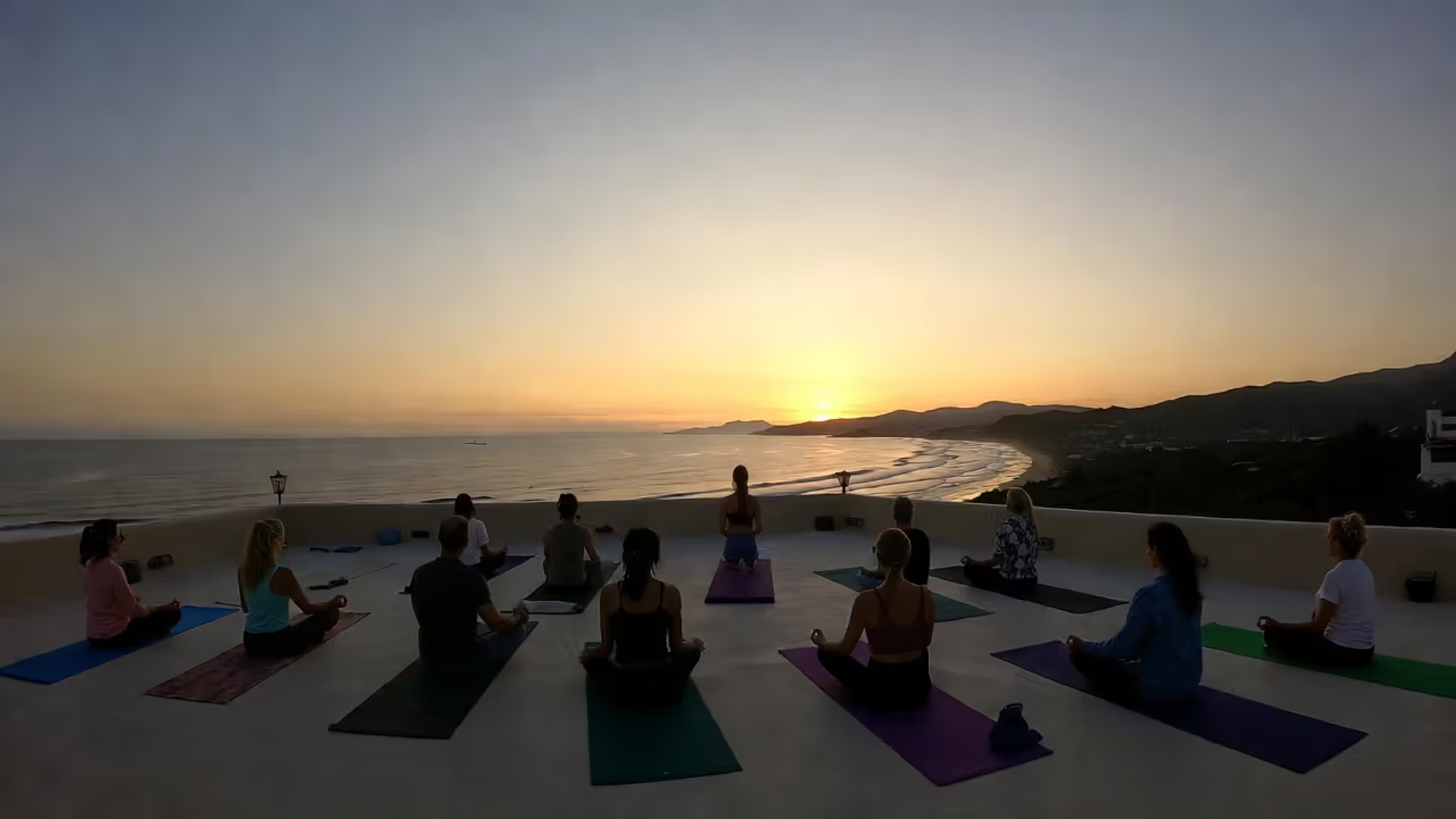
Traveler practicing yoga at sunrise with backpack beside mat overlooking ocean.
Yoga Travel Tips: How to Plan, Budget, and Pack for a Practice-Centered Trip

She booked a $3,200 retreat in Bali, then discovered round-trip flights from Chicago cost $1,400 in peak season. He planned a self-guided yoga trip through Portugal, arrived without a mat, and spent three days hunting for a studio that rented equipment. A couple signed up for teacher training in Costa Rica, completed 200 hours, and learned on return that the school's Yoga Alliance registration had lapsed — making their credential harder to verify.
Each of these problems was preventable. The logistics of combining travel with serious practice aren't complicated, but they require a planning sequence that most people skip. These yoga travel tips cover the full arc: choosing your format, building a realistic budget, packing correctly, staying consistent on the road, and dodging the mistakes that turn a practice-centered trip into an expensive frustration.
Three Ways to Structure a Yoga Vacation (and How to Pick Yours)
Before researching destinations or comparing prices, settle the format question. How you structure the trip determines every decision that follows.
Organized retreat. Someone else handles the schedule, meals, accommodation, and instruction. You show up, practice, and don't think about logistics. Best for: first-time yoga travelers, people who want depth without planning effort, anyone taking PTO and needing guaranteed quality. Trade-off: less flexibility, higher sticker price, and you're locked into one location.
Self-planned trip with drop-in practice. You choose the destination, find local studios or outdoor spaces, and build practice into a broader travel itinerary. Best for: experienced practitioners comfortable practicing independently, budget-conscious travelers, people combining yoga with sightseeing or cultural exploration. Trade-off: inconsistent instruction quality, more planning overhead, and no built-in community.
Training-focused travel. A 200-hour or 300-hour teacher training at an international school, typically lasting 2–5 weeks. Best for: practitioners pursuing credentials, career changers, or anyone who wants an intensive immersion in a specific tradition. Trade-off: the highest time commitment, limited free time, and the need to verify the school's accreditation independently.
Knowing how to plan a yoga vacation starts with this decision. A retreat requires different lead time, budget, and packing than a self-guided itinerary through Southeast Asia.
How to Plan a Yoga Vacation Step by Step (Without Overpaying)
Destination Selection — Climate, Cost of Living, and Visa Simplicity
Author: Connor Evans;
Source: yogapennsylvania.com
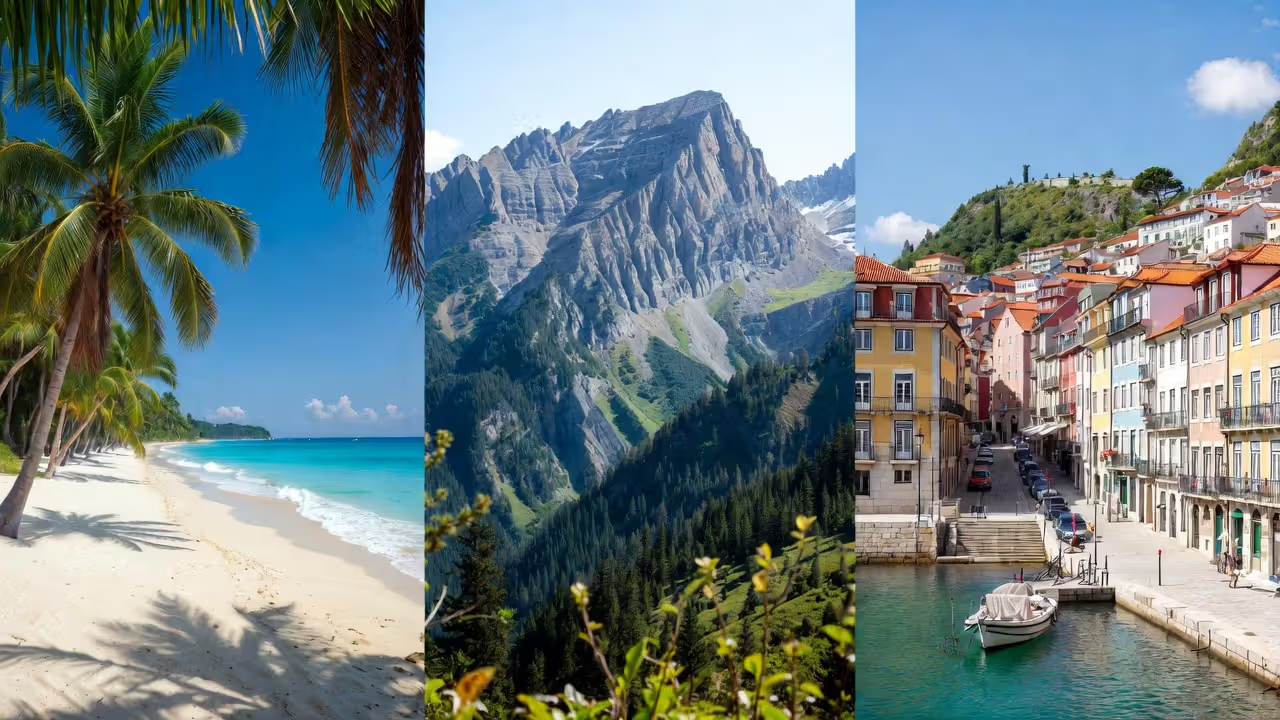
Three filters narrow the field fast. Climate: do you want tropical warmth, temperate mountain air, or European coastal weather? Cost of living: daily expenses in Bali run 60–70% lower than in California; Portugal sits somewhere between. Visa simplicity: U.S. citizens enter Costa Rica, Mexico, Bali, and most of Europe without advance visa applications for stays under 90 days. India requires a visa ($25 e-visa, processed in 3–5 days) — not difficult, but one more item on the timeline.
For yoga abroad tips that save real money: destinations with favorable exchange rates (Indonesia, India, Mexico) reduce daily living costs dramatically, but long-haul airfare from the U.S. can erase those savings if you book at peak season. The sweet spot is usually Central America — short flights, no visa hassle, and moderate local costs.
Booking Sequence — What to Lock In First and What to Leave Flexible
Follow this yoga retreat planning guide timeline:
6 months out: choose destination and book flights. Airfare fluctuates less when purchased 4–6 months in advance, and early booking locks in the lowest fare class. Set a price alert through Google Flights for your target route.
4 months out: book the retreat, training, or accommodation. Most reputable programs offer early-bird pricing that closes 3–4 months before the start date. If self-planning, reserve housing now but keep daily activities flexible.
2 months out: purchase travel insurance (with cancel-for-any-reason coverage if the retreat has strict refund terms), schedule any needed vaccinations, and start building your packing list.
The most expensive planning mistake: booking a non-refundable retreat deposit before checking flight costs. A $2,800 program in Bali looks affordable until you add $1,400 in airfare, $200 in travel insurance, and $150 in visa and vaccination fees. Always price the full trip before committing the deposit.
Yoga is a light, which once lit, will never dim.
— B.K.S. Iyengar
Budget Yoga Travel: Realistic Cost Ranges by Destination and Format
| Destination | Format | Program Cost | RT Flight (from U.S.) | Daily Extras | Visa + Insurance | Total Est. Weekly Spend |
| California (domestic) | Organized retreat | $3,000–$7,000 | $150–$400 | $30–$50 | $0–$150 (insurance only) | $3,500–$8,000 |
| Costa Rica | Organized retreat | $2,000–$5,000 | $300–$600 | $20–$40 | $100–$200 | $2,800–$6,200 |
| Bali (Ubud) | Self-planned | $0–$500 (drop-ins) | $800–$1,400 | $15–$30 | $100–$200 | $1,200–$2,500 |
| India (Rishikesh) | Teacher training | $1,200–$3,000 | $700–$1,200 | $10–$20 | $125–$250 | $2,200–$4,800 |
| Portugal (Algarve) | Organized retreat | $2,500–$5,500 | $500–$900 | $35–$60 | $100–$200 | $3,500–$7,000 |
Budget yoga travel doesn't mean cheap — it means spending intentionally. The lowest all-in cost is usually a self-planned trip in Southeast Asia or India, but you sacrifice the structure and instruction quality of an organized program. The best value-to-quality ratio for most U.S. travelers sits in Costa Rica and Mexico: reasonable flights, no visa, strong retreat infrastructure, and total costs 30–40% below equivalent domestic programs.
The "cheap destination, expensive flight" trap: Bali and India offer rock-bottom local costs, but $800–$1,400 in airfare plus 20+ hours of travel time and 2–3 days of jet-lag recovery erode the savings significantly for trips under two weeks.
Author: Connor Evans;
Source: yogapennsylvania.com
Maintaining Your Practice on the Road (When There's No Shala in Sight)
Travel for yogis means accepting that conditions will rarely be ideal — and practicing anyway.
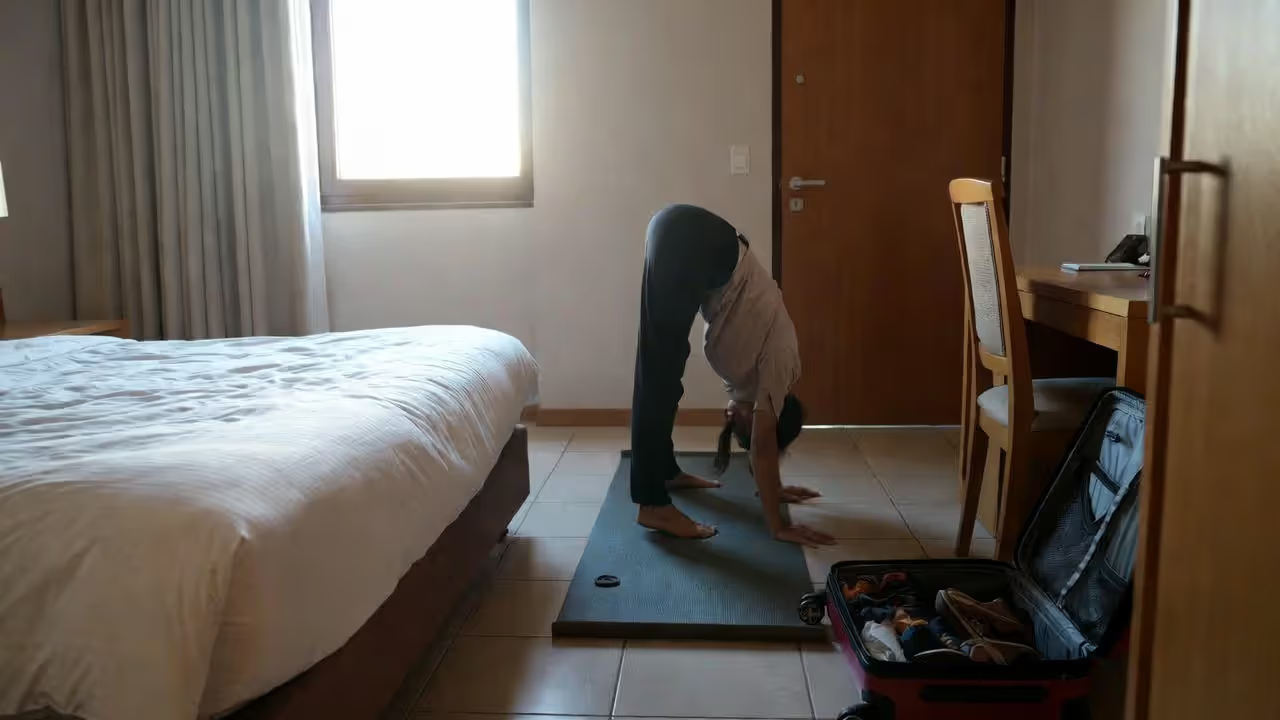
Hotel-room minimums. A 15-minute morning sequence requires only enough floor space to unroll a mat (or a towel on carpet). Sun salutations, standing balances, a few seated folds, and five minutes of seated breathing. This isn't a substitute for a full class, but it maintains the neurological and muscular patterns that keep your practice intact across disrupted schedules.
Finding drop-in studios abroad. Google Maps is the fastest tool — search "yoga" at your destination and check reviews. The MindBody app lists studios with online booking in most international cities. Instagram location tags for the area often surface independent teachers and pop-up sessions that don't appear on Google.
Adapting to conditions. Jet lag: practice in the morning regardless of when you wake up — movement resets circadian rhythm faster than lying in bed. Altitude (Colorado, Peru, Nepal): reduce intensity for the first 2–3 days; vigorous vinyasa at 8,000 feet will leave you dizzy if you're unacclimated. Tropical heat: shift practice to early morning or late evening and increase water intake by 30–50%.
Another underrated tool: downloaded video classes. Save 3–5 sessions from your preferred online teacher to your phone before departing. Hotel WiFi is unreliable in rural and international settings, and streaming a class through a VPN in Rishikesh at 6 AM rarely works smoothly. Offline content guarantees you always have guided practice available regardless of connectivity.
The common trap: all-or-nothing thinking. "I can't do a full 90-minute practice, so I'll skip it entirely." A 10-minute routine done daily for two weeks of travel beats a single 90-minute class on day one followed by nothing.
The Wellness Travel Checklist (Gear, Documents, and Overlooked Essentials)
What to Pack for Yoga-Focused Travel
Author: Connor Evans;
Source: yogapennsylvania.com
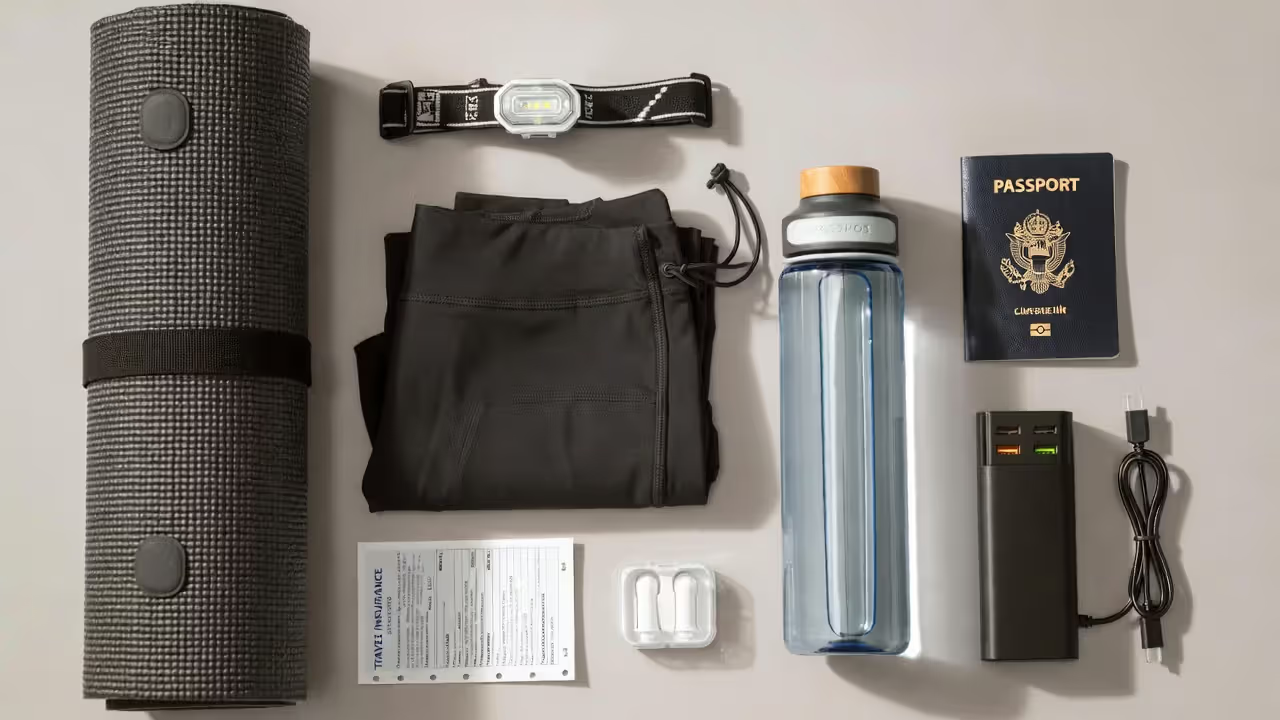
Mat decision: a travel mat (under 2 lbs, folds into a suitcase) works for retreat-goers and self-planners. If your program provides mats, skip bringing one entirely — confirm before packing. A full-weight studio mat is worth the luggage space only for teacher training where you'll use it 4–6 hours daily for weeks.
Clothing: 3–4 quick-dry practice sets for a week-long trip with laundry access. Synthetic blends over cotton. One warm layer for early-morning sessions or air-conditioned indoor spaces. Casual off-mat outfit rotation: 2–3 pieces.
Accessories: refillable water bottle (with filter for international destinations), small quick-dry towel, resistance band or yoga strap (doubles as a prop and packing compression tool), foam earplugs, portable phone charger, headlamp for early-morning starts at rural venues.
Documents, Insurance, and Medical Prep
Passport valid for 6+ months beyond your return date — many countries reject passports expiring within 6 months of entry. Printed copies of booking confirmations, flight itineraries, and emergency contacts. Digital backups stored in a cloud folder.
Travel insurance: non-negotiable for international trips and retreat bookings. Standard policies cost $50–$150 for a 1–2 week trip. Cancel-for-any-reason (CFAR) coverage adds $100–$300 but refunds 50–75% of prepaid costs if you cancel for any reason — essential when a $3,000+ retreat has a no-refund policy past 60 days out.
Vaccinations: check CDC recommendations for your specific destination 8+ weeks before departure. Hepatitis A and typhoid are commonly recommended for India and Southeast Asia. Bring any prescription medications in original labeled bottles — loose pills in a bag can trigger customs issues.
Mistakes That Ruin Yoga Trips (and How to Avoid Each One)
Author: Connor Evans;
Source: yogapennsylvania.com
Booking based on Instagram aesthetics. A property that photographs beautifully can still deliver mediocre instruction, thin meals, and shared bathrooms. Vet the teachers before the venue. Read independent reviews. Ask for the full daily schedule.
Underestimating travel fatigue. Arriving at a 5 AM flight after crossing 12 time zones and walking into a 4-hour practice the next morning is a recipe for injury and misery. Build at least one full buffer day between arrival and program start.
Overscheduling. Booking a week-long retreat immediately followed by five days of intensive sightseeing without a transition day. Your body and nervous system need decompression time between an immersive practice experience and the stimulation of tourist-mode travel. Build at least one empty day between the two — use it for journaling, a gentle walk, and a slow meal. The integration period matters more than most people realize; skipping it often means the insights from the retreat evaporate before you unpack.
Ignoring refund terms. Reading the cancellation policy after a family emergency — not before — is how people lose $2,000+ with no recourse. Read the terms before paying. Buy CFAR insurance if the policy is strict.
Failing to communicate needs. Dietary restrictions, injuries, and physical limitations mentioned on arrival instead of before booking create problems that hosts could have resolved in advance. Email the program with specifics before you commit.
Skipping accreditation checks for training abroad. If you're completing a certification, confirm the school's current Yoga Alliance registration number before enrolling. Registration lapses happen. Verify directly on the Yoga Alliance online directory — not on the school's own website.
FAQ
The logistics of a practice-centered trip are manageable once you follow the right sequence: pick your format, select a destination based on climate and cost, book flights before committing to a program deposit, pack with intention, and build buffer days into both ends of the itinerary. The practitioners who come home most satisfied are the ones who planned the logistics thoroughly enough that they could stop thinking about them once the trip began — and simply practice.
Related Stories
Read more
Read more

The content on yogapennsylvania.com is provided for general informational and inspirational purposes only. It is intended to share yoga tips, meditation practices, wellness guidance, retreat experiences, and lifestyle insights, and should not be considered medical, therapeutic, fitness, or professional health advice.
All information, articles, images, and wellness-related materials presented on this website are for general informational purposes only. Individual health conditions, physical abilities, wellness goals, and experiences may vary, and results can differ from person to person.
Yogapennsylvania.com makes no representations or warranties regarding the accuracy, completeness, or reliability of the content provided and is not responsible for any errors or omissions, or for decisions or actions taken based on the information presented on this website. Readers are encouraged to consult qualified healthcare or wellness professionals before beginning any new yoga, meditation, or fitness practice.