
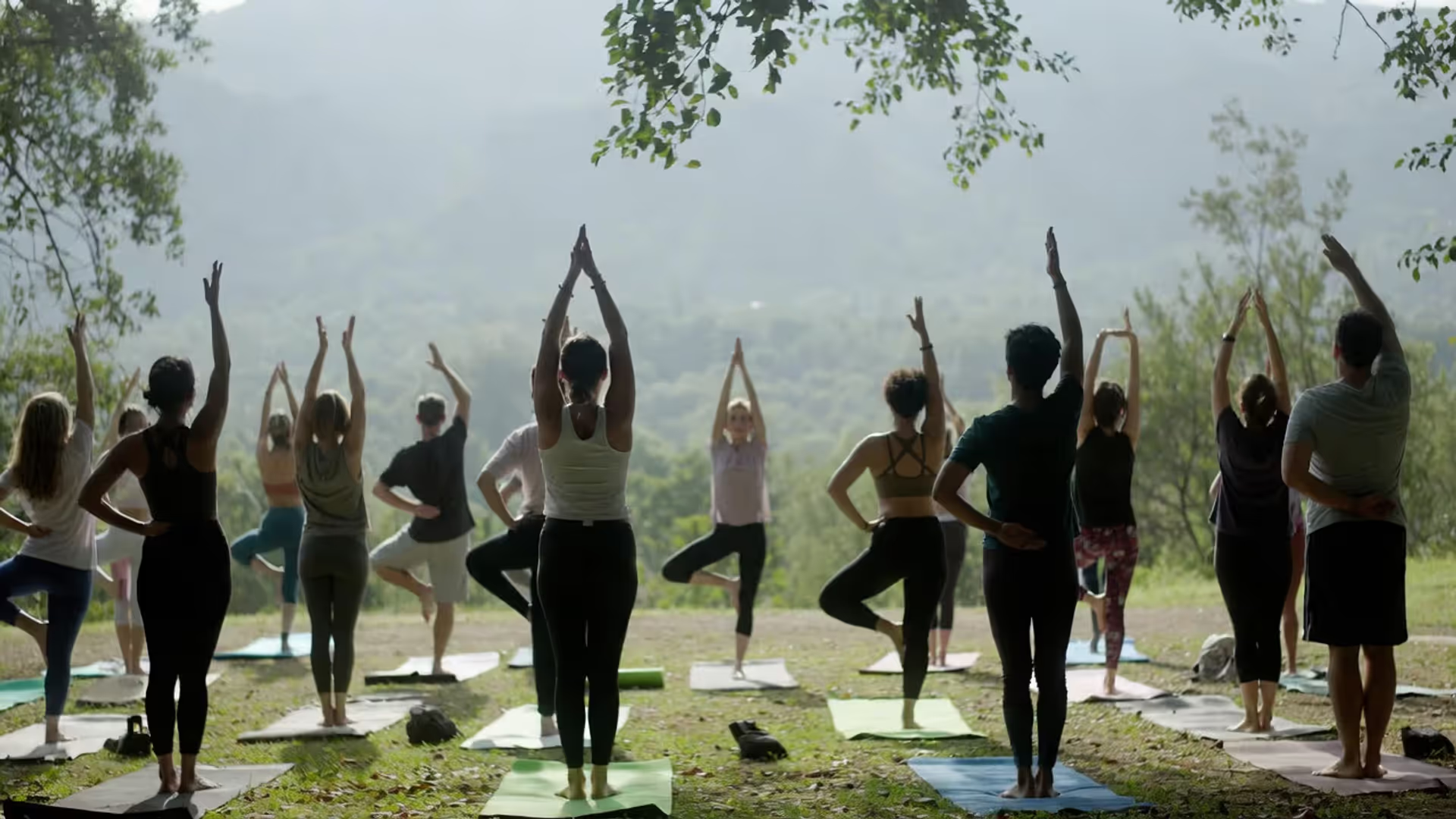
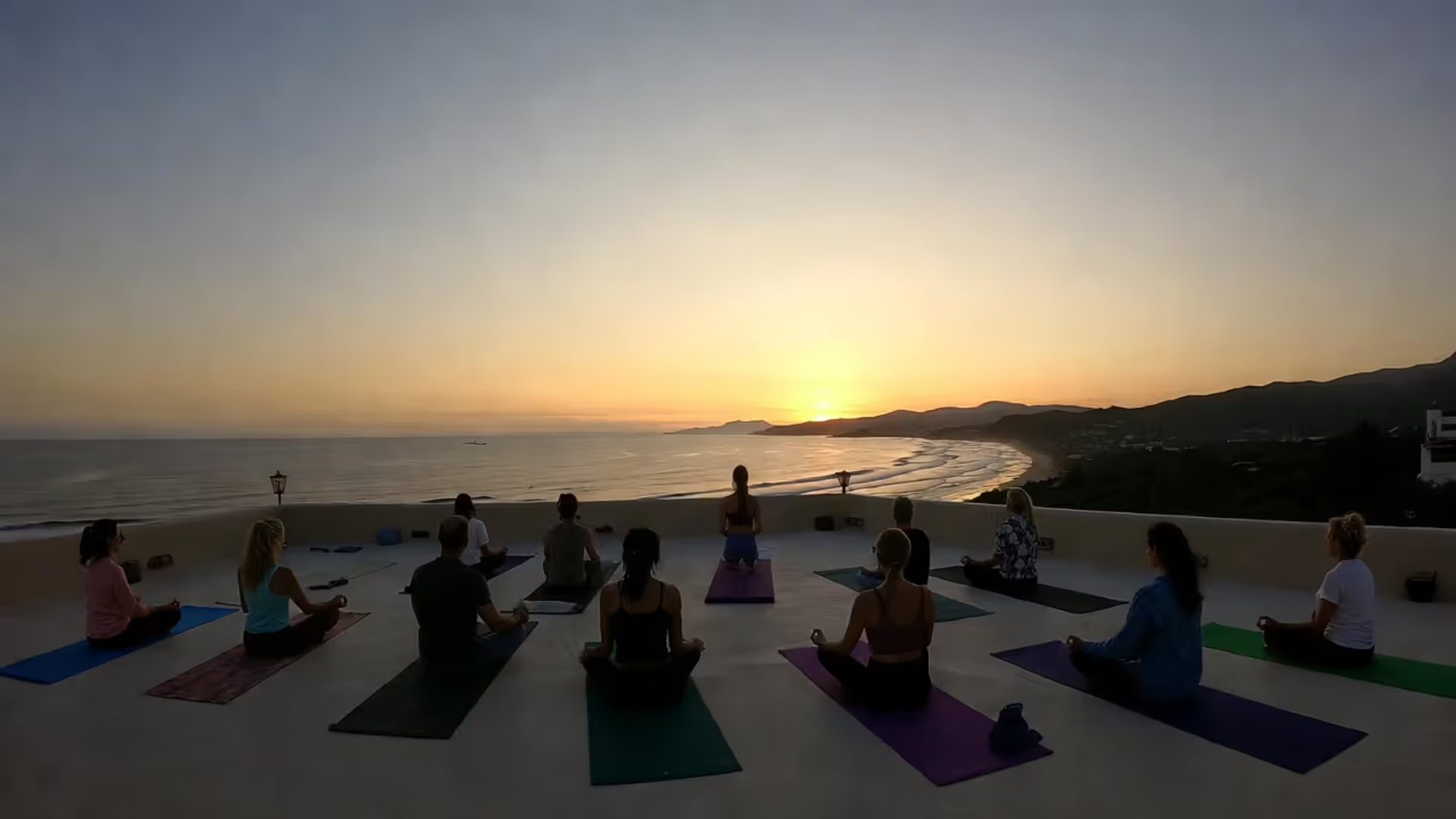
Small outdoor yoga retreat with mixed-level participants practicing together.
Yoga Retreat for Beginners: What to Expect and How to Choose

She almost didn't go. The website showed people in handstands on a cliff at sunrise, and she could barely touch her toes. She pictured herself in the back row struggling through poses while everyone else flowed effortlessly. She signed up anyway — a three-day weekend in the Catskills, labeled "all levels." By Sunday afternoon, she'd learned to breathe through discomfort, slept better than she had in months, and realized that nobody in the room had been watching her at all. They were too busy working on their own stuff.
That's the typical arc of a first-time retreat experience. The anticipation is worse than the reality. But knowing what actually happens — hour by hour, dollar by dollar, mistake by mistake — makes the gap between expectation and experience much smaller.
What Actually Happens at a Yoga Retreat (Hour by Hour)
A typical day at a guided program follows a predictable rhythm. Here's what happens at a yoga retreat on a standard weekday:
6:00–6:30 AM: Optional meditation or silent sitting. Attendance is usually voluntary, but the early start sets the tone. Expect 15–30 minutes of guided breathing or stillness. Nobody will judge you if you skip it to sleep.
7:00–8:30 AM: Morning asana session. This is the primary practice — 60 to 90 minutes of guided postures, typically the most physically demanding session of the day. Modifications are offered at well-run programs. You choose your intensity level.
8:30–9:30 AM: Breakfast. Usually communal, often vegetarian or vegan. Conversation is encouraged at most programs (silent meals are a different format).
9:30 AM–12:00 PM: Free time or optional workshop. Some programs offer a philosophy talk, anatomy session, or journaling exercise. Others leave the morning open for rest, reading, or exploring the property.
12:30–1:30 PM: Lunch. The largest meal in most retreat settings.
2:00–4:00 PM: Free time. Hike, nap, swim, read, do nothing. This block exists deliberately — integration time matters as much as instruction.
4:30–5:30 PM: Afternoon session. Usually gentler than the morning — restorative poses, yin, or guided meditation. Designed to wind down rather than ramp up.
6:00–7:00 PM: Dinner.
7:30–8:30 PM: Evening programming. Varies widely: sound bath, group discussion, kirtan (chanting), a lecture, or simply free time. Often optional.
9:00–9:30 PM: Lights out (suggested, not enforced at most venues).

Author: Connor Evans;
Source: yogapennsylvania.com
Common first-timer anxieties addressed: you don't have to attend everything. You won't be the only newcomer. The teacher will offer easier variations. And yes, the 6 AM wake-up is hard on day one — and surprisingly easy by day three.
Beginner Friendly vs Advanced: How to Tell Before You Book
The label "all levels" appears on roughly 80% of retreat listings. Most of the time it's accurate. Sometimes it isn't — "all levels" at a program led by an Ashtanga teacher with 20 years of experience may default to an intermediate pace that leaves newcomers scrambling.
| Program Type | Daily Practice Hours | Experience Required | Typical Group Size | Pace / Intensity | Beginner Verdict |
| All-Levels Guided Retreat | 2–3 hrs | None | 12–25 | Gentle to moderate | Best starting point |
| Gentle / Restorative Retreat | 1.5–2.5 hrs | None | 8–20 | Low | Excellent for anxious first-timers |
| Yoga Immersion Program | 3–5 hrs | Minimal helpful | 10–20 | Moderate | Good if you want depth |
| Ashtanga / Power Intensive | 3–5 hrs | 6+ months regular practice | 10–30 | High | Not for first-timers |
| Silent Meditation Retreat | 4–8 hrs (seated) | Meditation experience recommended | 20–80 | Emotionally intense | Avoid for first experience |
| Teacher Training (200-hr) | 6–10 hrs | 1+ year of regular practice | 15–30 | Very high | Professional commitment, not a vacation |
Green flags that a program is genuinely beginner friendly: explicit "no experience necessary" language, props listed as provided, student-to-teacher ratio under 15:1, gentle or hatha sessions included in the schedule, and teacher bios that mention working with newcomers — not just advanced certifications.
Red flags: prerequisites listed anywhere in the description, specific style requirements (Primary Series, arm balances, inversions), no mention of modifications, and marketing imagery that exclusively shows advanced postures.
Five Formats Beginners Should Consider (and Two to Avoid at First)
Weekend Domestic Getaways (Lowest Risk, Lowest Cost)
Author: Connor Evans;
Source: yogapennsylvania.com
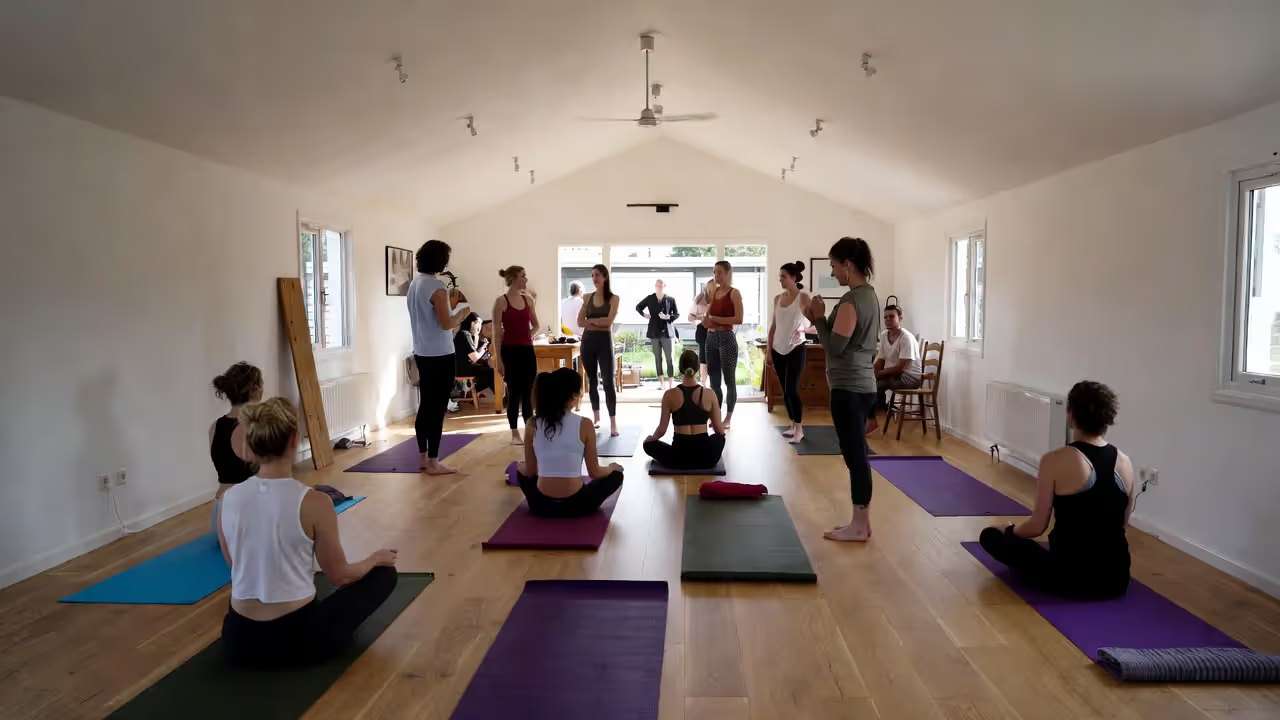
Two to three days at a venue within driving distance. Minimal financial commitment ($300–$1,200), no travel complexity, and short enough that homesickness or discomfort doesn't compound. This is the lowest-stakes way to test whether retreats suit you before investing in a longer trip. Hudson Valley, Catskills, Ojai, Sedona, and Berkshires all host recurring weekend programs.
Week-Long Guided Retreats (The Sweet Spot for First-Timers)
Five to seven days with structured daily programming. Long enough for your nervous system to actually downshift and for the instruction to build on itself — something a weekend can't fully deliver. This is the entry level yoga vacation that most first-timers find most satisfying. Domestic options run $2,000–$6,000; international (Costa Rica, Bali, Portugal) range from $1,500–$5,000 with accommodation and meals included.
Yoga Immersion Programs (Deeper but More Demanding)
A yoga immersion program compresses 4–7 days of structured curriculum covering philosophy, anatomy, chanting, and extended practice sessions — without the certification component of teacher training. These suit curious newcomers who want intellectual depth alongside physical experience. Expect 3–5 hours of daily programming. More demanding than a standard guided format but accessible to beginners with realistic expectations about the workload.
What to avoid on your first trip: Silent retreats — powerful for experienced meditators, but the combination of isolation, extended seated practice, and emotional intensity can overwhelm someone without a baseline. And teacher trainings marketed as "immersive experiences" — these are professional-level programs requiring significant prior experience, even when the marketing language makes them sound like an adventurous vacation.
The success of yoga does not lie in the ability to perform postures, but in how it positively changes the way we live our life and our relationships.
— T.K.V. Desikachar
Realistic Costs and What's Actually Included in the Price
Budget framework by format:
Weekend domestic: $300–$1,200 (shared room), $500–$1,800 (private room). Week-long domestic: $2,000–$6,000. Week-long international: $1,500–$5,000. Yoga immersion (domestic): $1,500–$4,000.
What "all-inclusive" typically covers: accommodation, three meals daily plus snacks, all group instruction, use of property facilities (pool, meditation spaces, gardens), and sometimes a set number of bodywork sessions.
What's commonly excluded even when "all-inclusive" is advertised: airport transfers ($50–$200 each way), private instruction ($100–$300 per session), off-site excursions ($30–$150 each), premium room upgrades, alcohol, gratuities for staff, and travel insurance.
The cost most first-timers underestimate: getting there. A $2,500 retreat in Costa Rica becomes a $3,800 trip after flights ($350–$600), ground transport, travel insurance ($75–$150), and incidental spending. Rule of thumb: add 25–35% to the advertised price for your total trip budget.
A smarter approach for budget-conscious newcomers: choose a domestic venue within driving distance for your debut. A weekend in the Catskills or Ojai at $500–$800 tests the format without international travel costs or significant PTO. If you confirm that immersive programming suits you, invest in a longer or international option for round two — when you'll know exactly what you value and what you can skip.
One more cost consideration: tipping. Many venues include a suggested gratuity of 15–20% for support staff (kitchen, housekeeping, groundskeeping). This is rarely mentioned in the booking materials but is customary in the U.S. retreat world. Budget $50–$150 for a week-long stay.
How to Prepare Without Overthinking It (Physical, Mental, and Logistical)

Author: Connor Evans;
Source: yogapennsylvania.com
Physical readiness: You don't need to "get in shape" first. That thinking delays people for months. If you can sit cross-legged on the floor for five minutes and stand on one leg for ten seconds, you have enough baseline for any true beginner program. If those feel difficult, look specifically for gentle or restorative formats that accommodate limited mobility.
Mental prep: Expect some discomfort. Managing yoga retreat expectations is half the battle — early mornings are an adjustment. Eating communal meals with strangers feels awkward on day one. You might feel bored during free time if you're used to constant stimulation. Emotions can surface unexpectedly during practice — that's normal at immersive settings and not a sign that something is wrong. These experiences are features of the format, not bugs.
Logistical checklist: These first yoga retreat tips save the most headaches. Mat (optional — confirm whether the center provides one), 3–4 practice outfits in quick-dry fabric, layers for temperature shifts, comfortable off-mat clothing, journal and pen, refillable water bottle, sunscreen and bug spray for outdoor venues, any medications in original bottles, and a printed copy of your booking confirmation.
The one email to send before committing: Contact the organizer and ask: What's the maximum group size? Is the schedule published? What experience level is assumed? What's the cancellation and refund policy? If you can't get a clear, specific answer to all four within one exchange, reconsider.
Book 4–6 months ahead for the best rate-to-availability balance. Early-bird pricing typically closes 3–4 months before the start date.
Mistakes First-Timers Make (and How to Avoid Each One)

Author: Connor Evans;
Source: yogapennsylvania.com
Choosing based on venue photos instead of programming. A gorgeous property with a mediocre teacher and vague schedule is a vacation rental with some yoga on the side. Check the instructor's credentials and teaching hours first. The setting is secondary.
Booking an advanced or silent program because it was cheaper or had open spots. Programs with available space close to the start date are sometimes available precisely because they serve a narrow audience. An unfilled Ashtanga intensive is not a beginner bargain — it's a mismatch waiting to happen.
Attending every optional session. The schedule shows eight offerings per day. You sign up for all of them. By day three you're exhausted, sore, and dreading the morning bell. A better approach: attend the two core sessions daily and pick one optional activity. Leave the rest open.
Not communicating injuries or limitations. Tell the instructor about your bad knee, your lower-back issue, or your shoulder impingement before the first session — not during it. A five-second conversation prevents a week of unnecessary pain and modified participation.
Comparing yourself to other participants. The person in the front row who looks effortless has been practicing for eight years. You're on day one. The comparison is meaningless and the self-criticism is counterproductive.
Packing too much. Three suitcases for a week in the mountains. You'll wear the same four outfits on rotation and leave half your bag untouched. Pack light. Retreats are deliberately casual.
FAQ
Your first retreat won't be perfect — and it doesn't need to be. The early mornings will feel hard. At least one meal won't be to your taste. You'll feel awkward introducing yourself to strangers over breakfast. And somewhere around day two or three, something will shift: the breath deepens, the body loosens, and the constant mental chatter slows down enough to notice. Choose a beginner-appropriate format, verify the schedule and instructor before paying, pack light, communicate your needs, and resist the urge to fill every open block on the schedule. The empty space is where most of the work actually happens.
Related Stories
Read more

Read more

The content on yogapennsylvania.com is provided for general informational and inspirational purposes only. It is intended to share yoga tips, meditation practices, wellness guidance, retreat experiences, and lifestyle insights, and should not be considered medical, therapeutic, fitness, or professional health advice.
All information, articles, images, and wellness-related materials presented on this website are for general informational purposes only. Individual health conditions, physical abilities, wellness goals, and experiences may vary, and results can differ from person to person.
Yogapennsylvania.com makes no representations or warranties regarding the accuracy, completeness, or reliability of the content provided and is not responsible for any errors or omissions, or for decisions or actions taken based on the information presented on this website. Readers are encouraged to consult qualified healthcare or wellness professionals before beginning any new yoga, meditation, or fitness practice.