
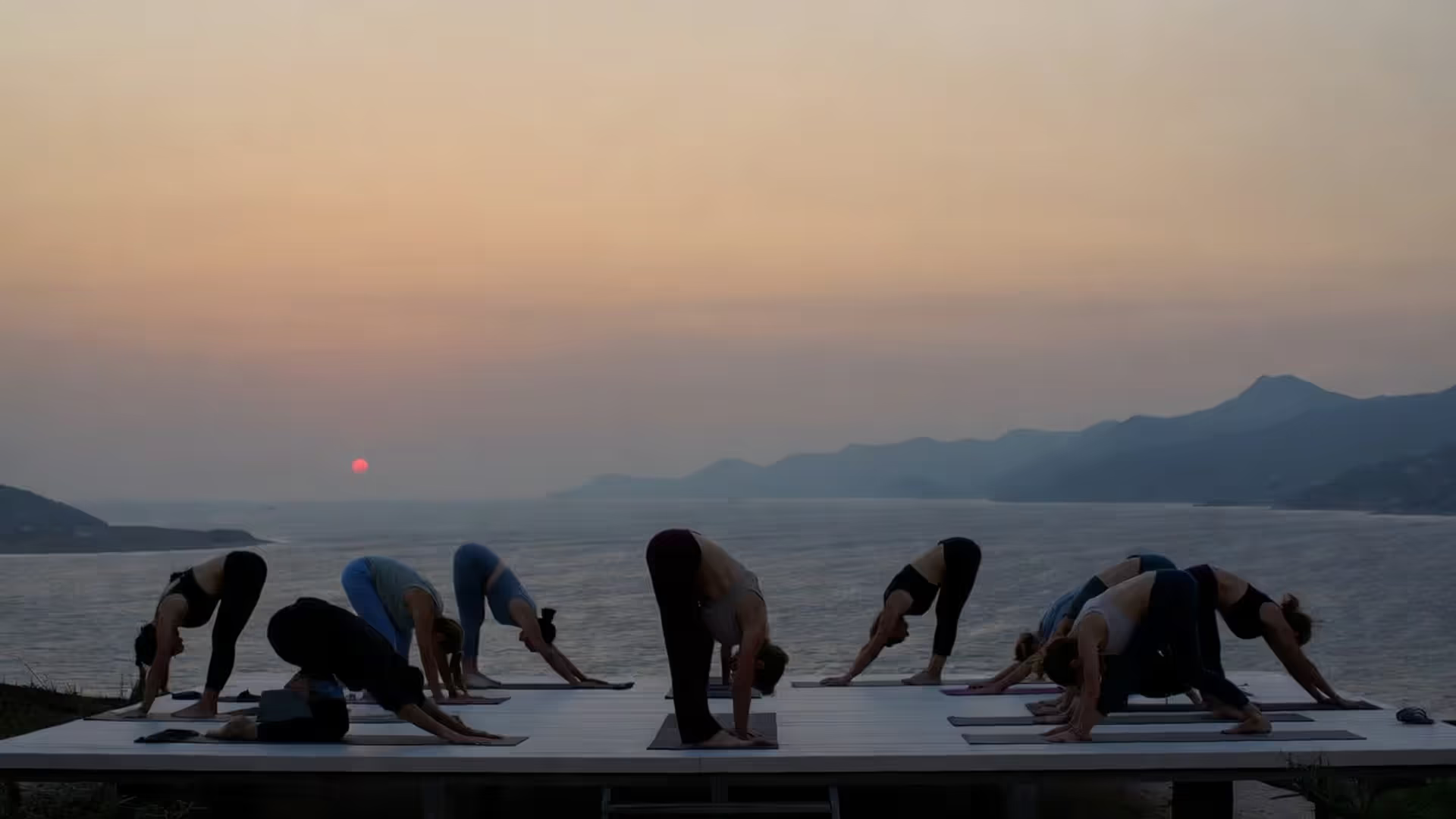
Where transformation meets destination — the rise of luxury wellness travel
Wellness Travel Guide to Yoga Vacations Retreats

Something fundamental has shifted in how people think about travel. The all-inclusive resort with unlimited buffets and poolside cocktails hasn't disappeared, but it's been joined — and increasingly overtaken — by a different vision of the ideal getaway. More travelers are asking not just "Where do I want to go?" but "Who do I want to become?"
This question marks a profound evolution in travel psychology. For decades, vacations served primarily as escape — temporary relief from demanding lives, brief windows of pleasure before returning to unchanged circumstances. The destination was backdrop for consumption: restaurants tried, attractions checked off, photos collected. Success meant maximizing experiences per dollar spent. But something about this equation stopped adding up for many travelers. They returned from expensive trips feeling vaguely unsatisfied, wondering why the anticipated joy hadn't materialized, why the "best week of their year" left them needing recovery time.
Welcome to the era of wellness travel, where vacations are designed not for escape but for transformation. And at the center of this revolution sits the yoga retreat — once a niche pursuit for the spiritually inclined, now a mainstream luxury experience attracting everyone from stressed executives to adventure travelers to honeymooners. Understanding why wellness travel is popular reveals a fundamental shift in what travelers value: not just where they go, but who they become in the going.
The numbers tell the story with striking clarity. The global wellness tourism market exceeded $800 billion and continues growing at nearly twice the rate of general tourism. Luxury yoga retreats specifically have exploded, with destinations multiplying across Bali, Costa Rica, Portugal, Thailand, Mexico, and beyond. What was once difficult to find — requiring insider knowledge and spiritual community connections — now requires choosing among thousands of options across every price point and style imaginable.
But statistics miss the experiential shift driving these numbers. People aren't just booking yoga vacations because they're available — they're booking them because traditional vacations increasingly feel hollow. The pattern is painfully familiar: anticipation builds for months, the trip delivers moments of pleasure interspersed with stress and exhaustion, then you return home more depleted than when you left, with nothing changed except your bank balance and your need for a vacation from your vacation. The Instagram photos look great. The lived experience feels somehow incomplete.
Luxury yoga vacations offer something fundamentally different. Guests return rested rather than depleted — genuinely restored in ways that persist weeks and months beyond the trip itself. They bring home practices rather than just photos, skills rather than just memories. The benefits compound rather than fade. Many describe these trips as pivotal life experiences — weeks that changed trajectories, catalyzed decisions, and initiated transformations that continued long after the final savasana.
This article provides wellness travel explained through the lens of yoga vacations. Why are they capturing the modern imagination with such force? What actually happens at these retreats that produces effects so different from conventional travel? How do you choose wisely among overwhelming options? And most importantly — what makes a yoga vacation genuinely transformative rather than just Instagram-worthy? The answers reveal not just a travel trend but a fundamental reconsideration of what vacations are for.
The Rise of Wellness Tourism: Wellness Travel Trends Reshaping the Industry
Why Traditional Vacations Fail
To understand why wellness travel is popular, consider why conventional vacations often disappoint. The contrast explains the rapid shift toward wellness travel trends that prioritize transformation over consumption.
The exhaustion paradox. Standard vacations pack maximum activity into limited time, operating on the flawed assumption that more experiences equals more value. Wake at 6 AM to beat crowds at popular attractions. Rush through breakfast to make the tour departure. Navigate unfamiliar public transit systems in foreign languages. Manage group dynamics when travel companions want different things. Process constant novelty — new foods, new customs, new stimuli — without the downtime needed for integration. The cognitive load of travel often exceeds that of regular work, yet we expect it to feel restful. You return having seen many things but genuinely rested from nothing. The vacation becomes another demanding project on the to-do list, executed successfully but not rejuvenating in any meaningful sense.
The re-entry crash. Even genuinely pleasurable vacations often feature a brutal return that erases whatever benefits accumulated. The inbox has exploded with hundreds of messages requiring response. Responsibilities accumulated in your absence now demand immediate attention. Jet lag compounds everything, leaving you sleep-deprived precisely when demands peak. Within three to five days, any vacation glow has completely faded, replaced by the familiar stress that motivated escape in the first place — often intensified by the backlog created by leaving. Research confirms this pattern: studies show vacation benefits typically dissipate within two to four weeks, with some travelers reporting lower wellbeing post-trip than pre-trip. Nothing has fundamentally changed except you've spent significant money and used precious time off.
The emptiness of pure consumption. Lying on a beach certainly has its place, and consumption-focused vacations deliver real pleasures. But many travelers report a certain hollowness to experiences organized purely around consumption — nice meals, nice views, nice experiences that somehow fail to satisfy deeper hungers. The restaurant was excellent but forgettable within weeks. The view was spectacular but produced no lasting change. The experiences were pleasant but engaged nothing beyond surface enjoyment. This isn't ingratitude; it's recognition that human beings need more than pleasant sensory input. We need meaning, growth, connection, and purpose. Vacations optimized purely for pleasure often neglect these deeper needs entirely, leaving travelers wondering why the "trip of a lifetime" feels somehow insufficient in retrospect.
The missed opportunity. Perhaps most significantly, traditional vacations represent profound missed opportunity. Consider what vacation time actually is: you've carved out precious days from demanding lives, overcoming significant obstacles to create protected time. You've invested substantial financial resources — often thousands of dollars. You've coordinated with employers, family, and responsibilities to create this window. And then you've used this rare and valuable opportunity for... distraction. Entertainment. Temporary pleasure that evaporates upon return. The potential for genuine renewal, skill development, perspective shift, and lasting transformation goes entirely unrealized. This is where the difference between wellness travel and luxury travel becomes crucial — and why many travelers now seek both together. True luxury, they're discovering, isn't about thread count or butler service. It's about using precious resources to create lasting value.

Author: Ava Mitchell;
Source: yogapennsylvania.com
What Wellness Travelers Actually Want
The wellness travel lifestyle reflects fundamental changes in what travelers seek from their limited vacation time — not superficial preferences but deep shifts in values:
Restoration over stimulation. Wellness travelers seek genuine rest, not just novel stimulation packaged as relaxation. They recognize the critical difference between lying exhausted by a pool and actually recovering depleted reserves. They want to return home with more energy than they left with — a complete reversal of the typical vacation pattern where travelers need "recovery time" after returning. This restoration extends beyond physical rest to include mental clarity, emotional equilibrium, and renewed sense of purpose. The goal isn't maximizing experiences but returning genuinely replenished.
Transformation over escape. Rather than temporary escape from problems — which, after all, patiently await your return — wellness travelers want tools to address those problems permanently. They seek fundamentally changed relationships with stress, sustainably better health habits, genuinely clearer perspective on life questions. This represents a shift from vacation as intermission to vacation as intervention. The retreat doesn't pause life's challenges; it equips you to meet them differently. This is the promise of transformational travel experiences — not forgetting your problems but developing capacity to handle them.
Experience over consumption. The broader cultural shift from acquiring things to having experiences extends powerfully to travel. But wellness travelers take this further: they want experiences that change them, not just entertain them. Yoga and wellness retreats offer profound experiences — physical challenge, emotional processing, community connection — rather than accumulated consumption. Guests do things rather than just see things. They develop rather than just enjoy. The experience becomes part of who they are rather than just something they did.
Connection over isolation. Despite being called "getaways," wellness retreats often provide deeper human connection than everyday life allows. In normal life, genuine connection competes with endless distractions and obligations. At retreat, shared practice creates immediate common ground. Communal meals foster conversation impossible in restaurant settings. Common purpose — everyone present for growth — creates meaningful bonds that tourist anonymity cannot replicate. Many retreat guests report forming friendships more quickly and deeply than in years of normal social interaction.
Alignment over compromise. Many wellness travelers describe wanting vacations aligned with their values rather than contradicting them. If health matters at home, why abandon it entirely on vacation? If mindfulness practice has transformed daily life, why design trips that systematically undermine it? Holistic luxury travel resolves these contradictions. You don't have to choose between enjoyment and health, between pleasure and growth. The categories merge into something more satisfying than either alone.
“We're witnessing a fundamental redefinition of luxury in travel. The new luxury isn't thread count or butler service — it's transformation. Travelers are asking what they'll gain from a trip, not just what they'll see. Wellness retreats answer that question in ways traditional hospitality cannot. The question has shifted from 'Where should I go?' to 'Who do I want to become?'”
— Thierry Malleret, Co-Founder of the Global Wellness Summit, Author of 'Wellness in the Age of AI'
The Economics of Wellness Tourism
The industry's explosive growth reflects genuine, sustained demand for premium wellness travel — not a passing trend but a structural shift in how people allocate travel budgets:
Market size and trajectory. Wellness tourism represents over $800 billion globally, with yoga and meditation retreats comprising a significant and rapidly growing segment within that already massive market. The sector grows at 7-9% annually — roughly double general tourism growth rates — and shows no signs of slowing. Even economic downturns have barely dented wellness travel; when budgets tighten, travelers often cut conventional vacations before wellness experiences, viewing them as essential rather than discretionary. Analysts project the market will exceed $1.2 trillion within the next five years.
Spending patterns reveal priorities. Wellness travelers spend 53% more than average tourists — a striking differential that reveals shifted priorities. They're willing to invest significantly in transformation, viewing retreat costs as health investments comparable to medical care or therapy rather than pure leisure expenses. This reframing changes the value calculation entirely. A $3,000 retreat isn't expensive entertainment; it's affordable transformation. This explains the thriving market for luxury wellness vacations — demand exists at every price point, and premium offerings command premium prices because buyers see premium value.
Demographic democratization. Once limited to specific demographics — wealthy women of a certain age, spiritual seekers, yoga enthusiasts — mindful luxury travel now spans age groups, income levels, and backgrounds with remarkable breadth. Corporate executives attend alongside teachers on summer break. Retirees practice next to millennials. Men have dramatically increased participation. First-time practitioners attend alongside advanced yogis. The market has broadened in ways that both reflect and drive mainstream acceptance of wellness practices generally.
Geographic proliferation. Luxury yoga retreats worldwide have multiplied across virtually every desirable destination on earth. Traditional hubs like India (where yoga originated) and Bali (the modern wellness capital) have been joined by Costa Rica, Portugal, Mexico, Greece, Morocco, and countless others. Local wellness scenes have emerged virtually everywhere tourists travel — and some destinations have reinvented their entire tourism proposition around wellness. This proliferation means options for every preference: beach or mountain, tropical or temperate, eastern or western, spiritual or secular, budget or luxury. The choice is no longer whether to take a yoga vacation but which of thousands of options best matches your goals.
What Happens at a Yoga Retreat
The Daily Structure
Understanding what actually happens at yoga retreats helps demystify the experience and set appropriate expectations. While programs vary significantly in style and intensity, common elements create a rhythm that most retreats share:
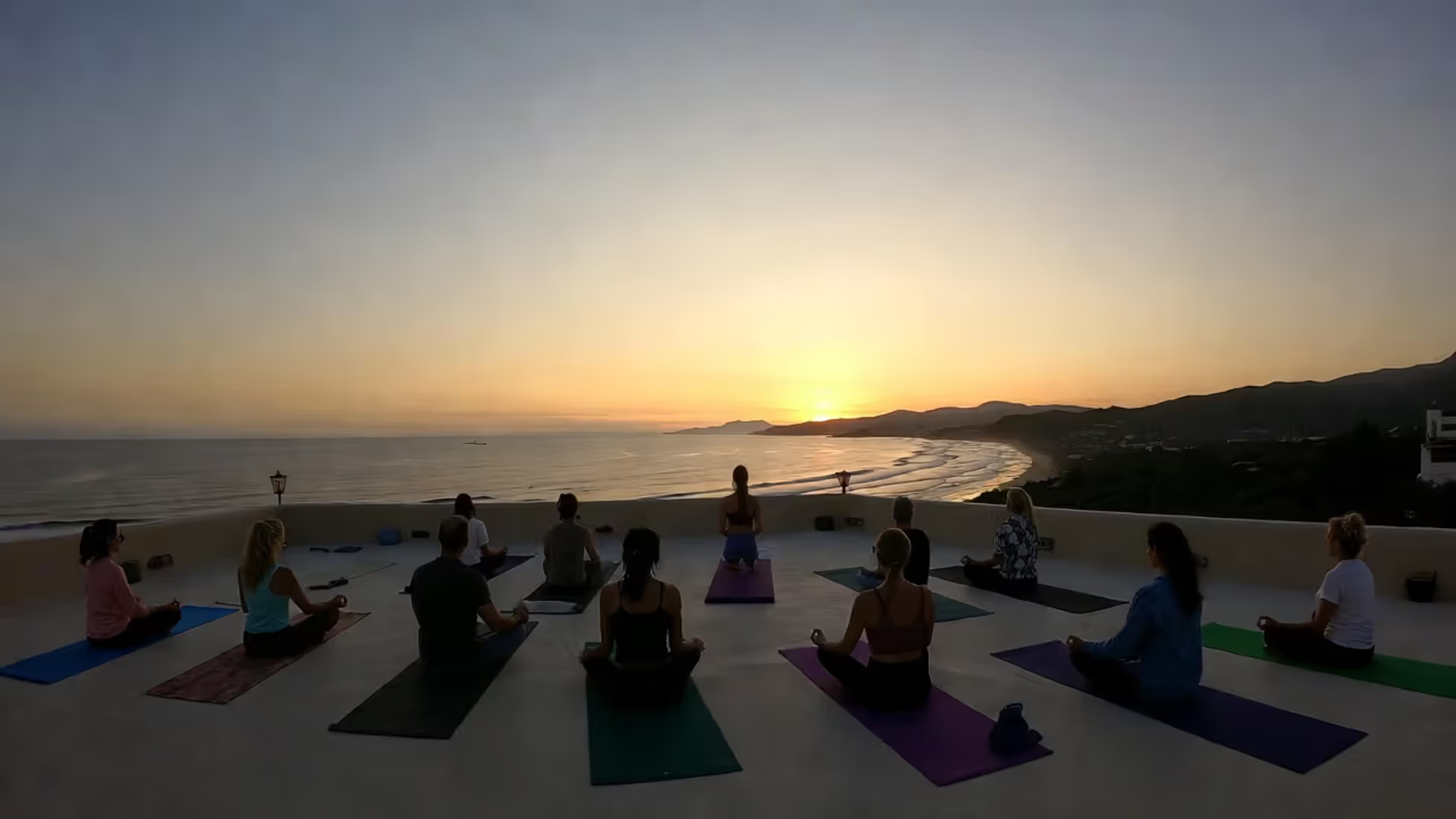
Morning practice. Most retreats begin with early morning yoga — often at or before sunrise, typically between 6:00 and 7:30 AM. This flagship session runs 90 minutes to two hours, featuring more vigorous practice while energy is fresh and before tropical heat intensifies. The early start aligns with yogic tradition (the "brahma muhurta" — auspicious hours before sunrise — holds special significance) and natural circadian rhythms that make morning ideal for physical practice. Expect to feel challenged; morning sessions often include flowing sequences, strength-building holds, and more demanding postures. The day's most intense physical work happens here, when you have energy to invest.
Breakfast and integration time. Nourishing breakfast follows morning practice, typically served between 8:30 and 9:30 AM. Expect healthy, often plant-based cuisine designed to support practice rather than induce food coma — fresh fruits, whole grains, proteins, vegetables. Many retreats serve meals communally at shared tables, creating natural opportunities for connection with fellow guests. Mid-morning often offers unstructured time for integration: journaling about practice insights, exploring the local area, swimming, napping, reading, or simply sitting with the profound quiet that emerges when you're not constantly doing. This spaciousness feels unfamiliar at first — many guests report initial restlessness before settling into slower rhythm.
Midday programming. Many retreats include additional programming during late morning or early afternoon: workshops exploring yoga philosophy beyond physical postures, breathwork (pranayama) sessions teaching powerful techniques for energy and mood regulation, meditation instruction for those wanting to develop seated practice, lectures on Ayurveda or nutrition or sleep science, or cultural excursions offering context for the destination. Some retreats keep midday free, trusting guests to use time wisely. Others offer optional activities — hiking, cooking classes, spa treatments, swimming — that guests can choose or skip based on their needs and energy.
Afternoon practice. A second yoga session often occurs in late afternoon — typically 4:00 to 6:00 PM, as heat breaks and energy shifts toward evening calm. These sessions are usually gentler than morning practice, emphasizing restoration, deep stretching, and flexibility rather than strength and vigor. Yin yoga (long-held passive poses targeting connective tissue), restorative yoga (supported poses held for extended relaxation), or gentle flow are common afternoon offerings. The goal shifts from building toward releasing, from efforting toward surrendering.
Evening rituals. Dinners are typically communal, served between 6:30 and 7:30 PM, fostering deeper connection among guests who've now shared multiple practices and meals. Conversations tend toward the meaningful — people discuss insights, life changes, why they came, what they're discovering. Some retreats include evening programming: guided meditation, kirtan (call-and-response chanting), sound healing with crystal bowls or gongs, or simply designated quiet time for reading and reflection. Early bedtimes are strongly encouraged — often 9:00 or 10:00 PM — both to support early morning practice and to allow the deep rest that intensive practice demands.
Digital detox. Many retreats actively encourage or explicitly require limited technology use. Phones stay in rooms during practice and meals. WiFi may be restricted to certain areas or hours. Social media is gently discouraged. The absence of constant connectivity initially triggers anxiety for many guests — then reveals itself as one of the retreat's greatest gifts. Without endless notifications, news cycles, and social media comparison, attention consolidates. Presence becomes possible. Many guests report that the digital break alone produces profound benefit, illuminating how much their devices fragment consciousness and steal peace.
The Transformation Mechanisms
What makes this structure transformative rather than just pleasant? Understanding these mechanisms helps appreciate why yoga vacations produce effects that standard travel cannot match.
Nervous system reset. The combination of daily yoga, quality sleep, healthy food, nature exposure, and reduced stimulation creates conditions for genuine nervous system recovery. Chronic stress patterns begin unwinding. Parasympathetic function strengthens. Guests don't just feel relaxed — their physiology shifts toward relaxation as default state. This isn't temporary relief; the nervous system literally recalibrates to a healthier baseline. Research shows that even one week of retreat conditions can produce measurable changes in cortisol levels, heart rate variability, and other stress biomarkers.

Author: Ava Mitchell;
Source: yogapennsylvania.com
Habit interruption. Removing people from routine environments disrupts automatic patterns. The coffee habit, the phone checking, the stress eating, the evening wine — these behaviors happen on autopilot at home, invisible because they're woven into environmental cues. When context changes, these patterns become visible. Retreats create space for conscious choice about which patterns serve you and which have merely become default.
Skill acquisition. Unlike passive vacations, yoga retreats teach skills. Guests leave with practices they can continue at home: morning yoga sequences, breathwork techniques, meditation methods, stress management tools. The retreat becomes beginning rather than ending — launching ongoing transformation rather than providing temporary escape. This skill transfer makes retreat investment potentially permanent rather than merely pleasant.
Concentrated practice. Practicing yoga twice daily for a week provides more mat time than many practitioners accumulate in months of sporadic studio attendance. This concentration accelerates progress, builds confidence, and establishes momentum for continued practice. You experience what consistent practice feels like — perhaps for the first time — creating template for home practice.
Community support. Transformation is easier in supportive community. Fellow guests provide encouragement, accountability, and inspiration. The shared journey creates bonds that sometimes outlast the retreat itself. You're not alone in your growth — you're surrounded by others pursuing similar goals.
Nature immersion. Many retreats situate in natural settings — beaches, mountains, jungles. This nature exposure provides its own significant benefits: reduced cortisol, improved mood, enhanced creativity, decreased blood pressure, and strengthened immune function. The setting amplifies the practice effects through biological mechanisms science increasingly validates.
Digital disconnection. Most retreats encourage or require reduced technology use. This digital detox removes the constant attention fragmentation characterizing modern life. Without endless notifications and social media comparison, presence becomes possible. Many guests report that the digital break alone produces profound benefit.
Expert guidance. Quality retreats provide access to experienced teachers offering personalized guidance unavailable in drop-in classes. Teachers observe your practice across multiple sessions, offering specific corrections. This concentrated learning accelerates development in ways that casual practice cannot match.
Types of Yoga Retreats
The yoga retreat market has diversified to serve different needs:
Beginner-friendly retreats. Designed for yoga newcomers or those returning after absence. Emphasis on foundational instruction, accessible modifications, and welcoming atmosphere. No prior experience required.
Intensive practice retreats. For experienced practitioners seeking to deepen practice. More challenging sequences, longer holds, advanced techniques. Assumes solid foundation and physical readiness.
Teacher trainings. Immersive programs (typically 200+ hours) preparing participants to teach yoga. Combines practice with anatomy, philosophy, teaching methodology, and practicum experience.
Specialty retreats. Focused programs addressing specific needs: yoga vacation for stress relief, yoga for back pain, prenatal yoga, yoga for athletes, couples' yoga retreats, women's wellness retreats, and countless other niches.
High end wellness retreats. Premium experiences combining yoga with spa treatments, gourmet cuisine, premium accommodations, and personalized service. The fusion of yogic simplicity with five-star hospitality defines the luxury wellness vacations segment. These curated wellness travel experiences often include personal wellness consultations, private sessions, and exclusive amenities.
Adventure yoga retreats. Combining yoga practice with activities like surfing, hiking, or cultural immersion. For those wanting active vacation with yoga foundation.
Silent retreats. Emphasizing meditation alongside yoga, with periods of noble silence. For those seeking deep introspection and mental quiet — the ultimate expression of slow travel luxury wellness.
Choosing Your Yoga Vacation
Destination Considerations: Exotic Wellness Travel Destinations
Popular yoga retreat destinations each offer distinct advantages, and choosing wisely significantly impacts your experience. Here's what makes each exotic wellness travel destination unique:
- Bali, Indonesia. The global yoga capital offers unmatched retreat density, established infrastructure, affordable luxury, rich spiritual culture, and stunning natural beauty. Yoga retreats Bali luxury options range from boutique to world-class. Ubud particularly concentrates yoga offerings — you can walk down a single street and find dozens of studios and retreat centers. The island's Hindu culture creates spiritual atmosphere unavailable in secular destinations. Costs remain reasonable despite popularity, with excellent retreats available at mid-range prices. Challenges include crowds at popular spots, significant travel time from Western origins (especially North America), and occasional issues with over-commercialization of spiritual practices.
- Costa Rica. Combines yoga with adventure travel, eco-tourism, and beach culture in a stable, welcoming country. Strong sustainability focus aligns with wellness values. Relatively accessible from North America with direct flights to multiple airports. English widely spoken, easing logistics for first-time international wellness travelers. Pacific and Caribbean coasts offer distinctly different vibes — Pacific for surf culture and sunsets, Caribbean for reggae rhythms and jungle immersion. The Nicoya Peninsula has become particularly developed for wellness tourism, recognized as one of the world's "Blue Zones" where people live extraordinarily long, healthy lives.
- Portugal. Europe's emerging wellness hub offers convenient access for European travelers, beautiful Atlantic coastline, established tourism infrastructure, and a growing retreat scene. The Algarve region has become particularly developed, with dramatic cliffs meeting pristine beaches. Portugal combines yoga with wine country exploration, historic cities, and excellent cuisine at prices below most Western European destinations. The country's relaxed pace and warm climate create ideal retreat conditions.
- Spain. Yoga retreats Spain luxury options have expanded dramatically, particularly in Ibiza (beyond its party reputation), the Canary Islands, and Andalusia. Spanish retreats often combine yoga with Mediterranean cuisine, wine experiences, and rich cultural heritage.
- India. Yoga's homeland provides authentic cultural immersion, traditional teachings, extremely affordable options, and spiritual depth unavailable elsewhere. Rishikesh, nestled in the Himalayas along the Ganges River, remains the classic destination — the "yoga capital of the world" where the Beatles famously studied with Maharishi Mahesh Yogi. Studying in India connects you to yoga's roots in ways no Western retreat can match. However, India requires more adventurous mindset, tolerance for intensity, and willingness to navigate significant cultural differences. For the right traveler, nothing compares. For others, the challenges may overwhelm.
- Mexico. Increasingly popular for North American travelers seeking accessible wellness escapes with minimal travel complexity. Tulum on the Riviera Maya became the epicenter of yoga retreat culture, though crowds and costs have grown substantially — some argue it's lost its soul to Instagram tourism. Fortunately, alternatives abound: Oaxaca offers indigenous culture and emerging wellness scene; Sayulita on the Pacific coast provides surf-yoga combination; San Miguel de Allende delivers colonial charm with growing retreat offerings. Short flights and familiar logistics make Mexico ideal for first wellness travel experiments.
- Thailand. Combines yoga with Buddhist meditation tradition, excellent vegetarian cuisine, affordable luxury, and established wellness infrastructure dating back decades. Koh Samui and Koh Phangan particularly developed for wellness tourism, with everything from budget ashrams to five-star wellness resorts. Thailand also offers excellent medical tourism infrastructure, allowing combination of retreat with medical checkups, dental work, or other health services at fraction of Western costs. The Thai approach to hospitality creates exceptionally welcoming retreat environments.
- Greece. Mediterranean beauty meets growing wellness scene in destinations carrying millennia of history. Yoga retreats Europe luxury options have proliferated across the Greek islands — Crete, Santorini, Corfu, Paros — offering stunning settings, excellent cuisine, and combination of cultural tourism with retreat experience. Greece appeals particularly to those wanting more than pure yoga focus, allowing temple visits, archaeological sites, and island exploration alongside practice.
Emerging destinations. The wellness travel market continues expanding geographically. Morocco offers desert retreats and exotic culture. Sri Lanka provides affordable alternatives to India. Colombia's transformation has opened yoga tourism. Vietnam and Cambodia blend practice with cultural discovery. Almost anywhere tourists travel, luxury yoga retreats worldwide have followed.
Evaluating Retreat Quality: Finding the Best Luxury Yoga Retreats
With thousands of options available, quality varies enormously. When searching for the best luxury yoga retreats, consider:
Teacher credentials and experience. Who leads the program? What training do they hold? How long have they taught? Do their style and philosophy resonate? Quality instruction is the retreat's core offering.
Reviews and testimonials. What do past guests report? Look for consistent themes rather than outliers. Note how retreat operators respond to concerns. Established retreats typically have substantial review histories.
Clear programming. Quality retreats provide detailed schedules before booking. Vague descriptions may indicate disorganization. You should know what you're getting.
Appropriate challenge level. The retreat should match your experience and goals. Too easy provides insufficient growth. Too challenging creates frustration or injury risk. Ask specifically about typical attendee level.
Accommodation quality. While not the core offering, accommodation significantly affects experience. Understand exactly what you're booking: private or shared room, bathroom arrangements, air conditioning, and so on.
Food provisions. Nutrition matters for retreat experience. Understand meal inclusions, dietary accommodation, cuisine style, and quality level. Many retreats emphasize healthy, often plant-based menus.
Inclusions and exclusions. What's included in quoted price? What costs extra? Airport transfers, excursions, spa treatments, and additional activities often carry separate charges. Calculate true total cost.
Cancellation policies. Life happens. Understand refund and rescheduling policies before booking, especially when booking far in advance or during uncertain times.
Group size. Intimate retreats (8-15 guests) offer more personal attention. Larger programs (30+) provide different energy and often lower per-person costs. Match size to your preference.
Budget Considerations
Yoga retreat costs vary enormously:
Budget options ($500-1,500/week). Available particularly in Southeast Asia, India, Central America. May involve shared accommodations, simpler meals, basic facilities. Can provide excellent value with quality instruction despite modest settings.
Mid-range retreats ($1,500-3,500/week). The market's sweet spot, offering comfortable private accommodations, quality cuisine, and professional programming without luxury premiums. Most retreats fall here.
Luxury experiences ($3,500-10,000+/week). High end wellness retreats offer premium accommodations, gourmet cuisine, spa inclusions, personalized service, and often spectacular settings. The wellness luxury travel experiencescombine yogic practice with five-star hospitality. When you book luxury wellness retreat at this level, expect world-class everything.
Additional costs to budget. Airfare (often substantial), travel insurance, gratuities, extra treatments, excursions, airport transfers, and incidentals. Total trip cost often exceeds retreat fee significantly.
Value assessment. Consider cost per day including all inclusions. A $3,000 week including accommodation, three daily meals, multiple yoga sessions, and airport transfers may represent strong value versus paying separately for equivalent components. When evaluating wellness travel packages luxury, factor all inclusions for accurate comparison.
The Lasting Impact of Yoga Vacations: Why Yoga Vacations Are Luxury Travel
Why Benefits Persist: Yoga Vacations Benefits That Last
Unlike standard vacations where benefits fade within days or weeks, yoga vacations benefits often persist and compound over months and years — this is exactly why yoga vacations are luxury travel in the truest sense. The mechanisms deserve understanding:
Skill transfer creates permanent value. You bring home practices, not just memories. Morning yoga sequences you can do anywhere. Breathwork techniques for calming anxiety. Meditation methods for mental clarity. Poses for back pain relief. These skills continue benefiting you long after return — potentially for the rest of your life. The retreat provides tools rather than just experiences. A beach vacation gives you a week of relaxation; a yoga retreat gives you a lifetime practice. The value per dollar invested looks entirely different over these timeframes.
Habit establishment proves feasibility. A week of consistent twice-daily practice establishes rhythm and, crucially, demonstrates feasibility. Many guests arrive believing they "could never" maintain daily practice — too busy, too undisciplined, too whatever excuse has prevented trying. Then they experience a week of daily practice and discover it's entirely possible. They've done it. The belief has been replaced by proof. Many guests report maintaining practice that seemed impossible before experiencing it daily in supportive environment. The retreat didn't just give them a week of yoga; it gave them evidence that a yoga life is possible for them.
Nervous system recalibration creates new baseline. The physiological reset achieved at retreat creates new baseline for your stress response — not just temporary relaxation that evaporates upon return, but genuinely recalibrated nervous system function. A week of parasympathetic activation, quality sleep, healthy food, nature exposure, and reduced stimulation literally changes how your nervous system operates. You return with genuinely altered stress response: slower to activate, faster to recover, lower baseline anxiety. This foundation supports ongoing wellbeing regardless of external circumstances.
Perspective shift illuminates path forward. Distance from routine plus intensive introspective practice often generates insight unavailable amidst daily demands. Guests report sudden clarity about life direction, recognition of relationship patterns that need addressing, resolution of career questions that have lingered for years, understanding of what actually matters versus what merely feels urgent. These realizations guide decisions long after return — not because the retreat told them what to do, but because the retreat created conditions for their own wisdom to emerge.
Community connections provide ongoing support. Retreat friendships often persist beyond the experience itself, providing ongoing support and accountability that sustains practice. Fellow guests understand your journey in ways home friends may not. They check in, share struggles and successes, offer encouragement when motivation wanes. The shared experience creates bonds that maintain motivation through the inevitable challenges of integrating practice into normal life.
Resource expansion opens new doors. Retreats often introduce guests to teachers, traditions, books, and resources they continue engaging for years. A teacher recommendation leads to a book that transforms understanding. A practice learned at retreat connects to an entire lineage worth exploring. A fellow guest becomes a lifelong practice partner. The retreat opens doors that remain open, each leading to further discovery.
Maximizing Retreat Benefits
To get most from yoga retreat vacations investment, preparation and intentionality matter enormously:
Prepare mindfully before arrival. Begin establishing some yoga practice before the retreat if you're new to it. Even a few weeks of beginner classes familiarizes you with basic poses and terminology, preventing precious retreat time from being spent on absolute fundamentals. You'll go deeper faster if basics are already somewhat familiar. Physical preparation also helps — some baseline flexibility and cardiovascular fitness makes retreat practice more enjoyable and reduces injury risk.
Set clear intentions. What do you actually hope to gain? Vague desires produce vague results. Specific intentions focus attention and dramatically increase likelihood of desired outcomes. Do you want to establish daily practice? Process a particular life challenge? Deepen existing practice? Recover from burnout? Write these intentions down. Share them with teachers when appropriate. The retreat will serve whatever intention you bring — but only if you bring one.
Surrender to structure. Resist the temptation to customize retreat programming excessively or skip sessions that don't immediately appeal. The structure exists for reasons developed through extensive experience. Morning practice matters even when you're tired. Meditation matters even when you're restless. Communal meals matter even when you prefer solitude. Trust the process, at least initially. After completing the full program once, you'll understand which elements serve you most.
Engage community meaningfully. Retreats offer connection opportunities rare in normal life. Participate fully in communal meals rather than retreating to your room. Introduce yourself to fellow guests. Share appropriately about why you came and what you're experiencing. Remain open to unexpected friendships. Some of these connections will last beyond the retreat and provide ongoing support for your practice.
Embrace discomfort as signal. Transformation inherently involves discomfort — physical, emotional, habitual. The yoga will challenge you. The early mornings will require adjustment. The digital detox may trigger anxiety. Emotions may surface unexpectedly. This discomfort indicates growth, not error. Distinguish between harmful pain (requiring modification) and growth discomfort (requiring perseverance). The tendency to avoid discomfort will be strong; recognizing this tendency is the first step beyond it.
Document insights actively. Journal throughout the retreat while insights are fresh and accessible. Capture realizations, intentions, specific plans, and emotional experiences. These records prove invaluable when motivation wanes post-return. The insight that feels unforgettable during retreat becomes surprisingly hazy within weeks of returning to normal life. Writing preserves what experience reveals.
Plan transition carefully. Don't book a return flight requiring immediate full-intensity return to work and responsibilities. Buffer days — at least one or two — help integrate experience before demanding schedules resume. Jarring transitions from retreat peace to immediate overwhelm can undermine benefits significantly. If possible, return on weekend rather than rushing to office Monday morning.
Establish home practice before leaving. Before departing the retreat, plan specifically how you'll maintain practice at home. What time will you practice? What physical space will you use? What sequence will you follow? Who will support your accountability? Specificity dramatically increases follow-through likelihood. Vague intention to "keep practicing" rarely survives contact with real-world demands.
A yoga retreat is not the destination — it's the launch pad. The week itself matters less than what you build upon it. The most successful retreat guests aren't those who have the deepest experience during the retreat, but those who use it as foundation for lasting change. I've seen countless people have profound retreat experiences that fade to nothing within months because they didn't build on them. And I've seen people with modest retreat experiences transform their entire lives because they used that week as a beginning. That's the real luxury: transformation that continues giving.
— Elena Brower, Yoga Teacher and Author, Host of 'Practice You' Podcast
The Return Home
The post-retreat period determines whether significant investment yields lasting returns or fades to pleasant memory:
The integration challenge is real. Returning to normal life after retreat can feel jarring, even distressing. The contrast between retreat peace and daily chaos may feel overwhelming. The person you became at retreat may feel incompatible with life's demands. This is normal and temporary — not evidence that retreat benefits were illusory or that transformation was fake. The integration challenge is well-documented and affects nearly everyone. Expect it, and don't panic when it arrives.
Gradual reentry preserves benefits. If at all possible, avoid immediate full-intensity return. A few buffer days at home help integrate experience before demanding schedules resume. Use this transition time for journaling, gentle practice, and conscious consideration of how to incorporate retreat lessons into normal life. The temptation will be to immediately catch up on everything that accumulated during absence; resist this temptation for at least a day or two.
Immediate practice establishment is crucial. The first week home determines whether retreat transforms into lasting change or fades to pleasant memory. Establish practice routine immediately, even if abbreviated. Even 15-20 minutes daily maintains connection to retreat experience. Waiting until "things settle down" or "life gets less crazy" often means waiting forever. Things don't settle down. Life doesn't get less crazy. Practice must be prioritized immediately or it won't be prioritized at all.

Author: Ava Mitchell;
Source: yogapennsylvania.com
Manage expectations wisely. Home practice won't replicate retreat conditions, and attempting to replicate them sets you up for disappointment. The view won't be as spectacular — you're in your living room, not overlooking tropical jungle. The time won't be as protected — demands will interrupt. The community won't be physically present. This is fine. Home practice serves different function than retreat practice. It maintains and builds on what retreat established rather than recreating retreat experience. Comparison to retreat undermines consistency; acceptance enables sustainability.
Stay connected intentionally. Maintain contact with retreat friends through whatever channels work — text, social media, video calls. Share struggles and successes. The mutual support extends retreat community's benefits far beyond the week itself. These people understand your journey in ways others may not. Their encouragement during difficult periods can make the difference between sustained practice and abandonment.
Plan next experience proactively. Many dedicated practitioners find annual or semi-annual retreats optimal for maintaining practice momentum and continuing development. Having future retreat on calendar provides motivation during challenging periods. It reminds you that this practice is something you're committed to, not something you tried once. Consider booking your next retreat before leaving current one — the commitment reinforces intention, and availability at popular retreats often requires advance booking.
The Business of Wellness Travel
Industry Evolution
The wellness tourism industry has professionalized rapidly:
Destination development. Regions increasingly compete for wellness tourism, developing infrastructure, marketing wellness positioning, and cultivating retreat operators. This competition benefits travelers through improved options.
Quality standardization. Industry organizations have developed certifications and standards, helping travelers identify quality offerings amid overwhelming options.
Integration with hospitality. Major hotel brands now incorporate wellness programming. Yoga classes, meditation offerings, and spa treatments have become standard resort amenities beyond dedicated retreats.
Technology enhancement. Online platforms have simplified retreat discovery, comparison, and booking. Reviews, detailed information, and transparent pricing enable informed decisions.
Corporate wellness travel. Companies increasingly send employees on wellness retreats as benefits, recognizing returns in productivity, retention, and healthcare cost reduction.
Sustainability Considerations
Conscious travelers should consider wellness tourism's environmental and social impacts:
Carbon footprint. Long-haul flights to remote retreat destinations carry substantial carbon costs. Consider closer destinations, longer stays (reducing per-day flight impact), or carbon offset programs.
Local community impact. Wellness tourism can benefit or exploit local communities. Look for retreats emphasizing local employment, fair wages, community investment, and cultural respect.
Ecological sustainability. Evaluate retreats' environmental practices: renewable energy, water conservation, waste reduction, sustainable building, and ecosystem protection.
Cultural appropriation concerns. Yoga originated in India within specific spiritual traditions. Wellness tourism sometimes divorces practices from their origins in potentially problematic ways. Seek retreats demonstrating cultural respect and appropriate acknowledgment.
Economic distribution. Does tourism money reach local communities or concentrate with foreign operators? Look for locally owned retreats or foreign operations with strong community benefit programs.
Frequently Asked Questions
The luxury market has always sold transformation — the promise that purchasing creates becoming. For generations, traditional luxury delivered this through objects: the watch, the car, the handbag, the vacation home. You became someone who owned these things, and ownership conveyed identity. The transformation was symbolic, achieved through acquisition. You signaled status through possessions that communicated success.
Luxury wellness travel represents luxury's fundamental evolution — perhaps its maturation. The transformation is no longer symbolic but actual. You don't become someone who owns a luxury retreat booking confirmation or someone who posts photos from exotic wellness destinations. You become someone genuinely changed by the experience itself. The practice you develop stays with you. The habits you establish shape daily life. The perspective you gain guides decisions for years. These persist long after any purchased object would have faded from novelty or been replaced by the next acquisition.
This explains why yoga vacations are luxury travel in the deepest, most enduring sense. They offer what the wealthy have always actually sought beneath the surface desire for objects: genuine transformation, authentic experience, meaningful return on investment, lasting change that improves life quality. The stressed executive finds sustainable calm rather than temporary distraction. The disconnected discovers genuine presence rather than more consumption. The stuck encounters clarity about what actually matters. These benefits can't be purchased any other way — not through more stuff, fancier hotels, or more exotic destinations. Only through the work of transformation itself.
The wellness travel lifestyle revolution also reflects shifting definitions of success among those who can afford to choose. When achievement means constant pressure that damages health. When status requires perpetual display that exhausts authenticity. When luxury means frantic accumulation that never satisfies. When "success" produces misery despite material abundance. Vacations extending these patterns provide no genuine relief — they're just more of the same in prettier settings.
The yoga retreat offers genuine alternative: slowing rather than rushing, being rather than doing, restoration rather than depletion, growth rather than mere consumption. This is mindful luxury travel at its finest — luxury defined not by price point or exclusivity but by genuine value delivered to the person who invests in it.
This isn't escape from life but preparation for it. The rested return better equipped for their responsibilities — more patient parents, more creative professionals, more present partners. The clarified make better decisions about careers, relationships, and priorities. The skilled have tools for ongoing wellbeing that serve them daily, not just during vacation weeks. The retreat pays dividends far beyond its duration, making it perhaps the highest-return investment available for those with resources to deploy.
The invitation is straightforward: consider what you actually want from your next vacation. Not what looks impressive on social media. Not what you're supposed to want. What would genuinely serve you? If the answer involves rest that actually restores, benefits that actually last, and experiences that actually change you — if you want to return transformed rather than merely distracted — yoga vacations luxury experiences may be worth serious exploration.
Research destinations. Read reviews. Ask questions. Book thoughtfully. Prepare intentionally. Engage fully. Integrate carefully.
The destination matters less than the intention you bring to it. The luxury isn't the location or the accommodations — it's the transformation. And unlike objects that depreciate from the moment of purchase, this investment compounds over time, delivering returns long after the trip itself has become memory.
Your mat awaits.
Related Stories
Read more
Read more


The content on yogapennsylvania.com is provided for general informational and inspirational purposes only. It is intended to share yoga tips, meditation practices, wellness guidance, retreat experiences, and lifestyle insights, and should not be considered medical, therapeutic, fitness, or professional health advice.
All information, articles, images, and wellness-related materials presented on this website are for general informational purposes only. Individual health conditions, physical abilities, wellness goals, and experiences may vary, and results can differ from person to person.
Yogapennsylvania.com makes no representations or warranties regarding the accuracy, completeness, or reliability of the content provided and is not responsible for any errors or omissions, or for decisions or actions taken based on the information presented on this website. Readers are encouraged to consult qualified healthcare or wellness professionals before beginning any new yoga, meditation, or fitness practice.